TR
TR EN
EN

When Should Different Car Parts Be Replaced?
Every component in a car has a different service life. Some parts have relatively predictable replacement intervals, while others should only be replaced when wear, damage, or a malfunction is detected. Therefore, there is no single mileage or time period that applies to every vehicle.
Driving style, road conditions, climate, vehicle age, engine type, maintenance quality, and the manufacturer's recommendations all affect how long a component lasts.
Knowing which parts require regular maintenance and which parts should be replaced based on their condition can help prevent unexpected breakdowns and reduce long-term repair costs.
Engine Oil and Oil Filter
Engine oil is one of the most important maintenance items because it lubricates the engine, helps control temperature, and carries contaminants away from internal components.
There is no universal replacement interval such as 10,000 km for every gasoline engine or 15,000 km for every diesel engine. The correct interval depends on the vehicle manufacturer's specifications, the approved oil type, engine design, and driving conditions.
Vehicles used mainly for short trips, heavy traffic, frequent cold starts, towing, or dusty environments may require more frequent oil changes.
The oil filter should normally be replaced at the same time as the engine oil.
Always use an oil that meets the manufacturer's required specification rather than choosing a product based only on viscosity.
Engine Air Filter
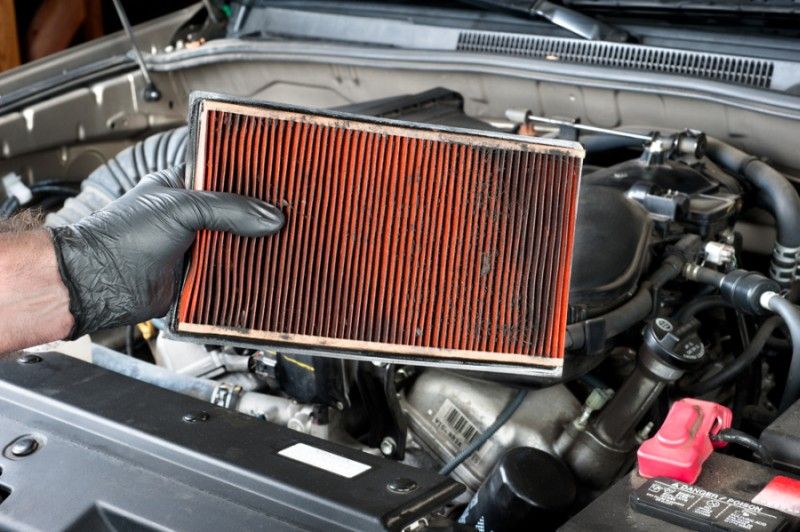
The engine air filter prevents dust, dirt, and other particles from entering the engine.
A dirty air filter can restrict airflow and may contribute to reduced engine performance, increased fuel consumption, and poor throttle response.
As a general reference, the air filter may be inspected around 15,000–30,000 km, but replacement intervals vary significantly between vehicles. In dusty environments, replacement may be necessary much sooner.
If the filter is visibly dirty, damaged, or heavily contaminated, it should not be kept in service simply because the vehicle has not reached the recommended mileage.
Cabin Air Filter
The cabin air filter, also known as the pollen or passenger-compartment filter, cleans the air entering the vehicle interior.
A clogged filter can reduce airflow from the ventilation system, cause unpleasant odors, and make the air-conditioning system appear weaker.
Depending on the vehicle and operating conditions, it is commonly checked or replaced approximately once a year or every 15,000–30,000 km.
Vehicles frequently driven in cities, dusty areas, or heavy traffic may require more frequent replacement.
Windshield Wipers
Windshield wipers do not have a fixed replacement mileage. Their condition is more important than the odometer.
Wiper blades should be replaced when they:
-
Leave water or streaks behind
-
Skip across the glass
-
Produce excessive noise
-
Leave unwiped areas
-
Have cracked or hardened rubber
As a general reference, many wiper blades last around one to two years, although climate and usage can make this period shorter or longer.
Poor-quality wipers may deteriorate faster, especially when exposed to strong sunlight and extreme temperatures.
Brake Pads and Brake Discs
Brake pads are among the most condition-dependent components on a vehicle.
There is no universal rule saying that brake pads must be replaced every 40,000 km or after a certain number of years. Their lifespan depends heavily on traffic, driving style, vehicle weight, terrain, and the type of brake pad.
A vehicle driven mostly in heavy city traffic may wear its brake pads much faster than a car used mainly on highways.
Brake pads should be inspected for remaining friction material, uneven wear, cracking, contamination, and other damage.
Brake discs should also be checked for excessive thickness loss, grooves, corrosion, heat damage, and uneven surfaces.
Warning signs include:
-
Grinding or scraping noises
-
Steering-wheel vibration during braking
-
Brake pedal pulsation
-
Reduced braking performance
-
The vehicle pulling to one side
-
A brake warning or pad-wear warning
Brake Fluid
Brake fluid absorbs moisture over time. As its moisture content increases, its boiling point can decrease, which may affect braking performance under heavy braking.
Many manufacturers recommend changing brake fluid approximately every two years, but the exact interval should be checked in the vehicle's maintenance schedule.
Brake fluid should also be inspected if the system has been opened, repaired, or contaminated.
Battery
A car battery does not have a guaranteed replacement date.
A typical 12-volt starter battery may last around three to five years, but temperature, charging-system condition, driving habits, and battery quality can significantly affect its lifespan.
Signs of a weak battery include:
-
Slow engine cranking
-
Difficulty starting in cold weather
-
Dim lights during starting
-
Electrical system warnings
-
Frequent need for jump-starting
Before replacing a battery, the charging system should also be tested. A faulty alternator or poor electrical connection can create symptoms that look like a bad battery.
Spark Plugs
Spark plug replacement intervals depend heavily on the type of spark plug and engine.
Conventional spark plugs may require replacement at relatively short intervals, while platinum and iridium plugs can last considerably longer.
Depending on the engine and manufacturer's specifications, replacement intervals can range from approximately 20,000 km to well over 100,000 km.
Worn spark plugs can cause:
-
Difficult starting
-
Rough idling
-
Misfires
-
Poor acceleration
-
Increased fuel consumption
-
Check-engine warning lights
The correct plug specification is important. Heat range, electrode design, dimensions, and gap must match the engine manufacturer's requirements.
Tires
Tires should never be evaluated only by mileage.
Tire life depends on:
-
Age
-
Tread depth
-
Driving style
-
Road conditions
-
Tire pressure
-
Alignment
-
Storage conditions
-
Climate
-
Tire construction and compound
Cracks, bulges, cuts, uneven wear, vibration, or significant loss of tread are reasons for inspection and potentially replacement.
Even if a tire has plenty of tread remaining, aging rubber can become harder and less effective in wet conditions. Older tires therefore deserve careful inspection.
Timing Belt
The timing belt is one of the most critical components in many engines because it synchronizes the crankshaft and camshaft.
Timing-belt replacement intervals vary considerably between engines. Some manufacturers specify both a mileage limit and an age limit.
A timing belt should therefore be replaced according to the manufacturer's specified interval rather than following a universal rule such as “every 60,000 km.”
If a timing belt breaks, the engine may suffer severe internal damage, particularly in interference engines.
When replacing a timing belt, it is often sensible to inspect or replace related components such as the tensioner, idler pulleys, and, where appropriate, the water pump.
Auxiliary or Serpentine Belt
The auxiliary belt drives components such as the alternator, air-conditioning compressor, and sometimes other accessories.
Unlike a timing belt, it generally does not have the same catastrophic engine-damage risk if it breaks, but a failure can still leave the vehicle stranded.
The belt should be inspected for:
-
Cracks
-
Fraying
-
Glazing
-
Missing ribs
-
Oil contamination
-
Abnormal noise
Replacement intervals depend on the vehicle manufacturer's maintenance plan and the belt's actual condition.
Water Pump
The water pump circulates coolant through the engine and cooling system.
Some vehicles use a belt-driven water pump, while others use an electrically driven or accessory-belt-driven design.
There is no universal replacement interval for every water pump.
If the water pump is driven by the timing belt, replacing it together with the timing-belt system can often be practical because much of the labor overlaps.
A failing water pump may cause:
-
Coolant leakage
-
Engine overheating
-
Bearing noise
-
Coolant circulation problems
-
Temperature fluctuations
Alternator
The alternator charges the battery and supplies electrical power while the engine is running.
An alternator is not normally replaced at a fixed mileage simply because the vehicle has reached a certain age.
Instead, its charging voltage, current output, bearings, pulley, regulator, and electrical connections should be tested when symptoms appear.
Possible signs of alternator problems include:
-
Battery warning light
-
Repeated battery discharge
-
Dim or fluctuating lights
-
Electrical system warnings
-
Unusual noises
-
Starting problems caused by insufficient battery charging
Fuel Pump
The fuel pump delivers fuel from the tank to the engine.
Fuel pumps do not have a universal five- or six-year replacement interval. Some last for many years and hundreds of thousands of kilometers, while others may fail much earlier.
A fuel-pressure test and electrical diagnosis should be performed before replacing the pump.
Possible symptoms include:
-
Difficult starting
-
Engine stalling
-
Loss of power under acceleration
-
Low fuel pressure
-
Engine hesitation
-
Intermittent no-start conditions
The fuel filter, fuel-pressure regulator, wiring, and pump power supply should also be considered during diagnosis.
Sensors
Modern vehicles contain numerous sensors, including:
-
Oxygen sensors
-
Mass airflow sensors
-
Manifold pressure sensors
-
Throttle-position sensors
-
Coolant temperature sensors
-
Crankshaft position sensors
-
Camshaft position sensors
-
Wheel-speed sensors
-
Pressure sensors
Sensors are not normally replaced according to a fixed mileage interval.
A diagnostic fault code does not automatically mean that the sensor itself is defective. Wiring, connectors, power supply, ground circuits, reference voltage, signal wiring, mechanical problems, or the ECU can also cause sensor-related fault codes.
Proper testing should be performed before replacing the component.
Fuses
Fuses generally do not require preventive replacement.
If a fuse blows, it should be replaced only with another fuse of the correct amperage.
If the replacement fuse blows again, there is likely an electrical problem that needs to be diagnosed.
Repeatedly installing larger fuses can damage wiring and create a serious fire risk.
Exhaust System and Muffler
The exhaust system is exposed to heat, moisture, road salt, and corrosion.
There is no fixed mileage for muffler replacement.
The exhaust system should be inspected when there are:
-
Exhaust leaks
-
Excessive noise
-
Visible corrosion
-
Holes
-
Loose hangers
-
Unusual exhaust smells inside the cabin
Condensation and small amounts of water dripping from the exhaust during cold starts can be normal. Persistent leaks or unusual exhaust behavior require inspection.
Shock Absorbers
Shock absorbers gradually lose performance rather than necessarily failing suddenly.
Their condition can be affected by road quality, vehicle load, driving style, and climate.
They should be inspected periodically, particularly as mileage increases. Around 75,000–100,000 km can be a useful point for closer inspection, but there is no universal replacement mileage.
Signs of worn shocks include:
-
Excessive bouncing
-
Poor road holding
-
Longer braking distances
-
Uneven tire wear
-
Vehicle instability
-
Oil leakage from the shock absorber
Clutch
Clutch life varies enormously.
A clutch used primarily on highways may last much longer than one used constantly in heavy city traffic.
Aggressive driving, frequent half-clutch use, towing, hill starts, and carrying heavy loads can accelerate wear.
Possible signs of clutch wear include:
-
Engine RPM increasing without a matching increase in speed
-
Difficulty engaging gears
-
Shuddering when moving away
-
Burning smell
-
A clutch pedal that feels unusual
A clutch can sometimes last more than 100,000 km, while another vehicle may require replacement considerably earlier.
Suspension and Steering Components
Components such as control-arm bushings, ball joints, tie-rod ends, stabilizer links, wheel bearings, and strut mounts should be inspected according to vehicle condition.
Poor roads and potholes can significantly shorten their service life.
Symptoms may include:
-
Clunking noises
-
Steering play
-
Uneven tire wear
-
Vehicle pulling to one side
-
Vibration
-
Instability during braking or cornering
These components should not be replaced simply because the vehicle has reached a particular mileage. A physical inspection is much more useful.
Coolant
Engine coolant protects against freezing and helps prevent overheating and corrosion inside the cooling system.
The replacement interval depends on the coolant technology and the vehicle manufacturer's specification. Some modern long-life coolants can remain in service for several years, while other systems have shorter intervals.
Using the correct coolant specification is more important than choosing a coolant simply by its color.
If the cooling system repeatedly loses coolant, the cause should be investigated rather than simply topping it up.
What Determines How Long a Car Part Lasts?
The same component can have very different lifespans in two identical vehicles.
Driving conditions are particularly important. Frequent stop-and-go traffic can accelerate brake and clutch wear. Poor roads can damage suspension components. Extremely hot or cold climates can affect batteries, tires, rubber components, and fluids.
Short journeys can also be harder on certain systems because the engine and fluids may not consistently reach their optimal operating temperatures.
For this reason, maintenance should be based on both the manufacturer's schedule and the actual condition of the vehicle.
Mileage Is Not the Only Maintenance Indicator
One of the most common maintenance mistakes is treating mileage as the only factor that determines whether a component needs replacement.
Some parts have a relatively predictable service interval, such as engine oil, certain filters, spark plugs, and timing-belt systems. Others, including brake pads, tires, batteries, suspension components, sensors, alternators, fuel pumps, and clutches, are much more dependent on condition and usage.
A component that is still functioning correctly does not necessarily need to be replaced simply because the car has reached a certain mileage.
At the same time, waiting for a part to fail completely is not always a good strategy. Safety-critical components such as brakes, tires, steering parts, and timing-belt systems should be monitored proactively.
The best maintenance approach is to combine the manufacturer's service schedule with regular inspections and the symptoms the vehicle is showing. This makes it easier to identify worn components before they turn into expensive repairs or leave the vehicle unexpectedly stranded.