TR
TR EN
EN

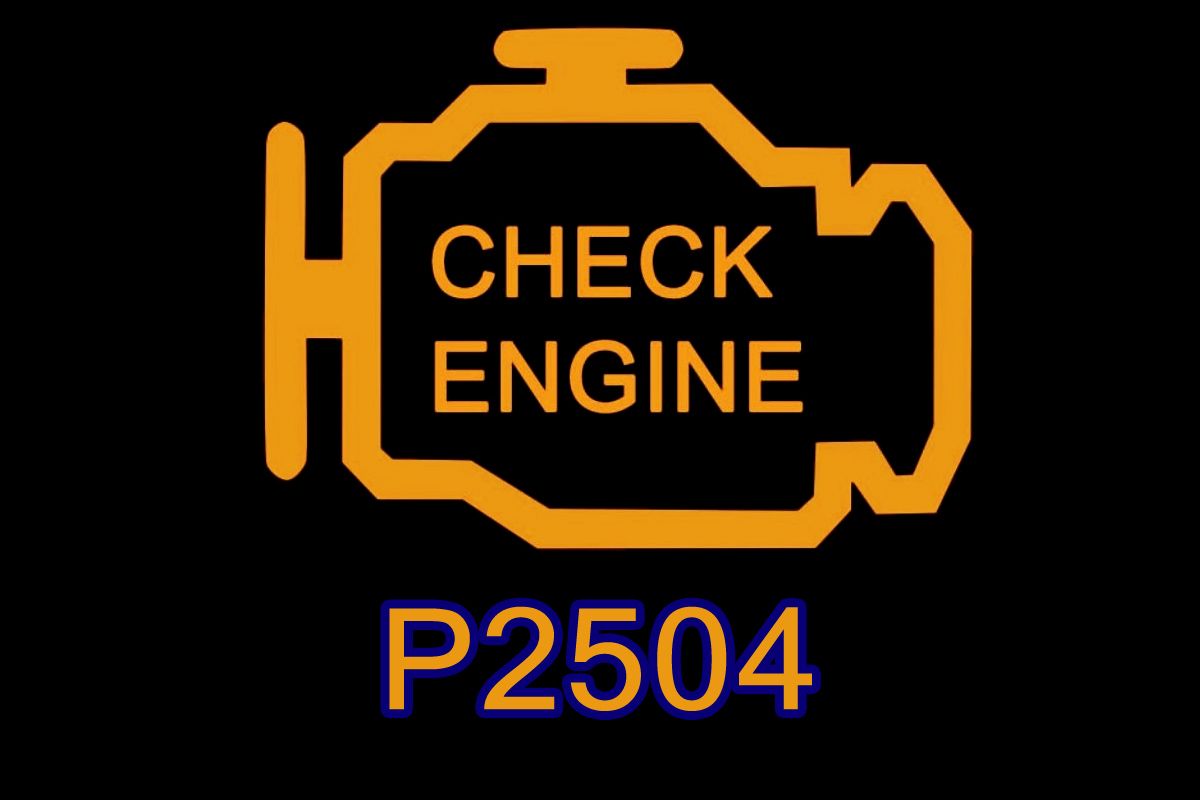
P2504 Charging System Voltage High
P2504 is an OBD-II diagnostic trouble code indicating that the engine control module (ECM/PCM) has detected a charging-system voltage level that is higher than the expected range.
In practical terms, the vehicle's electrical system appears to be receiving too much charging voltage.
The alternator is responsible for supplying electrical power while the engine is running and maintaining the battery at the appropriate state of charge. Modern vehicles use a voltage-regulation strategy to keep system voltage within a controlled range.
When the ECM detects that charging voltage remains above the expected limit, it can store P2504.
This does not automatically mean the alternator itself is defective. The voltage regulator, battery, wiring, grounds, sensing circuit, intelligent battery sensor, or the control system can also be responsible.
Why High Charging Voltage Matters
A vehicle's electrical system is designed to operate within a controlled voltage range.
If charging voltage becomes excessive, electrical components can be exposed to more voltage than they were designed to handle.
Depending on the severity and duration of the overvoltage condition, excessive charging voltage can affect:
-
Battery life
-
Electronic control modules
-
Sensors
-
Relays
-
Light bulbs
-
Instrumentation
-
Infotainment equipment
-
Alternator components
-
Other electrical accessories
A brief voltage fluctuation is different from a charging system that consistently operates at an excessively high voltage.
That distinction is important when diagnosing P2504.
What Does “Charging System Voltage High” Actually Mean?
The code does not necessarily mean that the battery itself is producing excessive voltage.
The battery is primarily a storage device. With the engine running, the alternator and its voltage-regulation system normally determine the charging-system voltage.
The ECM monitors charging-system information and compares it with expected values.
If the observed voltage is too high for the operating conditions, P2504 may be triggered.
The actual charging voltage strategy varies between vehicles.
Some modern vehicles deliberately change charging voltage depending on:
-
Battery condition
-
Engine temperature
-
Electrical load
-
Driving conditions
-
Deceleration
-
Battery-management strategy
-
Start-stop operation
Therefore, a single universal voltage number should not be used to diagnose every vehicle.
The Alternator Is Only One Suspect
When someone sees P2504 on a scan tool, the immediate reaction is often:
“The alternator is overcharging.”
That may be true, but it is not enough to establish the cause.
The alternator contains or works with a voltage regulator that controls its output.
A fault in that regulation system can cause excessive charging voltage.
But the ECM may also receive incorrect information because of a sensing or communication problem.
Possible causes include:
-
Faulty alternator voltage regulator
-
Defective alternator
-
Voltage-sensing circuit problem
-
Damaged wiring
-
Poor ground connection
-
Loose battery connection
-
Battery-management system fault
-
Intelligent battery sensor problem
-
Incorrect battery installation or configuration
-
Communication problem between control modules
-
Faulty control signal
-
Battery problem
-
ECM/PCM fault
The correct diagnosis depends on the vehicle's charging architecture.
Common Causes of P2504
Faulty voltage regulator
The voltage regulator controls alternator output.
If regulation fails and the alternator continues producing excessive voltage, P2504 can occur.
On some alternators the regulator is integrated into the alternator, while on other systems it may be controlled differently.
Alternator malfunction
Internal alternator faults can cause abnormal charging behavior.
Possible problems include regulator failure, diode problems, winding issues or other internal electrical faults.
Voltage-sensing circuit fault
The charging system may use a dedicated voltage-sensing circuit.
If the ECM or alternator receives incorrect voltage information, charging control can become abnormal.
Poor battery or chassis ground
A poor ground connection can create voltage differences between different parts of the electrical system.
This can confuse charging-system measurements and cause abnormal regulation.
Loose battery terminals
Loose or corroded terminals can interfere with current flow and voltage measurement.
They should be inspected before replacing expensive components.
Damaged wiring
A charging-system control or sensing wire can become:
-
Broken
-
Chafed
-
Corroded
-
Shorted
-
Melted
-
Poorly repaired
A wiring problem can produce a voltage reading that does not represent the actual system condition.
Intelligent battery sensor problem
Many modern vehicles use a battery current or battery monitoring sensor.
This sensor can provide information about battery condition, current flow and charging requirements.
If its information is incorrect, the charging strategy may become abnormal.
Incorrect battery replacement
Some modern vehicles require battery registration, coding or adaptation after battery replacement.
Installing a different battery type or capacity without following the manufacturer's battery-management procedure can sometimes cause charging-system problems.
Communication fault
Modern charging systems may use communication between the alternator, ECM, body-control module and battery-management system.
A communication problem can interfere with charging control.
ECM/PCM problem
The control module is rarely the first component that should be blamed.
It should only be considered after the charging system, wiring, grounds, sensors and communication circuits have been properly tested.
Symptoms of P2504
A high charging voltage condition can produce symptoms ranging from a simple warning light to significant electrical problems.
Possible symptoms include:
-
Check Engine Light
-
Battery warning light
-
High-voltage warning
-
Flickering lights
-
Headlights appearing unusually bright
-
Electrical accessories behaving abnormally
-
Battery overheating
-
Battery fluid loss on conventional batteries
-
Burning or sulfur-like battery odor
-
Premature battery failure
-
Unusual electronic behavior
-
Multiple warning lights
-
Intermittent control-module faults
-
Reduced or abnormal vehicle performance
Some vehicles may have no obvious symptoms at all.
The ECM may detect the condition before the driver notices anything unusual.
Battery Problems Can Be a Consequence, Not the Cause
A battery can be damaged by prolonged overcharging.
This creates an important diagnostic distinction.
Suppose the alternator regulator fails and produces excessive voltage.
The battery may subsequently become overheated or damaged.
If the technician then sees a bad battery and replaces only the battery, the charging system may continue overcharging the new battery.
The new battery can then suffer the same fate.
This is why the charging system needs to be tested as a complete system.
How to Diagnose P2504
A good diagnosis starts with determining whether the vehicle is actually overcharging.
Scan the entire vehicle
Check for all stored and pending DTCs.
Pay attention to codes involving:
-
Battery voltage
-
Alternator control
-
Generator communication
-
Battery monitoring
-
Voltage sensors
-
Network communication
-
Body-control modules
Multiple related codes can reveal whether P2504 is an isolated charging problem or part of a larger electrical issue.
Check the Freeze-Frame Data
Record the conditions under which P2504 was stored.
Useful information may include:
-
Engine RPM
-
Engine load
-
Coolant temperature
-
Vehicle speed
-
Battery voltage
-
Electrical load
-
Charging-system status
If the code appears only at high engine speed, the alternator may behave differently from when the fault occurs at idle.
If it appears immediately after starting, the charging strategy and battery condition deserve attention.
Measure Actual System Voltage
The next step is to determine what the electrical system is actually doing.
A technician can measure battery voltage with the engine off and compare it with the charging voltage while the engine is running.
The measurement should be performed under appropriate operating conditions and compared with the manufacturer's specifications.
It may also be useful to observe voltage during:
-
Idle
-
Increased engine RPM
-
Electrical load
-
Deceleration
-
Cold operation
-
Warm operation
Modern smart-charging systems can intentionally vary voltage, so seeing a changing voltage does not automatically indicate a fault.
The question is whether the voltage is appropriate for the specific vehicle's charging strategy.
Compare Scan-Tool Voltage With Measured Voltage
This is an especially useful diagnostic step.
If the scan tool reports unusually high voltage but a properly connected meter shows normal system voltage, the problem may involve:
-
Voltage-sensing circuit
-
Communication
-
Sensor data
-
ECM interpretation
If both the scan tool and the meter show excessive voltage, a genuine charging-system overvoltage condition becomes much more likely.
This comparison can prevent unnecessary alternator replacement.
Inspect Battery Connections and Grounds
Before condemning the alternator, inspect:
-
Positive battery terminal
-
Negative battery terminal
-
Engine ground strap
-
Chassis grounds
-
Alternator connections
-
Main charging cable
-
Fuse links
-
Ground connections near control modules
Corrosion can exist beneath a terminal or inside a cable connection even when the outside looks acceptable.
Voltage-drop testing can be useful for identifying excessive resistance in the charging and ground circuits.
Test the Alternator and Regulator
If excessive voltage is confirmed, the alternator and voltage regulation system should be tested according to the manufacturer's procedure.
Depending on the vehicle, the regulator may be:
-
Integrated into the alternator
-
Controlled electronically
-
Managed through a communication network
-
Influenced by a battery-management system
This means an alternator that appears mechanically normal can still have a control problem.
Smart Charging Systems Change the Diagnosis
Older vehicles often used relatively simple alternator voltage regulation.
Modern vehicles can be considerably more sophisticated.
The ECM may control alternator output according to battery condition and operating requirements.
For example, the vehicle may intentionally change charging behavior during acceleration and deceleration.
Some systems also use a battery monitoring sensor to determine how much charging current is required.
Consequently, diagnosing P2504 on a modern vehicle requires understanding how that particular charging system is controlled.
A generic “alternator should always produce exactly X volts” approach can lead to an incorrect diagnosis.
Check the Battery Monitoring Sensor
If the vehicle has an intelligent battery sensor, inspect its:
-
Connector
-
Wiring
-
Ground/reference circuits
-
Installation
-
Battery-terminal connection
-
Live-data values
A sensor that incorrectly reports battery condition or current flow can influence the charging strategy.
Some vehicles also require the battery sensor or battery-management system to be reset or adapted after battery replacement.
Could a Bad Ground Cause P2504?
Yes.
Ground problems are often overlooked in charging-system diagnostics.
The alternator, battery, ECM and other modules must have reliable electrical reference points.
If a ground connection has excessive resistance, the measured voltage at one point in the vehicle can differ from the voltage seen at another point.
This can interfere with charging regulation.
A proper voltage-drop test under load is generally more useful than simply checking whether a ground wire has continuity.
Could a Bad Battery Cause P2504?
A defective battery can affect charging-system behavior, but it should not automatically be blamed for an overvoltage code.
A battery with an internal problem may not accept charge correctly, and battery condition can influence smart charging.
However, a confirmed excessive charging voltage still requires investigation of the regulator, alternator and control system.
Replacing the battery alone may not solve the underlying problem.
What Repairs Can Fix P2504?
The repair depends on the actual cause.
Possible repairs include:
-
Replacing a faulty alternator
-
Replacing an alternator voltage regulator where serviceable
-
Repairing voltage-sensing wiring
-
Repairing alternator control wiring
-
Cleaning or repairing battery terminals
-
Repairing engine/chassis grounds
-
Replacing a damaged battery
-
Repairing the battery monitoring sensor circuit
-
Correcting battery configuration or registration
-
Repairing communication wiring
-
Correcting a control-module problem when confirmed
After repair, charging voltage should be checked again under the operating conditions specified by the manufacturer.
Is P2504 Dangerous?
A genuine charging-system overvoltage condition should be taken seriously.
Unlike a slightly weak battery, excessive voltage can potentially damage electrical components.
If you notice:
-
Battery overheating
-
Burning smell
-
Strong sulfur-like odor
-
Flickering or unusually bright lights
-
Multiple electronic warnings
-
Severe electrical instability
the vehicle should not be driven unnecessarily until the charging system is checked.
If the Check Engine Light is the only symptom and the charging system is operating normally, the situation may be less urgent, but the cause should still be diagnosed.
P2504 vs Low Charging Voltage
P2504 is the opposite of a low-voltage charging problem.
P2504 – Charging System Voltage High
The control system detects charging voltage above the expected range.
A low charging voltage condition indicates insufficient charging-system output.
The two can have completely different causes.
For example:
-
High voltage → regulator/control problem may be suspected.
-
Low voltage → alternator output, belt, wiring, battery or charging capacity may be involved.
However, intermittent charging problems can sometimes move between abnormal states, so the complete charging history and related codes matter.
Why You Should Not Replace the Alternator Immediately
The alternator is an obvious suspect, but replacing it without testing can be an expensive mistake.
Imagine that the alternator is functioning correctly but the ECM is receiving an incorrect voltage signal because of a damaged sensing wire.
A new alternator is installed.
The voltage-sensing problem remains.
P2504 returns.
The alternator was never the real problem.
The same applies to battery-monitoring systems and poor grounds.
The diagnostic objective should therefore be to determine where the excessive voltage is actually being created or incorrectly reported.
A Practical Diagnostic Sequence
For P2504, a logical sequence is:
Scan all modules
↓
Record freeze-frame data
↓
Measure actual battery/charging voltage
↓
Compare measured voltage with scan-tool data
↓
Inspect battery terminals, grounds and main charging cables
↓
Check alternator/regulator operation
↓
Check voltage-sensing and control circuits
↓
Evaluate battery-management/intelligent sensor data
↓
Check communication circuits if applicable
↓
Test or replace the confirmed faulty component
This approach separates a genuine overcharging problem from a false or incorrectly measured one.
Can You Drive With P2504?
If P2504 is accompanied by evidence of genuine overcharging, continued driving should be minimized.
Excessive voltage can damage electronic components and the battery.
If the vehicle has only a stored P2504 code and measurements show that charging voltage is currently normal, the vehicle may be driven to a repair facility, but the charging system should still be investigated.
Do not assume that the absence of symptoms means the problem is harmless.
Final Takeaway
P2504 – Charging System Voltage High means the vehicle's control system has detected charging-system voltage above the expected range.
The alternator and voltage regulator are important suspects, but they are not the only possibilities. Battery terminals, grounds, voltage-sensing circuits, battery-monitoring sensors, wiring and smart-charging control strategies can all influence the result.
The most useful first question is not:
“Do I need a new alternator?”
It is:
“Is the charging voltage actually too high, and if it is, where is that excessive voltage being created or incorrectly reported?”
Once that distinction is established, the diagnosis becomes much more straightforward and unnecessary replacement of the alternator or battery can often be avoided.