TR
TR EN
EN

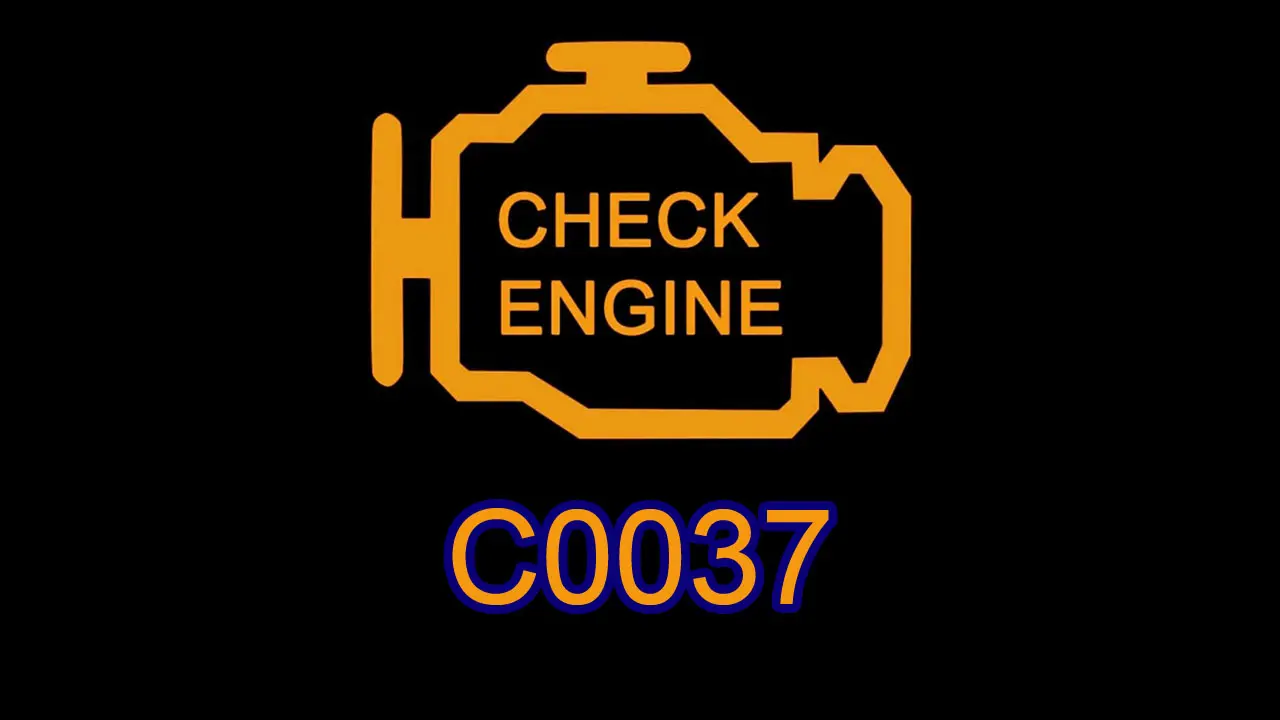
C0037 Left Rear Wheel Speed Sensor Circuit Malfunction
The C0037 Left Rear Wheel Speed Sensor Circuit Malfunction diagnostic trouble code indicates that the vehicle's Anti-lock Braking System (ABS) Control Module has detected an electrical problem in the left rear wheel speed sensor circuit.
Wheel speed sensors are essential components of modern vehicle safety systems. They continuously monitor the rotational speed of each wheel and send this information to the ABS module. The module uses this data to operate the Anti-lock Braking System (ABS), Electronic Stability Control (ESC), Traction Control System (TCS), Hill Start Assist, and several other advanced driver assistance systems.
When the ABS module detects an abnormal electrical condition such as an open circuit, short circuit, excessive resistance, intermittent signal, or invalid sensor output from the left rear wheel speed sensor, it stores the C0037 trouble code and usually illuminates the ABS warning light.
In most cases, the problem is related to the wheel speed sensor itself, damaged wiring, connector corrosion, a damaged tone ring, wheel bearing problems, or, less commonly, an ABS control module fault.
What Does C0037 Mean?
The left rear wheel speed sensor continuously measures the rotational speed of the left rear wheel.
The ABS module constantly monitors:
-
Wheel speed signal
-
Signal frequency
-
Circuit voltage
-
Circuit continuity
-
Sensor response time
If the module detects that the sensor signal is missing, unstable, outside the expected range, or electrically invalid, it stores DTC C0037.
Unlike performance-related wheel speed sensor codes, C0037 specifically indicates a circuit malfunction, meaning the issue usually involves the electrical circuit rather than the mechanical operation of the wheel itself.
How the Left Rear Wheel Speed Sensor Works
The wheel speed sensor is mounted close to a tone ring (reluctor ring) or a magnetic encoder built into the wheel bearing.
As the wheel rotates:
-
The tone ring passes the sensor.
-
The sensor generates an electrical signal.
-
The ABS module converts that signal into wheel speed.
-
The module compares the speed of all four wheels hundreds of times per second.
If one wheel suddenly slows faster than the others during braking, the ABS module reduces brake pressure to prevent wheel lockup.
The same wheel speed information is also used by:
-
Anti-lock Braking System (ABS)
-
Electronic Stability Control (ESC)
-
Traction Control System (TCS)
-
Electronic Brakeforce Distribution (EBD)
-
Hill Start Assist
-
Adaptive Cruise Control (on some vehicles)
-
Collision Avoidance Systems
Symptoms of C0037
The symptoms vary depending on the vehicle and the severity of the fault.
ABS Warning Light
The ABS warning light is usually the first indication that a problem exists.
Brake Warning Light
Some vehicles may also illuminate the brake warning light.
Stability Control Warning
The Electronic Stability Control (ESC) warning light may turn on.
Traction Control Disabled
Traction Control may stop functioning until the fault is repaired.
Cruise Control Problems
Certain manufacturers disable cruise control when wheel speed information becomes unreliable.
Driver Assistance Systems Disabled
Depending on the vehicle, the following systems may also become unavailable:
-
Adaptive Cruise Control
-
Automatic Emergency Braking
-
Collision Mitigation Braking
-
Hill Start Assist
No Noticeable Braking Problems
Under normal driving conditions, the hydraulic braking system usually continues operating normally.
However, ABS protection and electronic stability functions may no longer be available during emergency braking.
Common Causes of C0037
Several electrical and mechanical faults may trigger this diagnostic code.
Faulty Left Rear Wheel Speed Sensor
The sensor itself may fail because of:
-
Internal electronic failure
-
Water intrusion
-
Physical damage
-
Age-related deterioration
This is one of the most common causes.
Damaged Wiring Harness
The wiring leading to the sensor operates in a harsh environment.
Common wiring problems include:
-
Broken wires
-
Chafed insulation
-
Short circuits
-
Open circuits
-
Heat damage
Corroded or Loose Connector
Wheel speed sensor connectors are exposed to:
-
Water
-
Mud
-
Salt
-
Snow
-
Road debris
Corrosion or loose terminals can interrupt communication with the ABS module.
Damaged Tone Ring (Reluctor Ring)
Older vehicles typically use a toothed reluctor ring.
Possible failures include:
-
Cracked ring
-
Missing teeth
-
Rust expansion
-
Dirt buildup
-
Physical deformation
Damaged Magnetic Encoder
Many modern vehicles integrate the encoder inside the wheel bearing.
Possible failures include:
-
Magnetic strip damage
-
Contamination
-
Physical wear
Wheel Bearing Problems
A worn wheel bearing may:
-
Create excessive wheel movement
-
Alter the sensor gap
-
Damage the magnetic encoder
ABS Module Problems
Although less common, the ABS module itself may develop:
-
Internal circuit failures
-
Software issues
-
Communication faults
Vehicles Commonly Affected by C0037
C0037 is a generic OBD-II chassis code and may appear on a wide variety of vehicles equipped with ABS.
Examples include:
-
Ford F-150
-
Ford Explorer
-
Chevrolet Silverado
-
Chevrolet Equinox
-
GMC Sierra
-
Dodge Ram
-
Jeep Grand Cherokee
-
Toyota Camry
-
Toyota Corolla
-
Toyota RAV4
-
Honda Civic
-
Honda CR-V
-
Nissan Altima
-
Nissan Rogue
-
Hyundai Tucson
-
Kia Sportage
-
Volkswagen Golf
-
Audi A4
-
BMW 3 Series
-
Mercedes-Benz C-Class
Although the diagnostic code is generic, repair procedures may vary between manufacturers.
How C0037 Is Diagnosed
Proper diagnosis requires both electrical testing and inspection of mechanical components.
Read Stored Trouble Codes
A professional diagnostic scan tool should retrieve:
-
ABS fault codes
-
Stability control codes
-
Freeze-frame information
Related wheel speed sensor codes often help identify the source of the fault.
Monitor Live Wheel Speed Data
Technicians compare the live wheel speed readings from all four wheels.
The left rear sensor should closely match the speeds reported by the other wheels during normal driving.
Sudden dropouts, erratic readings, or a constant zero reading indicate a problem.
Inspect the Wheel Speed Sensor
The sensor should be checked for:
-
Physical damage
-
Dirt accumulation
-
Metal contamination
-
Proper installation
Inspect the Tone Ring or Encoder
Technicians inspect for:
-
Cracks
-
Rust
-
Missing teeth
-
Damaged magnetic encoder
Inspect Wiring and Connectors
Electrical inspection includes checking:
-
Continuity
-
Voltage
-
Ground
-
Connector condition
-
Corrosion
-
Loose terminals
Inspect the Wheel Bearing
Wheel bearings should be checked for:
-
Excessive play
-
Noise
-
Encoder damage
How to Fix C0037
The appropriate repair depends on the underlying cause.
Replace the Left Rear Wheel Speed Sensor
If testing confirms the sensor has failed internally, replacement is usually the correct repair.
Repair Damaged Wiring
Possible repairs include:
-
Repair broken wires
-
Replace damaged harnesses
-
Restore insulation
Repair or Replace Connectors
Corroded or damaged connectors should be cleaned or replaced.
Replace the Tone Ring
A damaged reluctor ring should be replaced to restore accurate wheel speed readings.
Replace the Wheel Bearing
If the magnetic encoder is integrated into the wheel bearing, the complete bearing assembly is usually replaced.
Clean the Sensor Area
Removing rust, mud, and metal debris may restore proper sensor operation.
Repair or Replace the ABS Module
If all other components test correctly, the ABS control module may require software updates, reprogramming, or replacement.
After repairs:
-
Clear the diagnostic trouble code.
-
Verify live wheel speed readings.
-
Perform a road test.
-
Confirm that C0037 does not return.
Can You Drive With C0037?
In most cases, the vehicle remains drivable because the conventional hydraulic braking system continues functioning.
However, the following systems may become unavailable:
-
Anti-lock Braking System (ABS)
-
Electronic Stability Control (ESC)
-
Traction Control System (TCS)
-
Brake Assist
Extra caution should be exercised on wet, snowy, or icy roads where these systems play an important role.
Is C0037 a Serious Code?
C0037 is generally considered a moderate safety-related diagnostic trouble code.
Although the vehicle usually remains operable, the loss of ABS and stability control can significantly reduce braking performance during emergency situations and on low-traction surfaces.
Prompt diagnosis and repair are recommended.
How to Prevent C0037
Regular maintenance can reduce the likelihood of wheel speed sensor failures.
Inspect Wheel Speed Sensors
Inspect the sensors periodically for damage or contamination.
Keep the Suspension Area Clean
Removing dirt and road debris helps protect the sensor and reluctor ring.
Inspect Wheel Bearings
Replace worn wheel bearings before encoder damage develops.
Protect Electrical Connectors
Inspect connectors regularly for corrosion, moisture intrusion, and loose terminals.
Address ABS Warning Lights Promptly
Early diagnosis often prevents more extensive ABS system repairs.
Final Thoughts
The C0037 Left Rear Wheel Speed Sensor Circuit Malfunction code indicates that the ABS control module has detected an electrical fault affecting the left rear wheel speed sensor circuit.
The most common causes include:
-
Faulty left rear wheel speed sensor
-
Damaged wiring
-
Corroded connectors
-
Damaged tone ring
-
Wheel bearing failure
-
ABS control module faults
A complete inspection of the wheel speed sensor, wiring, connectors, tone ring, wheel bearing, and ABS module is necessary to restore proper operation of the ABS, traction control, and stability control systems and ensure safe vehicle operation.