TR
TR EN
EN

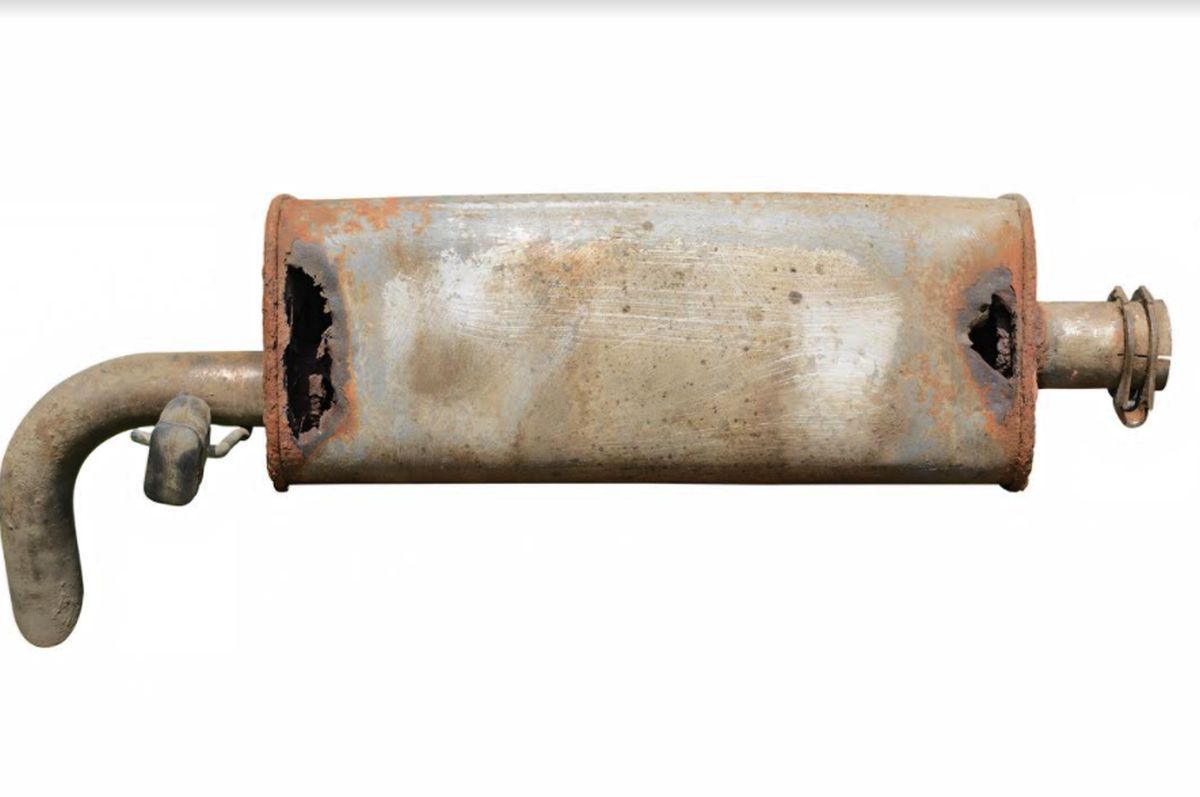
What Problems Can a Cracked or Damaged Exhaust Cause?
A cracked, broken, or leaking exhaust system is more than a noise problem. The exhaust system is responsible for carrying combustion gases away from the engine, reducing noise, controlling emissions, and—depending on the vehicle—working with oxygen sensors, the catalytic converter, diesel particulate filter, and turbocharger.
A small hole near the rear of the exhaust may mainly cause increased noise, while a leak close to the engine can create much more serious problems. The location of the leak is therefore extremely important.
What Happens When the Exhaust Has a Hole or Crack?
When the exhaust system is intact, exhaust gases follow a controlled path from the engine to the tailpipe.
A damaged exhaust allows gases to escape before reaching the end of the system. Depending on where the damage occurs, this can cause:
-
Increased exhaust noise
-
Hissing, ticking, or popping sounds
-
Exhaust fumes under the vehicle
-
Exhaust smell inside the cabin
-
Reduced engine performance
-
Incorrect oxygen sensor readings
-
Increased fuel consumption
-
Check engine warning light
-
Emissions problems
-
Turbocharger performance problems
-
Excessive heat around nearby components
Not every exhaust leak causes all of these symptoms. The position and size of the leak make a major difference.
Increased Exhaust Noise
The most obvious symptom is often a change in exhaust sound.
A hole, crack, or broken connection can make the vehicle noticeably louder.
The sound may vary depending on the location of the damage:
Small crack near the engine:
A ticking or tapping sound may be noticeable, particularly during cold starts.
Leak around the exhaust manifold:
A sharp ticking, puffing, or tapping noise can occur.
Hole in the middle exhaust pipe:
The vehicle may develop a deeper and louder exhaust note.
Damage near the rear muffler:
The exhaust may become significantly louder, but engine operation may remain relatively normal.
A sudden change in exhaust sound should therefore be investigated rather than dismissed as normal aging.
Exhaust Smell Inside the Vehicle
One of the most important warning signs is exhaust odor inside the cabin.
Exhaust gases can contain carbon monoxide and other harmful substances. Carbon monoxide is particularly dangerous because it is colorless and odorless.
If exhaust fumes are entering the passenger compartment, the vehicle should not be treated as safe simply because the engine is running normally.
The leak should be located and repaired as soon as possible.
Can a Cracked Exhaust Cause a Check Engine Light?
Yes, particularly when the leak is located before or near an oxygen sensor.
Modern engines use oxygen sensors to monitor the oxygen content of the exhaust.
If outside air enters the exhaust system through a leak, the oxygen sensor may detect more oxygen than expected.
The engine control system can interpret this information as an indication of a lean mixture or another combustion-related condition.
Depending on the vehicle, this can contribute to fault codes related to:
-
Oxygen sensor performance
-
Air-fuel mixture
-
Fuel trim
-
Catalyst efficiency
-
Misfire or combustion monitoring
However, an exhaust leak does not automatically mean that the oxygen sensor itself is defective.
This distinction is important when diagnosing a fault code.
Can an Exhaust Leak Increase Fuel Consumption?
It can.
An exhaust leak located before an oxygen sensor can introduce outside air into the exhaust stream.
The engine control system may interpret the additional oxygen as evidence of a lean mixture and compensate by increasing fuel injection.
Depending on the engine and the location of the leak, this can affect fuel trims and potentially increase fuel consumption.
However, a leak at the rear of the exhaust system generally has much less influence on the air-fuel control system.
Therefore, the location of the leak matters more than simply knowing that the exhaust is damaged.
Can a Hole in the Exhaust Cause Loss of Power?
Yes, but the effect depends heavily on where the leak is located.
A small hole near the rear muffler usually has little effect on engine power.
A serious leak near the exhaust manifold, turbocharger, or other upstream components can have a much greater impact.
On turbocharged engines, exhaust gases are used to drive the turbine. A significant leak before the turbocharger can reduce the amount of energy reaching the turbine.
This may result in:
-
Slow turbo spool-up
-
Reduced boost pressure
-
Turbo lag
-
Poor acceleration
-
Reduced engine power
An exhaust leak after the turbocharger can also create problems depending on its location and severity.
Exhaust Manifold Cracks Are More Serious
The exhaust manifold is attached directly to the engine and collects exhaust gases from the cylinders.
A crack in the manifold can therefore cause problems much closer to the engine than a hole in the rear exhaust pipe.
Typical symptoms include:
-
Ticking noise during cold starts
-
Exhaust smell under the hood
-
Reduced performance
-
Increased engine-bay temperature
-
Oxygen sensor-related problems
-
Turbocharger performance issues on turbocharged engines
-
Soot marks around the crack
-
Check engine light
A manifold leak should be repaired promptly, particularly when exhaust gases can reach the cabin or electrical components.
Can an Exhaust Leak Damage the Turbocharger?
An exhaust leak can affect turbocharger operation, especially when the leak occurs before the turbocharger turbine.
A turbocharger depends on exhaust-gas energy to spin the turbine.
If a substantial amount of exhaust escapes before reaching the turbine, the turbocharger may not receive the expected energy.
This can lead to lower boost and poor engine performance.
In addition, an exhaust leak can produce unusual temperatures and pressure conditions around the turbocharger.
However, a noisy or weak turbocharger should not automatically be blamed on an exhaust leak. Turbocharger faults, boost leaks, wastegate problems, actuator issues, and other causes can produce similar symptoms.
Can a Cracked Exhaust Cause Turbo Lag?
Yes.
A significant exhaust leak before the turbocharger can delay the buildup of exhaust energy required to accelerate the turbine.
The driver may notice that the turbocharger feels slower to respond than before.
Possible symptoms include:
-
Delayed boost
-
Weak acceleration at low RPM
-
Reduced maximum boost
-
Hissing or ticking
-
Poor throttle response
-
Check engine light
A smoke test or careful inspection can help identify the source.
Can an Exhaust Hole Cause Backfiring or Popping?
An exhaust leak can contribute to popping sounds, particularly when the vehicle is decelerating.
Outside air entering a hot exhaust system can interact with unburned fuel in the exhaust under certain conditions.
This can produce popping or afterfire noises.
However, repeated or severe backfiring should not automatically be attributed to an exhaust hole.
Ignition problems, fuel mixture issues, valve timing, misfires, and engine-management faults can also cause similar symptoms.
Can an Exhaust Leak Cause Engine Misfires?
An exhaust leak does not normally create a true ignition or mechanical misfire by itself.
However, a leak near an oxygen sensor can affect the sensor readings and fuel control, potentially contributing to mixture problems.
It is therefore possible for an exhaust leak to be associated with drivability problems, but the exact relationship depends on the engine and leak location.
If a vehicle has a misfire code, the ignition system, injectors, compression, air intake, fuel system, and exhaust system should all be considered during diagnosis.
Can an Exhaust Leak Cause Emissions Problems?
Yes.
The exhaust system is part of the vehicle's emissions-control system.
A damaged exhaust can interfere with:
-
Oxygen sensor measurements
-
Catalytic converter monitoring
-
Exhaust gas composition
-
Emissions testing
-
Diesel emissions systems
A vehicle may therefore fail an emissions inspection even if it continues to drive normally.
What Happens If the Catalytic Converter Is Before the Leak?
The location of the leak relative to the catalytic converter and oxygen sensors is important.
If the leak occurs upstream of the catalytic converter or oxygen sensor, it can affect sensor readings and emissions control.
If the leak is downstream of the catalytic converter, it generally has less effect on fuel-mixture control.
This is why simply saying "the exhaust is leaking" is not enough to determine the consequences.
The technician needs to know exactly where the leak is.
Can a Broken Exhaust Increase Engine-Bay Temperature?
A leak close to the engine can release extremely hot exhaust gases into areas that were not designed to receive them.
These gases can heat nearby:
-
Wiring
-
Plastic components
-
Hoses
-
Heat shields
-
Sensors
-
Intake components
-
Turbocharger-related components
A severe leak around the manifold or turbocharger should therefore be taken seriously.
Heat shields are also important because they help protect surrounding components from exhaust temperatures.
Exhaust Leak and Carbon Monoxide Risk
One of the most important reasons to repair an exhaust leak is safety.
Exhaust gases can potentially enter the passenger compartment through openings in the vehicle body, ventilation system, damaged seals, or other pathways.
Carbon monoxide exposure can cause symptoms such as:
-
Headache
-
Dizziness
-
Weakness
-
Nausea
-
Confusion
-
Loss of consciousness
A suspected exhaust leak combined with exhaust smell inside the cabin should be treated as a serious safety issue.
How Can You Tell Where the Exhaust Is Leaking?
Several signs can help locate an exhaust leak.
Listen for unusual sounds
A ticking or puffing sound from the engine area can indicate a manifold or front-pipe leak.
Look for soot
Black carbon deposits around a joint, flange, weld, or crack can be a strong indication that exhaust gases are escaping.
Inspect the exhaust system
The vehicle should be safely lifted and the exhaust pipes, joints, flanges, muffler, catalytic converter, and hangers inspected.
Use a smoke test
A smoke machine can make small leaks easier to identify.
Check during a cold start
Small manifold leaks can sometimes be easier to hear when the engine is cold because components have not yet expanded from heat.
Can an Exhaust Leak Be Welded?
Sometimes.
The correct repair depends on the type and location of the damage.
A small crack in an otherwise healthy steel exhaust component may be repairable by welding.
However, welding is not always the best solution.
Replacement may be more appropriate when:
-
The pipe is severely corroded
-
Multiple areas are damaged
-
The metal is extremely thin
-
A muffler has deteriorated internally
-
A flange is badly damaged
-
A catalytic converter housing is damaged
-
The component has repeatedly cracked
A temporary patch may reduce the noise but may not provide a durable repair.
Why Does the Exhaust Keep Cracking?
If a newly repaired exhaust develops another crack shortly afterward, the underlying cause should be investigated.
Possible reasons include:
-
Excessive engine movement
-
Broken exhaust hangers
-
Incorrect installation
-
Thermal expansion
-
Excessive vibration
-
Corrosion
-
Poor-quality welding
-
Misaligned exhaust components
-
Excessive exhaust temperature
Replacing only the visibly cracked section may not solve the problem if the exhaust system is under abnormal stress.
Can You Drive With a Hole in the Exhaust?
It depends on the location and severity of the damage.
A small hole in the rear muffler may primarily create excessive noise.
However, driving should be avoided if:
-
Exhaust fumes enter the cabin
-
The exhaust is hanging or close to falling off
-
There is a major leak near the engine
-
The vehicle has severe power loss
-
The catalytic converter or DPF is damaged
-
Hot exhaust gases are reaching wiring or plastic components
-
There is a strong exhaust smell around the vehicle
A damaged exhaust component can also become detached and create a road hazard.
Does Every Exhaust Leak Need the Entire Exhaust Replaced?
No.
A leak does not automatically mean the complete exhaust system needs replacement.
Depending on the damage, the repair may involve:
-
Replacing a gasket
-
Replacing a clamp
-
Repairing a flange
-
Welding a small crack
-
Replacing one section of pipe
-
Replacing the muffler
-
Replacing a damaged catalytic converter
-
Replacing a broken exhaust hanger
The goal should be to identify the damaged component and repair the actual cause.
Final Thoughts
A cracked or damaged exhaust can range from a relatively minor noise problem to a serious safety and engine-performance issue.
A hole in the rear muffler may mainly make the vehicle louder, while a crack in the exhaust manifold or a leak near a turbocharger can affect engine performance, oxygen-sensor readings, emissions, and turbocharger operation.
The most important warning sign is exhaust fumes entering the passenger compartment. This should never be ignored because of the potential carbon monoxide risk.
If an exhaust leak is suspected, the entire system should be inspected rather than simply replacing the noisiest component. The location of the leak, the condition of the surrounding components, and the vehicle's engine and emissions system all determine how serious the problem is.