TR
TR EN
EN

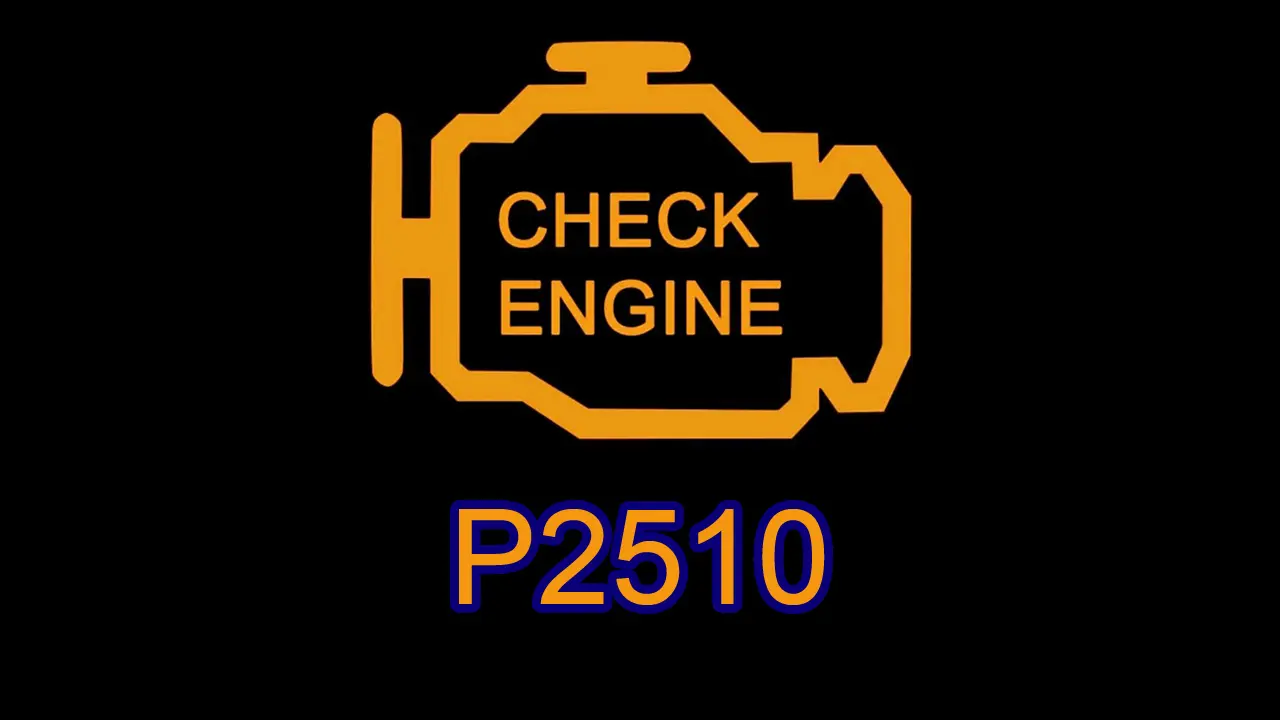
P2510 ECM/PCM Power Relay Sense Circuit Range/Performance
P2510 is a generic OBD-II diagnostic trouble code that indicates the Engine Control Module (ECM) or Powertrain Control Module (PCM) has detected that the Power Relay Sense Circuit is operating outside the expected range or is not performing as intended. This means the ECM has identified a mismatch between the commanded state of the ECM power relay and the electrical signal it receives from the relay's monitoring (sense) circuit.
The ECM power relay supplies battery voltage to the engine control module and several critical engine management components. The relay sense circuit allows the ECM to verify that the relay is functioning correctly. If the feedback signal is inconsistent, unstable, or does not match the relay's expected operation, the ECM stores diagnostic code P2510 and illuminates the Check Engine Light.
Because the ECM depends on this relay for a stable power supply, problems affecting the relay sense circuit can lead to engine performance issues, intermittent starting problems, or even a complete no-start condition.
What Does P2510 Mean?
Modern engine management systems use an ECM power relay to deliver battery voltage to the engine control module whenever the ignition is switched on.
The ECM continuously monitors a dedicated relay sense circuit to verify that:
-
The relay activates when commanded.
-
The relay remains energized while the engine is running.
-
The supplied voltage matches expected values.
-
The relay disengages properly when the ignition is turned off.
If the ECM detects that the relay feedback signal is outside the expected operating range or behaves abnormally, it stores code P2510.
Unlike codes that indicate a completely open or shorted circuit, P2510 usually points to inconsistent relay operation or abnormal electrical performance.
Common Symptoms of P2510
The severity of symptoms depends on how unreliable the ECM power relay becomes.
Common symptoms include:
-
Check Engine Light illuminated
-
Hard starting
-
Intermittent no-start condition
-
Engine stalls unexpectedly
-
Rough idle
-
Hesitation during acceleration
-
Reduced engine performance
-
Extended cranking before starting
-
Multiple warning lights on the dashboard
-
Communication errors with diagnostic equipment
-
Additional power supply or relay-related trouble codes
Some vehicles may experience intermittent symptoms that become more frequent as the relay deteriorates.
Common Causes of P2510
Most cases of P2510 are caused by faults within the relay circuit or the vehicle's electrical system.
Faulty ECM power relay
An aging or worn relay may not switch consistently under all operating conditions.
Damaged relay sense circuit wiring
The wiring between the relay and the ECM may develop:
-
Broken wires
-
Chafed insulation
-
Corrosion
-
Heat damage
-
Loose terminals
Loose or corroded electrical connectors
Poor connector contact can produce inaccurate relay feedback signals.
Weak battery
Insufficient battery voltage may prevent proper relay operation.
Faulty alternator
An unstable charging system may interfere with relay performance.
Blown or partially damaged fuse
A damaged fuse may reduce voltage reaching the relay.
Poor ground connection
High resistance in engine or chassis ground circuits may affect relay operation.
Faulty ignition switch
An ignition switch that intermittently supplies voltage can produce relay performance faults.
Water intrusion
Moisture inside connectors or the relay housing may create intermittent electrical problems.
ECM malfunction
Although uncommon, an internal ECM fault may incorrectly interpret the relay sense signal.
Vehicles Commonly Affected by P2510
P2510 can occur on nearly any OBD-II vehicle equipped with an electronically controlled ECM power relay.
Frequently affected vehicles include:
-
Ford F-150
-
Ford Explorer
-
Ford Focus
-
Chevrolet Silverado
-
Chevrolet Malibu
-
GMC Sierra
-
Ram 1500
-
Jeep Grand Cherokee
-
Toyota Camry
-
Toyota Corolla
-
Honda Accord
-
Honda Civic
-
Nissan Altima
-
Nissan Frontier
-
Hyundai Elantra
-
Kia Sportage
-
BMW 3 Series
-
Mercedes-Benz C-Class
-
Audi A4
-
Volkswagen Golf
Vehicles with aging electrical systems, high mileage, or previous electrical repairs are more likely to experience this code.
How Is P2510 Diagnosed?
Proper diagnosis involves evaluating the relay, its control circuit, and the electrical system.
Check for additional diagnostic trouble codes
Related codes involving:
-
ECM power supply
-
Battery voltage
-
Charging system
-
Ignition switch
-
Relay control
-
Communication networks
may provide important diagnostic clues.
Inspect the ECM power relay
Technicians verify that the relay activates and releases correctly under different operating conditions.
Inspect wiring and connectors
The relay sense circuit should be checked for:
-
Broken wires
-
Loose connectors
-
Corrosion
-
Heat damage
-
Chafing
Measure relay voltage
A digital multimeter is used to verify that the relay receives proper voltage and delivers correct output to the ECM.
Check battery and charging system
Battery voltage and alternator output should remain within the manufacturer's specified range.
Inspect ground circuits
Engine and chassis ground connections should be secure and free of excessive resistance.
Review live scan data
A professional scan tool allows technicians to monitor:
-
ECM supply voltage
-
Relay command status
-
Relay feedback signal
-
Battery voltage
-
Charging voltage
Perform relay substitution
If necessary, technicians may install a known-good relay to determine whether the original relay is faulty.
How to Fix P2510
The proper repair depends on the underlying cause.
Common repairs include:
-
Replacing the faulty ECM power relay
-
Repairing damaged relay sense circuit wiring
-
Replacing damaged wiring harnesses
-
Cleaning corroded electrical connectors
-
Repairing loose electrical connections
-
Replacing blown or damaged fuses
-
Replacing a weak battery
-
Replacing a faulty alternator
-
Repairing poor ground connections
-
Replacing a faulty ignition switch
-
Repairing water-damaged connectors
-
Updating ECM software if recommended by the manufacturer
-
Replacing the ECM if internal failure is confirmed
After repairs are completed, the diagnostic code should be cleared and the vehicle should be road-tested while monitoring relay operation.
Can You Drive With P2510?
Driving with P2510 is not recommended.
If the ECM power relay operates inconsistently, it can lead to:
-
Unexpected engine stalling
-
Hard starting
-
No-start conditions
-
Reduced engine performance
-
Electrical system instability
-
Communication failures between electronic control modules
An intermittent loss of ECM power while driving may also reduce power steering and brake assist, creating a potential safety hazard.
Is P2510 a Serious Code?
Yes. P2510 is considered a serious diagnostic trouble code because it affects the electrical power supplied to the engine control module.
Ignoring the problem may eventually result in:
-
Complete engine shutdown
-
Repeated no-start conditions
-
Multiple electrical system faults
-
Battery charging issues
-
Damage to electronic control modules
-
Unexpected vehicle breakdown
Early diagnosis helps prevent more extensive electrical problems and improves overall vehicle reliability.
How to Prevent P2510
Routine inspection of the vehicle's electrical system can significantly reduce the likelihood of relay-related problems.
Recommended preventive maintenance includes:
-
Test the battery during scheduled maintenance.
-
Inspect the charging system regularly.
-
Replace aging relays before they fail.
-
Inspect wiring for wear or heat damage.
-
Keep electrical connectors clean and dry.
-
Ensure engine and chassis ground connections remain secure.
-
Repair charging system faults promptly.
-
Replace damaged fuses with the correct specifications.
-
Investigate intermittent electrical symptoms as soon as they appear.
Preventive maintenance helps ensure a stable power supply to the ECM and reliable engine operation.
Final Thoughts
P2510 ECM/PCM Power Relay Sense Circuit Range/Performance indicates that the ECM has detected abnormal performance in the power relay monitoring circuit. The most common causes include a faulty ECM power relay, damaged relay sense wiring, corroded connectors, poor ground connections, weak battery, faulty alternator, ignition switch problems, blown fuses, or water intrusion into electrical connectors. Although an internal ECM fault is possible, external electrical issues are far more common.
Because the ECM power relay is responsible for supplying reliable voltage to the engine control module, this diagnostic code should be diagnosed and repaired promptly. Correcting the underlying fault restores stable ECM power, improves engine reliability, prevents intermittent stalling or no-start conditions, and helps protect the vehicle's electrical system from further damage.