TR
TR EN
EN

Throttle Position Sensor Failure Symptoms
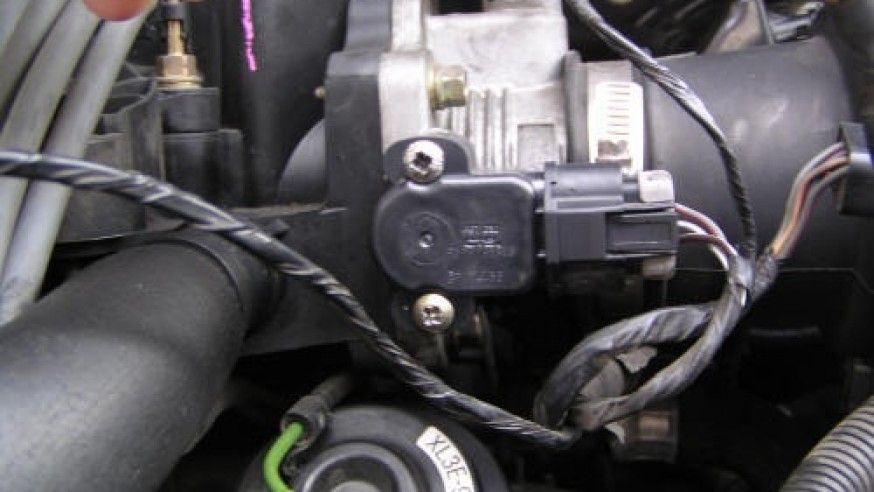
The Throttle Position Sensor (TPS) is an important component of a gasoline engine's electronic management system. Its main job is to monitor the position of the throttle plate and send this information to the Engine Control Unit (ECU).
The ECU uses throttle position information for several functions, including fuel injection, ignition timing, idle control, acceleration response, and, in some vehicles, automatic transmission shift control.
When the TPS develops a fault, the engine may respond incorrectly to accelerator input. Depending on the vehicle and the type of failure, symptoms can range from unstable idle and hesitation to significant power loss and reduced-power mode.
It is also important to remember that a TPS-related fault code does not automatically mean that the sensor itself is defective. Wiring, connectors, power supply, ground connections, the electronic throttle body, accelerator pedal sensors, or the ECU can cause similar problems.
What Does the Throttle Position Sensor Do?
The throttle controls the amount of air entering the engine.
When the driver presses the accelerator pedal, the engine management system determines how much throttle opening is required.
In older mechanical throttle systems, the accelerator pedal was directly connected to the throttle plate. Modern vehicles commonly use electronic throttle control, where the ECU receives information from the accelerator pedal sensors and controls an electric throttle motor.
The TPS tells the ECU where the throttle plate actually is.
This distinction is important because the throttle position sensor and accelerator pedal position sensor are not the same component.
In many modern electronic throttle bodies, the throttle position sensors are integrated into the throttle body assembly.
Common Symptoms of a Bad Throttle Position Sensor
A failing TPS can produce different symptoms depending on whether its signal is inaccurate, intermittent, or completely lost.
Poor or Delayed Throttle Response
One of the most noticeable symptoms is poor response when pressing the accelerator.
The driver may press the pedal but experience a delay before the engine responds. In more severe cases, the engine may respond very little or not respond normally at all.
An intermittent TPS signal can make throttle response feel inconsistent, with the vehicle accelerating normally one moment and hesitating the next.
Rough or Unstable Idle
A faulty throttle position signal can interfere with idle control.
The engine may idle at an unusually high or low RPM, or the RPM may repeatedly rise and fall.
However, an unstable idle does not automatically indicate a TPS problem. Vacuum leaks, a dirty throttle body, MAF or MAP sensor problems, fuel-delivery issues, and other engine-management faults can cause similar symptoms.
Hesitation and Jerking During Acceleration
If the TPS signal suddenly changes or contains an interruption, the ECU may receive incorrect information about throttle opening.
This can result in:
-
Hesitation
-
Jerking
-
Poor acceleration
-
Intermittent misfires
-
Inconsistent throttle response
The problem may be particularly noticeable when the accelerator is pressed quickly.
Loss of Engine Power
A defective throttle position signal can cause the ECU to limit engine output.
The vehicle may feel significantly weaker, particularly during acceleration, hill climbing, or higher engine speeds.
On electronically controlled throttle systems, the ECU may deliberately reduce throttle operation when it detects a serious disagreement between the accelerator pedal position and actual throttle position.
Reduced-Power or Limp Mode
Modern vehicles have safety strategies designed to prevent uncontrolled throttle operation.
If the ECU determines that the throttle position signal is unreliable, it may enter a reduced-power or limp mode.
Possible symptoms include:
-
Very limited acceleration
-
Poor throttle response
-
Difficulty increasing engine RPM
-
Electronic throttle warning
-
Check engine light
-
Reduced engine power
The exact behavior varies considerably between manufacturers and engine-management systems.
Increased Fuel Consumption
Incorrect throttle-position information can affect fuel and air calculations.
In some cases, this may result in increased fuel consumption.
However, poor fuel economy is not sufficient to diagnose a TPS problem. Faulty oxygen sensors, MAF sensors, MAP sensors, injectors, fuel pressure, thermostat problems, and other faults can also increase fuel consumption.
Check Engine Light
A TPS or electronic throttle problem can trigger the check engine light.
Depending on the vehicle, diagnostic trouble codes may relate to throttle position, throttle control, or accelerator pedal position.
Some commonly associated OBD-II codes include:
-
P0120 – Throttle/Pedal Position Sensor/Switch A Circuit
-
P0121 – Throttle/Pedal Position Sensor/Switch A Circuit Range/Performance
-
P0122 – Throttle/Pedal Position Sensor/Switch A Circuit Low Input
-
P0123 – Throttle/Pedal Position Sensor/Switch A Circuit High Input
-
P0124 – Throttle/Pedal Position Sensor/Switch A Circuit Intermittent
The exact code definitions and diagnostic procedures can vary by manufacturer.
Most importantly, a code mentioning the throttle position sensor does not automatically prove that the sensor needs to be replaced.
How Can You Tell If the TPS Is Faulty?
The most reliable approach is to monitor the sensor signal and compare it with expected values.
A diagnostic scan tool can often display throttle position data and, on electronic throttle systems, accelerator pedal position data as well.
As the accelerator is operated gradually, the throttle position value should generally change smoothly and consistently.
Problems may appear as:
-
Sudden jumps in sensor readings
-
Unexpected drops
-
Signal interruptions
-
Implausible throttle positions
-
A reading that becomes abnormal at a particular throttle angle
-
A mismatch between commanded and actual throttle position
Intermittent faults can be particularly difficult to diagnose because the sensor may operate normally most of the time.
Can a TPS Be Tested With a Multimeter?
Some throttle position sensors can be tested with a multimeter.
Depending on the sensor design, a technician may check:
-
Reference voltage
-
Ground
-
Signal voltage
-
Continuity
-
Changes in signal voltage as the throttle moves
The signal should behave consistently according to the manufacturer's specifications.
However, there is no universal TPS voltage range that applies to every vehicle.
Modern electronic throttle bodies can also use dual-channel position sensors and more sophisticated signal strategies. Therefore, generic voltage values found online should not be used as the only basis for diagnosing a specific vehicle.
Is the TPS Faulty, or Is the Throttle Body Faulty?
This is an important distinction.
On many modern vehicles, the throttle position sensors are integrated into the electronic throttle body.
As a result, a problem involving the throttle position signal may actually be caused by:
-
The TPS itself
-
Throttle body motor
-
Throttle plate mechanism
-
Throttle body connector
-
Wiring harness
-
Power supply
-
Ground connection
-
ECU control circuit
-
Accelerator pedal position sensor
Because several components work together, replacing the complete throttle body solely because a TPS-related fault code is stored can result in unnecessary expense.
Is the Accelerator Pedal Sensor the Same as the TPS?
No.
The accelerator pedal position sensor measures how far the driver is pressing the accelerator pedal.
The TPS measures the actual position of the throttle plate.
In an electronic throttle control system, the ECU can compare these signals.
For example, if the driver requests acceleration through the pedal but the throttle does not move to the expected position, the ECU may detect an inconsistency.
This means that a throttle-related problem can sometimes originate from the accelerator pedal sensor or wiring rather than the throttle position sensor itself.
Other Problems That Can Look Like a TPS Failure
Several other faults can produce symptoms similar to a defective throttle position sensor.
These include:
-
Dirty throttle body
-
Throttle body motor failure
-
Accelerator pedal position sensor
-
MAF sensor
-
MAP sensor
-
Vacuum leak
-
Intake manifold leak
-
Fuel pressure problems
-
Injector problems
-
Wiring or connector faults
-
ECU power or ground problems
-
Throttle body adaptation issues
-
Damaged or contaminated electrical connections
This is why a complete diagnostic process is more reliable than replacing parts based only on symptoms.
Does a Throttle Body Need to Be Relearned After Cleaning?
Some vehicles require a throttle body adaptation or relearn procedure after the throttle body has been cleaned, removed, or replaced.
Whether this procedure is required depends on the vehicle and engine-management system.
If an adaptation procedure is required but not performed, the vehicle may experience:
-
Unstable idle
-
Poor throttle response
-
Incorrect throttle position readings
-
Check engine light
-
Reduced-power operation
If a new problem appears immediately after throttle body service, the throttle body installation, connector, wiring, mechanical movement, and required adaptation procedure should all be checked before assuming that the TPS has failed.
Can You Drive With a Bad TPS?
It depends on the severity of the problem.
If the vehicle continues to operate normally but the check engine light is on, it should still be diagnosed as soon as possible.
However, driving becomes more concerning if the vehicle:
-
Suddenly loses throttle response
-
Enters reduced-power mode
-
Hesitates severely
-
Cannot accelerate normally
-
Loses power unexpectedly in traffic
A sudden loss of throttle response can create a safety risk, particularly during merging, overtaking, or climbing steep roads.
How Should a TPS Problem Be Diagnosed?
A systematic diagnostic procedure is usually more effective than replacing the sensor immediately.
A technician may:
-
Read stored and pending OBD-II fault codes.
-
Check freeze-frame data.
-
Monitor throttle position and accelerator pedal position with a scan tool.
-
Look for sudden signal jumps or interruptions.
-
Inspect the throttle body connector and wiring.
-
Check power and ground circuits.
-
Verify the throttle plate moves correctly.
-
Perform throttle body adaptation if required.
-
Check related sensors and engine-management data.
-
Replace the TPS or throttle body only after the test results support that diagnosis.
The Most Common Signs of TPS Failure
The main symptoms that can be associated with a failing throttle position sensor include:
-
Delayed throttle response
-
Hesitation during acceleration
-
Jerking or surging
-
Rough or unstable idle
-
Loss of engine power
-
Reduced-power or limp mode
-
Difficulty increasing engine RPM
-
Increased fuel consumption
-
Check engine light
-
Throttle or accelerator pedal-related fault codes
-
Sudden jumps or interruptions in throttle position data
These symptoms can point toward a throttle position problem, but they do not automatically prove that the TPS itself is defective.
In modern electronic throttle systems, the TPS, accelerator pedal sensors, throttle motor, wiring, connectors, power supply, and ECU all work together. A proper diagnosis should therefore evaluate the entire system before expensive components are replaced.
This approach not only improves the chances of finding the actual fault but also prevents unnecessary replacement of an otherwise healthy throttle body or sensor.