TR
TR EN
EN

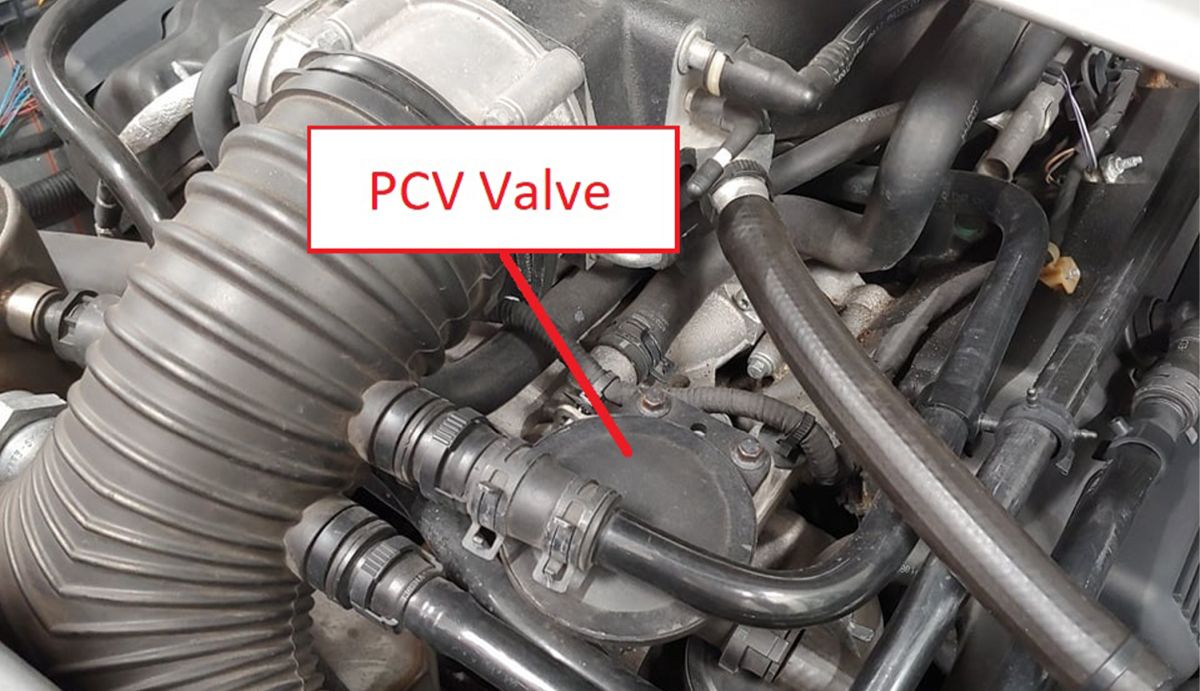
PCV Valve: What Is It? What Are the Symptoms of Failure?
The PCV valve is an important part of the engine crankcase ventilation system. PCV stands for Positive Crankcase Ventilation. Its main purpose is to control and redirect gases that accumulate inside the engine crankcase back into the intake system, where they can be burned in the engine instead of being released into the atmosphere.
Although the PCV valve is a relatively small component, a malfunction can affect engine idle quality, fuel consumption, oil consumption, emissions, and overall engine operation.
A PCV problem can also be misleading because its symptoms can resemble vacuum leaks, intake leaks, ignition problems, injector faults, or even engine mechanical problems.
What Does a PCV Valve Do?
During normal engine operation, a small amount of combustion gas escapes past the piston rings and enters the crankcase. This is known as blow-by gas.
Blow-by contains combustion products, unburned fuel vapors, water vapor, and oil vapors. If these gases were allowed to remain inside the crankcase, they could increase pressure and contribute to sludge formation, oil contamination, and seal problems.

The PCV system removes these gases from the crankcase and routes them back into the engine intake.
The basic process is:
Combustion → Blow-by gases enter crankcase → PCV system removes gases → Vapors enter intake → Engine burns them
The PCV valve helps regulate this flow according to engine operating conditions.
How Does a PCV Valve Work?
The exact design varies between engines, but a traditional PCV valve generally uses a spring-loaded valve mechanism.
At idle, intake manifold vacuum is relatively high. The valve restricts the amount of crankcase vapor entering the intake so that excessive air does not enter the engine.
When the engine is under load and manifold vacuum decreases, the valve can allow greater crankcase ventilation flow.
During conditions such as acceleration or high engine load, the ventilation path may operate differently depending on the engine design.
Modern vehicles may use more sophisticated crankcase ventilation systems that include:
-
PCV valves
-
Crankcase ventilation diaphragms
-
Oil separators
-
Breather passages
-
Check valves
-
Ventilation hoses
-
Pressure regulators
-
Integrated components inside the valve cover
For this reason, not every modern engine has a simple, removable PCV valve.
Where Is the PCV Valve Located?
The PCV valve is commonly installed on or near the engine valve cover, cylinder head, or crankcase ventilation system.
It may be connected to the intake manifold through a hose.
Depending on the engine design, the PCV system can include an integrated valve or diaphragm inside the valve cover or another ventilation assembly.
Common locations include:
-
Valve cover
-
Cylinder head
-
Crankcase ventilation housing
-
Intake manifold area
-
PCV hose between the engine and intake
The exact location should always be confirmed for the specific engine.
What Are the Symptoms of a Bad PCV Valve?
A faulty PCV valve can produce several different symptoms depending on whether it is stuck open, stuck closed, leaking, or whether another part of the ventilation system has failed.
Common symptoms include:
-
Rough or unstable idle
-
High idle speed
-
Engine hesitation
-
Poor acceleration
-
Increased oil consumption
-
Oil leaks
-
Whistling or hissing noises
-
Excessive crankcase pressure
-
Smoke from the exhaust
-
Oil contamination
-
Check Engine Light
-
Lean mixture fault codes
-
Misfire codes
-
Increased fuel consumption
-
Difficulty starting
-
Engine performance problems
The symptoms can vary considerably between different engines.
What Happens If the PCV Valve Gets Stuck Open?
A PCV valve stuck in the open position can allow too much air and crankcase vapor to enter the intake.
On engines where the PCV flow enters a vacuum-controlled intake path, this can effectively create an uncontrolled or excessive air path.
The result may include:
-
Rough idle
-
High idle
-
Lean air-fuel mixture
-
Engine hesitation
-
Stalling
-
Misfires
-
Increased oil vapor entering the intake
-
Check Engine Light
A stuck-open PCV valve can therefore behave similarly to a vacuum leak.
This is why replacing ignition components or injectors without checking the crankcase ventilation system may not solve the problem.
What Happens If the PCV Valve Gets Stuck Closed?
A stuck-closed PCV valve can prevent crankcase gases from being properly evacuated.
Pressure can then build up inside the crankcase.
Possible consequences include:
-
Oil leaks
-
Oil being forced past seals
-
Increased oil consumption
-
Oil contamination
-
Pressure escaping through other ventilation paths
-
Oil mist entering areas where it should not
-
Gasket or seal problems
The exact symptoms depend on the design of the crankcase ventilation system.
A closed PCV valve does not necessarily cause an immediate dramatic engine-performance problem. In some cases, the first noticeable symptom may be an oil leak or excessive crankcase pressure.
Can a Bad PCV Valve Cause an Oil Leak?
Yes, particularly when the PCV system becomes restricted or the valve is stuck closed.
The crankcase naturally experiences pressure changes during engine operation. If the ventilation system cannot properly control and remove blow-by gases, crankcase pressure can increase.
Excessive pressure may force engine oil past seals and gaskets.
However, an oil leak does not automatically mean the PCV valve is faulty.
Oil leaks can also be caused by:
-
Worn crankshaft seals
-
Valve cover gasket failure
-
Oil pan gasket problems
-
Camshaft seals
-
Turbocharger-related problems
-
Damaged hoses
-
Excessive engine wear
The PCV system should therefore be tested rather than assumed to be the cause.
Can a PCV Valve Cause High Idle?
Yes.
If a PCV valve or its associated hose allows excessive uncontrolled airflow into the intake, the engine may receive more air than expected.
The engine control system may detect this as a lean condition and attempt to compensate by adding fuel.
Depending on the engine, this can result in:
-
High idle
-
Unstable idle
-
Lean mixture codes
-
Stalling
-
Hesitation
However, a high idle can also be caused by a conventional vacuum leak, throttle-body problems, an intake leak, or sensor issues.
Can a PCV Valve Cause Rough Idle?
Yes. Rough idle is one of the symptoms that can occur when the PCV system is not operating correctly.
The effect is often more noticeable at idle because intake vacuum is relatively high and a leak or excessive PCV flow can have a greater influence on the air-fuel mixture.
The engine may feel as though it has:
-
A vacuum leak
-
An ignition misfire
-
An injector problem
-
An unstable fuel mixture
This is why the PCV system should be included in the diagnostic process when an engine has unexplained idle problems.
Can a Bad PCV Valve Cause Misfires?
It can contribute to misfires, particularly if a stuck-open PCV valve creates an excessive air leak and causes the mixture to become too lean.
In some cases, the ECU may store misfire codes such as:
-
P0300
-
P0301
-
P0302
-
P0303
-
P0304
depending on the number of cylinders and vehicle configuration.
However, a misfire code does not prove that the PCV valve is defective.
Spark plugs, ignition coils, injectors, compression, fuel pressure, intake leaks, and other engine-management components must also be considered.
Can a PCV Valve Cause Check Engine Light?
Yes.
Modern engine control systems can detect the effects of abnormal crankcase ventilation through fuel-trim and air-fuel mixture monitoring.
A faulty PCV system may contribute to codes associated with:
-
Lean mixture
-
Air leaks
-
Misfires
-
Crankcase pressure
-
Evaporative or intake-related faults
Codes such as P0171 or P0174 may sometimes be associated with an air leak caused by the PCV system, but the code itself does not identify the PCV valve as the failed component.
A vacuum leak elsewhere in the intake system can create exactly the same type of code.
Can a Bad PCV Valve Increase Oil Consumption?
Yes.
A malfunctioning PCV system can contribute to increased oil consumption.
If excessive crankcase vapors and oil mist are pulled into the intake, more oil can enter the combustion process.
A faulty PCV system can therefore contribute to:
-
Increased oil consumption
-
Oil residue in intake components
-
Oil deposits
-
Blue exhaust smoke in some situations
However, significant oil consumption should never automatically be blamed on the PCV valve.
Other possible causes include:
-
Worn piston rings
-
Valve stem seals
-
Turbocharger seal problems
-
Cylinder wear
-
Excessive blow-by
-
Incorrect oil viscosity
-
External oil leaks
What Causes a PCV Valve to Fail?
PCV components operate in a harsh environment and can eventually deteriorate.
Common causes include:
Oil contamination
The PCV system handles oil vapor and crankcase gases continuously. Deposits can eventually restrict the valve or ventilation passages.
Carbon and sludge deposits
Engine deposits can interfere with valve movement and reduce ventilation flow.
Diaphragm deterioration
Some modern PCV systems use a flexible diaphragm. The diaphragm can become brittle, cracked, or torn with age.
Heat
The PCV system operates close to the engine and is exposed to high temperatures for long periods.
Damaged hoses
A cracked or collapsed ventilation hose can create symptoms similar to a faulty PCV valve.
Incorrect maintenance
Poor oil quality, extended oil-change intervals, or severe sludge formation can accelerate PCV-system problems.
How Do You Test a PCV Valve?
Testing depends heavily on the engine design.
On some traditional systems, the valve can be removed and mechanically checked for movement or abnormal blockage. However, simply shaking a PCV valve and listening for a clicking sound is not a reliable diagnosis for every design.
A proper diagnostic process can include:
-
Visual inspection
-
Checking PCV hoses
-
Inspecting the valve and connections
-
Checking for cracks or collapsed hoses
-
Measuring crankcase pressure or vacuum
-
Checking fuel-trim values
-
Looking for lean-condition codes
-
Inspecting intake vacuum
-
Checking live engine data
-
Comparing the measured condition with manufacturer specifications
On modern engines, the PCV system may be integrated into the valve cover or another assembly. In these cases, replacing an individual valve may not even be possible.
Can You Test a PCV Valve With a Multimeter?
Usually, a traditional mechanical PCV valve cannot be properly tested with a multimeter because it is not an electrical component.
A multimeter can be useful if the vehicle uses an electronically controlled crankcase ventilation component or an electrically monitored pressure sensor.
In such systems, electrical testing may include:
-
Power supply
-
Ground
-
Signal
-
Resistance
-
Wiring continuity
-
Connector condition
The correct specifications depend on the particular vehicle.
A normal electrical reading does not automatically prove that the mechanical ventilation system is functioning correctly.
Can You Clean a PCV Valve?
Cleaning may help in some cases if the problem is caused by deposits or contamination and the component is designed to be serviced.
However, cleaning cannot repair:
-
A broken spring
-
A damaged diaphragm
-
A cracked valve
-
A failed internal mechanism
-
A damaged hose
-
Severe internal wear
Some PCV valves are inexpensive enough that replacement is more appropriate than attempting to clean them.
If the PCV system is integrated into the valve cover, the correct repair may involve replacing the complete ventilation assembly rather than cleaning a separate valve.
PCV Valve vs. PCV Hose
The PCV valve and PCV hose are not the same component.
The PCV valve controls or regulates crankcase ventilation flow, while the hose provides the passage through which gases travel.
A cracked hose can act like a vacuum leak.
A blocked hose can prevent proper crankcase ventilation.
Therefore, replacing the PCV valve without inspecting the hoses may leave the actual problem unresolved.
PCV Valve vs. Breather Valve
These terms can sometimes be used differently by manufacturers.
The PCV side generally controls the removal of crankcase gases into the intake, while a breather or fresh-air path allows clean air to enter the crankcase ventilation system.
Modern systems can combine several functions into an integrated oil-separation and ventilation assembly.
Because terminology varies between manufacturers, the actual engine design should be checked before diagnosing a component based solely on its name.
Can a Bad PCV Valve Damage the Engine?
A faulty PCV valve does not normally destroy an engine immediately.
However, prolonged crankcase ventilation problems can contribute to more serious issues.
A restricted system can allow excessive crankcase pressure to develop, potentially causing oil leaks and forcing oil through seals.
An incorrectly functioning system can also increase oil consumption and oil contamination.
If the engine is consuming a significant amount of oil, the problem should not be ignored because low engine oil level can eventually cause serious engine damage.
Does Every Car Have a PCV Valve?
Most modern internal-combustion engines have some form of positive crankcase ventilation system, but not every engine uses a simple, standalone PCV valve.
Some systems use:
-
A conventional PCV valve
-
A diaphragm-type regulator
-
An integrated valve cover assembly
-
An oil separator
-
Multiple ventilation valves
-
Electrically controlled components
Diesel engines can also have crankcase ventilation systems, although their design differs from many gasoline engines.
Is a PCV Valve the Same as an EGR Valve?
No.
The two systems perform completely different functions.
The PCV system manages crankcase gases produced inside the engine.
The EGR system redirects a controlled amount of exhaust gas back into the intake to reduce combustion temperatures and nitrogen oxide emissions.
Although both systems can influence emissions and intake conditions, they should not be confused with each other.
Is It Safe to Drive With a Bad PCV Valve?
It depends on the severity of the problem.
A mild PCV fault may allow the vehicle to continue operating for some time, but it should still be diagnosed and repaired.
Driving should be avoided if the engine has:
-
Severe oil leakage
-
Rapid oil consumption
-
Heavy blue smoke
-
Significant crankcase pressure
-
Severe misfires
-
Very unstable idle
-
Warning lights accompanied by major engine-performance problems
If the oil level is dropping rapidly, continuing to drive can result in serious engine damage.
Final Thoughts
The PCV valve is a small but important part of the engine's crankcase ventilation system. It controls the removal of blow-by gases from the crankcase and routes them back into the intake so they can be burned by the engine.
A faulty PCV valve can cause rough idle, high idle, hesitation, lean mixture problems, misfires, oil leaks, increased oil consumption, whistling noises, and Check Engine Light warnings.
However, these symptoms are not unique to the PCV system. Vacuum leaks, damaged hoses, throttle-body problems, ignition faults, injector problems, worn engine components, and other intake-system issues can produce similar symptoms.
For that reason, a PCV-related fault should be diagnosed by examining the entire crankcase ventilation system rather than simply replacing the valve. On modern engines, it is particularly important to determine whether the PCV valve is a separate serviceable component or part of an integrated valve-cover or oil-separation assembly.