TR
TR EN
EN

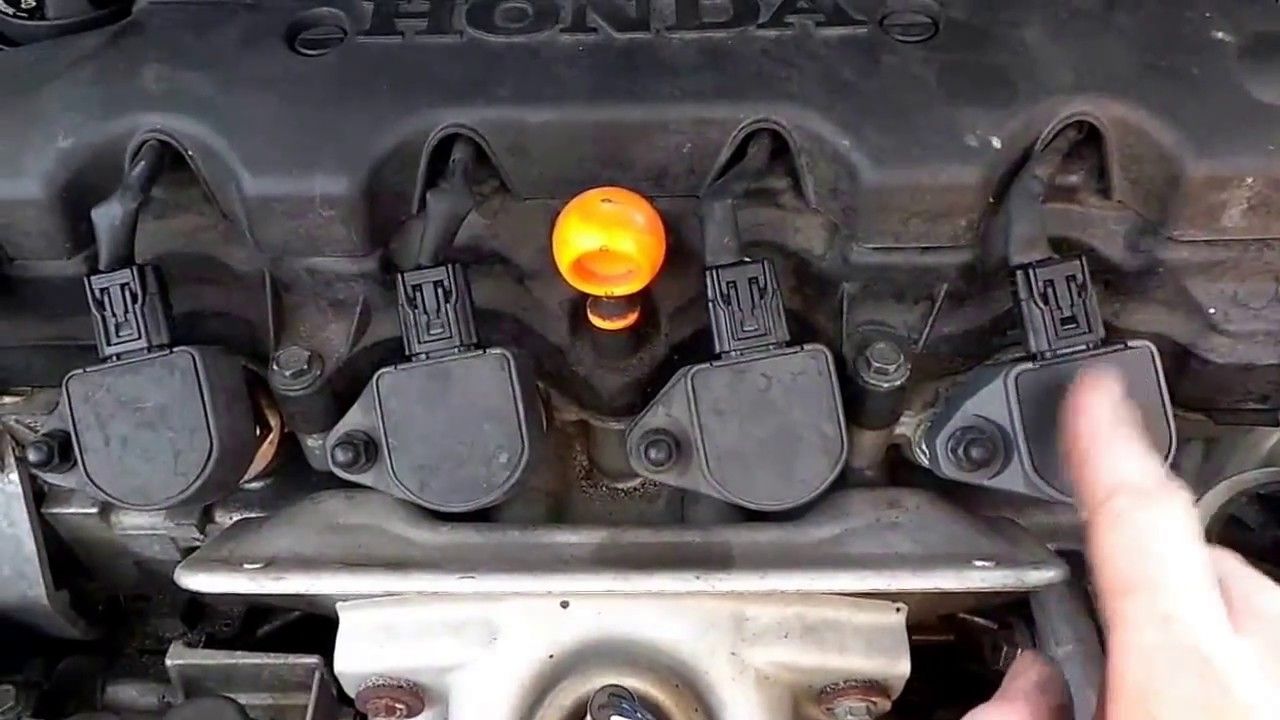
What Is an Ignition Coil? What Are the Symptoms of Ignition Coil Failure?
The ignition coil is one of the most important components of a gasoline engine's ignition system. Its main job is to convert the vehicle's relatively low battery voltage into the much higher voltage required to create a spark at the spark plug.
When the ignition coil works correctly, the spark plug produces a strong and properly timed spark, allowing the air-fuel mixture inside the cylinder to ignite efficiently. If the coil becomes weak or fails completely, the engine may begin to misfire, lose power, consume more fuel, or become difficult to start.
Ignition coil problems are particularly common in modern gasoline engines because many vehicles use individual ignition coils mounted directly on the spark plugs.
How Does an Ignition Coil Work?

An ignition coil is essentially a transformer consisting of two main windings: the primary winding and the secondary winding.
The engine control system sends an electrical signal to the primary side of the coil. This creates a magnetic field. When the current is interrupted, the magnetic field collapses rapidly and induces a much higher voltage in the secondary winding.
That high voltage is then delivered to the spark plug, where it jumps across the spark plug gap and creates the spark needed for combustion.
The exact voltage varies depending on the engine and ignition system, but it can reach tens of thousands of volts.
Because the ignition coil is responsible for generating this high-voltage spark, even a relatively small internal fault can cause noticeable engine-running problems.
Different Types of Ignition Coils
Not all vehicles use the same ignition coil arrangement.
Coil-on-Plug (COP)
Many modern engines use one ignition coil for each cylinder. The coil is installed directly above the spark plug.
This arrangement eliminates the need for long high-voltage ignition wires and generally provides more precise ignition control.
Coil Pack
Some engines use a coil pack that supplies spark to multiple cylinders.
Depending on the design, one coil may serve two cylinders or several cylinders.
Distributor-Based Ignition Systems
Older gasoline engines may use a single ignition coil together with a distributor and high-voltage ignition wires.
These systems are less common in modern vehicles but are still found in older cars.
What Are the Symptoms of a Bad Ignition Coil?
Ignition coil failure can produce several different symptoms. The severity depends on whether the coil is completely dead or only becoming weak under certain operating conditions.
Engine Misfire
One of the most common symptoms is an engine misfire.
If an ignition coil cannot generate a sufficiently strong spark, the air-fuel mixture may not burn correctly in that cylinder.
The driver may notice:
-
Engine shaking
-
Jerking
-
Hesitation
-
Uneven acceleration
-
Rough running
-
A noticeable loss of smoothness
A misfire may be more obvious when the engine is under heavy load.
Rough Idle
A weak ignition coil can cause the engine to run unevenly at idle.
The engine may shake while stationary, and the RPM may fluctuate. In some cases, the vehicle may feel as though it is about to stall.
However, rough idle does not automatically mean that the ignition coil is faulty. Vacuum leaks, dirty injectors, spark plugs, sensors, compression problems, and other issues can produce similar symptoms.
Loss of Engine Power
A failing coil may not produce enough spark energy under all conditions.
The vehicle may feel relatively normal during gentle driving but lose power when accelerating hard, climbing a hill, or carrying a heavy load.
This happens because the ignition system has to work harder under certain engine operating conditions.
Poor Acceleration
If one or more cylinders begin misfiring during acceleration, the vehicle may hesitate or feel as though it is struggling to respond to the accelerator.
Some ignition coils may work normally at idle but fail when engine load and cylinder pressure increase.
This is one reason why an ignition coil problem can sometimes be difficult to reproduce during a simple stationary inspection.
Increased Fuel Consumption
A misfiring cylinder does not burn the fuel mixture properly.
As a result, fuel consumption can increase. The engine control system may also adjust fuel delivery in response to detected combustion problems.
A sudden increase in fuel consumption should therefore be investigated rather than automatically attributed to the ignition coil.
Check Engine Light
Ignition coil problems can trigger the check engine light.
If the engine control module detects a misfire, it may store a diagnostic trouble code such as:
-
P0300 – Random/Multiple Cylinder Misfire Detected
-
P0301 – Cylinder 1 Misfire Detected
-
P0302 – Cylinder 2 Misfire Detected
-
P0303 – Cylinder 3 Misfire Detected
-
P0304 – Cylinder 4 Misfire Detected
The exact codes depend on the vehicle and engine.
A cylinder-specific misfire code does not automatically prove that the ignition coil is defective. The spark plug, injector, wiring, compression, or other components may be responsible.
Hard Starting
A failed ignition coil can make the engine difficult to start.
If one coil has completely failed, the engine may still start on some engines, but it may run very poorly afterward.
If several ignition coils are affected, or if the ignition system has a common power or control problem, starting may become much more difficult.
Engine Stalling
In severe cases, ignition problems can cause the engine to stall.
This is particularly concerning when the engine loses ignition while driving. The vehicle may suddenly lose power and should be inspected as soon as possible.
Exhaust Smell and Unburned Fuel
When a cylinder misfires, some of the fuel may pass through the combustion chamber without being burned properly.
This can produce an unusual fuel smell from the exhaust.
Continuous misfiring should not be ignored because unburned fuel can damage the catalytic converter by causing excessive heat inside the exhaust system.
Can a Bad Ignition Coil Damage the Engine?
A faulty ignition coil does not normally destroy an engine immediately, but continuing to drive with a severe misfire can cause secondary damage.
One of the biggest concerns is the catalytic converter.
If unburned fuel reaches the catalytic converter, it can ignite inside the converter and cause excessive temperatures. Prolonged severe misfires can therefore turn a relatively simple ignition problem into a much more expensive exhaust-system repair.
If the check engine light is flashing, the engine is shaking severely, or the vehicle has a major loss of power, continuing to drive should generally be avoided until the cause is diagnosed.
Why Does an Ignition Coil Fail?
Ignition coils can fail for several different reasons.
Heat
Ignition coils operate in a hot environment. Continuous exposure to high temperatures can eventually damage the internal windings and insulation.
Age and wear
Like many electrical components, ignition coils can deteriorate over time.
Moisture
Water or moisture entering the coil or spark plug area can cause electrical leakage and misfires.
Oil contamination
On some engines, leaking valve cover or spark plug tube seals can allow engine oil to enter the spark plug wells.
Oil contamination can damage the ignition coil boot and create ignition problems.
Worn spark plugs
A spark plug with an excessive gap or incorrect condition can require more voltage from the ignition system.
This can place additional stress on the ignition coil.
Damaged wiring or connectors
A coil may appear to be defective when the real problem is a damaged connector, poor electrical connection, broken wire, or power supply problem.
How Can You Test an Ignition Coil?
A proper ignition coil diagnosis should involve more than simply looking at the component.
Read the diagnostic trouble codes
The first step is often to scan the engine control module.
Misfire codes can help identify which cylinder is affected.
Inspect the spark plugs
The spark plug should be inspected for:
-
Excessive wear
-
Incorrect gap
-
Cracks
-
Carbon deposits
-
Fuel fouling
-
Oil contamination
A defective spark plug can create symptoms that look exactly like a bad ignition coil.
Check the coil and wiring
The coil connector, wiring, power supply, and ground should be checked according to the manufacturer's specifications.
Physical damage, corrosion, loose terminals, and damaged insulation can all cause ignition problems.
Swap-test the coil
On engines where this diagnostic method is appropriate, a technician may move the suspected coil to another cylinder and monitor the misfire.
For example, if a misfire initially occurs on cylinder 2 and the coil from cylinder 2 is moved to cylinder 3, the fault can then be monitored.
If the misfire moves to cylinder 3, the ignition coil becomes a strong suspect.
This method should be performed carefully and is not appropriate for every ignition system.
Use live diagnostic data
Modern scan tools can display misfire counters and other engine data.
Monitoring the engine under different operating conditions can help determine whether the problem occurs at idle, during acceleration, under load, or at a particular RPM.
Use an oscilloscope when necessary
For difficult or intermittent faults, an oscilloscope can provide more detailed information about the ignition system's electrical signals.
This can help identify problems that may not be obvious with a basic scan tool or multimeter.
Can You Check an Ignition Coil With a Multimeter?
Sometimes, but a multimeter alone cannot always prove that an ignition coil is healthy.
Resistance measurements can identify certain open or shorted circuits, depending on the coil design and the manufacturer's specifications.
However, some coils can have acceptable resistance readings and still fail when exposed to heat, vibration, or high cylinder pressure.
For this reason, resistance testing should be considered only one part of the diagnostic process.
Bad Ignition Coil or Bad Spark Plug?
Ignition coils and spark plugs can produce very similar symptoms.
Both can cause:
-
Misfires
-
Rough idle
-
Poor acceleration
-
Loss of power
-
Increased fuel consumption
-
Check engine light
-
Hard starting
This is why replacing the ignition coil without checking the spark plug and other components can lead to unnecessary expense.
If a cylinder-specific misfire occurs, the correct approach is to test the ignition system systematically rather than replacing parts based only on symptoms.
Can a Bad Ignition Coil Cause a Misfire Only at High RPM?
Yes.
This is an important characteristic of some ignition coil failures.
A weak coil may produce enough voltage to ignite the mixture at idle or during light driving but fail when cylinder pressure increases.
As engine speed and load increase, the ignition system may need to operate under more demanding conditions.
As a result, a vehicle may drive normally under gentle acceleration but begin misfiring during:
-
Hard acceleration
-
High engine RPM
-
Uphill driving
-
Heavy loads
-
High boost pressure on turbocharged engines
This type of intermittent problem can make diagnosis more difficult.
Should You Replace All Ignition Coils at Once?
Not necessarily.
If one ignition coil has failed, it does not automatically mean that all of the other coils need to be replaced.
The decision depends on the vehicle, mileage, maintenance history, coil condition, and manufacturer's recommendations.
If several coils are showing similar symptoms or the vehicle has very high mileage, replacing a set may sometimes be considered, but replacing healthy coils simply because one has failed is not always necessary.
How Long Does an Ignition Coil Last?
There is no universal replacement interval for ignition coils.
Their service life depends on the engine design, operating temperature, driving conditions, electrical system, spark plugs, and component quality.
Some ignition coils can last for many years and well over 100,000 kilometers, while others may fail much earlier.
For this reason, ignition coils are generally replaced when they show verified signs of failure rather than at a fixed mileage interval.
Is It Safe to Drive With a Bad Ignition Coil?
If the vehicle has a mild and intermittent problem, it may still be possible to drive it to a repair facility.
However, a severe misfire should not be ignored.
If the check engine light is flashing, the engine is shaking heavily, power is significantly reduced, or the vehicle is producing unusual exhaust emissions, it is safer to stop driving and have the vehicle diagnosed.
Continuing to operate an engine with severe misfires can cause additional damage, particularly to the catalytic converter.
The Most Common Signs of Ignition Coil Failure
The main symptoms to watch for include:
-
Engine misfires
-
Rough idle
-
Engine shaking
-
Hesitation during acceleration
-
Loss of power
-
Increased fuel consumption
-
Hard starting
-
Engine stalling
-
Check engine light
-
Cylinder-specific misfire codes
-
Problems that become worse under load or at higher RPM
-
Unusual fuel smell from the exhaust
These symptoms can strongly suggest an ignition problem, but they are not enough by themselves to confirm a defective ignition coil.
The most reliable diagnosis combines fault-code information, misfire data, spark plug inspection, wiring checks, electrical measurements, and—when necessary—component swapping or oscilloscope testing.
A faulty ignition coil is often a relatively straightforward repair compared with major engine problems, but the key is identifying the actual cause before replacing parts.