TR
TR EN
EN

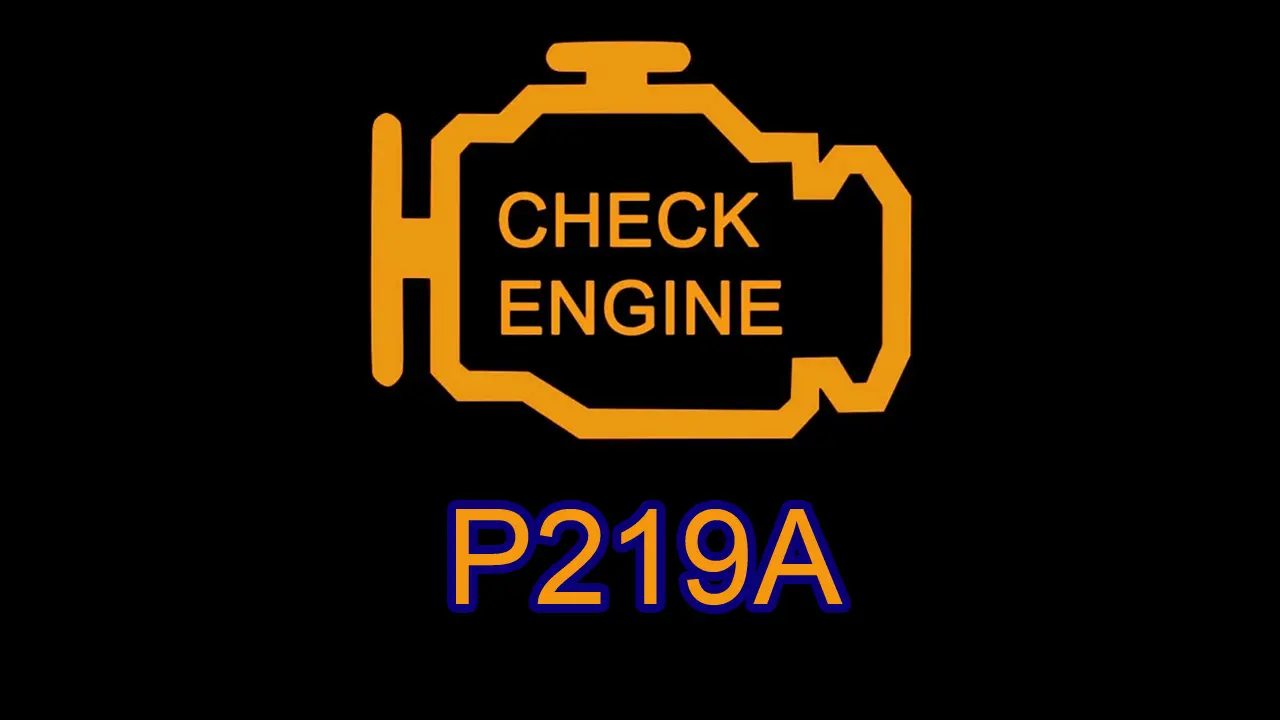
P219A Bank 1 Air/Fuel Ratio Imbalance
P219A Bank 1 Air/Fuel Ratio Imbalance is a generic OBD-II diagnostic trouble code that indicates the engine control module (ECM) has detected an imbalance in the air/fuel mixture among the cylinders on Bank 1 of the engine. Instead of all cylinders on that bank receiving and burning a consistent air/fuel mixture, one or more cylinders are operating either leaner or richer than the others.
Unlike general lean or rich fuel system codes, P219A does not necessarily mean the entire engine has an incorrect air/fuel ratio. Instead, it indicates that combustion is uneven between the cylinders on Bank 1, even if the average fuel mixture appears to be within normal limits.
If left unresolved, this imbalance can lead to rough engine operation, poor fuel economy, increased emissions, and even catalytic converter damage.
What Does P219A Bank 1 Air/Fuel Ratio Imbalance Mean?
Modern engine management systems constantly monitor combustion efficiency using oxygen sensors, crankshaft speed variations, fuel trims, and other sensor inputs.
When the ECM determines that the cylinders on Bank 1 are not producing balanced combustion, it stores trouble code P219A and usually turns on the Check Engine Light.
Bank 1 is the side of the engine that contains cylinder number one. On V-type engines, this code only applies to that specific bank.
P219A is commonly found on:
-
V6 engines
-
V8 engines
-
Direct injection gasoline engines
-
Turbocharged gasoline engines
-
Some hybrid gasoline engines
Inline four-cylinder engines generally have only one cylinder bank, so manufacturers may use different diagnostic strategies instead of Bank 1 and Bank 2 imbalance codes.
Common Symptoms of P219A
The symptoms vary depending on how severe the imbalance has become.
Typical symptoms include:
-
Check Engine Light illuminated
-
Rough idle
-
Engine vibration
-
Hesitation during acceleration
-
Reduced engine power
-
Poor throttle response
-
Slight engine misfires
-
Increased fuel consumption
-
Hard starting
-
Occasional engine stalling
-
Higher exhaust emissions
-
Failed emissions inspection
In some cases, the vehicle may drive normally except for the illuminated Check Engine Light.
Common Causes of P219A
Several fuel, air, ignition, and mechanical problems can cause this code.
Dirty or partially clogged fuel injectors
One or more injectors may not supply the correct amount of fuel, creating uneven combustion.
Vacuum leaks
Air entering through a damaged intake gasket or vacuum hose can make one or more cylinders run lean.
Common leak locations include:
-
Intake manifold gasket
-
Vacuum hoses
-
PCV valve and hoses
-
Intake manifold cracks
Dirty or faulty mass airflow (MAF) sensor
An inaccurate airflow reading can affect fuel delivery across the engine.
Faulty oxygen sensor
A malfunctioning upstream oxygen sensor on Bank 1 can provide incorrect feedback to the ECM.
Fuel pressure issues
Insufficient fuel pressure caused by:
-
Weak fuel pump
-
Restricted fuel filter
-
Faulty fuel pressure regulator
may result in uneven injector performance.
Carbon buildup
Gasoline direct injection (GDI) engines commonly develop carbon deposits on intake valves, restricting airflow to certain cylinders.
Ignition system faults
Weak spark can produce symptoms similar to an air/fuel imbalance.
Potential causes include:
-
Worn spark plugs
-
Failing ignition coils
-
Damaged ignition wires (if equipped)
Mechanical engine problems
Internal engine issues may affect combustion consistency.
Examples include:
-
Low compression
-
Burned valves
-
Worn piston rings
-
Head gasket leakage
Exhaust leaks
Leaks before the upstream oxygen sensor can introduce outside air and produce inaccurate oxygen sensor readings.
Vehicles Commonly Affected by P219A
P219A is a generic OBD-II code and can appear on many manufacturers.
It is frequently reported on:
-
Ford F-150
-
Ford Explorer
-
Ford Expedition
-
Ford Mustang
-
Chevrolet Silverado
-
GMC Sierra
-
Chevrolet Tahoe
-
Cadillac Escalade
-
Jeep Grand Cherokee
-
Ram 1500
-
Dodge Durango
-
Toyota Tundra
-
Toyota Sequoia
-
Lexus GX
-
Nissan Titan
-
Infiniti QX80
-
BMW X5
-
Mercedes-Benz GLS
-
Audi Q7
-
Volkswagen Touareg
The code is especially common on high-mileage direct injection gasoline engines.
How Is P219A Diagnosed?
Diagnosing P219A requires identifying why combustion differs between cylinders rather than replacing parts at random.
Check for additional trouble codes
Related codes may include:
-
Engine misfire codes
-
Fuel trim codes
-
Oxygen sensor faults
-
MAF sensor codes
-
Fuel injector circuit codes
These additional codes often help identify the underlying issue.
Review live data
Using a professional scan tool, technicians compare:
-
Short-Term Fuel Trim (STFT)
-
Long-Term Fuel Trim (LTFT)
-
Oxygen sensor activity
-
Misfire counters
-
Injector balance data
Abnormal values on Bank 1 can narrow the diagnosis.
Inspect for vacuum leaks
Smoke testing is commonly used to locate leaks around:
-
Intake manifold
-
Vacuum hoses
-
PCV system
Test fuel injectors
Injector balance testing determines whether each injector is delivering the proper amount of fuel.
Measure fuel pressure
Fuel pressure should be tested under different operating conditions to ensure the fuel system is functioning correctly.
Inspect ignition components
Spark plugs and ignition coils should be examined for wear, fouling, or damage.
Perform a compression test
Mechanical engine problems should always be ruled out if fuel and ignition systems appear to be operating correctly.
How to Fix P219A
The appropriate repair depends on the root cause identified during diagnosis.
Common repairs include:
-
Cleaning clogged fuel injectors
-
Replacing faulty injectors
-
Repairing vacuum leaks
-
Replacing intake manifold gaskets
-
Cleaning or replacing the MAF sensor
-
Replacing faulty oxygen sensors
-
Installing new spark plugs
-
Replacing defective ignition coils
-
Repairing exhaust leaks
-
Removing carbon buildup from intake valves
-
Repairing fuel pressure problems
-
Correcting engine compression issues
-
Updating ECM software if recommended by the manufacturer
Simply clearing the diagnostic code without repairing the underlying problem will usually result in the code returning.
Can You Drive With P219A?
Although many vehicles remain drivable with P219A, continued operation is not recommended.
Driving with an air/fuel imbalance may eventually cause:
-
Catalytic converter damage
-
Increased emissions
-
Reduced engine performance
-
Engine misfires
-
Poor fuel economy
-
Additional engine wear
If the Check Engine Light begins flashing or the engine runs very rough, the vehicle should be repaired as soon as possible.
Is P219A a Serious Code?
Yes. P219A is considered a moderately serious diagnostic code because it indicates uneven combustion within Bank 1.
If ignored for an extended period, it can increase wear on several expensive engine components, including:
-
Catalytic converters
-
Oxygen sensors
-
Spark plugs
-
Ignition coils
-
Pistons and valves in severe cases
Prompt diagnosis can prevent more extensive engine damage.
How to Prevent P219A
Routine maintenance significantly reduces the likelihood of this code occurring.
Recommended maintenance includes:
-
Replace spark plugs according to the manufacturer's schedule.
-
Use high-quality fuel.
-
Clean fuel injectors periodically.
-
Replace dirty engine air filters.
-
Clean the MAF sensor when needed.
-
Repair vacuum leaks promptly.
-
Maintain the fuel system regularly.
-
Address engine misfires immediately.
-
Perform routine engine inspections.
Keeping the fuel, ignition, and air intake systems in good condition helps maintain balanced combustion across all cylinders.
Final Thoughts
P219A Bank 1 Air/Fuel Ratio Imbalance indicates that the cylinders on Bank 1 are not burning the air/fuel mixture evenly. The problem may originate from dirty fuel injectors, vacuum leaks, ignition issues, airflow measurement errors, carbon buildup, or internal engine faults. Because this code identifies an imbalance rather than a single failed component, thorough diagnosis is essential before replacing parts.
Correcting the underlying cause restores smooth engine performance, improves fuel efficiency, lowers emissions, and helps prevent long-term damage to critical components such as the catalytic converter and oxygen sensors.