TR
TR EN
EN

What Is Antifreeze? How Is It Used?
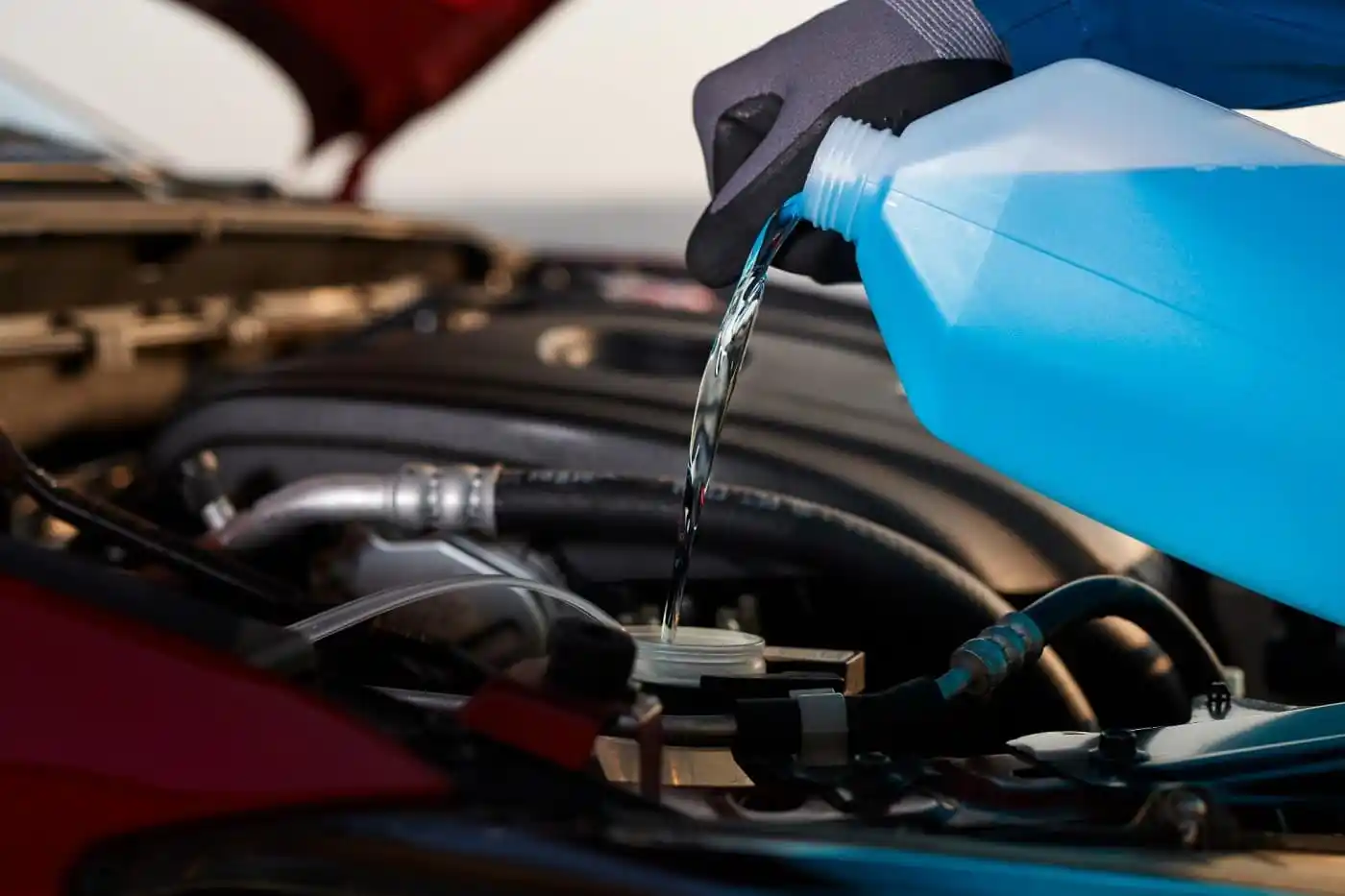
Antifreeze is a special fluid used in a vehicle's engine cooling system to prevent the coolant from freezing at low temperatures. However, preventing freezing is not its only purpose.
The correct antifreeze also helps protect the cooling system against corrosion, raises the coolant's boiling point, and helps the engine operate safely across a wide range of temperatures.
For this reason, antifreeze is an important part of regular vehicle maintenance, especially in modern engines.
What Does Antifreeze Do?
When an engine is running, combustion produces a very large amount of heat. The cooling system removes much of this heat.
Coolant circulates through passages in the engine block and cylinder head, absorbs heat, and transfers it to the radiator, where the heat is released into the surrounding air.
Antifreeze performs several important functions within this system:
-
Lowers the freezing point of the coolant.
-
Helps raise the boiling point.
-
Helps protect metal components against corrosion.
-
Helps protect the water pump and other cooling-system components.
-
Helps maintain stable cooling-system performance under changing temperatures.
Therefore, antifreeze should not be considered simply a "winter fluid." The correct coolant is part of the engine's cooling system throughout the year.
How Does Antifreeze Work?
Most automotive antifreeze products are based on chemicals such as ethylene glycol or propylene glycol.
When these substances are mixed with water, they change the freezing and boiling characteristics of the resulting coolant.
Plain water can freeze at temperatures below 0°C. A properly formulated mixture of antifreeze and water can remain resistant to freezing at significantly lower temperatures.
However, an important point should be remembered:
Using more antifreeze does not always provide better protection.
The correct mixture depends on the antifreeze product and the vehicle manufacturer's recommendations.
Can Antifreeze Be Used Undiluted?
In many cases, concentrated antifreeze is designed to be mixed with water rather than used directly.
A mixture of approximately 50% antifreeze and 50% suitable water is common in many automotive applications. However, this should not automatically be considered the correct ratio for every vehicle or every antifreeze product.
Some products are sold as premixed, ready-to-use coolant and should not be diluted further.
Always check the product instructions and the vehicle manufacturer's specifications before adding or mixing coolant.
Why Is Antifreeze Mixed With Water?
Water is an effective heat-transfer medium, while antifreeze changes the freezing and boiling characteristics of the coolant and provides corrosion protection through its additive package.
A properly prepared antifreeze-water mixture can therefore provide better overall cooling-system protection than using either plain water or concentrated antifreeze alone.
Using the wrong ratio can result in:
-
Insufficient freeze protection
-
Less effective heat transfer
-
Changes in cooling-system performance
-
Inadequate corrosion protection
The goal is not to use as much antifreeze as possible. The goal is to use the correct coolant mixture.
What Type of Water Should Be Used?
The water used to prepare coolant can also be important.
Tap water can contain minerals and dissolved substances, particularly in areas with hard water. Over time, these minerals can contribute to deposits and contamination inside the cooling system.
For this reason, depending on the vehicle manufacturer's recommendation, demineralized, deionized, or otherwise suitable purified water may be preferred.
The best approach is to follow the coolant requirements specified for the particular vehicle.
What Do Antifreeze Colors Mean?
Antifreeze products are available in many colors, including red, pink, blue, green, yellow, and orange.
However, color alone does not reliably identify the coolant technology or compatibility.
Two coolants with the same color can have different chemical formulations, while products with different colors may sometimes have similar characteristics.
When choosing antifreeze, pay attention to:
-
Manufacturer specifications
-
Coolant technology
-
Vehicle manufacturer approval
-
Required standards
-
Compatibility with the engine and cooling system
Color should be treated as an identification aid rather than the primary method of selecting coolant.
What Are the Main Types of Antifreeze?
There are several coolant technologies used in automotive applications.
IAT (Inorganic Additive Technology)
This is one of the traditional coolant technologies. It uses inorganic additives for corrosion protection and can still be appropriate for certain older vehicles and specific applications.
OAT (Organic Acid Technology)
OAT coolants use organic acid-based corrosion inhibitors and are used in many modern vehicles, including applications designed for longer coolant service intervals.
HOAT (Hybrid Organic Acid Technology)
HOAT coolants combine characteristics of organic and inorganic corrosion-inhibitor technologies.
However, these categories alone are not enough to determine which coolant should be used. The vehicle manufacturer's required specification should always take priority.
Can Different Antifreezes Be Mixed?
Different antifreeze products should not be mixed randomly.
Mixing products with incompatible additive technologies can potentially:
-
Reduce corrosion protection
-
Change the behavior of the additive package
-
Cause deposits or cloudiness
-
Affect long-term cooling-system performance
The fact that two products have the same color does not prove that they are compatible.
If you do not know what coolant is currently in the system, adding another product simply because its color looks similar is not a good approach.
Does Antifreeze Need to Be Replaced?
Yes.
Antifreeze does not necessarily retain its original protective properties indefinitely. Over time, corrosion-inhibiting additives can become depleted and the coolant can lose some of its protective performance.
The replacement interval depends on:
-
Coolant technology
-
Vehicle manufacturer
-
Engine design
-
Coolant specification
-
Operating conditions
For this reason, there is no universal rule that every antifreeze must be replaced after exactly two years or that every coolant is a lifetime fluid.
The vehicle manufacturer's maintenance schedule should be followed.
How Do You Check the Antifreeze Level?
The coolant level should be checked when the engine is cold.
Most vehicles have a coolant expansion tank marked with MIN and MAX levels.
When the engine is cold, the coolant level should normally be within the specified range.
If the level repeatedly drops, simply adding more antifreeze does not solve the underlying problem.
The following components may need to be inspected:
-
Coolant hoses
-
Radiator
-
Water pump
-
Thermostat housing
-
Expansion tank
-
Radiator or expansion-tank cap
-
Cylinder head gasket
-
Other cooling-system connections
Repeated coolant loss can indicate a leak or another mechanical problem.
Should You Open the Coolant Cap When the Engine Is Hot?
No. Opening the coolant reservoir or radiator cap on a hot engine can be dangerous.
When the engine is at operating temperature, the cooling system can be pressurized.
Opening the cap can release hot coolant or steam under pressure, potentially causing serious burns.
Always allow the engine to cool sufficiently before opening the cooling system or performing maintenance.
What Should You Do If the Antifreeze Level Is Low?
If the coolant level is low, first determine which coolant specification is required for the vehicle.
If the correct antifreeze is available, use the appropriate product according to the manufacturer's instructions.
In an emergency, if the correct coolant is not available, adding suitable water temporarily may help prevent the engine from overheating. However, this should not be treated as a permanent solution.
The correct coolant mixture should be restored as soon as possible, and the reason for the coolant loss should be investigated.
Should You Always Add Pure Antifreeze?
Not necessarily.
If a small amount of coolant has been lost, adding the correct coolant mixture may be sufficient.
However, if a significant amount of coolant has been lost or the existing mixture is unknown, adding concentrated antifreeze without checking the mixture can create an incorrect antifreeze-to-water ratio.
The existing coolant concentration can be measured when necessary, allowing the correct mixture to be restored.
Does Antifreeze Prevent Engine Overheating?
Antifreeze alone cannot prevent an engine from overheating.
Engine temperature is controlled by several components working together, including:
-
Radiator
-
Thermostat
-
Water pump
-
Cooling fan
-
Coolant
-
Hoses
-
Expansion system
-
Engine management system
For example, if the thermostat remains closed or the water pump fails to circulate coolant properly, the engine can overheat even when the correct antifreeze is being used.
Can Too Much Antifreeze Be Harmful?
Yes.
Using an excessive concentration of antifreeze is not necessarily better.
The cooling system is designed to operate with a specific coolant mixture. Increasing the antifreeze concentration too far can affect heat-transfer performance and may not provide the expected benefits.
The objective is not to maximize the amount of antifreeze.
The objective is to use the correct coolant concentration.
Does Antifreeze Prevent Freezing Completely?
A properly prepared coolant mixture can provide protection against freezing at very low temperatures.
However, every coolant has a specific operating range.
The actual level of protection depends on:
-
Antifreeze type
-
Mixing ratio
-
Product quality
-
Amount of water in the system
-
Condition of the coolant
In areas where extremely low temperatures are possible, selecting the correct coolant and maintaining the proper concentration becomes particularly important.
What Happens If You Do Not Use Antifreeze?
Using only water in the cooling system can cause serious problems, especially in freezing weather.
When water freezes, it expands. This expansion can put significant stress on components of the cooling system.
Possible consequences include:
-
Radiator damage
-
Hose or connection damage
-
Water pump damage
-
Engine block damage
-
Cylinder head damage
Plain water also provides inadequate long-term corrosion protection compared with a properly formulated coolant.
Common Antifreeze Mistakes
Several mistakes are frequently made when using engine coolant.
Choosing coolant only by color
Color is not a reliable method of determining compatibility.
Using engine antifreeze as windshield washer fluid
Engine coolant and windshield washer fluid have completely different purposes.
Using concentrated antifreeze without checking the instructions
Determine whether the product is concentrated or ready to use before adding it.
Mixing different coolants without checking compatibility
Different coolant technologies should not be mixed unless compatibility is confirmed.
Continuously topping up coolant without finding the leak
If the coolant level keeps dropping, the cause should be investigated.
Opening the coolant cap while the engine is hot
Pressurized hot coolant can cause serious injuries.
Treating antifreeze as a winter-only product
The coolant protects the engine and cooling system throughout the year.
How Do You Choose the Right Antifreeze?
The most important factor when selecting antifreeze is the specification required by the vehicle manufacturer.
Before buying coolant, check:
-
Vehicle manufacturer's recommended coolant specification
-
Coolant technology
-
Product compatibility
-
Required standards or approvals
-
Whether the product is concentrated or ready to use
-
Recommended mixing ratio
Do not choose coolant simply because it is labeled "red antifreeze," "blue antifreeze," or "green antifreeze."
Modern engines can require very specific coolant formulations, and using the wrong product may reduce the protection provided by the cooling system.
The Most Important Thing About Using Antifreeze
Antifreeze is not simply a winter fluid designed to prevent the engine from freezing. The correct coolant helps protect the cooling system against freezing, excessive temperatures, and corrosion while supporting reliable engine temperature control throughout the year.
When selecting or replacing antifreeze, the vehicle manufacturer's specification, coolant technology, compatibility, and correct mixing ratio are far more important than the color of the fluid or its price.
If the coolant level continues to fall, the engine begins running hotter than normal, or the coolant changes significantly in color or condition, simply adding more antifreeze is not enough. The entire cooling system should be inspected to determine the underlying cause.