TR
TR EN
EN

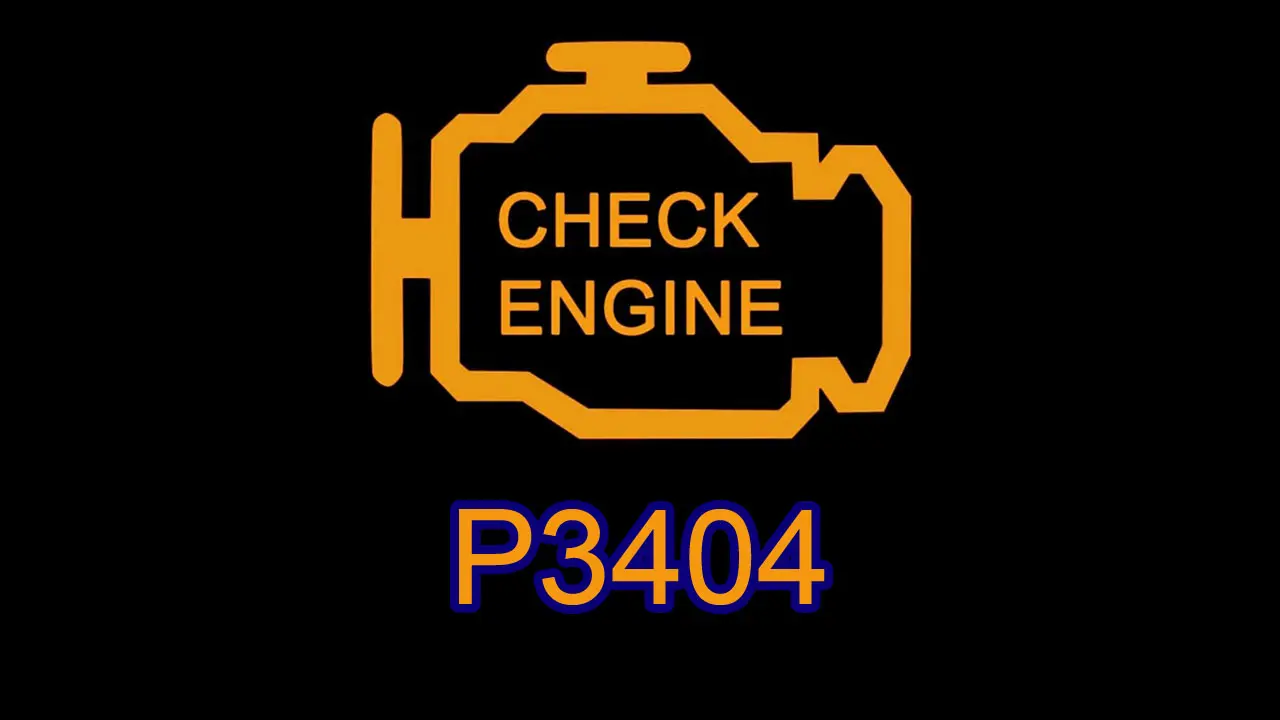
P3404 Cylinder 1 Deactivation/Intake Valve Control Circuit High
P3404 is set when the engine control module (ECM) detects an electrical condition that is higher than expected in the control circuit associated with cylinder 1 deactivation/intake valve operation.
This code is generally associated with engines that use cylinder deactivation or a related variable valve control system.
The word “High” is important. It describes an electrical condition detected by the ECM. It does not automatically mean that engine oil pressure is too high or that the intake valve is physically opening too far.
The problem can be as simple as damaged wiring or as complicated as a problem with the valve-control mechanism itself.
Why Cylinder Deactivation Uses Electrical Control
Cylinder deactivation allows an engine to alter the operation of selected cylinders under certain conditions, usually when the engine does not need its full power.
Depending on the engine design, the ECM may control solenoids that direct oil pressure to a special valve-train mechanism. This changes how the valves operate and allows the cylinder to be deactivated.
When more power is required, the system returns the cylinder to normal operation.
P3404 indicates that the electrical control side associated with cylinder 1 is not producing the expected electrical condition.
The exact component involved varies between manufacturers, so the relevant service information should be consulted before testing or replacing anything.
What Does “Circuit High” Mean?
A high circuit condition means that the ECM is detecting a higher-than-expected voltage or electrical state on the monitored circuit.
Possible causes include:
-
Control wire shorted to battery voltage
-
Damaged wiring
-
Incorrect wiring repair
-
Faulty solenoid or actuator
-
Poor connector contact
-
Internal actuator failure
-
Abnormal power supply
-
Problem with the ECM control circuit
The exact cause depends on how the particular vehicle's circuit is designed.
For that reason, P3404 should not automatically be interpreted as “replace the cylinder deactivation solenoid.”
The Wiring Is an Important Starting Point
Because P3404 specifically identifies a control-circuit problem, the wiring harness should be inspected carefully.
The relevant wiring is often exposed to the harsh environment around the engine, where heat and vibration can gradually damage insulation and terminals.
Look for:
-
Melted insulation
-
Chafed wiring
-
Broken conductors
-
Oil contamination
-
Corrosion
-
Loose terminals
-
Terminals pushed backward inside the connector
-
Damaged connector locks
-
Wiring contacting brackets or engine components
Pay particular attention to sections of the harness that pass close to hot exhaust components or moving engine parts.
A control wire that has rubbed through its insulation and contacted a power source can create exactly the type of high electrical condition that triggers this code.
Check for a Short to Power
One of the important tests for a circuit-high fault is determining whether the control circuit is unintentionally connected to a power source.
Depending on the wiring design, the control circuit may normally be switched by the ECM.
If the wire becomes shorted to battery voltage or another powered circuit, the ECM can see a voltage higher than expected.
The circuit should therefore be tested for unwanted connections to:
-
Battery voltage
-
Ignition voltage
-
Other powered circuits
-
Ground
-
Adjacent control circuits
The appropriate test procedure depends on the manufacturer's wiring diagram.
Inspect the Connector Closely
A connector can look perfectly normal from the outside and still have an electrical problem.
For example, a terminal may have lost its correct tension and make unreliable contact.
Check for:
-
Bent terminals
-
Loose terminals
-
Corrosion
-
Water or oil contamination
-
Broken locking mechanisms
-
Terminals that have moved backward
-
Damaged seals
If the fault is intermittent, gently moving the harness while monitoring the circuit can sometimes expose a poor connection.
However, the test should be performed carefully to avoid creating a new fault.
Could the Solenoid Be Faulty?
Yes.
The cylinder deactivation/intake valve control solenoid or actuator can develop an internal electrical problem.
Its coil may have abnormal resistance or another internal defect that changes the electrical characteristics of the circuit.
The component should be tested according to the manufacturer's specifications.
There is no universal resistance value that applies to every cylinder deactivation solenoid, so a generic measurement from another engine should not be used as the pass/fail standard.
If an actuator test is available through the scan tool, its response can also provide useful information.
Electrical Testing Should Come Before Mechanical Disassembly
P3404 can eventually lead to an investigation of the valve train or oil-pressure system, but the electrical circuit should normally be verified first.
A useful sequence is:
Connector → power supply → control circuit → actuator → mechanical system
This prevents unnecessary mechanical work when the actual problem is a damaged wire.
Voltage measurements should also be performed under the conditions specified by the manufacturer. A circuit that shows voltage with no electrical load may behave differently when the actuator is connected and operating.
Voltage-drop testing can therefore be more informative than simply checking for the presence of voltage.
Engine Oil Can Still Be Part of the Diagnosis
Although P3404 is an electrical circuit code, the system it controls may depend on engine oil pressure.
Many cylinder deactivation systems use oil to move or hold components within the valve train.
If the electrical circuit checks out but the mechanical system does not respond correctly, inspect:
-
Engine oil level
-
Oil specification
-
Oil condition
-
Oil filter
-
Engine oil pressure
-
Oil passages
-
Hydraulic components used by the deactivation system
An incorrect oil condition can interfere with the operation of the deactivation mechanism even when the electrical circuit itself is healthy.
However, oil pressure should not be assumed to be the cause simply because the code involves a valve-control system.
Symptoms You May Notice
P3404 does not produce exactly the same symptoms on every engine.
Depending on how the system fails, the vehicle may experience:
-
Check engine light
-
Rough idle
-
Engine vibration
-
Reduced performance
-
Hesitation
-
Increased fuel consumption
-
Cylinder-specific misfire
-
Poor transition between cylinder-deactivation modes
-
Abnormal valve-train behavior
Some vehicles may show only the warning light while continuing to drive normally.
Others may have noticeable drivability problems if the valve-control mechanism becomes stuck in an incorrect operating state.
Use Freeze-Frame and Live Data
A professional diagnosis should begin by finding out when and under what conditions P3404 was set.
Freeze-frame information can show details such as:
-
Engine RPM
-
Engine load
-
Coolant temperature
-
Vehicle speed
-
Operating conditions when the code was stored
Available manufacturer-specific live data may also show cylinder-deactivation commands or valve-control status.
If the vehicle supports an actuator test, commanding the relevant component can help determine whether the electrical system responds as expected.
A Practical Diagnostic Path
Rather than replacing parts immediately, work through the circuit logically.
First, confirm the fault.
Check whether P3404 is current, pending, or stored and look for additional related codes.
Next, identify the correct component.
Use the vehicle's wiring diagram and service information to determine exactly which actuator or solenoid is associated with cylinder 1.
Then inspect the wiring.
Look for shorts, damaged insulation, loose terminals and signs of heat or oil damage.
Verify the power supply.
Determine how the actuator is powered and confirm that the voltage is within the manufacturer's specification.
Test the control wire.
Check for unwanted voltage, shorts to power or ground, excessive resistance and wiring continuity as required.
Test the actuator.
Measure its electrical characteristics and use an actuator test if supported.
Move to the mechanical system only when necessary.
If the electrical circuit is functioning correctly but the valve-control system still fails to operate, investigate oil pressure, oil passages and the mechanical deactivation mechanism.
Don't Assume the ECM Is the Problem
The ECM controls the circuit, so an internal driver fault is possible.
But replacing the ECM should be one of the last steps, not the first.
Before considering an ECM fault, the technician should verify:
-
Actuator condition
-
Connector integrity
-
Power supply
-
Grounding
-
Wiring continuity
-
Short circuits
-
Control circuit behavior
-
Relevant sensor inputs
-
Mechanical response of the system
If an external wire is shorted to power, replacing the ECM will not solve the underlying problem.
Can You Keep Driving?
The severity depends on the vehicle's behavior.
If the engine runs normally and only the check engine light is present, the vehicle may remain operational for a limited period while the problem is diagnosed.
However, significant engine vibration, misfire, power loss or abnormal valve-train noise should not be ignored.
A cylinder-deactivation fault can be electrical, but the system may also involve hydraulic and mechanical components. If the engine is clearly not operating normally, prompt diagnosis is preferable to continued driving.
Repairs That May Be Required
The correct repair depends on the test results.
Possible repairs include:
-
Repairing a damaged control wire
-
Removing a short to battery voltage
-
Repairing or replacing an injector-style or valve-control connector
-
Replacing damaged terminals
-
Correcting a power-supply problem
-
Replacing a defective deactivation solenoid or actuator
-
Correcting an oil-pressure problem
-
Cleaning or repairing restricted oil passages
-
Repairing the mechanical deactivation mechanism
-
In uncommon cases, repairing or replacing the ECM
After the repair, P3404 should be cleared and the vehicle should be driven through the operating conditions in which the fault originally occurred.
The Key to Diagnosing P3404
P3404 should be approached as an electrical control-circuit problem first.
The most useful question is not simply “Is the cylinder deactivation solenoid bad?”
It is:
Why is the ECM seeing a higher-than-expected electrical condition in the cylinder 1 deactivation/intake valve control circuit?
Answering that question requires tracing the circuit from the ECM through the wiring and connector to the actuator. If that entire electrical path proves correct, the diagnosis can then move toward the oil-control and mechanical components of the cylinder deactivation system.
That approach makes it much easier to identify the actual fault without replacing expensive components unnecessarily.