TR
TR EN
EN

What Is a Leaf Spring Suspension? What Are the Symptoms of Failure?
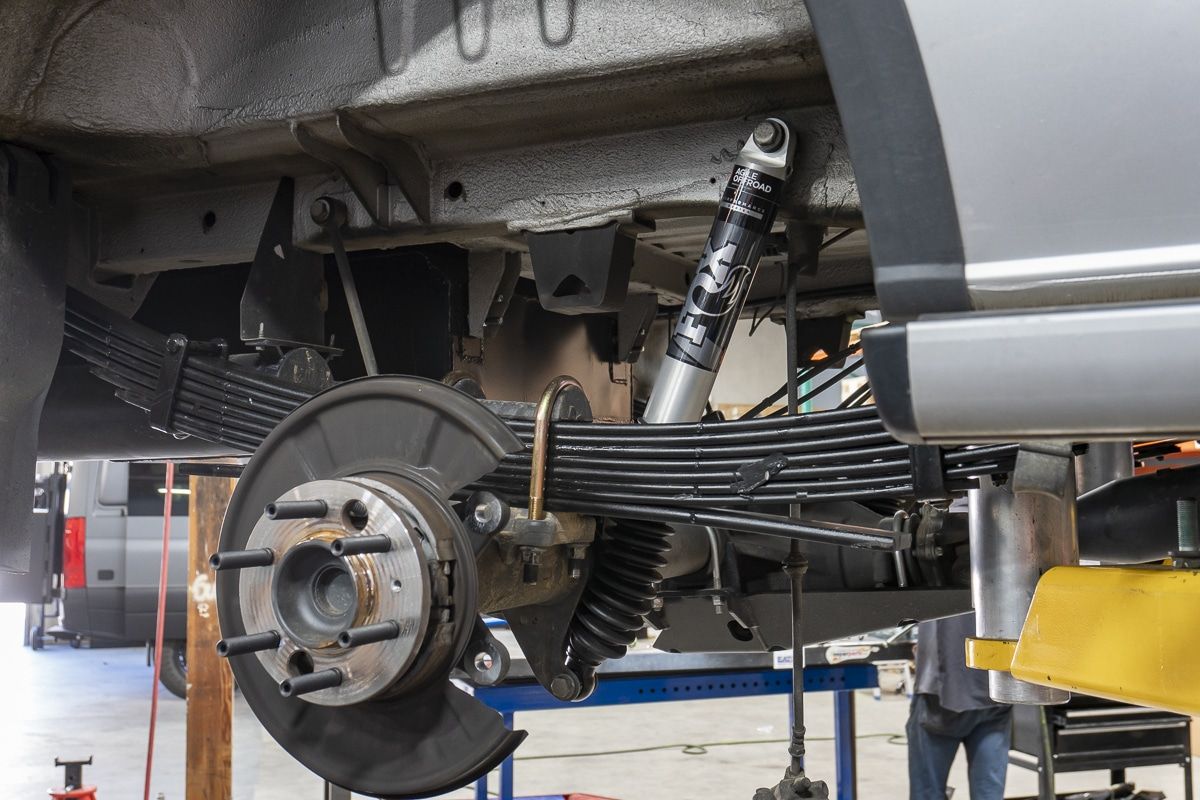
A leaf spring is one of the oldest and most durable suspension systems used on vehicles. Although modern passenger cars commonly use coil springs, MacPherson struts, or air suspension, leaf springs are still widely used on pickup trucks, vans, light commercial vehicles, trailers, and heavy-duty vehicles.
A leaf spring is made from one or more long, curved pieces of spring steel. It supports the vehicle's weight, absorbs bumps, and helps control the movement of the axle.
Leaf springs are especially useful on vehicles that regularly carry heavy loads because they can provide both springing and axle-location functions in a relatively simple mechanical design.
How Does a Leaf Spring Work?
A leaf spring works by flexing when the vehicle travels over uneven surfaces.
When the wheel encounters a bump, the axle moves upward and applies force to the leaf spring. The spring bends and stores some of the energy generated by the impact.
It then releases that energy in a controlled manner as the suspension returns toward its normal position.
The suspension system normally works together with shock absorbers.
The leaf spring primarily supports the vehicle and provides spring force, while the shock absorber controls the speed at which the suspension moves.
A leaf spring can therefore be thought of as both a spring element and, in many designs, part of the axle-location system.
What Is a Leaf Spring Made Of?
Leaf springs are normally manufactured from specially treated spring steel designed to withstand repeated bending loads.
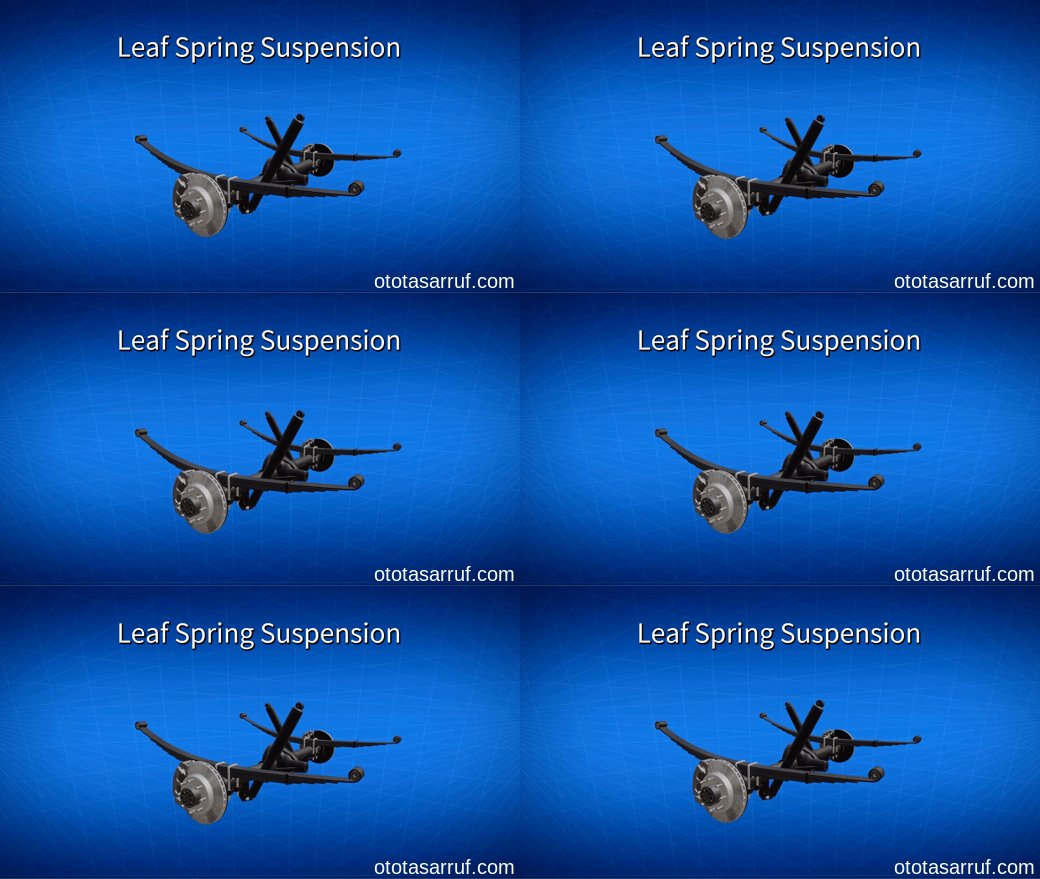
A typical leaf spring may contain several individual leaves stacked together.
The longest leaf is usually the main leaf and may contain the eyes at its ends, where the spring attaches to the vehicle through shackles or fixed mounts.
Shorter leaves may be positioned underneath it.
These additional leaves can increase the spring's load-carrying capability and help distribute stress.
What Are the Main Parts of a Leaf Spring Suspension?
A typical leaf spring suspension can include:
-
Main leaf
-
Additional spring leaves
-
Spring center bolt
-
Spring clamps
-
Front spring eye
-
Rear spring eye
-
Shackle
-
Spring hanger
-
U-bolts
-
Axle seat
-
Shock absorber
-
Bushings
The exact arrangement depends on the vehicle.
Some systems use a semi-elliptic leaf spring, while other designs use different spring configurations.
What Is the Purpose of a Leaf Spring?
A leaf spring performs several important functions.
Its main purposes include:
-
Supporting vehicle weight
-
Absorbing road impacts
-
Maintaining ride height
-
Controlling axle movement
-
Helping locate the axle
-
Handling heavy loads
-
Maintaining appropriate suspension geometry
On many solid-axle vehicles, the leaf spring is connected directly between the chassis and axle.
This allows the spring to perform some of the work that would otherwise require separate suspension links.
What Are the Symptoms of a Faulty Leaf Spring?
A damaged leaf spring can produce several noticeable symptoms.
Common signs include:
-
Vehicle sitting lower on one side
-
Sagging suspension
-
Uneven ride height
-
Excessive bouncing
-
Harsh ride
-
Suspension noise
-
Cracked or broken spring leaf
-
Vehicle leaning
-
Poor handling
-
Rear-end instability
-
Abnormal tire wear
-
Axle movement
-
Visible spring deformation
-
Suspension knocking or clunking
The symptoms depend on whether the problem is a broken spring, worn bushing, damaged shackle, loose U-bolt, or another suspension component.
Vehicle Sits Lower on One Side
One of the easiest symptoms to notice is uneven ride height.
If one side of the vehicle sits noticeably lower than the other, the leaf spring on that side may have lost its original spring rate or may be damaged.
Possible causes include:
-
Broken leaf
-
Fatigued spring
-
Permanently deformed spring
-
Overloading
-
Damaged shackle
-
Worn spring bushing
-
Incorrectly installed suspension components
However, uneven ride height does not automatically prove that the leaf spring is faulty.
Other suspension components and differences in load can produce a similar appearance.
Sagging Leaf Spring
A leaf spring can gradually lose its original shape after years of repeated loading.
The spring may become flatter than intended.
This is particularly common on vehicles that frequently carry heavy loads or operate under severe conditions.
A sagging spring can reduce available suspension travel and change the vehicle's ride height.
It can also affect axle and suspension geometry.
Cracked or Broken Leaf Spring
A visible crack is a serious problem.
A leaf spring is subjected to repeated bending forces throughout its service life. Fatigue can eventually produce cracks.
Corrosion can accelerate this process by creating stress concentrations in the metal.
A broken leaf may cause:
-
Vehicle leaning
-
Suspension noise
-
Reduced load capacity
-
Axle movement
-
Poor handling
-
Contact between suspension components
-
Abnormal tire wear
A severely cracked or broken leaf spring should not be treated as a minor suspension problem.
Leaf Spring Noise
A faulty leaf spring suspension may produce:
-
Squeaking
-
Creaking
-
Clunking
-
Knocking
-
Metallic sounds
Noise can occur when the spring moves against another component or when a bushing, shackle, clamp, or mounting point is worn.
However, suspension noise does not automatically mean the spring itself is damaged.
The source may be a bushing, U-bolt, shackle, shock absorber, or mounting bracket.
Worn Leaf Spring Bushings
Leaf spring bushings isolate the spring from the vehicle's chassis and allow controlled movement.
Over time, rubber bushings can become:
-
Cracked
-
Hardened
-
Torn
-
Deformed
-
Separated from their sleeves
Worn bushings can cause:
-
Clunking
-
Squeaking
-
Excessive axle movement
-
Poor handling
-
Uneven tire wear
-
Changes in vehicle alignment
-
Suspension instability
A vehicle may therefore have a leaf spring suspension problem even when the steel spring itself is still structurally sound.
Damaged Spring Shackle
The shackle allows the leaf spring to change its effective length as it flexes.
As the spring compresses and extends, its arc changes slightly. The shackle provides the necessary movement.
A worn or seized shackle can restrict suspension movement.
Possible symptoms include:
-
Squeaking
-
Binding
-
Harsh ride
-
Clunking
-
Uneven ride height
-
Poor suspension movement
The shackle and its bushings should therefore be inspected whenever leaf spring problems are suspected.
Loose Leaf Spring U-Bolts
U-bolts secure the axle to the leaf spring assembly.
If they become loose, the axle may not remain properly positioned relative to the spring.
This can cause:
-
Clunking
-
Axle movement
-
Changes in handling
-
Alignment problems
-
Suspension noise
-
Abnormal tire wear
Loose U-bolts are a safety concern and should be checked and tightened according to the vehicle manufacturer's specifications.
U-bolts should not simply be tightened to an arbitrary torque value because the correct specification depends on the vehicle and hardware.
Leaf Spring Center Bolt Failure
Multiple-leaf spring packs are commonly held together by a center bolt.
If this bolt becomes damaged or breaks, the leaves may no longer remain correctly aligned.
This can affect the relationship between the spring pack and axle.
A damaged center bolt requires inspection of the complete spring assembly.
Leaf Spring Corrosion
Rust is another important cause of leaf spring deterioration.
Surface corrosion does not necessarily mean that a spring has failed.
However, severe corrosion can reduce the effective cross-section of the steel and create stress concentrations.
Corrosion is particularly concerning when it is accompanied by:
-
Deep pitting
-
Cracks
-
Flaking metal
-
Deformation
-
Broken leaves
A heavily corroded spring should be inspected carefully rather than judged only by its external appearance.
Why Do Leaf Springs Break?
Leaf springs can fail because of several factors.
Common causes include:
-
Metal fatigue
-
Overloading
-
Severe road impacts
-
Corrosion
-
Poor-quality replacement parts
-
Incorrect installation
-
Damaged bushings
-
Excessive axle movement
-
Repeated heavy-duty use
-
Accident damage
Repeated overloading places additional stress on the spring.
A vehicle that regularly carries more weight than its designed capacity can accelerate spring fatigue.
Can Overloading Damage Leaf Springs?
Yes.
Leaf springs are particularly common on vehicles designed to carry heavy loads, but they still have a maximum design capacity.
Repeatedly exceeding the vehicle's rated payload can cause:
-
Permanent spring deformation
-
Premature fatigue
-
Cracks
-
Broken leaves
-
Bushing damage
-
Shackle damage
-
Reduced suspension travel
The manufacturer's gross vehicle weight and axle-load limits should always be respected.
Can a Leaf Spring Become Weak Without Breaking?
Yes.
A leaf spring does not have to visibly break to become unsuitable.
Repeated stress can gradually alter its characteristics.
A weakened spring may cause:
-
Lower ride height
-
Excessive suspension compression
-
Reduced load capacity
-
Increased bottoming
-
Uneven ride height
-
Poor handling under load
This is one reason why comparing left and right suspension height can be useful during inspection.
Leaf Spring vs Coil Spring
Leaf springs and coil springs perform the same basic function of supporting vehicle weight, but their designs are different.
Leaf springs are particularly useful for:
-
Pickup trucks
-
Vans
-
Light commercial vehicles
-
Heavy-duty vehicles
-
Trailers
Their ability to combine springing and axle location makes them mechanically simple and strong.
Coil springs are more common in passenger cars because they can provide advantages in ride comfort, suspension geometry, and packaging when used with separate control arms or other locating components.
Neither system is universally better. The appropriate design depends on the vehicle's intended use.
Leaf Spring vs Air Suspension
Air suspension uses pressurized air inside an air spring rather than a steel leaf spring.
Air suspension can provide adjustable ride height and excellent load-leveling capabilities.
Leaf springs, by comparison, are mechanically simpler and generally easier to maintain.
Air suspension can provide greater flexibility, while leaf springs are often favored for durability and heavy-load applications.
Can a Leaf Spring Affect Vehicle Handling?
Yes.
A damaged or weakened leaf spring can affect suspension geometry and axle location.
The driver may notice:
-
Vehicle wandering
-
Rear-end instability
-
Increased body movement
-
Poor cornering behavior
-
Steering corrections
-
Uneven handling under load
However, poor handling has many other possible causes, including worn shock absorbers, tires, wheel alignment, bushings, wheel bearings, and other suspension components.
Can a Bad Leaf Spring Cause Tire Wear?
It can contribute to abnormal tire wear.
A damaged spring or worn spring mounting component can change axle position or suspension geometry.
This can produce uneven tire loading or alignment changes.
However, tire wear should not automatically be blamed on the leaf spring.
Other common causes include:
-
Incorrect tire pressure
-
Wheel alignment
-
Worn bushings
-
Bent suspension components
-
Wheel bearing problems
-
Damaged tires
-
Incorrect toe or camber
The complete suspension and wheel alignment should be inspected.
Can a Leaf Spring Affect Ride Comfort?
Yes.
A healthy leaf spring should provide the intended balance between load capacity and suspension movement.
A damaged, excessively stiff, weak, or incorrectly selected spring can alter ride quality.
A vehicle may become:
-
Excessively harsh
-
Bouncy
-
Unstable
-
More sensitive to bumps
-
Prone to bottoming out
The shock absorbers also have a major influence on ride comfort.
A rough ride does not automatically mean that the leaf springs need replacement.
Leaf Spring and Shock Absorber Are Not the Same
This distinction is important.
The leaf spring supports the vehicle and provides spring force.
The shock absorber controls suspension movement.
If the vehicle continues bouncing several times after passing over a bump, worn shock absorbers may be involved.
If the vehicle sits unusually low or the spring is visibly damaged, the leaf spring may be the problem.
Both components should be inspected when suspension behavior changes.
How Is a Leaf Spring Problem Diagnosed?
A proper inspection usually begins with a visual examination.
The technician may check:
-
Spring shape
-
Broken leaves
-
Cracks
-
Corrosion
-
Spring bushings
-
Shackles
-
U-bolts
-
Center bolts
-
Mounting brackets
-
Axle position
-
Shock absorbers
-
Ride height
The left and right sides should often be compared.
Measurements can help determine whether the vehicle is sitting at the correct ride height.
Can a Leaf Spring Be Repaired?
The answer depends on the type of damage.
A severely cracked or broken leaf spring should generally be replaced rather than welded or straightened as a normal repair.
Spring steel has specific heat-treatment and mechanical properties.
Improper welding or heating can change the material's characteristics and reduce its strength.
Bushings, shackles, U-bolts, and other separate components can often be replaced individually when the main spring is still structurally sound.
Should Leaf Springs Be Replaced in Pairs?
In many situations, replacing both springs on the same axle can be appropriate, particularly when both have similar mileage and wear.
Installing a new spring on only one side can sometimes produce differences in ride height or spring rate.
However, the correct approach depends on the vehicle, the type of failure, and the condition of the other spring.
The manufacturer's repair procedure should be followed.
Can You Drive With a Broken Leaf Spring?
Driving with a broken leaf spring is generally unsafe.
A broken spring can affect:
-
Axle location
-
Ride height
-
Tire clearance
-
Handling
-
Suspension travel
-
Load capacity
A broken leaf may also move from its intended position and contact other components.
If a spring is visibly broken or the vehicle has suddenly developed severe leaning or suspension instability, continued normal driving should be avoided.
Can You Drive With a Weak Leaf Spring?
A weakened spring is less immediately obvious than a broken spring, but it can still affect safety and vehicle behavior.
If the vehicle sits significantly lower than normal, bottoms out easily, handles poorly, or becomes unstable when loaded, the suspension should be inspected before continuing normal use.
Heavy loads should especially be avoided until the condition is confirmed.
Leaf Spring Maintenance
Leaf spring suspensions are relatively durable, but they still require inspection.
Useful maintenance practices include:
-
Inspect springs for cracks
-
Check for severe corrosion
-
Inspect bushings
-
Check shackles
-
Inspect U-bolts
-
Check ride height
-
Inspect shock absorbers
-
Avoid exceeding payload limits
-
Investigate new suspension noises
-
Check the suspension after severe impacts
On some designs, lubrication between leaves may be specified, while on others it is not recommended.
The manufacturer's maintenance procedure should always take priority.
Final Thoughts
Leaf spring suspension is a simple, strong, and proven suspension design that remains widely used on pickups, vans, commercial vehicles, trailers, and heavy-duty vehicles.
A leaf spring supports the vehicle's weight, absorbs road impacts, and can also help locate the axle. Its simple construction makes it durable, but repeated heavy loads, corrosion, fatigue, severe impacts, and worn mounting components can eventually cause problems.
Common symptoms of a leaf spring problem include uneven ride height, sagging, suspension noise, excessive bouncing, poor handling, abnormal tire wear, visible cracks, and broken spring leaves.
However, these symptoms do not automatically prove that the leaf spring itself has failed. Bushings, shackles, U-bolts, shock absorbers, axle components, and wheel alignment can produce similar symptoms.
A cracked or broken leaf spring is a serious safety issue and should be repaired before the vehicle is used normally. When diagnosing suspension problems, the complete leaf spring assembly and its mounting components should be inspected rather than replacing the spring based on symptoms alone.