TR
TR EN
EN

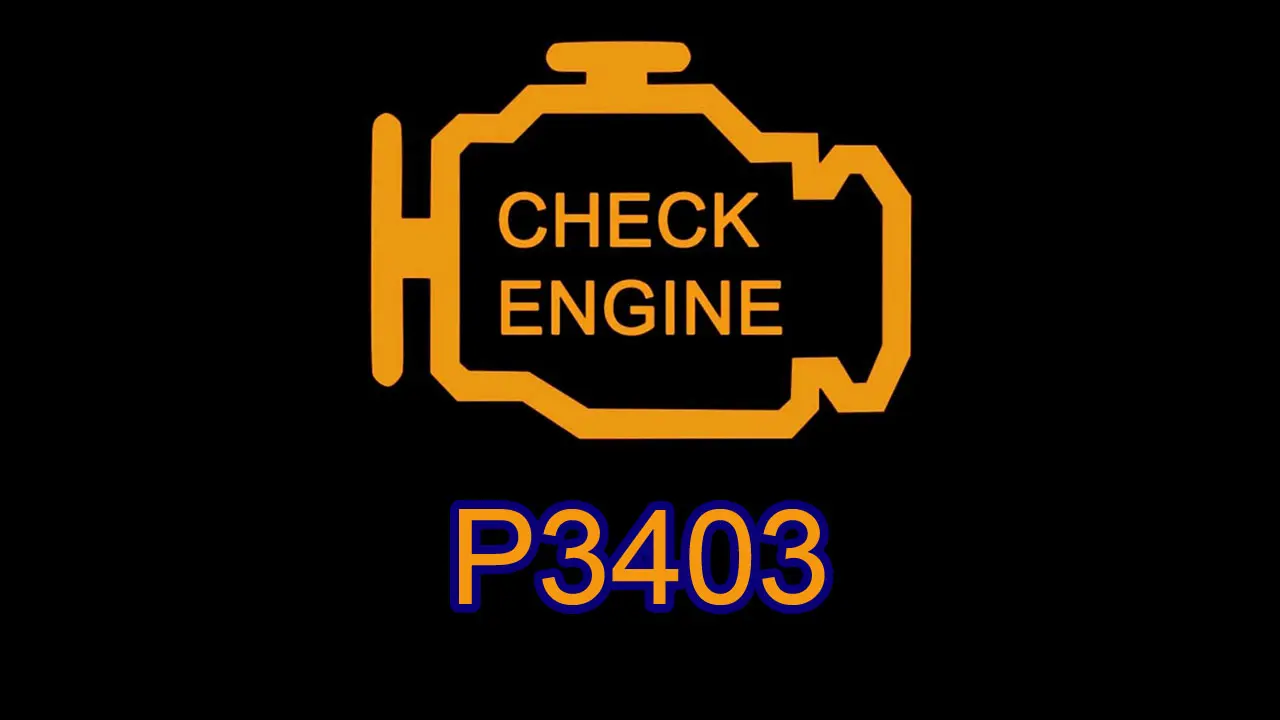
P3403 Cylinder 1 Deactivation/Intake Valve Control Circuit Low
P3403 is stored when the engine control module (ECM) detects an abnormally low electrical condition in the control circuit associated with cylinder 1 deactivation/intake valve operation.
This code is associated with engines that use some form of cylinder deactivation or variable valve control. The system can alter valve operation under certain operating conditions so the engine does not have to operate all cylinders in the same way all the time.
The important word in P3403 is “Low.”
It generally refers to an electrical signal or voltage condition detected by the ECM. It does not automatically mean low engine compression, low fuel pressure, or low engine oil pressure.
How Cylinder Deactivation Fits Into the Picture
Cylinder deactivation systems are designed to change valve operation when the engine does not need its full output.
Depending on the engine design, electronically controlled solenoids and oil-pressure-operated mechanisms can alter the operation of the valve train.
When the ECM wants cylinder 1 to operate normally, the valve-control system must respond correctly. When cylinder deactivation is requested, the corresponding mechanism must also respond as expected.
P3403 indicates that the electrical side of the control system is not behaving as the ECM expects.
The exact hardware differs considerably between engines, so the relevant solenoid, actuator, and wiring should always be identified using the vehicle's service information.
Why “Circuit Low” Matters
A low circuit condition can be caused by several different electrical problems.
For example:
-
A control wire may be shorted to ground.
-
The actuator may have an internal electrical fault.
-
The power supply may be missing or too low.
-
A connector terminal may have excessive resistance.
-
Wiring may be damaged.
-
A shared power supply may be faulty.
-
The ECM may be detecting an abnormal load from the actuator.
This is why replacing the valve-control component immediately is not necessarily the correct repair.
The circuit needs to be tested to determine where the low electrical condition originates.
Start With the Connector and Harness
The wiring around the cylinder deactivation or valve-control actuator deserves careful attention.
These components are often mounted directly on or near the engine, where wiring is exposed to:
-
High temperatures
-
Engine vibration
-
Oil contamination
-
Moisture
-
Repeated movement
-
Contact with other engine components
Inspect the connector for corrosion, loose terminals, damaged locks, pushed-back pins, and contamination.
Then follow the harness away from the connector.
A wire can look intact externally while the conductor inside has been damaged. Wiring that has been rubbing against a bracket or engine component is particularly worth examining.
Check the Electrical Supply
The next step is to determine how the relevant actuator is powered and controlled.
Some systems use a shared power supply for several solenoids, while the ECM controls the individual circuits separately.
That means a problem with a fuse, relay, common power feed, or ground connection can sometimes affect more than one component.
The vehicle's wiring diagram should therefore be used to establish:
-
Which terminal receives power
-
Which terminal is controlled by the ECM
-
Where the circuit is grounded
-
Whether the actuator shares power with other components
-
What voltage should be present under the specified conditions
A voltage measurement should be interpreted according to the manufacturer's test procedure rather than against a universal value.
A Short to Ground Can Produce a Low Signal
One common electrical possibility behind a “circuit low” condition is a control wire that is unintentionally connected to ground.
This can happen when insulation becomes damaged and the conductor contacts the engine or another grounded component.
The result can be an electrical condition that the ECM interprets as a low control signal.
The circuit may therefore need to be checked for:
-
Short to ground
-
Short to battery voltage
-
Short to another circuit
-
Excessive resistance
-
Open circuit
The exact tests depend on the electrical design of the vehicle.
The Solenoid or Actuator Could Be Faulty
The component controlled by the circuit can itself be defective.
An electrically controlled solenoid contains a coil, and that coil can develop an open circuit, short circuit, or abnormal resistance.
If the component's electrical characteristics are outside specification, the ECM may detect an abnormal circuit condition.
Resistance testing can be useful, but there is no universal resistance specification for these components. The manufacturer's specifications should always be used.
A component that measures correctly when cold may still fail when it becomes hot, so temperature-related faults should not be overlooked.
Why Engine Oil Can Still Matter
P3403 describes an electrical circuit condition, but cylinder deactivation systems often depend on engine oil pressure and oil passages for their mechanical operation.
This creates an important distinction.
The electrical circuit can be working correctly while the mechanical mechanism fails to respond because of:
-
Low engine oil level
-
Incorrect oil viscosity
-
Contaminated oil
-
Restricted oil passages
-
Incorrect oil filter
-
Low oil pressure
-
A sticking hydraulic mechanism
Therefore, if the electrical tests pass but the cylinder deactivation system still does not operate correctly, the investigation may need to move into the lubrication and mechanical side of the system.
Do Not Assume the Code Means the Intake Valve Is Broken
The wording of P3403 can make it sound as though the intake valve itself has mechanically failed.
That is not necessarily the case.
The code concerns the control circuit associated with cylinder 1 deactivation/intake valve operation.
The actual problem could be located several steps away from the valve itself:
ECM → wiring → connector → actuator/solenoid → hydraulic/mechanical mechanism
The diagnostic task is to determine where this chain stops behaving correctly.
What Symptoms Can P3403 Cause?
The symptoms depend heavily on the engine and on whether the cylinder deactivation system is stuck in an active or inactive state.
Possible symptoms include:
-
Check engine light
-
Rough idle
-
Engine vibration
-
Reduced engine performance
-
Hesitation during acceleration
-
Increased fuel consumption
-
Cylinder-specific misfire
-
Abnormal valve-train operation
-
Poor engine smoothness
In some vehicles, the driver may notice very little apart from the check engine light.
In others, the engine may run noticeably rough if the valve-control system cannot maintain the required operating state.
A Scan Tool Can Provide Useful Information
A scan tool should be used to check more than just the stored DTC.
Look at:
-
Current and pending codes
-
Freeze-frame information
-
Engine speed when the code occurred
-
Engine load
-
Coolant temperature
-
Other valve-control or cylinder-deactivation information
-
Available actuator commands
-
Manufacturer-specific live data
If the vehicle supports an actuator test, commanding the relevant solenoid can help determine whether the component responds.
However, a successful actuator command does not necessarily prove that the mechanical mechanism is functioning correctly. Electrical operation and mechanical operation still need to be considered separately.
A Practical Diagnostic Approach
P3403 is easier to diagnose when the circuit is tested systematically.
Begin with the code and freeze-frame data.
Determine when the fault occurred and whether other related codes were stored at the same time.
Identify the exact component.
Use the vehicle's service information to locate the cylinder 1 deactivation/intake valve control actuator and identify its terminals.
Inspect the connector and harness.
Look for damaged wiring, corrosion, loose terminals and evidence of contact with hot or moving components.
Verify the power supply.
Confirm that the actuator receives the required electrical supply under the specified operating conditions.
Test the control circuit.
Check for opens, shorts to ground, shorts to power and excessive resistance.
Test the actuator.
Measure its electrical characteristics against the manufacturer's specification and, where supported, perform an actuator test.
Move to the mechanical side if necessary.
If the electrical circuit is proven good but the system still does not operate correctly, investigate oil pressure, oil passages and the mechanical deactivation mechanism.
This sequence helps prevent unnecessary component replacement.
Common Diagnostic Mistakes
Replacing the actuator immediately
The actuator may be perfectly good while the problem is actually in the wiring or connector.
Interpreting “low” as low oil pressure
The word “low” in the DTC primarily describes an electrical circuit condition. Oil pressure is a separate mechanical/hydraulic consideration.
Ignoring the shared power supply
If several components use the same power feed, a fuse, relay, or common wiring problem can affect the diagnosis.
Testing only when the engine is cold
Some electrical faults appear only after the engine reaches operating temperature.
Condemning the ECM too early
The ECM should generally be considered only after the external circuit and actuator have been properly tested.
When Should the ECM Be Suspected?
The ECM controls the relevant circuit, so an internal driver problem is possible.
However, the ECM is normally a late-stage suspect.
Before reaching that conclusion, the technician should establish that:
-
The actuator is within specification
-
The connector is in good condition
-
Power supply is correct
-
Grounding is correct where applicable
-
Wiring is intact
-
There are no unwanted shorts
-
The control circuit reaches the ECM correctly
-
The ECM is receiving the required operating information
Only then does an ECM fault become a reasonable possibility.
Can You Continue Driving With P3403?
The answer depends on how the engine is behaving.
If the vehicle runs normally and the code appears without noticeable symptoms, immediate drivability problems may not be present.
However, if the engine is shaking, misfiring, losing significant power, or producing abnormal valve-train noise, continued driving should be minimized until the cause is identified.
A cylinder deactivation fault can sometimes be a simple electrical problem, but it can also reveal an issue involving the oil-control or mechanical valve-train system.
What Repairs Can Resolve P3403?
The repair depends entirely on the result of the diagnostic tests.
Possible repairs include:
-
Repairing damaged wiring
-
Replacing a damaged connector or terminal
-
Correcting a power-supply problem
-
Repairing a shorted control circuit
-
Replacing the cylinder deactivation/intake valve control solenoid or actuator
-
Correcting an engine oil or oil-pressure problem
-
Cleaning or repairing restricted oil passages
-
Repairing the mechanical cylinder deactivation mechanism
-
In uncommon cases, repairing or replacing the ECM
After the repair, the code should be cleared and the vehicle should be operated through the conditions in which the fault originally occurred.
P3403 should ultimately be treated as a circuit diagnosis rather than a parts-replacement instruction. The key is to determine why the cylinder 1 deactivation/intake valve control circuit is producing a low electrical condition. Starting with the connector, wiring, power supply and actuator usually provides a much more reliable path to the actual fault than replacing components based on the code alone.