TR
TR EN
EN

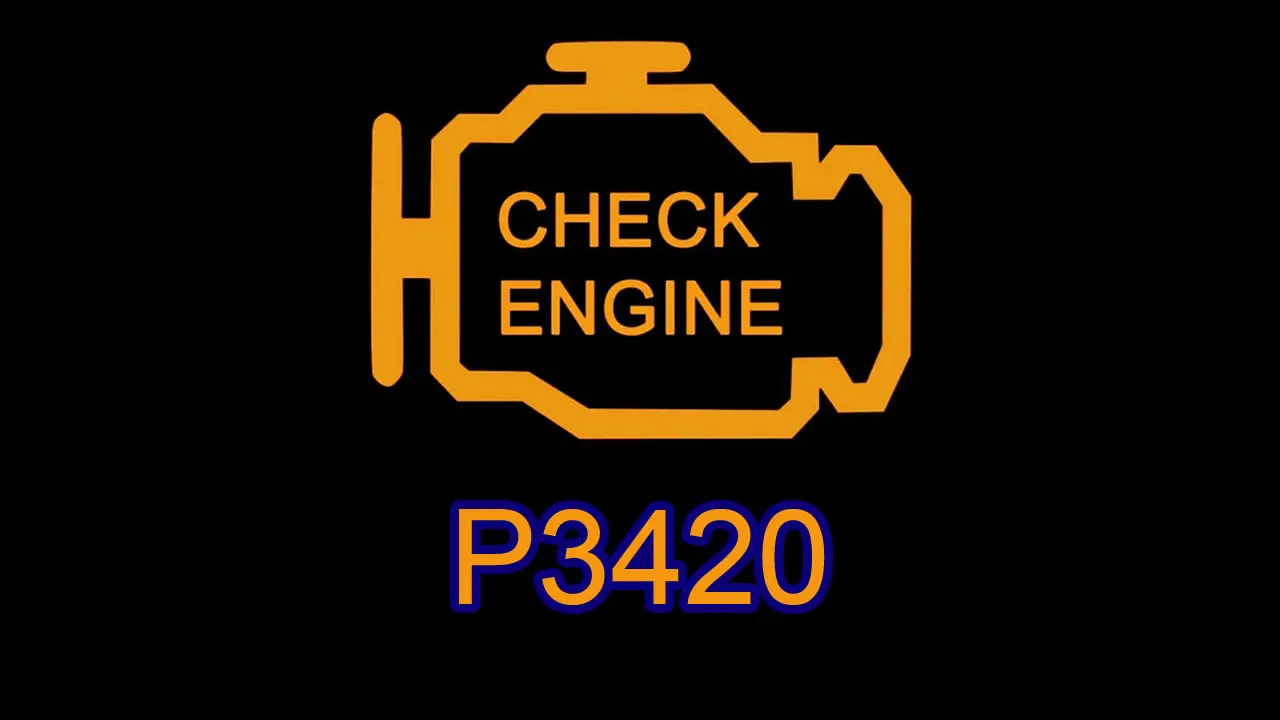
P3420 Cylinder 3 Deactivation/Intake Valve Control Circuit High
The P3420 trouble code indicates that the engine control module (ECM/PCM) has detected an electrical signal or voltage that is higher than expected in the cylinder 3 deactivation/intake valve control circuit.
The word “High” refers to the electrical condition of the control circuit. It does not mean that intake pressure is too high or that the intake valve is physically stuck in a high position.
Cylinder deactivation systems are used on certain engines to temporarily deactivate selected cylinders under specific operating conditions. The ECM controls the system through electrical and, depending on the engine design, hydraulic or mechanical components. If the control circuit produces a voltage outside the expected range, P3420 may be stored.
Importantly, this code does not automatically mean that the intake valve or control solenoid has failed. A short to power, damaged wiring, poor connector contact, abnormal supply voltage, or a faulty solenoid can all produce this code.
What Does P3420 Mean?
P3420 stands for:
“Cylinder 3 Deactivation/Intake Valve Control Circuit High”
In simple terms, the ECM/PCM has detected a higher-than-expected electrical signal in the control circuit responsible for cylinder 3 deactivation/intake valve operation.
The “high” condition generally relates to the voltage or electrical signal detected by the ECM.
It should not be interpreted as:
-
Excessively high intake manifold pressure
-
Excessively high engine oil pressure
-
A physically high valve position
-
A valve that is automatically stuck open
The exact electrical strategy varies between manufacturers, so the manufacturer's wiring diagram and diagnostic specifications should be used.
Common Causes of P3420
Several electrical problems can cause P3420.
Common causes include:
-
Control wire shorted to battery voltage or another power source
-
Damaged wiring
-
Chafed or melted wire insulation
-
Loose electrical connections
-
Corroded connector terminals
-
Bent or pushed-back terminals
-
Water or oil contamination inside a connector
-
Faulty cylinder deactivation/intake valve control solenoid
-
Faulty actuator
-
Incorrect previous wiring repair
-
Abnormal power supply voltage
-
Poor ground connection
-
A problem within the ECM/PCM control circuit
A short to power is particularly important to investigate when diagnosing a “high” circuit code, but it should not be assumed to be the cause before testing.
Symptoms of P3420
The symptoms can vary depending on the engine design and whether the electrical problem is continuous or intermittent.
Possible symptoms include:
-
Check Engine Light
-
Reduced engine performance
-
Poor acceleration
-
Hesitation
-
Irregular throttle response
-
Rough idle
-
Engine vibration
-
Misfire or uneven engine operation
-
Increased fuel consumption
-
Changes in engine operating characteristics
-
Cylinder deactivation system becoming unavailable
-
Difficult starting in some cases
Some vehicles may continue to drive relatively normally even with P3420 stored, particularly when the fault only occurs under specific operating conditions.
How to Diagnose P3420
The most important part of diagnosing P3420 is determining why the control circuit is producing a higher-than-expected electrical signal.
1. Confirm the code and check freeze-frame data
First, confirm P3420 with a suitable diagnostic scanner and examine the freeze-frame information.
Engine speed, coolant temperature, engine load, vehicle speed, and other parameters can help determine the conditions under which the fault occurred.
After clearing the code, determine whether it returns immediately or only under certain operating conditions.
2. Inspect the wiring
The wiring between the ECM/PCM and the cylinder 3 deactivation/intake valve control component should be carefully inspected.
Look for:
-
Broken wires
-
Damaged insulation
-
Chafing against engine components
-
Melted wiring
-
Previous repairs
-
Wires contacting another power circuit
-
Loose connections
A wire that has rubbed against another circuit can intermittently create a short to voltage and trigger P3420.
3. Inspect the connector and terminals
The solenoid or actuator connector should be disconnected and inspected carefully.
Look for corrosion, moisture, oil contamination, loose terminals, bent pins, or terminals that have been pushed backward inside the connector.
A connector can appear visually normal while still having poor terminal tension, so electrical testing may be required.
4. Measure the circuit voltage
The voltage in the control circuit should be measured and compared with the manufacturer's specified values.
There is no universal voltage value that applies to every vehicle. Different manufacturers use different control strategies.
If the control wire has unexpected battery voltage, the wiring should be checked for a short to a power source.
5. Test the control solenoid
The cylinder 3 deactivation/intake valve control solenoid should be tested according to the manufacturer's specifications.
Resistance can be measured where applicable, but a normal resistance reading does not necessarily prove that the solenoid is functioning correctly under operating conditions.
If supported by the diagnostic equipment, an active test can provide additional information about how the solenoid responds to commands.
6. Check power and ground circuits
The component's power and ground circuits should also be checked.
A poor connection or excessive resistance can create abnormal electrical behavior that may not be detected by a simple continuity test.
Voltage-drop testing can be useful when a circuit appears correct during static testing but behaves differently under load.
7. Check the ECM/PCM only after the external circuit is verified
If the wiring, connectors, power supply, ground, and control solenoid all test correctly, the ECM/PCM control circuit can be investigated.
The ECM should not be replaced simply because P3420 is present. External circuit problems should be eliminated first.
How Is P3420 Repaired?
The correct repair depends on the actual cause.
Possible repairs include:
-
Repairing a wire shorted to power
-
Replacing damaged wiring
-
Repairing damaged insulation
-
Replacing a damaged connector
-
Repairing loose or damaged terminals
-
Cleaning or replacing corroded terminals
-
Repairing power or ground problems
-
Replacing the cylinder deactivation/intake valve control solenoid
-
Replacing a faulty actuator
-
Correcting an improper previous wiring repair
-
Repairing a confirmed ECM/PCM control circuit fault
-
Replacing the ECM/PCM only when its failure has been properly confirmed
After the repair, the code should be cleared and the vehicle should be tested under the conditions in which the fault originally occurred.
Is P3420 a Serious Code?
The seriousness of P3420 depends on the underlying cause and the symptoms.
If the vehicle drives normally and only the Check Engine Light is illuminated, the problem may not immediately indicate severe engine damage. However, an electrical fault should still be diagnosed rather than simply ignored.
If P3420 is accompanied by severe engine vibration, repeated misfires, significant power loss, stalling, or difficult starting, diagnosis should be performed as soon as possible.
P3420 Does Not Automatically Mean a Bad Intake Valve
One of the most important points when diagnosing P3420 is that the code does not identify a failed intake valve by itself.
It tells you that the ECM/PCM has detected a higher-than-expected electrical condition in the cylinder 3 deactivation/intake valve control circuit.
The actual cause may be a wiring short, damaged connector, terminal problem, abnormal power supply, faulty solenoid, actuator problem, or, less commonly, an ECM/PCM control fault.
For this reason, the best diagnostic approach is to test the electrical circuit systematically before replacing expensive components.