TR
TR EN
EN

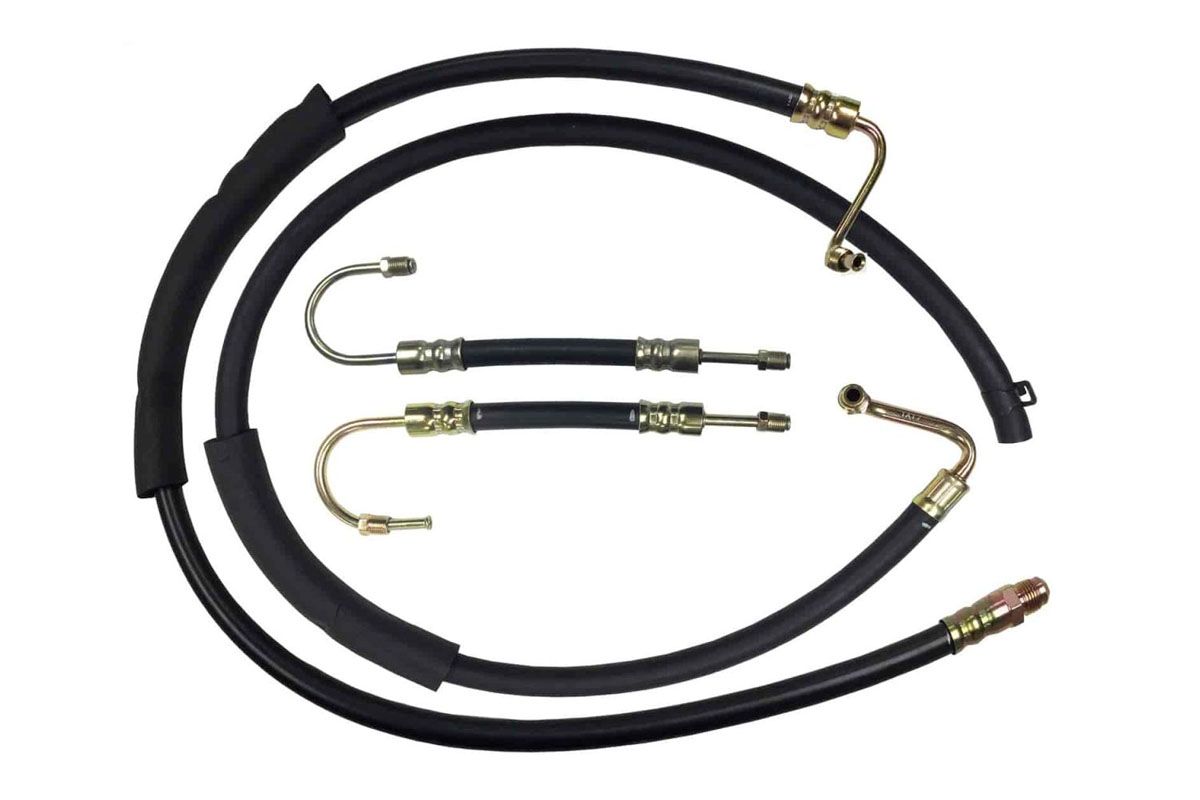
What Is a Power Steering Hose? What Are the Symptoms of Failure?
The power steering hose is an important component of a hydraulic power steering system. Its main purpose is to carry power steering fluid between the power steering pump, steering rack or steering gearbox, and the fluid reservoir.
In a hydraulic power steering system, the pump creates hydraulic pressure to reduce the amount of effort required to turn the steering wheel. The fluid travels through dedicated hoses and pipes to provide hydraulic assistance.
If a power steering hose develops a leak, crack, restriction, or connection problem, the system may lose hydraulic pressure. This can make the steering heavier, cause the power steering pump to become noisy, and eventually lead to damage to other steering components.
What Does a Power Steering Hose Do?
The primary function of the power steering hose is to safely transport hydraulic fluid through the steering system.
Most hydraulic power steering systems have two main fluid paths:
High-pressure line
The high-pressure hose carries pressurized fluid from the power steering pump to the steering rack or steering gearbox.
Because this line is exposed to high hydraulic pressure, it requires a specially designed reinforced hose or, depending on the vehicle, a combination of hose and metal pipe.
Return line
The return hose carries fluid back from the steering system to the power steering reservoir.
The pressure in the return line is generally much lower than in the high-pressure line, so its construction can be different.
The high-pressure and return hoses should not automatically be considered interchangeable.
Where Is the Power Steering Hose Located?
Power steering hoses are normally located between:
-
The power steering pump
-
The power steering fluid reservoir
-
The steering rack
-
The steering gearbox
Depending on the vehicle design, some sections may be flexible rubber or synthetic hoses, while other sections may use rigid metal pipes.
Because the hoses are usually located in the engine compartment or underneath the vehicle, they are exposed to heat, vibration, road dirt, moisture, and other environmental conditions.
What Are the Symptoms of a Bad Power Steering Hose?
A damaged or leaking power steering hose can produce several noticeable symptoms.
Common symptoms include:
-
Power steering fluid leakage
-
Repeatedly low power steering fluid level
-
Heavy steering
-
Whining or humming when turning the steering wheel
-
Abnormal power steering pump noise
-
Intermittent steering assistance
-
Uneven or inconsistent steering feel
-
Fluid around hose connections
-
Cracks in the hose
-
Swelling or deformation of the hose
-
Fluid underneath the vehicle
-
Air entering the hydraulic system
-
Foaming or bubbling in the power steering reservoir
The exact symptoms depend on whether the problem affects the pressure hose, return hose, connection, or another component of the steering system.
Power Steering Fluid Leakage
One of the most important signs of a power steering hose problem is a fluid leak.
A crack in the hose, damaged fitting, failed O-ring, loose connection, or deteriorated sealing surface can allow power steering fluid to escape.
A leak may come from:
-
The hose itself
-
Hose fittings
-
Threaded connections
-
O-rings
-
Seals
-
The connection at the power steering pump
-
The connection at the steering rack
-
The steering gearbox
Therefore, fluid around a hose does not automatically prove that the hose itself is defective. Fluid can travel from another leaking component and collect around the hose.
The actual starting point of the leak should be identified before replacing parts.
What Does a Low Power Steering Fluid Level Mean?
Power steering fluid should not normally require frequent topping up.
If the fluid level repeatedly drops, there is usually a leak somewhere in the system.
Possible leak locations include:
-
Power steering hoses
-
Power steering pump
-
Steering rack
-
Steering gearbox
-
Reservoir
-
Seals
-
Fittings and connections
Adding fluid without repairing the leak only temporarily hides the problem.
A significant leak in the high-pressure line can cause the system to lose fluid very quickly.
Heavy Steering
A damaged power steering hose can cause the steering to become heavier if the hydraulic system cannot maintain adequate fluid flow or pressure.
The problem may become particularly noticeable during:
-
Parking
-
Low-speed maneuvering
-
Tight turns
-
U-turns
However, heavy steering does not automatically mean that the power steering hose is defective.
Other possible causes include:
-
Low fluid level
-
Power steering pump failure
-
Steering rack problems
-
Steering gearbox problems
-
Drive belt problems
-
Restricted fluid flow
-
Internal hydraulic faults
A complete system diagnosis is therefore necessary.
Whining or Humming When Turning
A whining or humming noise while turning the steering wheel is another common symptom of a hydraulic power steering problem.
If the fluid level is too low, the pump may draw air into the system.
The mixture of air and fluid can cause:
-
Whining
-
Humming
-
Foaming
-
Vibration
-
Irregular steering assistance
For this reason, a noisy power steering pump should not immediately be diagnosed as a failed pump.
The fluid level, hoses, connections, and possible leaks should be checked first.
Can a Power Steering Hose Crack?
Yes.
Power steering hoses can deteriorate over time because of:
-
High engine compartment temperatures
-
Hydraulic pressure
-
Vibration
-
Age
-
Oil and chemical contamination
-
Moisture
-
Road debris
-
Friction against other components
-
Incorrect installation
Rubber and synthetic materials can become hard and brittle as they age.
A hose may initially develop a small seepage leak and later develop a larger crack that causes substantial fluid loss.
What Does a Swollen Power Steering Hose Mean?
Visible swelling is an abnormal condition and should not be ignored.
If a high-pressure hose becomes swollen, its internal reinforcement or material structure may have deteriorated.
The hose may deform further when hydraulic pressure increases.
A severely swollen hose should generally be replaced rather than considered safe simply because it has not yet started leaking.
What Happens If a Power Steering Hose Bursts?
If a high-pressure power steering hose suddenly bursts, a large amount of fluid can be lost within a short period.
The driver may notice:
-
Sudden loss of power steering assistance
-
Heavy steering
-
A large fluid leak
-
Loud power steering pump noise
-
Fluid spraying around the engine compartment or underneath the vehicle
Continuing to drive after a major hydraulic leak can cause the power steering pump to operate without adequate lubrication.
This can result in additional pump damage.
Can a Power Steering Hose Become Restricted?
Yes, although restrictions are generally less common than leaks.
Fluid flow can be restricted by:
-
Internal hose deterioration
-
Debris inside the hydraulic system
-
Incorrect hose installation
-
A crushed hose
-
Excessive bending
-
Damaged internal layers
-
Contaminated power steering fluid
A restriction can interfere with normal fluid circulation and hydraulic pressure.
The result may be unusual steering behavior, noise, or inconsistent power assistance.
Can the Inside of a Power Steering Hose Fail?
Yes.
A hose can appear acceptable from the outside while its internal structure has deteriorated.
Older hoses can develop internal separation or deterioration, allowing pieces of the inner material to break away.
These particles can circulate through the hydraulic system and potentially restrict fluid passages or affect other components.
This is one reason why simply inspecting the outside of a hose is not always enough to determine its condition.
Is a Power Steering Hose the Same as a Brake Hose?
No.
Although both systems use hydraulic fluid, power steering hoses and brake hoses are designed for different applications.
A brake hose is designed specifically for the braking system and its operating conditions.
A power steering hose is designed for the hydraulic steering system and may have different pressure, material, fitting, and temperature requirements.
A generic hydraulic hose should never be installed simply because it physically fits.
The replacement hose must be suitable for the specific steering system.
What Is the Difference Between a Power Steering Hose and a Power Steering Pipe?
Some vehicles use both flexible hoses and rigid metal pipes.
A flexible hose can accommodate movement and vibration between components.
A metal pipe provides a rigid fluid path and is commonly used in sections where flexibility is not required.
For example, a high-pressure steering line may contain a combination of metal pipe and flexible reinforced hose.
The exact design varies by vehicle.
Why Do Power Steering Hoses Fail?
Several factors can shorten the service life of a power steering hose.
Age
Rubber and synthetic materials naturally deteriorate over time.
Heat
Constant exposure to engine and exhaust-area heat can accelerate material degradation.
Hydraulic pressure
High-pressure hoses are continuously exposed to hydraulic pressure during steering operation.
Vibration
Engine and vehicle vibration can gradually stress hose connections and mounting points.
Friction
A hose rubbing against another component can eventually wear through its outer surface.
Chemical contamination
Engine oil, fuel, solvents, and incompatible chemicals can damage hose materials.
Incorrect installation
A hose that is twisted, stretched, sharply bent, or incorrectly routed can fail prematurely.
Incorrect power steering fluid
Using a fluid that is not compatible with the vehicle can damage seals, hoses, and other hydraulic components.
How Do You Check a Power Steering Hose?
Inspection should begin by checking the power steering fluid level according to the manufacturer's procedure.
The following should then be inspected:
-
Hose surface
-
Hose fittings
-
Metal pipes
-
Pump connections
-
Steering rack connections
-
Steering gearbox connections
-
O-rings and seals
-
Hose clamps where applicable
-
Protective coverings
-
Areas where the hose passes close to other components
Oil or fluid contamination should be carefully traced back to its source.
If necessary, the affected area can be cleaned and inspected again after operating the steering system so that the origin of a new leak can be identified.
Is Looking at the Hose Enough to Find a Leak?
No.
Power steering fluid can spread across surrounding components while the vehicle is operating.
A leak from the power steering pump, steering rack, or another connection may run onto the hose and make it appear that the hose is leaking.
Therefore, the highest or most visible wet area is not necessarily the source of the leak.
The beginning point of the fluid trail should be identified.
What Should You Check When Replacing a Power Steering Hose?
The replacement hose must be designed for the specific vehicle and hydraulic steering system.
Important considerations include:
-
Correct pressure rating
-
Correct internal diameter
-
Correct fittings
-
Correct hose length
-
Compatibility with the specified power steering fluid
-
Resistance to engine compartment temperatures
-
Correct routing
-
Proper attachment and support
A conventional rubber hose should not be substituted for a high-pressure power steering hose.
The replacement part must be capable of handling the pressure and temperature requirements of the system.
Why Does the Power Steering Make Noise After Hose Replacement?
Air can enter the hydraulic system when a power steering hose is removed.
If air remains in the system after installation, the pump may produce abnormal noise.
Possible symptoms include:
-
Whining
-
Humming
-
Foaming in the reservoir
-
Steering vibration
-
Irregular steering assistance
The hydraulic system may therefore need to be properly bled according to the manufacturer's procedure.
The correct bleeding procedure varies between vehicles.
Does Power Steering Fluid Leak When Replacing the Hose?
Yes.
Because the hose carries hydraulic fluid, removing it normally results in some fluid loss.
After replacement, the system may require:
-
Correct power steering fluid
-
Fluid level adjustment
-
Air bleeding
-
Leak inspection
-
Steering system testing
The exact fluid specification is important.
Using the wrong fluid can damage seals and other hydraulic components.
Will a Bad Power Steering Hose Trigger an OBD-II Code?
A conventional hydraulic power steering hose is a mechanical and hydraulic component, so it normally does not generate a direct OBD-II fault code.
However, many modern vehicles use electronically monitored steering systems.
Depending on the vehicle, the steering system may include:
-
Steering angle sensors
-
Pressure sensors
-
Electronic control modules
-
CAN communication
-
Electric or electro-hydraulic steering components
A modern vehicle may therefore store steering-related diagnostic codes.
Even when a code is present, however, the code does not automatically prove that the hose itself has failed.
Can You Drive With a Bad Power Steering Hose?
Driving with a serious power steering fluid leak is not recommended.
The vehicle should be inspected as soon as possible if:
-
The steering suddenly becomes heavy
-
The fluid level drops rapidly
-
Fluid is spraying from the hose
-
The power steering pump becomes very noisy
-
A large amount of fluid is visible underneath the vehicle
-
Power steering assistance is lost
Continuing to drive can turn a relatively simple hose problem into an expensive power steering pump or steering system repair.
Loss of steering assistance can also make low-speed maneuvering significantly more difficult.
Is the Power Steering Hose Bad or Is the Power Steering Pump Bad?
These two problems can produce similar symptoms.
For example, heavy steering and pump noise can occur because of either a pump problem or insufficient fluid caused by a leaking hose.
A systematic diagnosis should include:
-
Checking the fluid level
-
Looking for leaks
-
Inspecting the hoses and connections
-
Checking the pump for abnormal noise
-
Checking the hydraulic system pressure when required
-
Inspecting the steering rack or steering gearbox
-
Comparing measured pressure with the manufacturer's specifications
Replacing the pump before identifying the source of a fluid loss can result in unnecessary expense.
Can a Power Steering Hose Be Repaired?
Some hoses can technically be rebuilt or professionally reconditioned, depending on their construction and fittings.
However, high-pressure steering hoses should not be repaired using improvised clamps, ordinary rubber hose, or unsuitable fittings.
The hose must be capable of safely handling the system's operating pressure and temperature.
If the hose is cracked, swollen, badly worn, internally damaged, or otherwise unreliable, replacement with a correctly specified hose is generally the safer solution.
Conclusion
The power steering hose is an essential part of a hydraulic power steering system. It transports hydraulic fluid between the power steering pump, steering rack or steering gearbox, and reservoir.
The most common signs of a power steering hose problem include fluid leakage, repeatedly low fluid level, heavy steering, whining or humming noises, fluid around hose connections, cracks, swelling, and inconsistent steering assistance.
A leaking high-pressure hose can cause the system to lose a significant amount of fluid very quickly. If the pump continues operating without sufficient fluid, it can also become damaged.
However, heavy steering or pump noise does not automatically mean that the hose is defective. The power steering pump, steering rack, steering gearbox, low fluid level, restricted fluid flow, seals, and other hydraulic components can produce similar symptoms.
For this reason, the complete hydraulic steering system should be inspected before replacing parts.
A damaged, swollen, cracked, or seriously leaking power steering hose should not be ignored. Early diagnosis can prevent further damage to the power steering pump and other steering components while also helping maintain safe and predictable steering performance.