TR
TR EN
EN

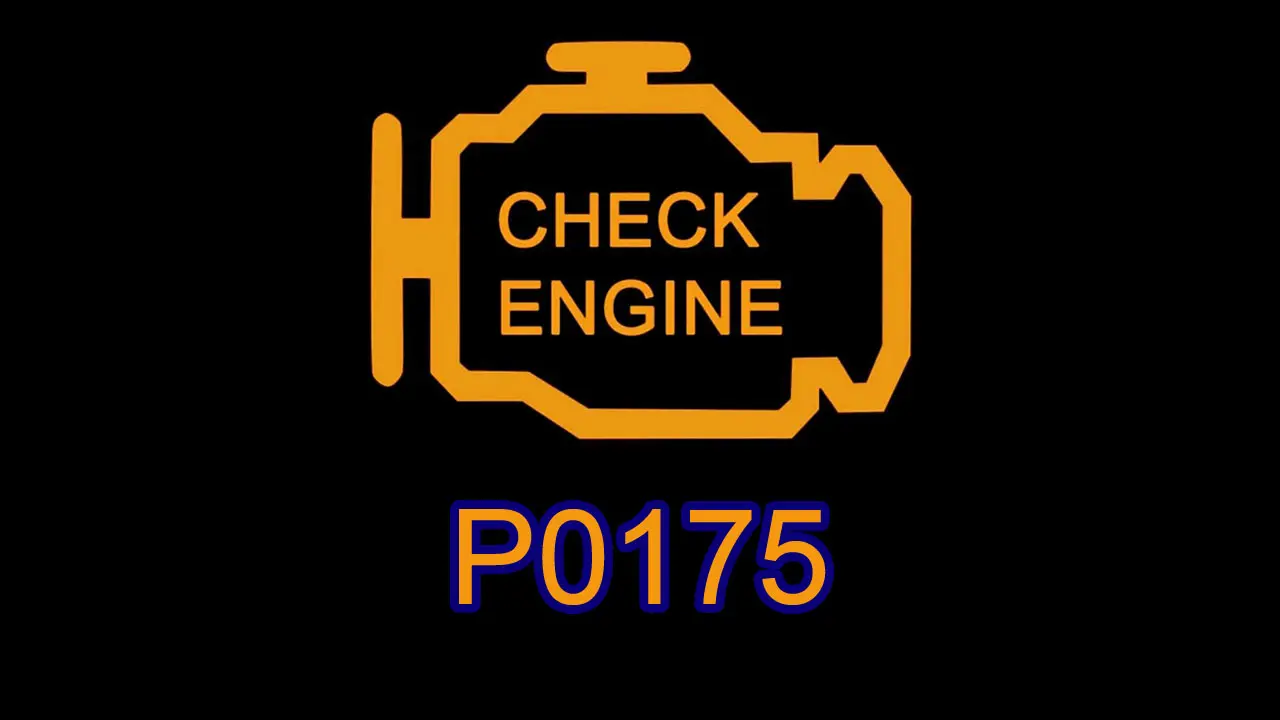
P0175 System Too Rich (Bank 2)
P0175 means the engine control module (ECM) has determined that the air-fuel mixture on Bank 2 is richer than the expected operating range.
In simple terms, the engine is receiving too much fuel, too little air, or both for the amount of combustion air the ECM expects.
But there is an important detail that is often missed:
P0175 does not automatically mean that a fuel injector is leaking.
The ECM usually reaches this conclusion by looking at the oxygen or air-fuel sensor feedback and the fuel corrections it has been making. If it repeatedly has to remove fuel from Bank 2 and still sees a mixture that is too rich, it can eventually set P0175.
That makes this code a system-level mixture diagnosis, rather than a direct identification of one failed component.
What Does “Too Rich” Mean?
A rich mixture contains more fuel relative to the amount of oxygen available for combustion than the ECM expects.
A simplified way to think about it is:
Too much fuel + normal air
or
Normal fuel + too little air
can both result in a rich combustion condition.
The ECM normally attempts to correct the mixture.
If it detects a rich condition, it can reduce the amount of fuel being commanded.
This fuel correction is commonly visible through scan-tool data such as:
-
Short-Term Fuel Trim (STFT)
-
Long-Term Fuel Trim (LTFT)
-
Air-fuel ratio
-
Oxygen sensor voltage or equivalence ratio
-
Mass Air Flow (MAF)
-
Manifold Absolute Pressure (MAP)
If the correction reaches a calibrated limit, P0175 may be stored.
What Does “Bank 2” Mean?
Bank 2 refers to the side of the engine that does not contain cylinder number 1 on engines with more than one cylinder bank.
This is particularly important on:
-
V6 engines
-
V8 engines
-
V10 engines
-
Other multi-bank engines
On an inline four-cylinder engine, there normally isn't a separate Bank 2 in the conventional sense.
The exact cylinder numbering and sensor arrangement should always be confirmed using manufacturer service information.
Also, Bank 2 does not mean the second cylinder.
It refers to an entire cylinder bank.
How the ECM Decides the Mixture Is Rich
Modern engine management systems continuously monitor combustion feedback.
The ECM may initially command a calculated amount of fuel based on inputs such as:
-
Engine speed
-
Engine load
-
MAF
-
MAP
-
Throttle position
-
Coolant temperature
-
Intake air temperature
-
Fuel pressure
-
Oxygen sensor feedback
Once closed-loop operation begins, the ECM compares the expected mixture with feedback from the oxygen or air-fuel sensors.
If the mixture appears rich, the ECM reduces fuel delivery.
For example:
ECM commands normal fuel
↓
Sensor reports rich mixture
↓
ECM reduces fuel
↓
Sensor still reports rich
↓
Fuel trims become increasingly negative
↓
Correction reaches its limit
↓
P0175 is stored
This is why fuel-trim data is extremely useful when diagnosing P0175.
Negative Fuel Trim Is an Important Clue
When the ECM removes fuel, fuel trim becomes negative.
For example, if the ECM is continually reducing fuel on Bank 2, you may see negative STFT and/or LTFT values.
The exact percentage at which a manufacturer sets a fault varies, so there is no universal “P0175 occurs at exactly X%” rule.
The important diagnostic question is:
Why does the ECM have to keep removing fuel?
That question is much more useful than simply asking which part should be replaced.
Common Causes of P0175
P0175 can have several different causes.
Leaking fuel injector
An injector on Bank 2 may be:
-
Stuck partially open
-
Leaking after shutdown
-
Delivering excessive fuel
-
Electrically malfunctioning
A leaking injector can create a genuinely rich condition.
Excessive fuel pressure
If fuel pressure is higher than the system expects, injectors can deliver more fuel than intended.
Possible causes include:
-
Faulty fuel-pressure regulator
-
Fuel-pressure control problem
-
Incorrect fuel-pressure command
-
Return-system restriction on applicable systems
-
Faulty pressure-control components
On modern systems, commanded and actual fuel pressure should be compared where data is available.
Faulty fuel-pressure sensor
If the ECM receives incorrect fuel-pressure information, its control strategy may be affected.
This does not necessarily mean the pressure itself is wrong; the sensor could simply be reporting incorrect information.
Faulty oxygen or air-fuel ratio sensor
A sensor can report a falsely rich condition.
The ECM may then reduce fuel unnecessarily and potentially create an actual lean condition while still storing a rich-related code.
This is why the sensor signal must be tested rather than automatically trusted.
MAF sensor problem
A MAF sensor that underreports or overreports incoming air can disturb fuel calculations.
Contamination, wiring problems, incorrect installation, or sensor degradation can all affect the reading.
Restricted air intake
A severely restricted air filter or intake path can reduce the amount of air entering the engine.
Less air with the same amount of fuel can create a richer mixture.
EVAP purge problem
A purge valve that is stuck open can introduce fuel vapors into the intake when the ECM is not expecting them.
Depending on the system, this can contribute to a rich condition.
Fuel contamination
Incorrect fuel or contamination can affect combustion and sensor feedback.
Coolant temperature sensor problem
If the ECM incorrectly believes the engine is much colder than it really is, it may command additional fuel.
Engine mechanical problem
A mechanical issue affecting Bank 2 can sometimes influence oxygen-sensor readings and mixture control.
P0175 Can Be a Fuel Problem — But It Doesn't Have to Be
This is where diagnosis becomes interesting.
Suppose Bank 2 has a leaking injector.
The engine receives too much fuel.
The oxygen sensor detects the rich condition.
The ECM reduces fuel.
Fuel trims become strongly negative.
P0175 is stored.
That's a straightforward fuel-delivery problem.
But imagine instead that the Bank 2 air-fuel sensor itself is reporting an incorrect rich signal.
The ECM believes the engine is too rich and begins removing fuel.
The actual mixture may then become leaner than intended.
The resulting diagnostic picture can be much more complicated.
Therefore, sensor feedback needs to be validated before condemning fuel-system components.
Compare Bank 1 and Bank 2
This is one of the most useful diagnostic techniques for P0175.
If the engine has two banks, compare the corresponding data.
Look at:
-
STFT Bank 1
-
STFT Bank 2
-
LTFT Bank 1
-
LTFT Bank 2
-
Oxygen sensor behavior
-
Air-fuel ratio sensor data
-
MAF
-
Fuel pressure
Suppose:
Bank 1 fuel trim: +2%
Bank 2 fuel trim: -22%
That difference is significant.
It suggests that the problem may be localized to Bank 2 rather than being a global engine-wide fuel-control problem.
Possible suspects then include:
-
Bank 2 injector
-
Bank 2 oxygen/A/F sensor
-
Bank 2 wiring
-
Bank 2 exhaust issue
-
Bank 2 intake/fueling problem
What If Both Banks Are Rich?
This changes the direction of the diagnosis.
If both banks show strongly negative fuel trims, the problem may be common to the entire engine.
Possible causes include:
-
Excessive fuel pressure
-
MAF measurement problem
-
Incorrect coolant temperature
-
Fuel contamination
-
Common fuel-control problem
-
EVAP purge issue
-
Airflow calculation problem
In this situation, replacing one Bank 2 injector would make little sense unless there is evidence pointing specifically to that injector.
P0175 and Fuel Pressure
Fuel pressure deserves serious attention when diagnosing a rich condition.
If fuel pressure is too high, the injectors may deliver more fuel than expected.
The exact relationship depends on the injector and fuel-system design.
On older systems, a mechanical regulator may control pressure.
On newer systems, the ECM may actively control fuel pressure through electronic components.
Therefore, check:
Desired fuel pressure
versus
Actual fuel pressure
where the vehicle provides this information.
A mechanical pressure test may also be required depending on the system.
Don't Assume a Normal Fuel Pressure Reading Proves the Fuel System Is Good
Fuel pressure is only one part of the fuel-delivery system.
An injector can leak even when rail pressure is within specification.
Likewise, an injector can have an electrical problem while static fuel pressure appears normal.
If P0175 is isolated to Bank 2, injector balance, leakage, and cylinder-specific behavior may need to be investigated.
Checking the Injectors
If the evidence points toward excessive fuel on Bank 2, the injectors should be evaluated.
Possible tests include:
-
Injector electrical resistance
-
Injector command
-
Injector balance
-
Leakage testing
-
Cylinder contribution
-
Fuel-pressure decay testing where appropriate
-
Oscilloscope analysis of injector control
The correct procedure depends heavily on the injection system.
A gasoline port injector and a modern diesel common-rail injector cannot be tested using the same assumptions.
A Leaking Injector May Cause More Than P0175
If an injector is mechanically leaking, other symptoms may appear.
Possible signs include:
-
Hard starting
-
Fuel smell
-
Poor fuel economy
-
Rough idle
-
Misfire
-
Oil dilution
-
Black exhaust smoke on applicable engines
-
Spark-plug fouling on gasoline engines
A gasoline engine with a heavily over-fueled cylinder may also develop a misfire code such as P030x.
This combination can be a valuable clue.
Check the Spark Plugs on Gasoline Engines
If P0175 affects a gasoline engine, inspect the spark plugs when appropriate.
A cylinder receiving excessive fuel may produce a plug that appears:
-
Wet with fuel
-
Dark
-
Carbon fouled
If one cylinder on Bank 2 looks dramatically different from the others, that can help identify a cylinder-specific fuel problem.
However, plug appearance alone is not enough to condemn an injector.
MAF Sensor Problems
The MAF sensor plays a major role in calculating engine airflow.
If its measurement is incorrect, the ECM's fuel calculation can also be incorrect.
Check:
-
MAF reading at idle
-
MAF behavior during acceleration
-
MAF wiring
-
MAF connector
-
Sensor contamination
-
Intake leaks before the MAF
-
Correct sensor installation
Do not use a universal “grams per second at idle” rule for every engine. MAF readings vary with engine size, design, RPM, altitude, and operating conditions.
Compare the data with manufacturer specifications or known-good values for that engine.
MAP Sensor and Load Calculation
Some engines rely heavily on MAP-based load calculations, while others use MAF or a combination of sensors.
A faulty MAP sensor can therefore influence fuel calculations.
Check whether the MAP reading is plausible for:
-
Ignition on, engine off
-
Idle
-
Acceleration
-
Deceleration
A sensor that reports an implausible pressure can cause the ECM to calculate airflow incorrectly.
Coolant Temperature Sensor
The engine coolant temperature sensor can also contribute to a rich condition.
If the ECM believes the engine is extremely cold, it may increase fuel delivery.
One useful test is to check coolant temperature before starting after a long soak.
The reading should be reasonably consistent with ambient temperature.
If the scanner reports a very low temperature on a warm engine, investigate the sensor and circuit.
EVAP Purge Valve
A purge valve stuck open can allow fuel vapors into the intake continuously.
This can create a rich condition, especially under operating conditions when the purge system should be closed.
Clues can include:
-
Rough idle
-
Difficult starting after refueling
-
Fuel odor
-
Mixture problems that change with purge operation
The exact diagnostic procedure depends on the EVAP system.
Exhaust Leaks Can Complicate Oxygen Sensor Diagnosis
An exhaust leak can allow outside oxygen to enter the exhaust stream.
This can alter oxygen sensor readings.
A sensor may then report a condition that does not accurately represent the combustion mixture inside the cylinder.
While exhaust leaks are often associated with lean-related interpretations, the broader point is that sensor feedback can be misleading if the exhaust system itself is compromised.
The location of the leak relative to the oxygen or air-fuel sensor is important.
Check the Engine Oil
If a gasoline engine has been running excessively rich for an extended period, unburned fuel can potentially enter the crankcase.
This can dilute engine oil.
If there is a strong fuel smell in the engine oil or the oil level has unexpectedly increased, investigate the cause promptly.
Possible causes include severe over-fueling or injector leakage.
This is not a diagnostic requirement for every P0175, but it is an important warning sign when present.
A Practical Diagnostic Scenario
Imagine a V6 engine arrives with P0175.
The vehicle drives reasonably well.
The technician checks fuel trims and finds:
Bank 1: near normal
Bank 2: strongly negative
This immediately suggests that the issue is not simply a global fuel-pressure problem.
The technician compares the Bank 2 oxygen/A/F sensor with Bank 1 and notices abnormal sensor behavior.
Further testing reveals an electrical problem in the Bank 2 sensor circuit.
The sensor was reporting an incorrect rich condition, causing the ECM to remove fuel.
Replacing the injectors would have been the wrong repair.
Another Scenario: Genuine Over-Fueling
A different vehicle shows strongly negative fuel trims only on Bank 2.
The Bank 2 sensor responds correctly.
Fuel pressure is within specification.
The MAF and coolant-temperature readings are plausible.
An injector leakage test reveals that one Bank 2 injector does not seal correctly after the engine is shut down.
The injector is allowing additional fuel into the cylinder.
In this case, P0175 is the result of a genuine fuel-delivery problem.
P0175 and Misfire Codes
A rich condition can produce misfires.
If P0175 appears together with a cylinder-specific misfire code such as P0301, P0303, or another P030x code, look for a relationship.
A severely over-fueled cylinder may fail to burn the mixture correctly.
At the same time, a misfire itself can change oxygen content in the exhaust and affect sensor readings.
Therefore, the codes should be interpreted together rather than independently.
Don't Ignore the Possibility of a Sensor Misinterpretation
This is one of the more important lessons with mixture codes.
The ECM decides that the mixture is rich based partly on sensor feedback.
If that feedback is wrong, the diagnostic conclusion can also be wrong.
Therefore, the technician should establish whether:
The engine is genuinely rich
or
The ECM only believes the engine is rich because the feedback signal is incorrect.
That distinction can prevent unnecessary injector, fuel-pump, and fuel-pressure component replacement.
A Logical Diagnostic Procedure for P0175
A practical diagnostic sequence is:
1. Scan all modules
Record P0175 and any additional DTCs.
2. Check freeze-frame data
Look at RPM, load, coolant temperature, MAF/MAP, fuel trims, and other available parameters when the code was stored.
3. Check whether the problem is currently present
Look at STFT and LTFT for both banks.
4. Compare Bank 1 with Bank 2
Determine whether the rich condition is localized or affecting the whole engine.
5. Validate the oxygen/A/F sensor data
Make sure the feedback signal is plausible.
6. Check MAF and MAP data
Verify that airflow and engine-load calculations make sense.
7. Check coolant temperature
Make sure the ECM is not being told that the engine is much colder than it actually is.
8. Check fuel pressure
Compare actual pressure with manufacturer specifications.
9. Inspect Bank 2 injectors
Look for leakage, excessive delivery, and electrical problems.
10. Check the EVAP purge system
Make sure unwanted fuel vapor is not continuously entering the intake.
11. Inspect the intake and exhaust systems
Look for restrictions, leaks, and conditions that could distort sensor feedback.
12. Check for fuel contamination
Especially when the problem appeared after refueling.
13. Evaluate wiring and connectors
Sensor and injector wiring should be checked for opens, shorts, corrosion, and poor terminal contact.
14. Consider ECM problems last
An ECM should not be condemned until the input signals and controlled components have been proven.
Why Fuel Trim Is So Valuable
Fuel trim can tell you what the ECM is trying to do.
If P0175 is present and Bank 2 fuel trims are strongly negative, the ECM is actively trying to remove fuel.
That is valuable information.
The next question becomes:
Why isn't removing fuel enough?
Possible answers include:
-
Excess fuel entering the engine
-
Incorrect sensor feedback
-
Excessive fuel pressure
-
Incorrect airflow calculation
-
Fuel vapor entering through EVAP
-
Engine operating condition outside expected parameters
Fuel trim therefore helps turn P0175 from a generic “rich” code into a more targeted diagnostic problem.
Is P0175 Serious?
P0175 should not be ignored.
A persistent rich condition can result in:
-
Poor fuel economy
-
Increased emissions
-
Carbon deposits
-
Spark-plug fouling
-
Catalytic converter damage
-
Engine-oil contamination
-
Poor engine performance
A catalytic converter can be particularly vulnerable to prolonged abnormal combustion conditions.
The seriousness depends on how rich the mixture actually is and how long the condition has existed.
Can You Keep Driving With P0175?
If the vehicle runs normally and the code is intermittent, it may remain drivable while diagnosis is arranged.
However, prolonged operation with a genuinely rich mixture is not advisable.
Stop or limit driving if there are symptoms such as:
-
Strong fuel smell
-
Heavy black smoke
-
Severe misfire
-
Flashing Check Engine Light
-
Major loss of power
-
Engine oil smelling strongly of fuel
-
Severe hard starting
A flashing Check Engine Light can indicate a severe misfire capable of damaging the catalytic converter.
P0175 vs P0172
These codes have similar meanings but apply to different banks.
P0172 – System Too Rich (Bank 1)
P0175 – System Too Rich (Bank 2)
If both codes appear together, investigate causes that can affect the entire engine.
If only P0175 appears, focus more heavily on components and conditions specific to Bank 2.
Final Diagnosis
P0175 – System Too Rich (Bank 2) means that the ECM has determined that the air-fuel mixture on Bank 2 is richer than expected and that its fuel corrections are not bringing the mixture back into the expected range.
It does not automatically identify a leaking injector.
The actual cause can be:
-
Excessive fuel delivery
-
Excessive fuel pressure
-
Faulty injector
-
Incorrect oxygen/A/F sensor feedback
-
MAF or MAP measurement problem
-
Coolant-temperature sensor error
-
EVAP purge problem
-
Intake restriction
-
Fuel contamination
-
Wiring or electrical faults
-
Other engine-management problems
The most useful starting point is to compare Bank 1 and Bank 2 fuel trims and validate the sensor data.
If Bank 2 alone has strongly negative fuel trims, concentrate on that bank. If both banks are rich, look for a problem affecting the entire engine.
The key principle with P0175 is simple:
The ECM knows that Bank 2 is being interpreted as too rich. Your job is to determine whether the engine is actually receiving too much fuel or whether the sensors and calculations are making the ECM believe that it is.
:::