TR
TR EN
EN

What Is a Knock Sensor? What Are the Symptoms of Knock Sensor Failure?
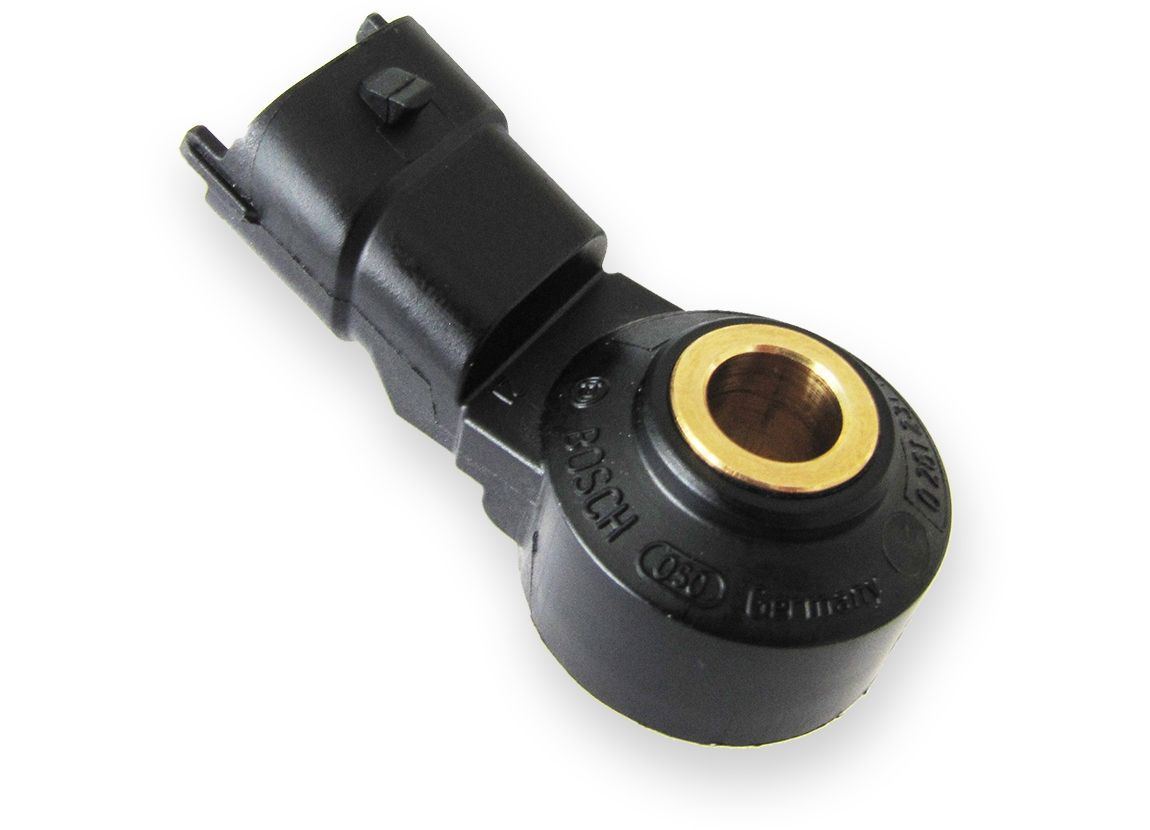
A knock sensor is an important component of the engine management system. It detects abnormal combustion, commonly known as engine knock or detonation, and sends this information to the engine control unit (ECU). The ECU then adjusts ignition timing and, in some engines, other operating parameters to protect the engine and maintain proper performance.
Although the knock sensor itself is relatively small, a problem with it can affect engine performance, fuel economy, emissions, and overall drivability.
What Does a Knock Sensor Do?
During normal combustion, the air-fuel mixture burns in a controlled manner inside the cylinder. Under certain conditions, the mixture can ignite abnormally and create rapid pressure waves. This condition is commonly referred to as knock, pinging, or detonation.
The knock sensor is designed to detect the vibration pattern associated with this abnormal combustion.
When the sensor detects a possible knock event, it sends a signal to the ECU. The ECU can then retard the ignition timing to reduce combustion pressure and prevent continued knocking.
In many modern engines, this process happens continuously. The ECU constantly monitors the knock sensor signal and adjusts ignition timing according to engine load, speed, temperature, and other operating conditions.
Where Is the Knock Sensor Located?
The knock sensor is generally mounted directly to the engine block because it needs to detect vibrations generated inside the engine.
Depending on the engine design, it may be located:
-
On the engine block
-
Between the cylinder banks on a V-type engine
-
Near the intake manifold
-
On the lower or upper section of the engine block
-
In some engines, beneath the intake manifold
The exact location varies considerably between engine designs, so accessing the sensor can sometimes require removing other components.
What Causes a Knock Sensor to Fail?
A knock sensor can fail because of several different reasons. The sensor itself is not always the problem when a diagnostic system reports a knock sensor-related fault.
Common causes include:
Sensor failure

The internal piezoelectric element can deteriorate or become damaged over time. This may cause an incorrect, weak, or missing signal.
Damaged wiring
The wiring between the sensor and ECU can become damaged by heat, vibration, oil contamination, or physical contact with other engine components.
Connector problems
Loose terminals, corrosion, moisture, or poor electrical contact can interrupt the sensor signal.
Incorrect tightening
Knock sensors are sensitive to mounting conditions. If the sensor is installed too loosely or tightened incorrectly, its ability to detect engine vibrations can be affected.
Engine mechanical problems
Actual engine knocking can sometimes be caused by other problems rather than a faulty sensor. Incorrect ignition timing, poor fuel quality, carbon deposits, overheating, or fuel mixture problems can all contribute to abnormal combustion.
Incorrect engine repairs
If the sensor has been removed and reinstalled incorrectly, its mounting surface or installation torque can affect its operation.
Symptoms of a Bad Knock Sensor
A faulty knock sensor does not always produce an obvious symptom. In some cases, the ECU can compensate for the problem, while in others the engine may enter a protective strategy.
Possible symptoms include:
Check Engine Light
The most common indication is the illumination of the Check Engine Light. The ECU may store a knock sensor-related diagnostic trouble code when the sensor signal is missing, outside the expected range, or otherwise implausible.
Reduced engine performance
If the ECU cannot reliably determine whether the engine is knocking, it may use conservative ignition timing. This can make the engine feel less responsive, particularly during acceleration.
Poor acceleration
The vehicle may feel slower when accelerating under heavy load. The effect can be more noticeable when climbing a hill, carrying a heavy load, or accelerating at higher engine speeds.
Increased fuel consumption
Incorrect knock detection can cause the ECU to use ignition timing that is less efficient. As a result, fuel consumption may increase.
Engine hesitation
Some vehicles may experience hesitation or inconsistent response when accelerating.
Reduced engine power
In certain vehicles, the ECU may significantly retard ignition timing to protect the engine. This can result in noticeable power loss.
Engine knocking or pinging
A failed knock sensor does not necessarily cause the engine to knock directly. However, if the sensor cannot detect actual knock events, the ECU may fail to make the appropriate ignition timing corrections. This can allow knocking to occur under certain conditions.
Can a Bad Knock Sensor Cause Engine Damage?
Potentially, yes.
The knock sensor is part of the engine's protection strategy. If the engine experiences genuine detonation and the ECU cannot properly detect it, the ignition timing may not be corrected as intended.
Repeated severe knocking can increase cylinder pressure and temperature and may contribute to damage involving components such as:
-
Pistons
-
Piston rings
-
Valves
-
Spark plugs
-
Connecting rods
-
Head gasket
However, a knock sensor fault does not automatically mean that engine damage will occur. The actual risk depends on the engine design, operating conditions, severity of the knock, fuel quality, and how the ECU responds to the fault.
What Causes Engine Knock Besides a Bad Knock Sensor?
This distinction is important when diagnosing a knock sensor problem.
Actual engine knock can be caused by:
-
Low-quality or incorrect-octane fuel
-
Excessive carbon deposits
-
Excessive engine temperature
-
Lean air-fuel mixture
-
Incorrect ignition timing
-
Excessive cylinder temperature
-
Faulty fuel injectors
-
Problems with the cooling system
-
Incorrect engine modifications
-
Excessive compression in certain operating conditions
Therefore, replacing the knock sensor without checking the reason for the abnormal combustion may not solve the underlying problem.
Knock Sensor Failure and Diagnostic Trouble Codes
A knock sensor fault can trigger different OBD-II codes depending on the vehicle manufacturer and engine management system.
Some codes are related to:
-
Knock sensor circuit malfunction
-
Knock sensor signal too low
-
Knock sensor signal too high
-
Knock sensor range or performance
-
Knock sensor communication or signal problems
The exact code should always be checked before replacing the sensor. A stored code does not necessarily prove that the sensor itself has failed.
How Is a Knock Sensor Diagnosed?
A proper diagnosis should begin with the diagnostic trouble code and the conditions under which it was recorded.
The technician may then inspect the sensor and its electrical circuit.
Visual inspection
The sensor, connector, wiring, and surrounding area should be checked for:
-
Broken wires
-
Damaged insulation
-
Corrosion
-
Oil contamination
-
Loose connectors
-
Physical damage
-
Incorrect installation
Electrical testing
Depending on the sensor design, a technician can check the wiring, power or reference circuits where applicable, signal circuit, and ECU connection.
Some knock sensors generate a voltage signal in response to vibration, while others are monitored using more sophisticated circuit strategies. Therefore, the correct testing procedure depends on the vehicle.
Live data inspection
On vehicles that provide suitable data, scan-tool readings can help determine whether the ECU is receiving a plausible knock-related signal.
Checking actual engine knock
If the sensor appears to be working correctly, the technician should investigate whether the engine is experiencing genuine abnormal combustion.
Fuel quality, ignition, fuel delivery, cooling, and engine operating conditions should be considered before condemning the sensor.
Should You Replace the Knock Sensor Immediately?
Not necessarily.
Replacing the sensor may be appropriate if testing confirms that it is defective. However, replacing it solely because a knock sensor-related fault code is stored can lead to unnecessary expense.
The wiring and connector should be checked first, particularly on engines where the sensor is exposed to significant heat or vibration.
The sensor's mounting condition should also be considered. An incorrectly installed sensor can produce abnormal readings even when the sensor itself is not defective.
Can a Knock Sensor Be Cleaned?
A knock sensor is not normally a component that is repaired by cleaning.
If the sensor itself has an internal electrical or piezoelectric failure, cleaning it will not restore its function. If there is contamination around the mounting surface, however, the mounting area may need to be properly cleaned during installation according to the manufacturer's procedure.
It is also important not to damage the sensor during removal or installation.
Is It Safe to Drive With a Bad Knock Sensor?
It depends on the vehicle and the nature of the fault.
If the Check Engine Light is on but the engine is running normally, the vehicle may continue to operate using a protective ignition strategy. However, continued driving under heavy load or high engine temperatures is not ideal when a knock detection problem is suspected.
If the engine is actually producing loud knocking, severe hesitation, overheating, or significant power loss, continued driving should be avoided until the cause is diagnosed.
What Is the Difference Between Knock and Pre-Ignition?
Knock and pre-ignition are often confused, but they are not exactly the same.
Knock generally occurs when part of the unburned air-fuel mixture auto-ignites after the spark has initiated normal combustion. This creates rapid pressure fluctuations inside the cylinder.
Pre-ignition occurs when the mixture starts burning before the normal spark-triggered combustion event. It can be caused by excessively hot components, deposits, or other abnormal conditions.
Both can be harmful, but they involve different combustion mechanisms.
Why Is the Knock Sensor Important?
The knock sensor allows the ECU to operate the engine closer to its optimal ignition timing while maintaining a safety margin against abnormal combustion.
Without reliable knock feedback, the ECU may have to use more conservative settings. This can affect performance and fuel efficiency.
For this reason, a knock sensor is not simply an ordinary vibration sensor. Its signal is an important part of the engine's electronic control and protection system.
Final Check Before Replacing the Sensor
If a vehicle shows a knock sensor-related fault, the best approach is to diagnose the complete system rather than immediately replacing the sensor.
Check the diagnostic code, inspect the wiring and connector, verify the sensor installation, examine live data where available, and investigate any genuine engine knocking.
A faulty sensor is one possible cause, but wiring problems, connector faults, incorrect installation, or an actual engine combustion problem can produce similar symptoms.