TR
TR EN
EN

Why Does the Windshield Washer Fluid Warning Light Come On?
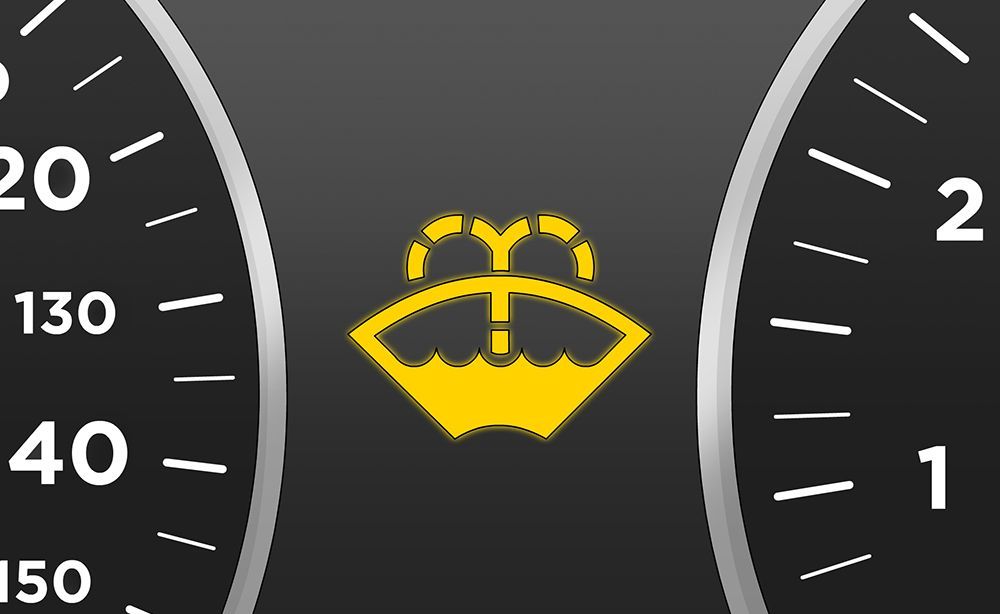
The windshield washer fluid warning light comes on when the vehicle detects that the washer fluid level is low or when the fluid level sensor detects an insufficient amount of fluid in the reservoir.
On the instrument cluster, this warning usually appears as a windshield with water spray symbol. In most cases, simply filling the washer fluid reservoir is enough to turn the warning off. However, if the warning remains illuminated even after the reservoir has been filled, there may be a problem with the level sensor, connector, wiring, or reservoir.
What Does the Windshield Washer Fluid Warning Light Mean?
The main purpose of this warning is to inform the driver that the windshield washer fluid is running low.
The windshield washer system is important for maintaining visibility, especially during long-distance driving, rainy weather, muddy road conditions, or when insects and dirt accumulate heavily on the windshield.
Even if the windshield wipers continue to operate when the fluid runs out, cleaning the windshield effectively becomes difficult.
The Washer Fluid Level Is Low
The most common reason for the warning light is simply a low washer fluid level.
The washer fluid reservoir is usually located in the engine compartment and has a cap marked with a windshield and spray symbol.
When the fluid falls below a certain level, the level sensor detects the condition and the vehicle activates the warning light.
Some vehicles activate the warning only when the reservoir is nearly empty, while others warn the driver while there is still a small amount of fluid remaining.
What Should You Do When the Washer Fluid Runs Out?
The first step is to check the washer fluid reservoir and refill it with an appropriate windshield washer fluid.
Using a washer fluid suitable for the season is particularly important. During winter, a fluid with adequate freeze protection should be used.
Plain water may work as a temporary solution, but it is not ideal for long-term use. Water can freeze in cold weather and potentially cause problems with the washer pump, hoses, or spray nozzles.
Proper washer fluid is also generally more effective than plain water at removing road dirt, oil residue, and insects.
The Warning Light Remains On Even When the Reservoir Is Full
If the warning light remains illuminated after filling the reservoir, the problem may not be the fluid level itself.
The following components may need to be checked:
-
Washer fluid level sensor
-
Sensor connector
-
Wiring
-
Reservoir connections
-
Body control module
-
Instrument cluster
On vehicles equipped with a washer fluid level sensor, the sensor is usually installed on or inside the washer fluid reservoir.
Faulty Washer Fluid Level Sensor
A faulty level sensor can cause the vehicle to incorrectly detect a low fluid level.
As a result, the warning light may remain on even when the reservoir is full.
Typical symptoms include:
-
Warning light remains on continuously
-
Warning does not disappear after refilling
-
Warning appears intermittently
-
Warning behavior changes with temperature
-
Reservoir is full but the vehicle reports low fluid
Depending on the vehicle design, the sensor may be replaceable separately. On some models, however, it may be integrated into the reservoir or another component and require replacement of the complete assembly.
Sensor Connector and Wiring Problems
If the sensor itself is working correctly, its electrical connections should be inspected.
A loose connector, corrosion, moisture, or damaged wiring can prevent the sensor signal from reaching the vehicle's control module correctly.
A broken wire or short circuit can create the same symptoms as a failed sensor.
This is particularly worth checking on vehicles where work has previously been performed around the front bumper, wheel arch, or washer fluid reservoir.
Can a Washer Fluid Leak Cause the Warning Light?
Yes. A leak can cause the washer fluid level to drop repeatedly.
Possible leak locations include:
-
Washer fluid reservoir
-
Reservoir seal
-
Washer pump connection
-
Washer hoses
-
Spray nozzles
-
Hose connections
If the warning light comes back shortly after the reservoir has been filled, the cause of the fluid loss should be investigated instead of simply replacing the level sensor.
A Washer Pump Failure Is Not the Same as a Level Sensor Failure
The washer pump and level sensor perform different functions.
The level sensor detects how much fluid is in the reservoir, while the pump moves the fluid toward the spray nozzles.
Therefore, if the reservoir is full but no fluid comes out of the spray nozzles, the problem is not necessarily related to the level sensor.
The washer pump, fuse, electrical supply, hoses, and spray nozzles should also be checked.
Why Can the Washer Fluid Warning Appear in Cold Weather?
Cold weather can make washer fluid problems more noticeable.
If the fluid freezes, the washer system may stop working properly. Depending on the vehicle and sensor design, extremely low temperatures can also affect the way the fluid level is detected.
For this reason, winter washer fluid with an appropriate freezing point should be used in cold climates.
Why Does the Warning Light Sometimes Turn On and Off?
An intermittent washer fluid warning can provide an important diagnostic clue.
If the warning appears while driving but disappears when the vehicle stops, the fluid level may be close to the sensor's minimum threshold.
When the vehicle moves, the fluid inside the reservoir can shift from side to side. This may temporarily expose the sensor and cause the system to detect a low level.
A loose connector or damaged wiring can also cause an intermittent warning.
Can You Drive With the Washer Fluid Warning Light On?
The washer fluid warning light generally does not indicate an immediate engine or transmission problem.
However, driving for a long time without washer fluid is not recommended because visibility can deteriorate quickly when the windshield becomes dirty.
This can be particularly dangerous at night, in heavy rain, or when driving toward direct sunlight.
For this reason, the reservoir should be refilled as soon as practical after the warning appears.
What Type of Washer Fluid Should You Use?
A good-quality windshield washer fluid appropriate for the season should be used.
Summer washer fluids can be formulated to remove insects and road grime effectively, while winter fluids provide protection against freezing.
Using only water in freezing conditions is not recommended.
It is also better to avoid adding random detergents, dishwashing liquid, or concentrated chemicals to the washer reservoir. Excessive foaming, residue, or damage to certain plastic and painted surfaces can occur.
How Is the Washer Fluid Warning Light Turned Off?
Most vehicles do not require a special reset procedure.
Once the reservoir has been filled to a sufficient level and the sensor is functioning correctly, the warning should normally disappear automatically.
Some vehicles may require the ignition to be switched off and on again or the vehicle to be driven for a short distance before the system updates the fluid status.
If the warning remains on with a full reservoir, the sensor and electrical system should be inspected.
How Is the Problem Diagnosed?
A practical diagnostic sequence is:
-
Check the washer fluid level.
-
Inspect the reservoir and system for leaks.
-
Check whether the washer pump operates.
-
Inspect the fluid level sensor if the vehicle is equipped with one.
-
Check the sensor connector and wiring.
-
Perform electrical tests with a multimeter if necessary.
-
Check relevant live data with a diagnostic scanner.
-
If the sensor and wiring are functioning correctly, investigate the control module and related circuits.
In most cases, the warning light simply means that the washer fluid level is low. If the reservoir is full but the warning remains illuminated, however, the level sensor, connector, wiring, and possible leaks should be checked before replacing parts unnecessarily.