TR
TR EN
EN

Fuel Pump and Fuel Filter Failure Symptoms
The fuel system has a direct effect on engine performance. The fuel pump is responsible for delivering fuel from the tank to the engine, while the fuel filter removes dirt, rust, and other contaminants before they reach sensitive fuel-system components.
When either component becomes restricted, weak, or defective, the engine may not receive the correct amount of fuel. The resulting symptoms can sometimes look like ignition, injector, sensor, or even engine problems.
Understanding the difference between a fuel pump problem and a clogged fuel filter can therefore make diagnosis much easier.
What Does the Fuel Pump Do?
The fuel pump moves fuel from the fuel tank toward the engine.
In most modern vehicles, an electric fuel pump is installed inside the fuel tank as part of the fuel pump module. Some systems may also use additional pumps, especially engines equipped with direct injection.
Depending on the vehicle, the fuel system may include:
-
Fuel tank
-
Electric fuel pump
-
Fuel pump module
-
Fuel filter
-
Fuel pressure regulator
-
Fuel lines
-
Fuel rail
-
Fuel injectors
-
High-pressure fuel pump on certain engines
-
Fuel pressure sensor
The pump must provide sufficient fuel flow and pressure under all operating conditions, including acceleration and high engine load.
What Does the Fuel Filter Do?
The fuel filter prevents contaminants from reaching the fuel system.
Fuel can contain:
-
Dust
-
Rust particles
-
Dirt
-
Sediment
-
Tank debris
-
Other contaminants
Over time, the filter can become restricted. A partially clogged filter may allow enough fuel to pass during light driving but become a serious restriction when the engine demands more fuel.
This is why a vehicle can sometimes drive normally at low speeds but experience hesitation or power loss during hard acceleration.
Fuel Pump vs. Fuel Filter: Why the Symptoms Can Be Similar
A weak fuel pump and a restricted fuel filter can produce very similar symptoms.
Both problems can cause:
-
Poor acceleration
-
Engine hesitation
-
Loss of power
-
Difficult starting
-
Stalling
-
Low fuel pressure
-
Engine misfires
-
Reduced engine performance
The important difference is that a fuel filter is primarily a fuel-flow restriction, while a weak fuel pump is usually unable to generate or maintain the required fuel pressure and flow.
Proper testing is therefore more reliable than trying to identify the component based only on symptoms.
Common Symptoms of Fuel Pump Failure
A failing fuel pump can produce several warning signs.
Difficulty starting
The engine may crank for longer than normal before starting. If the pump is unable to build sufficient pressure quickly, the engine may need several attempts to start.
Engine cranks but does not start
If the pump completely stops working and the engine does not receive fuel, the engine may crank normally but fail to start.
However, this symptom does not automatically prove that the fuel pump is defective. A blown fuse, failed relay, wiring problem, immobilizer issue, or another fuel-system fault can produce the same result.
Loss of power during acceleration
A weak pump may supply enough fuel during light driving but fail to keep up with fuel demand during acceleration.
The vehicle may feel normal when driven gently but lose power when the accelerator is pressed harder.
Hesitation
The engine may hesitate when accelerating, especially when fuel demand suddenly increases.
The hesitation can sometimes feel similar to an ignition problem.
Engine stalling
A fuel pump that intermittently loses pressure can cause the engine to stall.
The engine may restart after sitting for several minutes, making the problem particularly difficult to diagnose.
Poor performance at high RPM
A weak pump may become more noticeable at higher engine speeds because fuel demand increases.
The vehicle may perform reasonably well at low RPM but begin losing power as engine speed and load increase.
Common Symptoms of a Clogged Fuel Filter
A restricted fuel filter can cause many of the same symptoms.
Slow acceleration
The engine may feel unusually weak when accelerating.
Hesitation under load
The vehicle may hesitate when climbing a hill, carrying heavy loads, or accelerating aggressively.
Loss of power at high RPM
A partially blocked filter may allow sufficient fuel flow at low demand but restrict the flow when the engine requires more fuel.
Difficulty starting
A severely restricted filter can make it difficult for the fuel system to maintain adequate pressure and flow.
Engine stalling
If the restriction becomes severe enough, fuel delivery can fall below the level required to keep the engine running.
Intermittent performance
The vehicle may work normally under some conditions and perform poorly under others. This can happen because fuel demand changes continuously while driving.
How Does a Weak Fuel Pump Sound?
Some electric fuel pumps produce a faint operating noise when the ignition is switched on.
A noticeable change in the pump's sound can sometimes indicate a problem.
Possible warning signs include:
-
Loud whining
-
High-pitched buzzing
-
Grinding-like noise
-
Unusual humming
-
Pump noise that changes significantly with engine operation
However, pump noise alone is not enough to diagnose a failing fuel pump.
A pump can be noisy and still produce adequate pressure, while another pump can be relatively quiet but fail to provide sufficient fuel flow.
Fuel pressure and flow testing provide much stronger evidence.
Does a Clogged Fuel Filter Make a Noise?
Usually, a clogged fuel filter does not produce a distinct noise of its own.
Instead, the fuel pump may become louder because it has to work against increased restriction.
For this reason, a loud fuel pump does not necessarily mean the pump itself is failing. A restricted filter or another restriction in the fuel system can also affect pump operation.
What Happens During Hard Acceleration?
Hard acceleration is one of the situations where fuel delivery problems often become easier to notice.
When the accelerator is pressed aggressively, the engine requires significantly more fuel.
If the fuel filter is restricted or the fuel pump cannot maintain sufficient pressure and flow, the fuel system may fall behind the engine's demand.
The result can be:
-
Hesitation
-
Poor acceleration
-
Power loss
-
Misfire
-
Engine stumbling
-
Stalling in severe cases
This is one reason why a vehicle may appear perfectly normal during gentle driving but develop a serious symptom during full-throttle acceleration.
Can a Bad Fuel Pump Cause Misfires?
Yes.
The engine requires the correct amount of fuel to maintain the intended air-fuel mixture.
If fuel pressure becomes too low, the engine may receive insufficient fuel, particularly under high load.
This can result in:
-
Lean combustion
-
Engine hesitation
-
Misfires
-
Reduced power
-
Check Engine Light activation
Diagnostic trouble codes related to fuel pressure or mixture may sometimes accompany the problem.
However, misfire codes do not automatically mean that the fuel pump is defective. Ignition coils, spark plugs, injectors, vacuum leaks, sensors, and other components can also cause misfires.
Can a Clogged Fuel Filter Cause a Lean Condition?
It can.
If the filter restricts fuel delivery enough, the engine may receive less fuel than expected.
The engine control system may detect a lean air-fuel condition through the oxygen or air-fuel sensors.
Depending on the vehicle, diagnostic trouble codes such as P0171 or P0174 may appear.
A lean code should not automatically lead to fuel-filter replacement. The entire fuel-delivery system should be tested before replacing components.
Fuel Pressure Is One of the Most Important Diagnostic Tests
When a fuel-delivery problem is suspected, fuel pressure should be measured according to the vehicle manufacturer's specifications.
The important question is not simply:
"Is there fuel pressure?"
The more important questions are:
-
Is the pressure within specification?
-
Does pressure build quickly?
-
Does it remain stable?
-
Does pressure drop during acceleration?
-
Does pressure hold after the engine is switched off?
-
Is fuel flow sufficient?
-
Does the pressure regulator operate correctly?
A vehicle may have fuel pressure at idle but still have inadequate fuel delivery under load.
Fuel Pressure Drops Under Acceleration
This is an important diagnostic clue.
Suppose fuel pressure is correct while the engine is idling. When the accelerator is pressed, however, the pressure drops significantly.
Possible causes include:
-
Weak fuel pump
-
Restricted fuel filter
-
Restricted fuel line
-
Electrical supply problem to the pump
-
Faulty fuel pressure regulator
-
Fuel pressure control problem
-
Insufficient fuel supply from the tank
The correct diagnosis requires testing rather than replacing the pump immediately.
Electrical Problems Can Look Like a Bad Fuel Pump
A fuel pump depends on its electrical supply.
A problem with the:
-
Fuse
-
Relay
-
Wiring
-
Ground connection
-
Electrical connector
-
Pump control module
can prevent the pump from operating correctly.
A voltage-drop test can be particularly useful because the pump may receive voltage with little electrical load but lose voltage when it is operating under demand.
This is one reason simply checking whether voltage is present is not always sufficient.
Fuel Pump Failure Can Be Intermittent
Not every fuel pump fails completely.
An aging pump can operate normally most of the time and then lose pressure intermittently.
The vehicle may:
-
Start normally in the morning
-
Develop a problem after becoming hot
-
Stall unexpectedly
-
Restart after cooling down
-
Work normally again for several days
Heat can make an internally worn electric motor or pump assembly behave differently.
Intermittent fuel-pump problems are often more difficult to diagnose than a completely failed pump.
Does Fuel Level Affect Fuel Pump Operation?
Yes.
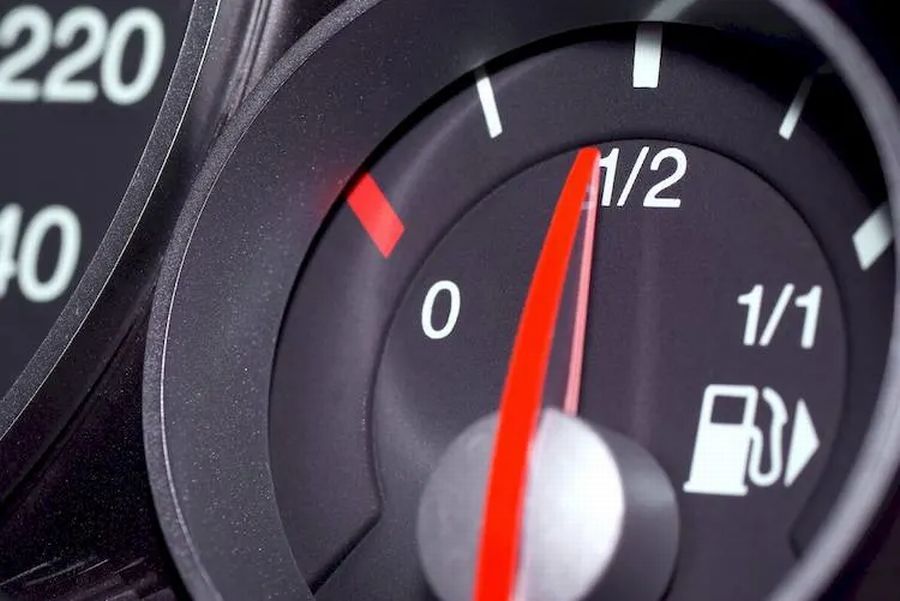
Many fuel pumps are located inside the fuel tank and are surrounded by fuel that helps cool the pump.
Repeatedly driving with a very low fuel level can increase the pump's operating temperature in some vehicle designs.
A fuel pump that has already accumulated significant wear may become more sensitive to high temperature and low fuel conditions.
Keeping the tank from being repeatedly driven nearly empty can therefore be beneficial, although it does not prevent normal pump wear.
Can Bad Fuel Damage the Fuel Pump or Filter?
Yes.
Contaminated fuel can introduce dirt, rust, water, or other contaminants into the fuel system.
A severely contaminated fuel supply can:
-
Restrict the filter
-
Damage the fuel pump
-
Affect injectors
-
Cause poor engine operation
-
Produce fuel-pressure problems
If a problem begins immediately after refueling, contaminated fuel should be considered as a possible cause.
Symptoms That Can Help Separate the Two Problems
Although testing is necessary, symptom patterns can provide useful clues.
A clogged fuel filter may be more likely when:
-
The vehicle gradually loses performance
-
Acceleration becomes increasingly weak
-
The problem appears mainly under heavy load
-
Fuel pressure drops because of restricted flow
-
The filter has exceeded its recommended replacement interval
A weak fuel pump may be more likely when:
-
The pump is unusually loud
-
Starting becomes increasingly difficult
-
The engine stalls intermittently
-
Fuel pressure is low
-
Pressure drops significantly under load
-
The problem becomes worse when the pump is hot
These are clues, not definitive diagnostic rules.
What About a High-Pressure Fuel Pump?
Direct-injection gasoline engines and many modern diesel engines can use a high-pressure fuel pump in addition to the low-pressure fuel supply system.
This creates another possible source of fuel-pressure problems.
A vehicle can have:
-
A healthy fuel tank pump
-
A healthy fuel filter
-
But a defective high-pressure fuel pump
In such a case, the low-pressure side may test normally while rail pressure fails to reach the required level.
The diagnostic procedure must therefore match the engine's fuel-system design.
Diesel Fuel Filter Problems
Diesel engines can be particularly sensitive to fuel-filter condition.
A restricted diesel fuel filter can cause:
-
Difficult starting
-
Poor acceleration
-
Loss of power
-
Engine stalling
-
Reduced fuel pressure
-
Poor performance under load
Water contamination is also an important concern in diesel fuel systems.
Some diesel vehicles have a water-in-fuel warning system, and this warning should not be ignored.
Fuel Filter Replacement Interval
There is no universal replacement interval for every vehicle.
Some vehicles use replaceable fuel filters that have a specified service interval. Others use filters integrated into the fuel tank or fuel pump module and may have a different maintenance strategy.
The correct replacement interval depends on:
-
Vehicle manufacturer
-
Engine
-
Fuel-system design
-
Fuel type
-
Driving conditions
-
Fuel quality
Following the manufacturer's maintenance schedule is generally the safest approach.
Can You Drive With a Bad Fuel Pump?
It depends on the severity of the problem.
A weak pump can fail completely without much warning. If fuel pressure is already below specification, continued driving may result in:
-
Sudden power loss
-
Engine stalling
-
Inability to restart
-
Dangerous loss of acceleration when merging or overtaking
If the engine is repeatedly stalling or losing power, continued driving should be avoided until the fuel system is properly diagnosed.
Can You Drive With a Clogged Fuel Filter?
A mildly restricted filter may allow the vehicle to continue operating for some time, but ignoring the problem is not recommended.
As the restriction becomes worse, fuel delivery can become increasingly unreliable.
The vehicle may eventually experience severe power loss or stall.
A restricted filter can also place additional strain on some fuel pumps because the pump must operate against greater resistance.
How Is a Fuel Pump Diagnosed?
A professional diagnosis can include:
-
Checking fuel-pump operation
-
Measuring fuel pressure
-
Measuring fuel flow
-
Testing fuel pressure under load
-
Checking residual pressure after shutdown
-
Measuring voltage at the pump
-
Performing voltage-drop tests
-
Checking fuses and relays
-
Inspecting wiring and connectors
-
Checking the fuel filter
-
Scanning for diagnostic trouble codes
-
Checking fuel trims
-
Checking injector operation when necessary
The most useful approach is to test the system systematically instead of replacing several parts based only on symptoms.
How Is a Fuel Filter Diagnosed?
The filter itself may be inspected or replaced depending on its design.
If the filter is suspected of being restricted, technicians may compare fuel pressure and flow before and after the filter or use other manufacturer-approved diagnostic procedures.
On vehicles with a serviceable external filter, replacement may be relatively straightforward.
On other vehicles, the filter may be integrated into the fuel pump module, making the repair more involved.
Do Not Replace the Fuel Pump Without Testing
A common diagnostic mistake is to replace the fuel pump immediately whenever a vehicle has poor acceleration or difficult starting.
This can lead to unnecessary expense.
The actual cause could be:
-
Fuel filter restriction
-
Fuel pressure regulator
-
Wiring problem
-
Weak electrical supply
-
Fuel pump relay
-
Fuel pressure sensor
-
Injector problem
-
Contaminated fuel
-
High-pressure fuel pump
-
Fuel-line restriction
Testing fuel pressure and electrical supply first can prevent unnecessary parts replacement.
Final Thoughts
Fuel pump and fuel filter problems can produce remarkably similar symptoms, especially when the vehicle is under heavy load.
A weak fuel pump can cause low fuel pressure, difficult starting, intermittent stalling, abnormal pump noise, and loss of power during acceleration.
A clogged fuel filter can restrict fuel flow and cause hesitation, poor acceleration, high-RPM power loss, difficult starting, and stalling when fuel demand becomes high.
The most important point is that symptoms alone cannot always distinguish between the two. Fuel pressure, fuel flow, electrical supply, and the condition of the fuel filter should be checked systematically.
Correct diagnosis is especially important because replacing a fuel pump when the actual problem is a clogged filter—or replacing a filter when the pump is weak—does not solve the underlying problem.