TR
TR EN
EN

What Is a Steering Angle Sensor? What Are the Symptoms of Failure?
The steering angle sensor (SAS) is an electronic sensor that measures the steering wheel's position and the direction and amount of steering input. It is an important component of modern vehicle stability and safety systems.
The information provided by the steering angle sensor is commonly used by systems such as Electronic Stability Control (ESC/ESP), Traction Control System (TCS), Anti-lock Braking System (ABS), and Electric Power Steering (EPS).
The sensor tells the vehicle whether the steering wheel is turned left or right and approximately how far it has been turned. The vehicle's control modules can then compare this information with wheel-speed, yaw-rate, and lateral-acceleration data to determine whether the vehicle is following the driver's intended path.
What Does the Steering Angle Sensor Do?
The primary function of the steering angle sensor is to measure steering input.
For example, when the driver turns the steering wheel to the left, the sensor detects the change in steering angle and sends this information to the relevant control module.
The vehicle can then use this information to determine:
-
Steering wheel position
-
Steering direction
-
Steering angle
-
Steering rate on some systems
-
Steering wheel center position
-
Driver's intended direction of travel
This information becomes particularly important when the vehicle is cornering or when the stability control system detects a potential loss of control.
How Does a Steering Angle Sensor Work?
Modern steering angle sensors are generally electronic.
Depending on the vehicle, the sensor may use optical, magnetic, Hall-effect, or other electronic sensing technology to determine the position of the steering wheel or steering column.
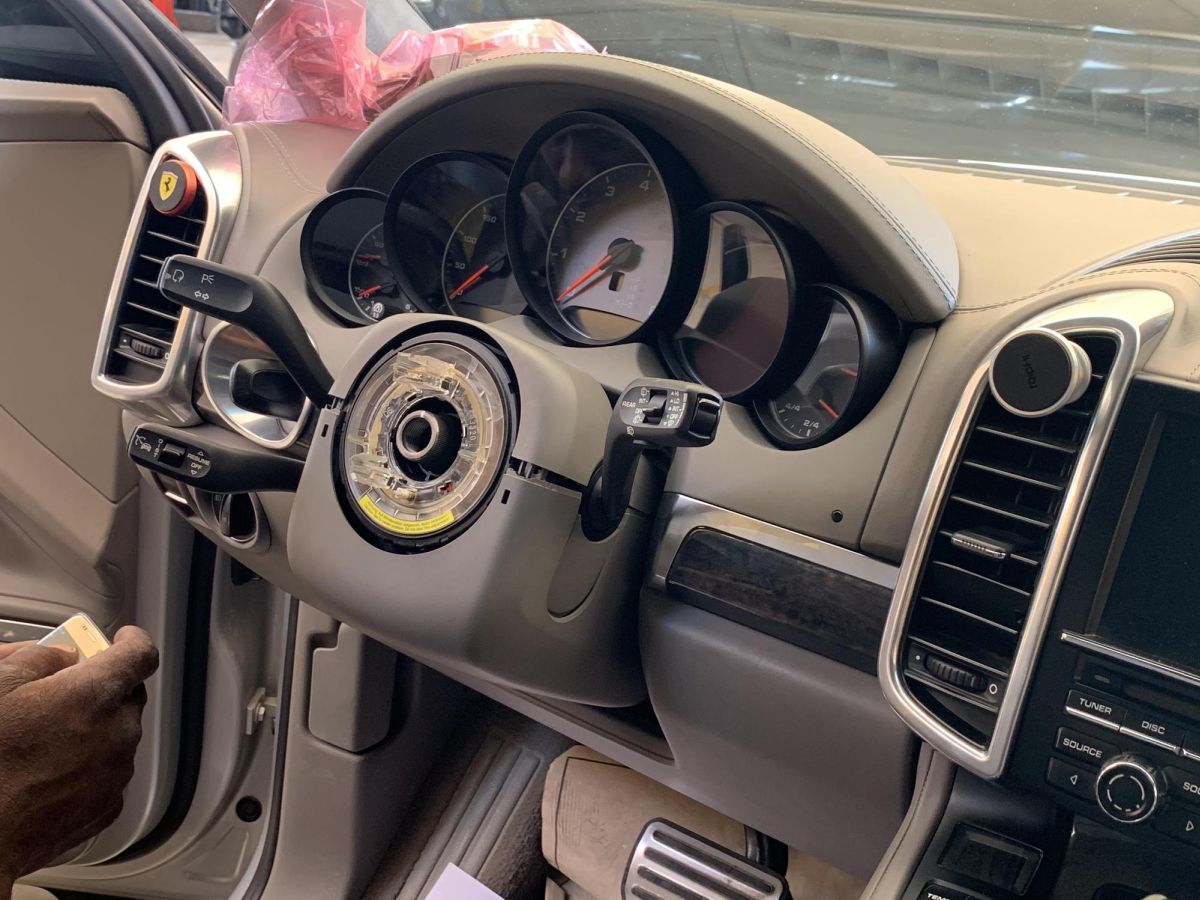
The sensor is typically installed around the steering column and may be incorporated into the clock spring/steering wheel electronics assembly or a dedicated steering column module.
The sensor continuously monitors steering movement and communicates the measured position to the vehicle's electronic control systems.
Why Is the Steering Angle Sensor Important?
The steering angle sensor provides information about what the driver wants the vehicle to do.
For example, if the driver turns the steering wheel left but the vehicle begins moving in a direction that does not correspond to the steering input, the ESC system can compare the steering angle with information from other sensors.
These may include:
-
Wheel-speed sensors
-
Yaw-rate sensor
-
Lateral acceleration sensor
-
Brake pressure information
-
Throttle position
-
Steering angle
If the system detects a difference between the driver's intended direction and the vehicle's actual movement, the stability-control system can intervene by applying individual brakes and, depending on the vehicle, reducing engine torque.
Where Is the Steering Angle Sensor Located?
The steering angle sensor is normally located around the steering column, close to the steering wheel.
Depending on the vehicle design, it may be:
-
Integrated into the clock spring assembly
-
Mounted directly on the steering column
-
Integrated into a steering column control module
-
Combined with other steering-wheel electronics
The exact location and design vary between manufacturers and vehicle generations.
What Are the Symptoms of a Bad Steering Angle Sensor?
A faulty or incorrectly calibrated steering angle sensor can cause several symptoms.
Common symptoms include:
-
ABS warning light
-
ESP/ESC warning light
-
Traction control warning light
-
Steering warning light
-
Stability control system becoming unavailable
-
Steering wheel warning message
-
Vehicle stability-control system activating unexpectedly
-
Cruise control becoming unavailable on some vehicles
-
Steering-related diagnostic trouble codes
-
Steering wheel appears centered but the system reports an incorrect angle
-
Vehicle may require steering angle calibration
-
Warning lights appearing after wheel alignment or steering repairs
Several warning lights may appear simultaneously because the steering angle signal is used by multiple vehicle systems.
Steering Wheel Is Straight but the Steering Angle Is Incorrect
This is an important symptom.
The steering wheel may physically appear to be centered while the vehicle's control module sees a steering angle that is not zero.
This can happen after:
-
Wheel alignment
-
Steering rack replacement
-
Tie-rod replacement
-
Steering column work
-
Steering wheel removal
-
Suspension repairs
-
Clock spring replacement
-
Steering angle sensor replacement
-
Battery or electrical work on some vehicles
In such cases, the sensor may not actually be defective.
It may simply require steering angle calibration.
Can Wheel Alignment Affect the Steering Angle Sensor?
Yes.
A change in wheel alignment can affect the relationship between the steering wheel's physical center position and the vehicle's actual wheel direction.
If the steering wheel is not correctly centered during an alignment, the steering angle sensor may report an angle that does not correspond correctly to the vehicle's direction.
This can cause stability-control systems to detect implausible steering information.
For this reason, steering angle calibration may be required after certain steering or alignment procedures.
What Happens If the Steering Angle Sensor Loses Calibration?
A sensor that has lost its calibration may still be physically functional.
However, the control module may not know the correct center position.
This can cause:
-
ESP/ESC warning light
-
ABS warning light
-
Traction-control warning
-
Steering system warning
-
Stability-control system deactivation
-
Steering angle-related fault codes
In many cases, recalibration with an appropriate diagnostic tool can restore normal operation.
The exact calibration procedure depends on the vehicle.
What Causes Steering Angle Sensor Failure?
Several factors can cause steering angle sensor problems.
Sensor Wear
Mechanical or electronic components inside the sensor can deteriorate over time.
Clock Spring or Steering Column Damage
On some vehicles, the steering angle sensor is integrated with the clock spring or steering column electronics. Damage to this assembly can affect the steering angle signal.
Incorrect Steering Wheel Installation
If the steering wheel or steering column is assembled incorrectly, the sensor's reference position can be incorrect.
Wheel Alignment Problems
Incorrect alignment can create an apparent mismatch between steering position and vehicle direction.
Electrical Problems
Possible electrical causes include:
-
Damaged wiring
-
Corroded connector
-
Poor electrical connection
-
Low battery voltage
-
Power supply problems
-
Communication faults
-
Ground problems
Sensor Calibration Loss
The sensor may simply need to be recalibrated rather than replaced.
Can a Bad Steering Angle Sensor Affect ABS?
Yes.
The ABS and stability-control systems can use steering angle information to determine the driver's intended direction.
A faulty steering angle signal can therefore cause ABS/ESC-related warning lights or disable certain stability-control functions.
However, this does not necessarily mean that the ABS hydraulic unit or ABS pump is defective.
The steering angle sensor, wiring, calibration, and communication network should be checked.
Can a Bad Steering Angle Sensor Affect ESP or ESC?
Yes.
This is one of the most common consequences of a steering angle sensor problem.
The ESC system needs to know where the driver is trying to steer.
If the steering angle information is missing, incorrect, or implausible, the system may disable itself and illuminate the ESC/ESP warning light.
The vehicle may continue to drive normally, but electronic stability assistance may not be available.
Can a Bad Steering Angle Sensor Affect Traction Control?
It can.
Traction and stability-control systems often share information with the steering angle sensor.
If the sensor provides an invalid signal, the vehicle may deactivate traction or stability functions and display a warning.
Again, this does not automatically mean that the traction-control system itself has failed.
Can a Steering Angle Sensor Cause a Heavy Steering Wheel?
Usually, the steering angle sensor itself does not provide the physical steering assistance.
However, on some vehicles, steering angle information is used by the Electric Power Steering (EPS) system.
If the sensor or related steering-column electronics fail, the EPS system may enter a protective mode depending on the vehicle.
This can potentially result in a steering warning or altered steering assistance.
A genuinely heavy steering wheel, however, requires separate diagnosis of the power-steering system, including the motor, control module, wiring, battery voltage, and mechanical steering components.
Does a Steering Angle Sensor Trigger an OBD Fault Code?
Yes.
Modern vehicles can store diagnostic trouble codes related to steering angle sensor circuits, communication, calibration, or implausible signals.
Depending on the manufacturer, the fault may be stored in:
-
ABS module
-
ESC module
-
EPS module
-
Steering column module
-
BCM
-
Other chassis-control modules
A basic engine-only OBD scanner may not access all of these modules.
A professional diagnostic scanner capable of communicating with the vehicle's chassis and body modules may be necessary.
How Is a Steering Angle Sensor Diagnosed?
Diagnosis should not begin with immediate sensor replacement.
First, the technician should check the vehicle for diagnostic trouble codes.
Then the following should be inspected:
-
Steering wheel center position
-
Wheel alignment
-
Steering angle live data
-
Sensor power supply
-
Sensor ground
-
Wiring
-
Electrical connectors
-
Communication between control modules
-
Clock spring assembly where applicable
-
Steering column components
The steering wheel should be centered and the sensor's reported angle should be compared with the manufacturer's specifications.
If the sensor reports an incorrect center position but all electrical circuits are normal, calibration may solve the problem.
How Is a Steering Angle Sensor Calibrated?
The calibration procedure varies by vehicle.
A common procedure involves placing the front wheels and steering wheel in the correct straight-ahead position and using a diagnostic scan tool to perform a steering angle calibration or zero-point adjustment.
Some vehicles may require additional conditions, such as:
-
Engine running
-
Vehicle stationary
-
Correct battery voltage
-
Steering wheel centered
-
Front wheels correctly aligned
Some systems may also require a short road test after calibration.
The exact procedure specified by the vehicle manufacturer should always be followed.
When Does the Steering Angle Sensor Need to Be Replaced?
Replacement is generally necessary when the sensor itself has been confirmed to be defective.
Before replacing it, the following should be ruled out:
-
Calibration error
-
Wheel alignment problem
-
Incorrect steering wheel position
-
Damaged wiring
-
Poor connector contact
-
Low voltage
-
Clock spring problems
-
Steering column module failure
-
Communication problems
Replacing a perfectly functional sensor will not solve a calibration or wiring problem.
Can You Drive With a Faulty Steering Angle Sensor?
The answer depends on the symptoms and which systems have been disabled.
If the vehicle displays ABS, ESP/ESC, or traction-control warnings, some electronic safety functions may be unavailable.
The vehicle may still have normal mechanical steering and braking, but its electronic stability assistance may not operate as intended.
Driving should be avoided if the steering itself feels abnormal, power steering assistance is reduced, or multiple safety-system warnings appear.
The vehicle should be diagnosed as soon as possible.
Steering Angle Sensor vs. Yaw Rate Sensor
These two sensors perform different jobs.
The steering angle sensor measures what the driver is commanding through the steering wheel.
The yaw-rate sensor measures how quickly the vehicle is actually rotating around its vertical axis.
The stability-control system compares these and other measurements to determine whether the vehicle is following the driver's intended path.
For example, the driver may turn the steering wheel left, but the vehicle may begin rotating differently than expected because of a loss of traction.
The ESC system can use this information to intervene.
Final Thoughts
The steering angle sensor is a critical component of modern vehicle safety systems. It measures steering-wheel position and provides this information to systems such as ABS, ESC/ESP, traction control, and, on some vehicles, electric power steering.
A faulty or incorrectly calibrated sensor can cause ABS, ESP/ESC, traction-control, and steering warning lights, as well as steering-angle-related diagnostic trouble codes.
One of the most important points during diagnosis is that a steering angle sensor fault does not always mean the sensor needs to be replaced. Incorrect wheel alignment, an off-center steering wheel, damaged wiring, low voltage, communication problems, or a lost calibration can produce very similar symptoms.
For this reason, the correct diagnostic approach is to check the steering wheel and wheel alignment, inspect the electrical circuit, examine live steering-angle data, and perform calibration when appropriate before deciding that the sensor itself has failed.