TR
TR EN
EN

LPG Vehicle Maintenance and Inspection: What Should Be Checked Regularly?
LPG-powered vehicles can be economical to operate, but the LPG system requires regular inspection and maintenance just like the engine, cooling system, ignition system, and other components of the vehicle.
Because LPG is stored under pressure and the fuel system contains dedicated components such as the regulator, injectors, filters, valves, hoses, and electronic controls, neglecting maintenance can lead to poor engine performance, increased fuel consumption, starting problems, or safety risks.
Regular maintenance is therefore important not only for fuel economy but also for reliable and safe operation.
Why Is LPG Vehicle Maintenance Important?
An LPG system works together with the vehicle's original engine management system. The gasoline ECU continues to control many aspects of engine operation, while the LPG control unit calculates and adjusts the amount of gas delivered to the engine.
Over time, filters become restricted, injectors can become contaminated, the regulator can lose pressure stability, and hoses or connections can deteriorate.
A system that initially operates perfectly may gradually develop problems without producing an obvious warning at first.
Regular maintenance helps detect these problems before they become more expensive failures.
LPG System Components That Require Inspection
An LPG system contains several components that should be checked periodically.
Important components include:
-
LPG tank
-
Multivalve
-
LPG filler connection
-
High-pressure fuel line
-
Pressure regulator or vaporizer
-
LPG filters
-
LPG injectors
-
LPG control unit
-
Gas pressure and temperature sensors
-
Coolant hoses connected to the regulator
-
Gas hoses and connections
-
Shut-off solenoid valves
-
Electrical wiring and connectors
Each component has a different function, and a problem in one part can affect the operation of the entire system.
LPG Filter Replacement
One of the most important routine maintenance operations is replacing the LPG filters.
Many LPG systems have a liquid-phase filter and/or a vapor-phase filter, depending on the system design.
The filters prevent contaminants and residues from reaching sensitive components such as the regulator and injectors.
When a filter becomes clogged, the vehicle may experience:
-
Poor acceleration
-
Hesitation under load
-
Engine misfires
-
Reduced LPG performance
-
Increased fuel consumption
-
Difficulty switching to LPG
-
Fuel pressure problems
-
Lean or rich mixture conditions
The replacement interval depends on the LPG system, fuel quality, vehicle usage, and manufacturer recommendations. It is better to follow the specific LPG system's service schedule rather than applying one universal interval to every vehicle.
LPG Regulator or Vaporizer Inspection
The regulator, also called a vaporizer in many systems, reduces the pressure of LPG before it reaches the injectors.
It also uses engine coolant to help vaporize and regulate the fuel.
A regulator that is worn or contaminated may have difficulty maintaining stable gas pressure.
Possible symptoms include:
-
Unstable idle
-
Engine stalling
-
Poor acceleration
-
Switching between gasoline and LPG unexpectedly
-
Difficulty operating on LPG when the engine is cold
-
Gas pressure fluctuations
-
Increased fuel consumption
-
Mixture-related fault codes
During maintenance, the regulator should be checked for pressure stability, coolant circulation, leaks, and general condition.
The coolant hoses connected to the regulator are also important. Poor coolant circulation can prevent the regulator from reaching the correct operating temperature.
LPG Injector Inspection
LPG injectors must deliver the correct amount of fuel at the correct time.
Contaminated, worn, or mechanically sticking injectors can cause uneven combustion between cylinders.
Typical symptoms include:
-
Rough idle
-
Misfire
-
Hesitation
-
Poor throttle response
-
Increased fuel consumption
-
Check Engine Light
-
Different fuel trims between gasoline and LPG operation
If the engine runs correctly on gasoline but develops problems only when operating on LPG, the LPG injectors and their calibration should be considered among the first areas to investigate.
Injector cleaning may help in some cases, but severely worn injectors may require replacement.
Checking LPG Hoses and Connections
LPG hoses and connections should be inspected carefully.
Technicians should look for:
-
Cracks
-
Hardening
-
Abrasion
-
Loose connections
-
Damaged clamps
-
Signs of leakage
-
Contact with hot engine components
-
Improper routing
High-pressure components require particular attention because they operate under significantly greater pressure than the low-pressure side of the system.
Any damaged or questionable hose should be replaced rather than repaired with an improvised solution.
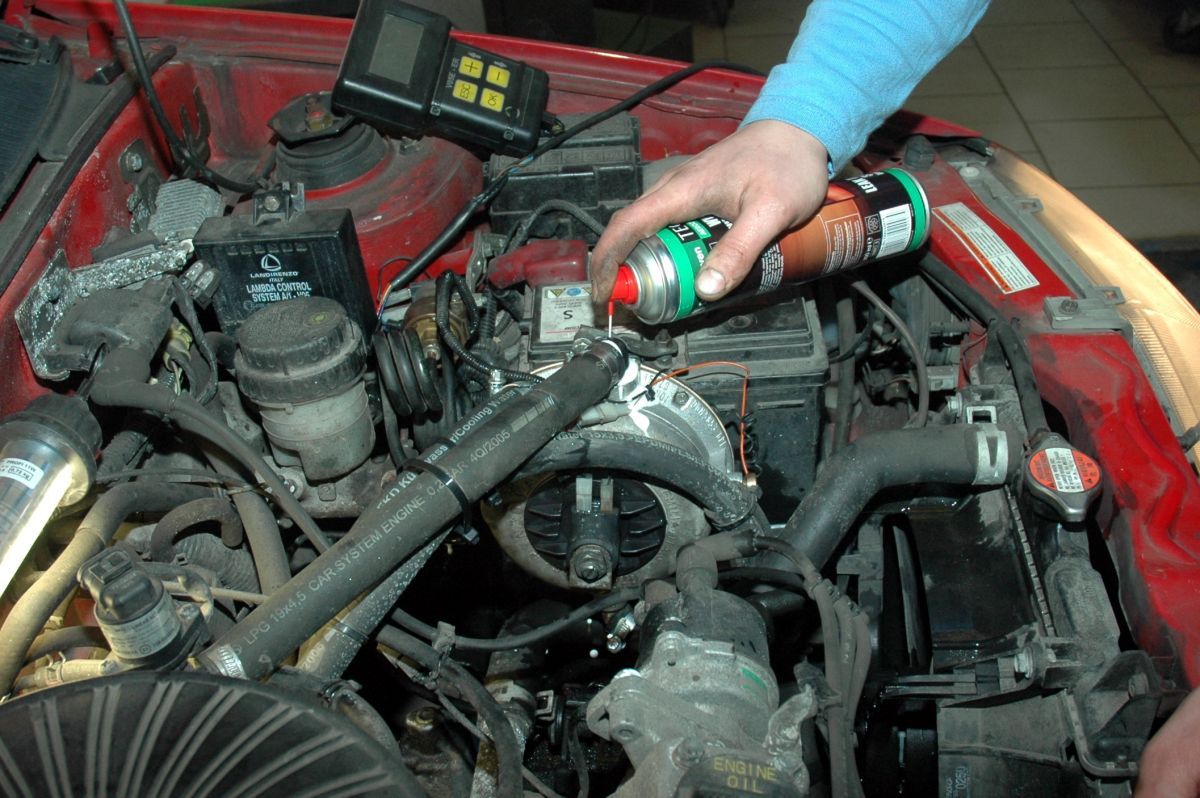
LPG Leak Inspection
Leak inspection is one of the most important safety checks on an LPG vehicle.
A fuel leak may occur at a connection, valve, hose, regulator, injector rail, tank assembly, or other component.
A noticeable gas smell should never be ignored.
If an LPG leak is suspected:
-
Do not continue driving unnecessarily.
-
Avoid smoking or using open flames.
-
Do not intentionally search for a leak with a flame.
-
Have the vehicle inspected by a qualified LPG technician.
A professional leak test should be performed using an appropriate detection method.
LPG Tank and Multivalve Inspection
The LPG tank is one of the most important safety components of the system.
The tank and its mounting points should be inspected for:
-
Physical damage
-
Corrosion
-
Loose mounting
-
Damaged protective components
-
Problems around the multivalve
-
Signs of leakage
The multivalve controls several important functions, including fuel flow and tank filling.
The tank should never be modified, welded, drilled, or repaired using unauthorized methods.
Tank-related work should always be performed according to the applicable safety requirements and the manufacturer's specifications.
LPG Electrical System Inspection
Modern LPG systems depend heavily on electronic control.
The LPG ECU communicates with sensors and controls components such as the injectors and solenoid valves.
During maintenance, technicians should inspect:
-
Wiring harnesses
-
Electrical connectors
-
Ground connections
-
Fuses
-
LPG ECU connections
-
Injector wiring
-
Sensor wiring
-
Solenoid valve wiring
Loose or corroded connectors can create intermittent problems that are difficult to diagnose.
An LPG fault that appears randomly may be caused by an electrical connection rather than a defective component.
LPG Sensor Checks
Depending on the system, several sensors may be used to control LPG operation.
These can include:
-
Gas pressure sensor
-
Gas temperature sensor
-
Regulator temperature sensor
-
Manifold pressure sensor
-
Engine RPM signal
-
Throttle position information
-
Oxygen sensor information
-
Engine coolant temperature information
Incorrect sensor readings can cause the LPG ECU to calculate the wrong fuel quantity.
For this reason, checking live data can be more useful than simply replacing parts based on symptoms.
Spark Plug and Ignition System Maintenance
The ignition system is particularly important on LPG vehicles.
LPG can place greater demands on the ignition system than gasoline under certain operating conditions. A weak ignition system may therefore become noticeable first when the engine is running on LPG.
Maintenance should include inspection of:
-
Spark plugs
-
Ignition coils
-
Spark plug gaps
-
Plug wires where applicable
-
Coil connectors
Worn spark plugs or weak ignition coils can cause misfires, hesitation, poor acceleration, and rough running.
If the vehicle runs well on gasoline but misfires on LPG, the ignition system should not automatically be ruled out.
Engine Oil and Oil Level Checks
LPG maintenance should not be limited to the gas system.
The engine still requires normal oil and filter maintenance.
The oil level should be checked regularly, and the oil should be changed according to the vehicle manufacturer's recommendations.
Oil consumption should also be monitored.
If the engine is consuming excessive oil, the underlying cause should be investigated instead of assuming that the LPG system is responsible.
Air Filter Maintenance
The engine needs the correct amount of clean air to maintain the desired air-fuel mixture.
A severely restricted air filter can affect engine performance and fuel economy.
A dirty air filter may contribute to:
-
Poor acceleration
-
Increased fuel consumption
-
Reduced engine response
-
Incorrect fuel-trim values
-
Poor LPG calibration
For this reason, the engine's air intake system should be maintained together with the LPG system.
Cooling System Inspection
The cooling system is especially important on vehicles equipped with a conventional LPG vaporizer/regulator because engine coolant is used to heat the regulator.
The following should be checked:
-
Coolant level
-
Coolant condition
-
Coolant hoses
-
Regulator coolant connections
-
Thermostat operation
-
Signs of coolant leakage
Insufficient coolant circulation through the regulator can cause LPG performance problems, especially during cold operation.
LPG Calibration and Software Checks
Replacing filters and inspecting hardware is not always enough.
The LPG ECU should also be checked using appropriate diagnostic software when necessary.
A technician may examine:
-
Gas pressure
-
Gas temperature
-
Injector times
-
RPM
-
Fuel trims
-
Lambda/O2 sensor information
-
LPG correction values
-
Switching temperatures
-
Error codes
-
Operating conditions
Calibration should not simply be adjusted to hide a mechanical problem.
For example, increasing fuel correction because an injector is partially blocked may temporarily change the symptoms without solving the underlying fault.
Comparing Gasoline and LPG Operation
One of the most useful diagnostic methods is comparing engine behavior on gasoline and LPG.
If the engine operates normally on gasoline but poorly on LPG, attention should generally move toward the LPG-specific components and calibration.
Possible causes include:
-
LPG injector problems
-
Regulator pressure problems
-
Restricted filters
-
Incorrect calibration
-
LPG sensor problems
-
Gas leaks
-
Electrical problems
However, an engine problem can also appear more clearly on LPG because of the different combustion and ignition requirements.
Therefore, gasoline operation should be used as a comparison, not as absolute proof that the engine itself is healthy.
Fuel Consumption Should Be Monitored
Monitoring LPG consumption is another useful part of vehicle maintenance.
A sudden increase in LPG consumption can indicate:
-
Incorrect calibration
-
Dirty injectors
-
Regulator problems
-
Air intake problems
-
Oxygen sensor problems
-
Ignition problems
-
Tire pressure or mechanical resistance issues
-
Driving style changes
Fuel consumption should ideally be evaluated over several refueling cycles rather than based on a single tank.
Common Signs That an LPG System Needs Attention
An LPG vehicle should be inspected if you notice:
-
Increased LPG consumption
-
Rough idle
-
Engine hesitation
-
Poor acceleration
-
Misfires
-
Stalling
-
Difficulty switching to LPG
-
Switching back to gasoline unexpectedly
-
Gas smell
-
Check Engine Light
-
LPG system warning
-
Unstable engine operation
-
Reduced performance
-
Gas pressure-related fault codes
Some problems can be corrected with relatively simple maintenance, while others may indicate a failing regulator, injector, sensor, or electrical component.
How Often Should an LPG Vehicle Be Serviced?
There is no single maintenance interval that applies to every LPG system.
The correct interval depends on:
-
LPG system manufacturer
-
Vehicle manufacturer
-
Type of LPG system
-
Vehicle mileage
-
Fuel quality
-
Driving conditions
-
Age of the components
As a general approach, the LPG system should be inspected periodically rather than waiting for symptoms to appear.
Filter replacement should follow the LPG system manufacturer's recommendation, while leak checks and visual inspections should be performed whenever the vehicle is serviced or whenever there is a reason to suspect a problem.
Can LPG Maintenance Affect Engine Life?
Properly installed and correctly calibrated LPG systems can operate reliably for many years.
However, poor installation, incorrect calibration, neglected maintenance, or operation with defective components can create additional stress on the engine.
Problems such as persistent lean operation, repeated misfires, excessive combustion temperatures, or incorrect fuel delivery should not be ignored.
The important point is that LPG itself is not automatically harmful to an engine. The quality of the installation, calibration, maintenance, and engine condition are much more important factors.
What Should Be Checked Before Buying a Used LPG Vehicle?
A used LPG vehicle should be inspected more carefully than simply checking whether the engine starts and runs.
The inspection should include:
-
LPG tank condition
-
Tank mounting
-
Multivalve
-
Filling connection
-
High-pressure lines
-
Regulator
-
LPG filters
-
Injectors
-
LPG ECU
-
Wiring
-
Sensors
-
Gas pressure
-
Leak condition
-
LPG calibration
-
Engine fault codes
-
Fuel trims
-
Spark plugs and ignition system
-
Cooling system
-
Engine compression when necessary
The vehicle should also be tested on both gasoline and LPG.
A system that works smoothly during a short test drive may still have an intermittent problem, so diagnostic data and physical inspection are valuable.
LPG Maintenance Should Not Be Delayed
LPG systems are generally reliable when they are correctly installed and maintained, but they should not be treated as maintenance-free systems.
Regular filter replacement, leak inspection, regulator and injector checks, electrical inspections, proper calibration, and normal engine maintenance can prevent many common problems.
The most important rule is to investigate changes in vehicle behavior early. Increased fuel consumption, rough running, hesitation, misfires, unusual smells, or repeated warning lights should be treated as signs that the vehicle needs inspection rather than simply being accepted as normal LPG behavior.