TR
TR EN
EN

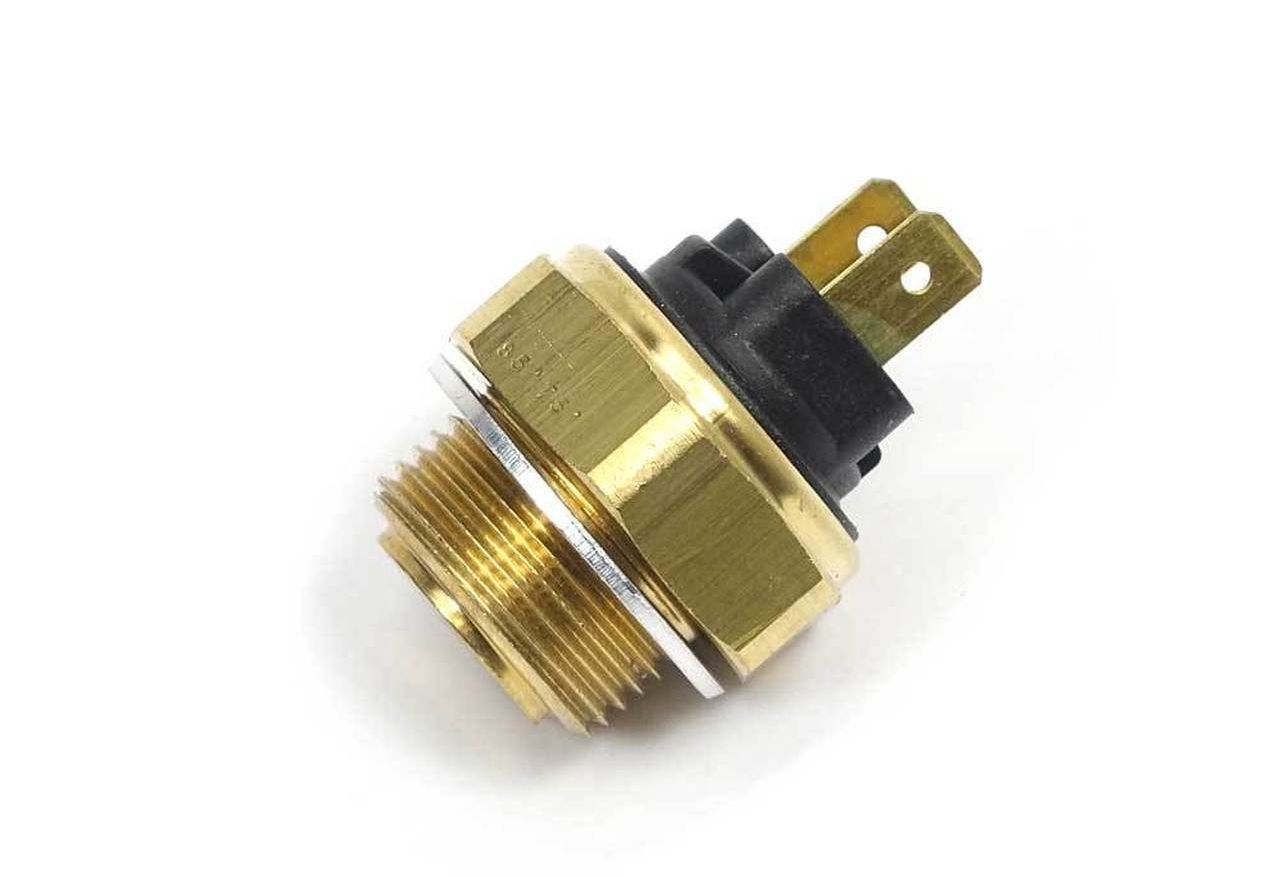
What Is a Radiator Fan Switch? What Are the Symptoms of Radiator Fan Switch Failure?
The radiator fan switch, commonly called a fan switch or thermoswitch, is a temperature-controlled electrical switch that activates the radiator cooling fan when the engine coolant reaches a predetermined temperature.
Its main purpose is to help maintain the engine at a safe operating temperature, especially when the vehicle is stationary or moving slowly and there is not enough natural airflow through the radiator.
In older and simpler cooling systems, the fan switch may directly control the radiator fan circuit. In many modern vehicles, however, fan operation is controlled electronically by the Engine Control Unit (ECU) using information from the Engine Coolant Temperature (ECT) sensor. Therefore, not every vehicle has a separate conventional fan switch.
How Does a Radiator Fan Switch Work?
A conventional fan switch contains a temperature-sensitive mechanism that reacts to coolant temperature.
As the engine warms up:
-
Engine coolant temperature increases.
-
The coolant reaches the fan switch's activation temperature.
-
The switch changes its electrical state.
-
The radiator fan circuit is activated.
-
The cooling fan starts operating.
-
Coolant temperature begins to decrease.
-
When the temperature falls to the switch's cut-off point, the fan turns off.
Many systems use different activation and deactivation temperatures. This prevents the fan from switching on and off continuously around one exact temperature.
Some vehicles also use a two-stage fan switch, allowing the cooling fan to operate at different speeds depending on coolant temperature.
Where Is the Fan Switch Located?
On vehicles equipped with a conventional fan switch, it is usually installed in a location where it can accurately sense engine coolant temperature.
Common locations include:
-
The radiator tank
-
Radiator outlet
-
Thermostat housing
-
Coolant outlet housing
-
Engine coolant passage
The exact location varies according to the engine and cooling system design.
It is important not to confuse the fan switch with the coolant temperature sensor. They may look similar, but they can perform completely different functions.
What Are the Symptoms of a Bad Fan Switch?
A failed fan switch can cause the radiator fan to operate incorrectly. The symptoms depend on whether the switch has failed in an open or closed condition.
Common symptoms include:
Radiator fan does not turn on
This is one of the most important symptoms. If coolant temperature rises beyond the normal operating range but the fan never activates, a defective fan switch is one possible cause.
However, the fan itself, fuse, relay, wiring, ECU control, coolant temperature sensor, or a low coolant level can produce the same symptom.
Engine overheating
If the fan is not activated when required, the cooling system may not be able to remove enough heat, particularly during:
-
Traffic jams
-
Idling
-
Slow-speed driving
-
Hot weather
-
Driving with a heavy load
-
Using the air conditioning
The engine may remain at a normal temperature at highway speeds because natural airflow through the radiator can compensate for the inactive fan.
Radiator fan runs continuously
A fan switch that becomes stuck in its activated state can cause the radiator fan to remain on even when the engine is relatively cool.
Depending on the vehicle, the fan may start immediately after the ignition is switched on or continue running for an unusually long period.
Fan switches on too early
A faulty or incorrect fan switch can activate the fan at a temperature lower than intended.
This may result in the fan running frequently even though the engine is not actually overheating.
Fan switches on too late
The opposite problem can also occur. If the switch activates at an excessively high temperature, coolant temperature may rise significantly before the fan starts.
This can lead to overheating, particularly when the vehicle is stationary.
Temperature gauge rises in traffic
If the temperature gauge remains normal while driving but rises when the vehicle stops, the radiator fan system should be investigated.
A defective fan switch is one possible cause, but this symptom can also be caused by a failed fan motor, relay, fuse, wiring problem, restricted radiator, thermostat problem, or insufficient coolant.
What Causes a Fan Switch to Fail?
Several problems can affect a conventional radiator fan switch.
Internal switch failure
The electrical contacts inside the switch can wear, burn, or become stuck over time.
Coolant contamination
Old or contaminated coolant can contribute to corrosion and deposits around coolant-system components.
Incorrect coolant
Using the wrong coolant or mixing incompatible coolant types can contribute to corrosion and cooling-system problems.
Excessive heat
Repeated exposure to high temperatures can eventually damage the switch.
Electrical problems
A damaged connector, corroded terminal, broken wire, poor ground, or blown fuse can prevent the fan circuit from operating correctly even when the switch itself is good.
Incorrect replacement part
A fan switch must have the correct temperature specifications for the particular cooling system. Installing a switch with the wrong activation temperature can cause abnormal fan operation.
How Can You Diagnose a Bad Fan Switch?
Diagnosis should begin by determining whether the vehicle actually uses a separate fan switch.
If it does, the switch and its circuit can be tested.
A technician may:
-
Check the coolant level.
-
Inspect the fan fuse and relay.
-
Inspect the electrical connector.
-
Check the wiring for corrosion or damage.
-
Monitor coolant temperature.
-
Test whether the fan motor operates when powered directly.
-
Test the fan switch for continuity at the specified temperature.
-
Check the switch's activation and deactivation temperatures.
-
Inspect the cooling system for other faults.
On some conventional systems, the switch can be tested with a multimeter while the switch is exposed to controlled temperature changes. The electrical state should change at approximately the specified temperature.
The manufacturer's specifications should always be used rather than assuming one universal activation temperature.
Fan Switch vs. Coolant Temperature Sensor
These components are often confused because both respond to coolant temperature.
A fan switch is primarily an electrical switching device used to activate or control the cooling fan.
An ECT sensor normally sends a variable electrical signal to the ECU. The ECU then uses this information for functions such as:
-
Cooling fan control
-
Fuel injection
-
Ignition timing
-
Cold-start enrichment
-
Idle control
-
Emissions management
-
Temperature gauge information, depending on the vehicle
In modern vehicles, the ECU may control the radiator fan directly based on ECT sensor information rather than using a separate fan switch.
This distinction is important when diagnosing a cooling fan problem.
Can a Bad Fan Switch Cause Overheating?
Yes. If a conventional fan switch fails in a way that prevents the fan from activating, engine temperature can rise excessively.
The risk is particularly high when the vehicle is stationary because there is little natural airflow through the radiator.
However, overheating should never automatically be blamed on the fan switch. A cooling fan that does not operate can have many possible causes.
The complete fan circuit should be checked before replacing any component.
Does the Fan Always Need to Run?
No.
The radiator fan is not normally expected to operate continuously. Its operation depends on coolant temperature and the vehicle's cooling strategy.
It may remain off during:
-
Cold engine operation
-
Normal-speed driving with sufficient airflow
-
Low coolant temperatures
It may activate during:
-
Extended idling
-
Heavy traffic
-
High ambient temperatures
-
High engine load
-
Air-conditioning operation, depending on vehicle design
-
High coolant temperatures
Some modern vehicles may also run the cooling fan for a short period after the engine is switched off. This does not necessarily indicate a fault.
What Happens If You Keep Driving With a Bad Fan Switch?
If the fan switch has failed and the radiator fan cannot operate when required, continuing to drive can eventually cause serious engine overheating.
Excessive engine temperature can contribute to:
-
Head gasket damage
-
Cylinder head distortion
-
Coolant boiling
-
Loss of coolant
-
Engine oil degradation
-
Damage to plastic and rubber cooling-system components
-
Severe engine damage in extreme cases
If the temperature gauge enters the overheating zone or an overheating warning appears, the vehicle should be stopped safely and the engine allowed to cool. Continuing to drive an overheating engine can turn a relatively simple cooling-system problem into a major engine repair.
Is Replacing the Fan Switch Difficult?
The difficulty depends on the vehicle.
On some engines, the switch is easily accessible and can be replaced relatively quickly. On others, access may be restricted or coolant may need to be drained before removal.
When replacing a conventional fan switch, the correct replacement part should be selected according to the vehicle's engine and cooling-system specifications.
The coolant level should also be checked after the repair, and any air introduced into the cooling system should be removed according to the manufacturer's procedure.
Final Thoughts
The radiator fan switch is a relatively simple component, but it can have an important role in preventing engine overheating on vehicles that use a conventional temperature-controlled fan system.
A fan that does not operate, a fan that runs continuously, or overheating in traffic can indicate a problem with the fan switch. However, these symptoms can also be caused by the fan motor, relay, fuse, wiring, coolant temperature sensor, thermostat, radiator, or ECU-controlled fan system.
For this reason, replacing the fan switch without testing the complete cooling fan circuit is not always the correct solution. A proper diagnosis should identify whether the problem is caused by the switch itself or another part of the cooling system.