TR
TR EN
EN

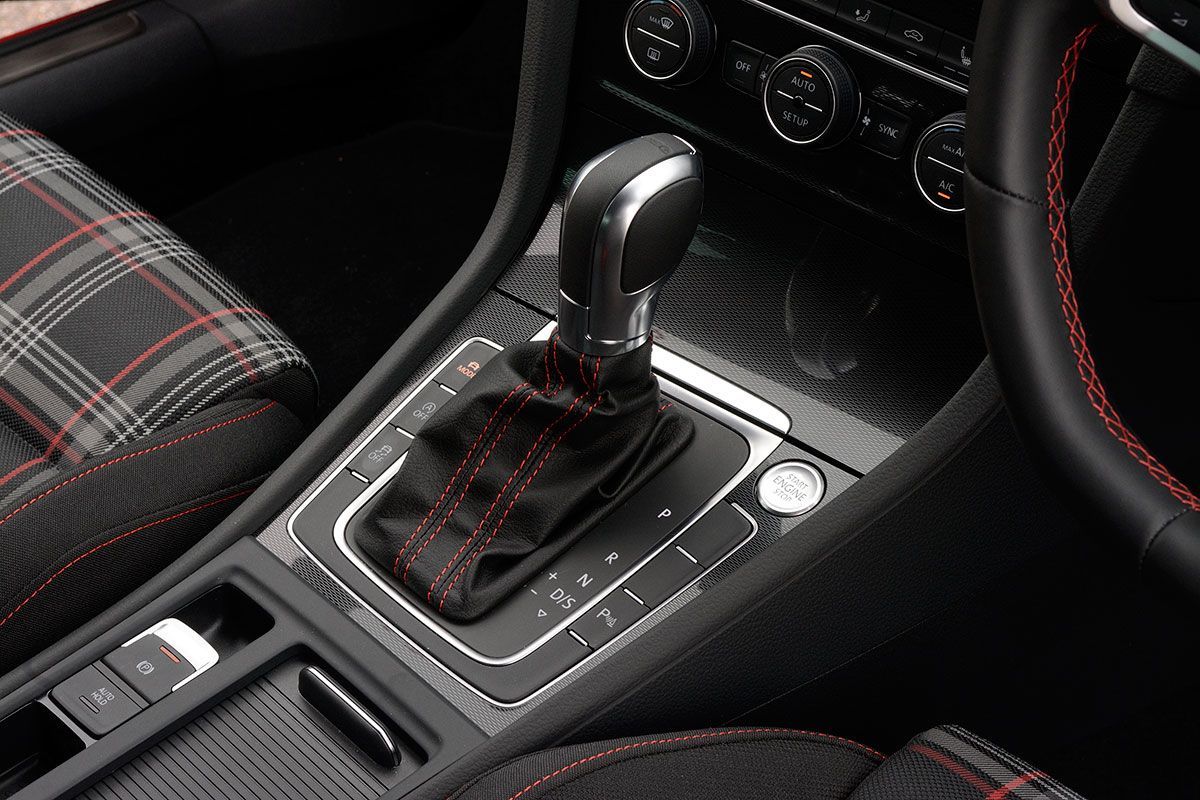
What Is a DSG Transmission? What Are Its Advantages, Disadvantages, and Common Failures?
DSG stands for Direct-Shift Gearbox. It is a type of dual-clutch automatic transmission developed by Volkswagen Group and used in many Volkswagen, Audi, SEAT, and Škoda vehicles.
Unlike a conventional automatic transmission that typically uses a torque converter, a DSG uses two clutches and two separate gear paths. This allows the transmission to preselect the next gear and change gears extremely quickly.
The result is a transmission that can combine the convenience of an automatic gearbox with some of the efficiency and direct response associated with a manual transmission.
How Does a DSG Transmission Work?
The key to understanding DSG operation is the dual-clutch system.
One clutch generally controls one group of gears, while the other controls the remaining gears.
For example:
-
One clutch may control 1st, 3rd, 5th, and 7th gears.
-
The other clutch may control 2nd, 4th, 6th, and reverse.
The exact arrangement depends on the specific DSG design.
When the vehicle is moving in 1st gear, the transmission can already have 2nd gear selected on the other gear shaft. When the ECU and transmission control system determine that an upshift is required, one clutch disengages while the other engages.
This allows the gear change to happen very quickly.
The process works similarly during downshifts. The transmission can predict the next required gear based on vehicle speed, engine speed, throttle position, driving conditions, and other parameters.
What Is the Mechatronic Unit?
The mechatronic unit is one of the most important components in a DSG transmission.
It combines electronic control and hydraulic control in a single assembly. The transmission control system uses information from various sensors to determine:
-
Which gear should be selected
-
When the clutch should engage
-
How much hydraulic pressure is required
-
When a gear change should occur
-
How quickly the clutch should engage or disengage
The mechatronic unit contains components such as valves, solenoids, electronic circuits, and hydraulic control passages.
A problem with the mechatronic system can therefore cause symptoms that may initially appear to be mechanical transmission problems.
What Are the Advantages of a DSG Transmission?
DSG transmissions have several important advantages.
Very fast gear changes
One of the biggest advantages is rapid gear shifting.
Because the next gear can be preselected before the actual shift takes place, DSG transmissions can change gears much faster than many conventional automatic transmissions.
This provides a direct and responsive driving experience.
Good fuel efficiency
A DSG can operate efficiently because it does not rely on a conventional torque converter for power transfer.
The transmission can also keep the engine operating within an efficient RPM range by selecting the appropriate gear quickly.
Actual fuel consumption depends on the vehicle, engine, transmission version, driving style, and road conditions.
Direct power delivery
The clutch-based design can provide a strong mechanical connection between the engine and transmission.
This can make acceleration feel more direct, particularly under hard acceleration.
Sporty driving characteristics
DSG transmissions are popular in performance-oriented vehicles because they can provide very quick upshifts and downshifts.
In manual or sport mode, the driver can often request gear changes without using a traditional clutch pedal.
Automatic convenience
Despite using a dual-clutch mechanism, DSG is still an automatic transmission from the driver's perspective.
There is no clutch pedal, and the transmission can automatically select gears in normal driving.
Good highway efficiency
At cruising speed, the transmission can select a high gear and keep engine RPM relatively low.
This can contribute to reduced fuel consumption and lower engine noise.
What Are the Disadvantages of a DSG Transmission?
DSG technology also has disadvantages.
More complicated construction
A DSG contains considerably more mechanical, hydraulic, and electronic components than a simple manual transmission.
The dual-clutch system and mechatronic unit increase the complexity of the transmission.
More components can also mean more potential failure points.
Repair costs can be high
When a major DSG component fails, repairs can be expensive.
Depending on the problem, repairs may involve:
-
Clutch replacement
-
Mechatronic repair or replacement
-
Flywheel replacement
-
Solenoid replacement
-
Hydraulic repairs
-
Internal gearbox repairs
-
Software or adaptation procedures
The exact cost depends heavily on the DSG version and vehicle.
Low-speed behavior can sometimes be noticeable
Because DSG uses clutches rather than a conventional torque converter, very slow driving can sometimes feel different.
Crawling through traffic, parking, or repeatedly moving forward and backward can produce:
-
Slight hesitation
-
Mild vibration
-
Clutch engagement sensation
-
Low-speed judder
A small amount of clutch engagement sensation can be characteristic of the design, but excessive shudder or harsh engagement should be investigated.
Clutch wear
The clutches are wear components. Their lifespan depends heavily on driving conditions.
Frequent:
-
Stop-and-go traffic
-
Aggressive acceleration
-
Hill starts
-
Towing
-
Repeated creeping
-
Improper driving technique
can increase clutch wear.
What Are the Most Common DSG Transmission Failures?
DSG failures vary depending on the exact transmission family. However, several problems are frequently associated with DSG systems.
Mechatronic Unit Failure
Mechatronic problems are among the most well-known DSG issues.
A malfunctioning mechatronic unit can cause:
-
Harsh gear changes
-
Delayed engagement
-
Gear selection problems
-
Transmission warning lights
-
Loss of certain gears
-
Limp mode
-
Random shifting behavior
-
Failure to select reverse
-
Intermittent transmission faults
In some cases, the problem may be caused by an electronic component, while in others it may involve hydraulic pressure, solenoids, valves, or internal wear.
Clutch Wear
The DSG clutch assembly is subject to normal wear.
As the clutch wears, the transmission may develop:
-
Shuddering
-
Judder during takeoff
-
Slipping
-
Delayed engagement
-
RPM fluctuations
-
Poor acceleration
-
Difficulty moving smoothly from a stop
Clutch wear can be particularly noticeable when starting from a standstill.
DSG Clutch Judder
Judder is a common complaint associated with dual-clutch transmissions.
The vehicle may shake or vibrate when:
-
Pulling away
-
Reversing
-
Parking
-
Driving slowly in traffic
Possible causes include clutch wear, clutch contamination, incorrect clutch adaptation, flywheel problems, or other transmission-related faults.
Not every low-speed vibration means the entire transmission needs to be replaced.
Dual-Mass Flywheel Problems
Some DSG applications use a dual-mass flywheel (DMF) between the engine and transmission.
A worn flywheel can produce:
-
Rattling noises
-
Vibrations
-
Clunking
-
Shuddering
-
Noise during engine start or shutdown
-
Abnormal vibration at idle
A flywheel problem can sometimes be mistaken for a clutch or transmission fault.
Solenoid and Hydraulic Problems
The DSG's hydraulic system depends on valves and solenoids to control clutch and gear operation.
Problems in this system can cause:
-
Incorrect gear selection
-
Harsh shifting
-
Delayed shifting
-
Gear loss
-
Pressure-related faults
-
Limp mode
Transmission fluid contamination or incorrect fluid maintenance can contribute to hydraulic problems on wet-clutch DSG systems.
Transmission Fluid Problems
Some DSG transmissions use wet clutches, where the clutch packs operate in transmission fluid.
These transmissions require the correct fluid and appropriate maintenance procedures.
Incorrect fluid, contaminated fluid, insufficient fluid, or an incorrect fluid level can affect transmission operation.
It is important to understand that not every DSG uses the same maintenance requirements. Some DSG versions use wet clutches, while others use dry clutches.
The correct service procedure must therefore be determined according to the specific transmission.
Software and Adaptation Problems
DSG transmissions rely heavily on electronic control.
After clutch or mechatronic repairs, the transmission may require appropriate:
-
Basic settings
-
Clutch adaptation
-
Calibration
-
Software procedures
If adaptation values are incorrect, the transmission may shift poorly even when its mechanical components are in good condition.
DSG Transmission Failure Symptoms
A DSG problem can produce several warning signs.
Common symptoms include:
-
Jerking during gear changes
-
Shuddering when taking off
-
Delayed engagement
-
Harsh shifting
-
Transmission warning message
-
Flashing gear indicator
-
Loss of certain gears
-
Reverse gear failure
-
Gearbox stuck in one gear
-
Unexpected neutral selection
-
Slipping sensation
-
Excessive RPM during acceleration
-
Abnormal transmission noises
-
Limp mode
-
Difficulty moving away from a stop
An intermittent problem should not be ignored simply because the transmission works normally again after restarting the vehicle.
Why Does a DSG Enter Limp Mode?
When the transmission control system detects a serious fault, it may activate limp mode to protect the transmission.
The transmission may then:
-
Remain in one gear
-
Use only a limited number of gears
-
Shift harshly
-
Refuse certain gear selections
-
Display a transmission warning
Possible causes include mechatronic faults, sensor problems, clutch problems, hydraulic pressure issues, overheating, wiring faults, or internal transmission failures.
The exact diagnostic trouble codes should be read before replacing expensive components.
How Is a DSG Transmission Diagnosed?
A proper DSG diagnosis should begin with electronic diagnostics rather than immediately replacing the gearbox.
A technician should check:
Transmission fault codes
The transmission control module should be scanned for stored and current fault codes.
Live data
Important parameters can include clutch temperatures, clutch slip, hydraulic pressure, selected gear, input and output speeds, and adaptation values, depending on the transmission.
Clutch adaptation values
These values can help determine whether clutch operation is within the expected range.
Transmission fluid
On wet-clutch DSG versions, fluid condition, level, and service history should be checked according to the manufacturer's procedure.
Wiring and connectors
Electrical faults can sometimes imitate a major mechatronic or transmission failure.
Mechanical inspection
If electronic and hydraulic tests do not identify the problem, the clutch, flywheel, bearings, gears, and other internal components may need to be examined.
Dry-Clutch DSG vs. Wet-Clutch DSG
Not all DSG transmissions are identical.
Dry-clutch DSG
Dry-clutch versions generally use clutch assemblies that are not immersed in transmission fluid.
They can offer efficiency advantages but can be more sensitive to low-speed clutch behavior, especially in heavy traffic and repeated stop-and-go driving.
Wet-clutch DSG
Wet-clutch versions operate their clutch packs in oil.
This design can handle higher torque in many applications and provides cooling and lubrication for the clutch packs.
However, wet-clutch DSG systems require the correct transmission fluid and appropriate maintenance.
Because different DSG generations have different designs, it is important to identify the exact transmission before discussing its maintenance interval, common failures, or repair procedure.
How Long Does a DSG Transmission Last?
There is no single mileage figure that applies to every DSG transmission.
Service life depends on:
-
Transmission type
-
Engine torque
-
Driving style
-
Traffic conditions
-
Maintenance
-
Fluid service where applicable
-
Clutch usage
-
Temperature
-
Towing and load
-
Quality of previous repairs
A well-maintained DSG can provide long service, while severe stop-and-go use, overheating, neglected maintenance, or repeated clutch abuse can significantly shorten component life.
How Can DSG Problems Be Prevented?
Proper maintenance and driving habits can reduce the risk of premature problems.
Important practices include:
-
Use the correct transmission fluid when applicable.
-
Follow the manufacturer's service requirements.
-
Avoid unnecessary aggressive launches.
-
Do not repeatedly creep forward for long periods in heavy traffic.
-
Avoid holding the vehicle on a hill using the accelerator.
-
Investigate shuddering or slipping early.
-
Address transmission warning messages promptly.
-
Use the correct diagnostic and adaptation procedures after repairs.
-
Avoid installing incorrect transmission components or fluids.
Is DSG Better Than a Conventional Automatic?
Neither transmission is universally better.
A DSG can provide:
-
Very fast shifts
-
Direct response
-
Good efficiency
-
Sportier operation
A conventional automatic transmission can provide:
-
Very smooth low-speed operation
-
Excellent creep behavior
-
Strong tolerance for certain types of stop-and-go driving
-
A different balance between comfort and responsiveness
Modern conventional automatics have also become extremely sophisticated, so the difference is not simply "DSG is faster and conventional automatic is slower."
The best choice depends on the vehicle, transmission generation, engine, intended use, maintenance requirements, and driver's expectations.
Final Thoughts
A DSG transmission is a sophisticated dual-clutch automatic gearbox designed to combine fast gear changes, efficient power transfer, and automatic driving convenience.
Its biggest strengths are rapid shifting, direct response, and potentially good fuel efficiency. Its disadvantages include greater mechanical and electronic complexity, clutch wear, sensitivity to certain low-speed driving conditions, and potentially high repair costs.
Common DSG problems include mechatronic failures, clutch wear, clutch judder, dual-mass flywheel problems, hydraulic or solenoid faults, electrical problems, and transmission control or adaptation issues.
One of the most important points when diagnosing a DSG is that a transmission warning or shifting problem does not automatically mean the complete gearbox needs to be replaced. Proper fault-code scanning, live-data analysis, clutch and adaptation checks, and mechanical inspection can often identify the actual failed component before expensive parts are replaced.