TR
TR EN
EN

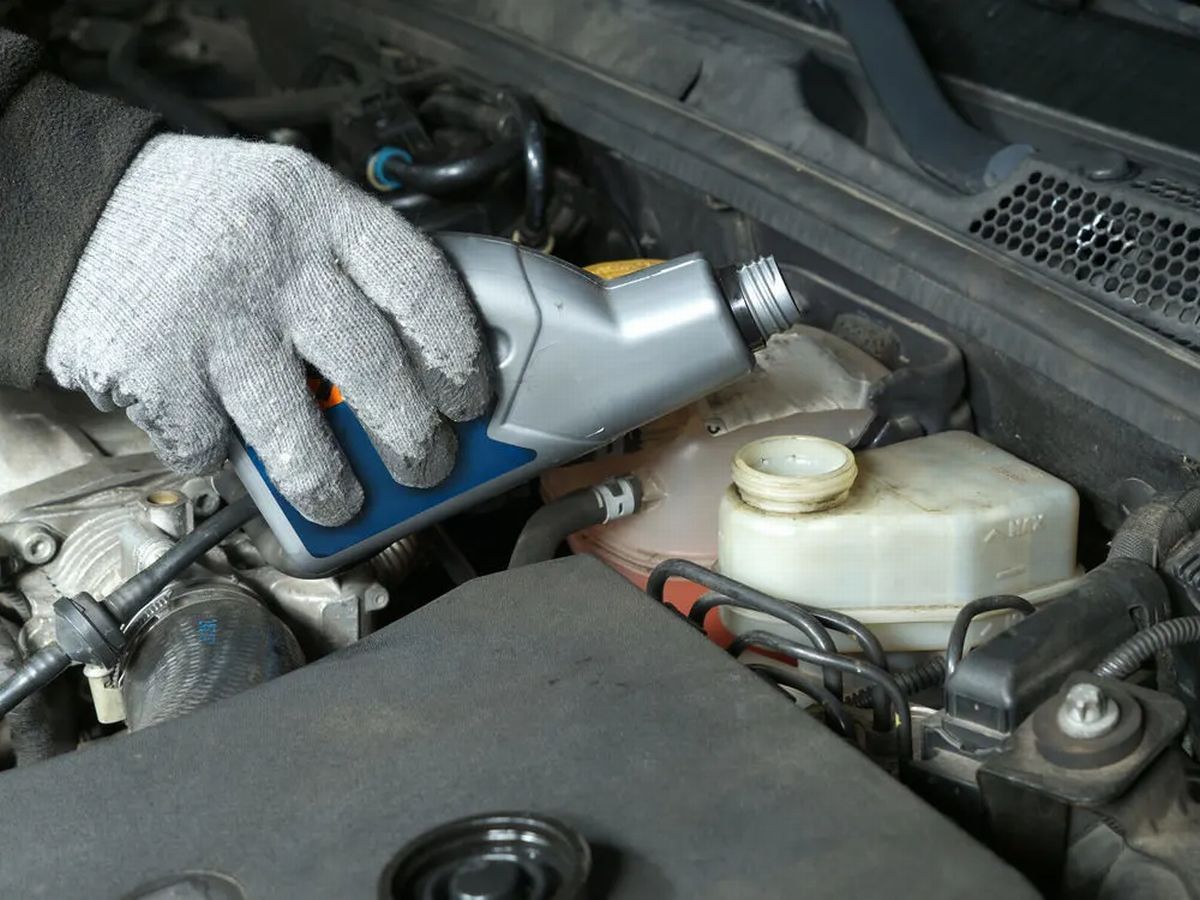
Why Does Brake Fluid Level Decrease? When Should Brake Fluid Be Changed?
Brake fluid is one of the most important fluids in a vehicle because it transfers the pressure created when the brake pedal is pressed to the brake calipers or wheel cylinders. Unlike engine oil or coolant, brake fluid normally does not disappear quickly. Therefore, a noticeable drop in brake fluid level should not simply be ignored.
A small decrease can be related to normal brake pad wear, but a significant or rapid loss may indicate a leak in the braking system. Understanding why the fluid level drops and when the fluid should be replaced is essential for safe braking.
What Is Brake Fluid and What Does It Do?
Brake fluid is a specially formulated hydraulic fluid used in hydraulic braking systems. When the brake pedal is pressed, the brake master cylinder generates hydraulic pressure. This pressure is transmitted through the brake lines and hoses to the calipers or wheel cylinders.
The resulting hydraulic force pushes the brake pads against the brake discs or the brake shoes against the brake drums.
Brake fluid must therefore withstand:
-
High temperatures
-
High hydraulic pressure
-
Repeated heating and cooling cycles
-
Moisture exposure
-
Long periods of operation without significant compression
Because brake fluid plays such a direct role in braking performance, its condition is just as important as its level.
Why Does Brake Fluid Level Decrease?
There are several possible reasons for a lower brake fluid level. The cause should be determined before simply adding more fluid.
Brake pad wear
One of the most common reasons for a gradual decrease is brake pad wear.
As brake pads become thinner, the caliper pistons must move farther outward to maintain contact between the pads and the brake disc. This causes more brake fluid to remain inside the caliper, resulting in a lower level in the master-cylinder reservoir.
This type of decrease is generally gradual.
However, when new brake pads are installed, the caliper pistons are pushed back into their original positions and the fluid level may rise again.
Brake fluid leak
A leaking braking system is much more serious.
Brake fluid can leak from:
-
Brake hoses
-
Metal brake lines
-
Brake calipers
-
Wheel cylinders
-
Brake master cylinder
-
Brake pipe connections
-
ABS hydraulic unit
-
Brake fluid reservoir or its connections
A significant drop in fluid level, especially over a short period, should be treated as a possible leak until proven otherwise.
Brake caliper leakage
A damaged caliper seal can allow brake fluid to escape around the piston.
Signs may include:
-
Wetness around the caliper
-
Brake fluid on the inside of the wheel
-
Reduced braking performance
-
Pulling to one side
-
A soft or sinking brake pedal
A leaking caliper requires immediate attention.
Master cylinder leakage
The brake master cylinder can also develop internal or external leaks.
An external leak may be visible around the master cylinder, while an internal problem can cause the brake pedal to slowly sink even when there is no obvious fluid loss.
In some cases, brake fluid can also leak toward the brake booster.
Brake hose or brake pipe damage
Flexible brake hoses deteriorate over time and can develop cracks or leaks. Metal brake lines can also corrode, especially in vehicles exposed to road salt, moisture, and harsh environmental conditions.
A damaged brake line can cause a rapid loss of hydraulic pressure and represents a serious safety risk.
Can Brake Fluid Decrease Normally?
Yes, a small gradual decrease can occur as the brake pads wear.
However, brake fluid should not continually disappear under normal conditions.
Unlike engine oil, brake fluid is not normally consumed by the engine or braking system.
Therefore:
Small gradual level reduction = may be related to brake pad wear.
Rapid or significant level reduction = possible leak or another braking-system problem.
If the level repeatedly falls after topping up the reservoir, the system should be inspected rather than continuously refilled.
What Happens If Brake Fluid Gets Too Low?
If the brake fluid level becomes excessively low, air can enter the hydraulic braking system.
Air is compressible, while brake fluid is effectively incompressible. When air enters the system, part of the pedal movement is used to compress the air instead of transferring hydraulic pressure to the brakes.
This can result in:
-
A soft brake pedal
-
A spongy pedal
-
Longer stopping distances
-
Reduced braking performance
-
Brake warning lights
-
Brake pedal sinking toward the floor
-
In severe cases, partial or complete loss of hydraulic braking
Driving with a seriously low brake fluid level is dangerous.
What Color Should Brake Fluid Be?
Fresh brake fluid is generally clear to light amber, depending on its type and formulation.
As it ages and absorbs moisture and contaminants, it may become darker.
However, color alone is not a reliable way to determine whether brake fluid needs replacement. A fluid that still looks relatively clean can contain excessive moisture.
For this reason, brake fluid condition should be evaluated using the vehicle manufacturer's service recommendations and, when necessary, a proper moisture or boiling-point test.
Why Does Brake Fluid Need to Be Changed?
Brake fluid is hygroscopic, meaning that it absorbs moisture from the surrounding environment.
Moisture can enter the braking system through microscopic openings, seals, hoses, and the fluid reservoir over time.
As the water content increases, the boiling point of the brake fluid decreases.
This becomes particularly important during heavy braking.
If brake components become extremely hot, contaminated brake fluid can approach its boiling point and produce vapor. Vapor is compressible, which can significantly reduce braking effectiveness.
This phenomenon is commonly associated with brake fluid fade under severe braking conditions.
When Should Brake Fluid Be Changed?
There is no single replacement interval that applies to every vehicle.
Many manufacturers recommend replacing brake fluid approximately every 2 years, while some vehicles may have different intervals based on the brake-fluid specification and operating conditions.
The correct interval should always be based on the vehicle manufacturer's maintenance schedule.
Brake fluid may need to be replaced sooner if:
-
The vehicle is driven in very humid conditions
-
The vehicle frequently operates under heavy braking
-
The fluid has excessive moisture content
-
The fluid has been contaminated
-
Brake system components have been opened
-
The vehicle has undergone brake-system repairs
-
The recommended service interval has been exceeded
Even if the vehicle has very low mileage, brake fluid can still deteriorate with age.
Does Brake Fluid Have a Shelf Life?
Yes.
Brake fluid can deteriorate even when the vehicle is not driven frequently.
This is because moisture absorption occurs over time. A vehicle that spends most of its life parked can still require brake fluid replacement according to the manufacturer's time-based maintenance schedule.
The same principle applies to an opened container of brake fluid. Once opened, the fluid can absorb moisture from the air, so storing it for long periods is not ideal.
What Are the Symptoms of Old Brake Fluid?
Degraded brake fluid does not always produce an obvious symptom, but several warning signs may appear.
Possible symptoms include:
-
Soft or spongy brake pedal
-
Reduced braking consistency
-
Brake pedal feel changing after repeated braking
-
Brake fluid that is significantly darker than expected
-
Reduced resistance to brake fade during heavy braking
-
Moisture content above the manufacturer's recommended limit
A soft pedal can also be caused by air in the system, worn components, or a hydraulic leak, so it should not automatically be blamed on old fluid.
What Happens During a Brake Fluid Change?
A proper brake fluid service normally involves removing the old fluid from the hydraulic system and replacing it with fresh fluid.
Depending on the vehicle, the process may involve:
-
Removing old fluid from the reservoir
-
Filling the reservoir with the correct new fluid
-
Bleeding the brake system
-
Removing old fluid from the brake lines
-
Checking for air bubbles
-
Verifying the final fluid level
-
Testing the brake pedal
The bleeding sequence varies depending on the vehicle and braking system.
Some modern vehicles equipped with ABS may require additional procedures or diagnostic equipment to properly bleed the hydraulic unit.
Which Brake Fluid Should Be Used?
The correct brake fluid specification is extremely important.
Common specifications include:
-
DOT 3
-
DOT 4
-
DOT 5
-
DOT 5.1
These fluids should not be considered interchangeable simply because they are all called brake fluid.
Most modern passenger vehicles use DOT 4 or a specification recommended by the manufacturer.
DOT 5 is silicone-based and is chemically different from glycol-based DOT 3, DOT 4, and DOT 5.1 fluids.
Always use the exact specification stated on the vehicle's reservoir cap, owner's manual, or official service documentation.
Can Different Brake Fluids Be Mixed?
This depends on the fluid types.
DOT 3, DOT 4, and DOT 5.1 are glycol-based and can generally be compatible in certain applications, but the vehicle manufacturer's specified fluid should always take priority.
DOT 5 silicone-based fluid should not simply be mixed with glycol-based brake fluids.
Using an incorrect fluid can cause braking-system problems and damage components designed for another fluid type.
Should You Just Add Brake Fluid When the Level Is Low?
Not necessarily.
If the level is slightly below the maximum mark, the first step should be finding out why it has decreased.
If the brake pads are worn, adding fluid may temporarily restore the reservoir level, but after new pads are installed the fluid level may rise and potentially overflow.
If there is a leak, adding fluid without repairing the leak only masks the problem.
Therefore, repeatedly topping up brake fluid without diagnosing the reason for the loss is not a proper repair.
How Can Brake Fluid Leaks Be Detected?
A brake system inspection should include the entire hydraulic circuit.
A technician may inspect:
-
The master cylinder
-
Brake booster area
-
Reservoir
-
Brake pipes
-
Flexible hoses
-
Calipers
-
Wheel cylinders
-
ABS hydraulic unit
-
Connections and fittings
-
The area behind each wheel
Brake fluid may leave wet or oily-looking traces around the leaking component.
However, not every leak is immediately visible, particularly when the fluid is leaking internally or into another component.
Brake Fluid vs Brake Fluid Reservoir Level
It is important to distinguish between fluid level and fluid condition.
A reservoir can contain enough brake fluid while the fluid itself is already contaminated with moisture.
Conversely, the fluid can be relatively fresh but the level can be dangerously low because of a leak.
Therefore, both should be checked:
Level: Is there enough fluid in the reservoir?
Condition: Is the fluid still within an acceptable service condition?
System integrity: Is the hydraulic system free of leaks?
All three are important for safe braking.
Can Brake Fluid Cause Brake Problems If It Is Old?
Yes.
Old or moisture-contaminated brake fluid can reduce the braking system's resistance to high temperatures.
This is especially important during:
-
Long downhill descents
-
Repeated hard braking
-
Track driving
-
Towing
-
Heavy vehicle loads
-
Mountain driving
Under these conditions, brake temperatures can become very high. Brake fluid with excessive moisture content has a lower boiling point, increasing the risk of vapor formation.
What Should You Do If the Brake Fluid Warning Light Comes On?
A brake warning light should never be ignored.
Depending on the vehicle, the warning light can indicate:
-
Low brake fluid level
-
Parking brake activation
-
A hydraulic brake-system problem
-
Another brake-related fault
If the light remains on after releasing the parking brake, the brake fluid level should be checked and the braking system inspected.
If the brake pedal also feels soft, the vehicle should not be driven until the cause has been identified.
How Often Should Brake Fluid Be Checked?
The brake fluid level can be checked during routine vehicle maintenance and whenever the hood is opened for basic inspections.
A more detailed condition check should be performed during brake servicing.
It is particularly important to check the fluid if you notice:
-
A lower-than-usual reservoir level
-
A soft pedal
-
Brake warning lights
-
Fluid around the wheels
-
Unusual braking behavior
-
Recently replaced brake components
Does Brake Fluid Level Tell You When the Pads Need Replacement?
Not by itself.
A falling brake fluid level can sometimes indicate worn brake pads, but it is not a reliable substitute for visually inspecting the pads.
Brake pad thickness should be checked directly.
This is especially important because a low fluid level can also be caused by a hydraulic leak.
Final Thoughts
Brake fluid should not normally disappear from a vehicle's braking system. A small gradual reduction can occur as brake pads wear, but a rapid or significant decrease should always raise suspicion of a leak.
Brake fluid also deteriorates with age because it absorbs moisture. For this reason, replacing it according to the vehicle manufacturer's recommended time or mileage interval is an important part of brake maintenance.
If the brake fluid level is low, do not simply keep adding fluid. First determine whether the cause is brake pad wear, a hydraulic leak, or another braking-system problem.
A healthy braking system requires the correct fluid level, the correct fluid specification, good-quality fluid, and a completely sealed hydraulic circuit.