TR
TR EN
EN

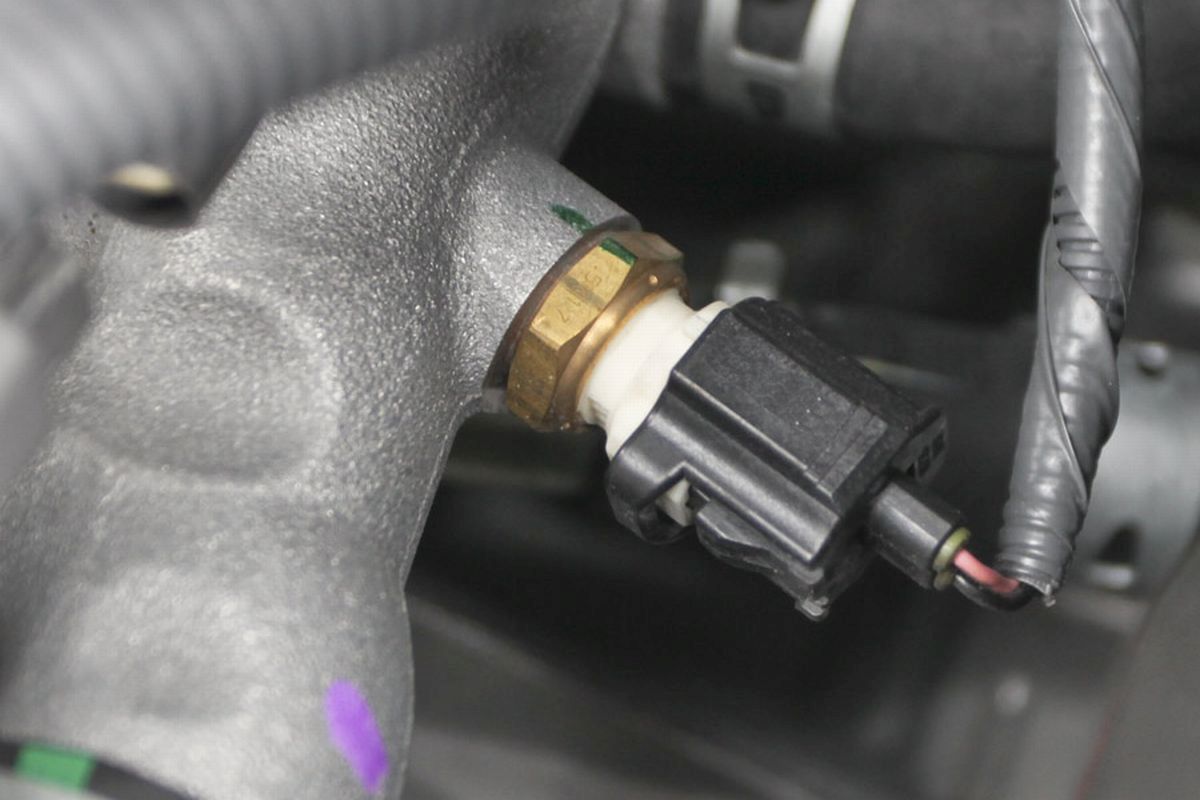
What Is an Engine Coolant Temperature Sensor? What Are the Symptoms of Failure?
The engine coolant temperature sensor, commonly called the coolant temperature sensor or engine temperature sensor, is an important component that measures the temperature of the engine coolant and sends this information to the engine control unit (ECU).
The ECU uses this information to determine how the engine should operate under different temperature conditions. Coolant temperature affects fuel injection, ignition timing, idle speed, cooling fan operation, emissions control, and in many vehicles, automatic transmission strategies.
A faulty coolant temperature sensor can therefore cause much more than an incorrect temperature reading. It can lead to hard starting, poor fuel economy, unstable idle, increased emissions, cooling fan problems, and engine performance issues.
What Does the Engine Coolant Temperature Sensor Do?
The main purpose of the coolant temperature sensor is to monitor the temperature of the engine coolant.
The sensor sends a temperature-dependent electrical signal to the ECU. As the coolant temperature changes, the electrical resistance of the sensor changes as well. The ECU interprets this signal and determines the approximate operating temperature of the engine.
This information can be used for:
-
Adjusting fuel injection
-
Controlling cold-start enrichment
-
Adjusting ignition timing
-
Controlling engine idle speed
-
Activating and controlling the cooling fan
-
Managing emissions systems
-
Adjusting certain automatic transmission strategies
-
Determining when the engine has reached operating temperature
In many modern vehicles, the temperature information is also used by the instrument cluster to display the engine temperature to the driver.
Where Is the Coolant Temperature Sensor Located?
The sensor is usually installed in a location where it can accurately measure engine coolant temperature.
Depending on the engine design, it may be located:
-
On the cylinder head
-
On the engine block
-
Near the thermostat housing
-
On a coolant outlet flange
-
Near the coolant hose connection
-
In the intake manifold area on some engines
Its exact location varies significantly between engines.
Some vehicles use more than one temperature sensor. One may provide information primarily to the ECU, while another may be used for the dashboard or other control systems.
How Does a Coolant Temperature Sensor Work?
Most engine coolant temperature sensors are thermistors, usually of the NTC type.
NTC stands for Negative Temperature Coefficient. With an NTC sensor, electrical resistance decreases as temperature increases.
When the engine is cold, the sensor has relatively high resistance. As the engine warms up, its resistance decreases.
The ECU supplies a reference voltage to the sensor circuit and monitors the resulting voltage. From this signal, it calculates the approximate coolant temperature.
This allows the ECU to distinguish between conditions such as:
-
Cold engine
-
Warming engine
-
Normal operating temperature
-
Excessively high temperature
What Are the Symptoms of a Faulty Coolant Temperature Sensor?
A failing coolant temperature sensor can produce different symptoms depending on whether the sensor is reporting a temperature that is too high, too low, or an implausible value.
The most common symptoms include the following.
Difficult Cold Starting
One of the common symptoms is difficult starting when the engine is cold.
During a cold start, the ECU needs accurate temperature information to determine the appropriate amount of fuel.
If the sensor incorrectly reports that the engine is already warm, the ECU may not provide enough fuel for a proper cold start.
The result can be:
-
Extended cranking
-
Multiple starting attempts
-
Rough running immediately after starting
-
Poor throttle response when cold
Hard Starting When the Engine Is Hot
A faulty sensor can also cause starting problems when the engine is already warm.
If the sensor incorrectly reports an extremely low temperature, the ECU may enrich the mixture more than necessary. This can cause an overly rich mixture and make hot restarting difficult.
Therefore, both cold-start and hot-start problems can potentially be related to coolant temperature sensor readings.
Poor Fuel Economy
Incorrect temperature information can cause the ECU to use an inappropriate fuel strategy.
If the ECU believes that the engine is colder than it actually is, it may continue using a richer fuel mixture for longer than necessary.
This can increase fuel consumption.
Poor fuel economy can have many causes, however, so the coolant temperature sensor should not be replaced based on fuel consumption alone.
Unstable or High Idle Speed
A faulty coolant temperature signal can affect engine idle control.
If the ECU believes that the engine is still cold, it may maintain a higher idle speed than necessary.
Possible symptoms include:
-
Higher-than-normal idle RPM
-
Fluctuating idle
-
Rough idle
-
Engine speed taking too long to return to normal
Engine Running Too Rich or Too Lean
The coolant temperature signal is an important input for fuel mixture control.
If the sensor reports an incorrect temperature, the ECU may calculate an inappropriate fuel mixture.
A faulty sensor can therefore contribute to:
-
Rich running
-
Poor combustion
-
Increased fuel consumption
-
Black exhaust smoke in severe cases
-
Poor throttle response
-
Increased emissions
Cooling Fan Running Continuously
A coolant temperature sensor fault can sometimes cause the radiator cooling fan to operate continuously.
This can happen because the ECU cannot reliably determine the actual coolant temperature. As a protective strategy, some vehicles activate the cooling fan when the temperature signal is missing or implausible.
Depending on the vehicle, the fan may:
-
Run immediately after ignition is switched on
-
Continue running after the engine is turned off
-
Operate at high speed
-
Run even when the engine is cold
This behavior does not automatically prove that the temperature sensor is defective. The wiring, connector, ECU and fan control system should also be checked.
Cooling Fan Not Activating Correctly
The opposite problem can also occur.
If the temperature sensor incorrectly reports that the engine is cooler than it really is, the ECU may delay cooling fan activation.
This can potentially contribute to overheating.
A faulty fan relay, fan motor, wiring problem, or fan control module can produce similar symptoms, so the entire cooling system should be diagnosed.
Incorrect Temperature Gauge Reading
On vehicles with a traditional temperature gauge, a faulty temperature signal can cause the gauge to display an incorrect reading.
The gauge may:
-
Remain unusually low
-
Show a higher temperature than expected
-
Move erratically
-
Suddenly drop or rise
-
Remain fixed in one position
Modern vehicles may use data from the ECU rather than a simple direct sensor-to-gauge circuit, so the exact behavior depends on the vehicle.
Check Engine Light
A coolant temperature sensor or circuit problem can trigger the check engine light.
Depending on the fault and vehicle, diagnostic trouble codes may indicate:
-
Sensor circuit problems
-
High or low input voltage
-
Implausible temperature readings
-
Open circuit
-
Short circuit
-
Temperature performance problems
Common OBD-II codes associated with coolant temperature sensor problems include codes from the P0115–P0119 range.
The exact code should always be interpreted according to the vehicle's engine and manufacturer-specific diagnostic information.
Increased Exhaust Emissions
Because coolant temperature affects fuel mixture and other engine control strategies, an incorrect temperature signal can increase emissions.
A sensor that falsely indicates a cold engine may cause the ECU to maintain an enriched mixture for too long.
This can increase:
-
Hydrocarbon emissions
-
Carbon monoxide emissions
-
Fuel consumption
It can also affect the operation of emissions-control components.
Poor Engine Performance
A faulty temperature sensor can cause the ECU to use incorrect engine-management settings.
The driver may notice:
-
Sluggish acceleration
-
Poor throttle response
-
Rough running
-
Reduced engine performance
-
Hesitation
-
Increased fuel consumption
The severity depends on how far the reported temperature differs from the actual coolant temperature.
What Causes Coolant Temperature Sensor Failure?
Coolant temperature sensors can eventually fail due to age, heat, contamination, or electrical problems.
Common causes include:
-
Internal sensor failure
-
Corrosion
-
Coolant contamination
-
Damaged wiring
-
Loose electrical connections
-
Corroded connector terminals
-
Short circuits
-
Open circuits
-
Coolant leaks around the sensor
-
Incorrect installation
-
Excessive engine heat
Sometimes the sensor itself is perfectly functional and the actual problem is in the electrical circuit.
Coolant Temperature Sensor Wiring Problems
The wiring and connector should always be inspected before replacing the sensor.
A damaged wire can produce exactly the same symptoms as a defective sensor.
For example, an open circuit may cause the ECU to see an extremely unrealistic temperature value. A short circuit can also produce an implausible signal.
Common wiring problems include:
-
Broken wires
-
Damaged insulation
-
Corroded terminals
-
Loose connectors
-
Poor electrical contact
-
Water or coolant contamination inside the connector
How Is a Coolant Temperature Sensor Diagnosed?
A proper diagnosis should compare the sensor's reported temperature with the actual engine temperature.
One of the easiest methods is to use an OBD-II diagnostic scanner and monitor live data.
When the engine is completely cold, the coolant temperature reported by the ECU should generally be reasonably close to the surrounding temperature.
As the engine warms up, the reported temperature should increase gradually and logically.
An unrealistic reading can indicate a sensor or circuit problem.
Checking the Sensor With a Multimeter
The sensor can also be tested electrically.
Because most coolant temperature sensors are NTC thermistors, their resistance should change according to temperature.
A technician can measure the sensor's resistance and compare the result with the manufacturer's specifications.
The important point is that there is no single resistance value that applies to every vehicle. Different sensors have different resistance-temperature characteristics.
Therefore, the correct specifications for the specific engine should be used.
Checking the Sensor Signal
In addition to testing the sensor itself, the electrical circuit should be checked.
A technician may inspect:
-
Reference voltage
-
Ground circuit
-
Sensor signal
-
Wiring continuity
-
Connector condition
-
ECU input circuit
If the sensor tests correctly but the ECU receives an incorrect signal, the wiring or ECU circuit may be responsible.
Can a Faulty Coolant Temperature Sensor Cause Overheating?
A coolant temperature sensor does not normally control the physical temperature of the engine by itself. The mechanical cooling system is responsible for removing heat.
However, the sensor can affect electronically controlled cooling functions.
If the ECU receives incorrect temperature information, cooling fan operation may be affected on some vehicles.
It is also important to understand that an engine can overheat even when the temperature sensor is working perfectly.
Other possible causes include:
-
Low coolant level
-
Coolant leakage
-
Faulty thermostat
-
Failed cooling fan
-
Damaged water pump
-
Blocked radiator
-
Air trapped in the cooling system
-
Head gasket problems
Therefore, overheating should never automatically be attributed to the temperature sensor.
Can You Drive With a Bad Coolant Temperature Sensor?
A vehicle may continue to run with a faulty coolant temperature sensor, but continuing to drive without diagnosing the problem is not recommended.
If the sensor is causing an incorrect fuel mixture, the engine may run poorly and consume more fuel.
More importantly, if the sensor or its circuit affects cooling fan control, an unresolved problem could contribute to overheating in certain vehicles.
If the temperature gauge suddenly moves into the overheating range, coolant warning appears, steam is visible, or the engine shows signs of severe overheating, the vehicle should be stopped and inspected rather than continuing to drive.
How Is a Coolant Temperature Sensor Replaced?
Replacing the sensor is generally straightforward on many engines, but coolant handling is important.
The basic procedure usually involves:
-
Allowing the engine to cool completely
-
Locating the coolant temperature sensor
-
Disconnecting the electrical connector
-
Removing the old sensor
-
Installing the correct replacement sensor
-
Using the appropriate seal or sealing method
-
Reconnecting the electrical connector
-
Checking and correcting the coolant level
-
Removing air from the cooling system when necessary
-
Checking for leaks
-
Verifying the temperature reading with a diagnostic scanner
The exact procedure depends on the engine design.
Opening the cooling system while the engine is hot can be dangerous because the coolant may be under pressure.
Does Replacing the Sensor Fix the Problem Immediately?
If the sensor is the actual cause of the problem, replacing it should restore a correct temperature signal.
However, some vehicles may require fault codes to be cleared after the repair. In other cases, the ECU may automatically stop reporting the fault after several successful drive cycles.
If the problem remains after sensor replacement, the wiring, connector, thermostat, cooling system, ECU and other related components should be investigated.
Coolant Temperature Sensor vs. Temperature Gauge
These two terms are sometimes confused.
The coolant temperature sensor is the component that measures coolant temperature and provides an electrical signal.
The temperature gauge is the instrument or display that communicates temperature information to the driver.
In older vehicles, a separate sender may be used for the dashboard gauge, while the ECU may use another sensor.
Modern vehicles often integrate temperature information through the ECU and electronic instrument cluster.
Final Thoughts
The engine coolant temperature sensor is a small component with an important role in modern engine management.
It provides the ECU with information about coolant temperature, allowing the engine control system to adjust fuel delivery, idle speed, ignition strategy, emissions control, and cooling fan operation.
Common symptoms of a faulty sensor include difficult starting, poor fuel economy, unstable idle, incorrect temperature readings, cooling fan problems, poor engine performance, increased emissions, and a check engine light.
However, these symptoms can also be caused by wiring problems, thermostat faults, cooling system issues, fuel-system problems, or other engine-management components.
For this reason, the sensor should not be replaced simply because the engine temperature appears abnormal. Checking the diagnostic trouble codes, monitoring live coolant temperature data, and testing the sensor and its electrical circuit can provide a much more accurate diagnosis.