TR
TR EN
EN

What Is Adaptive Cruise Control? How Does It Work?
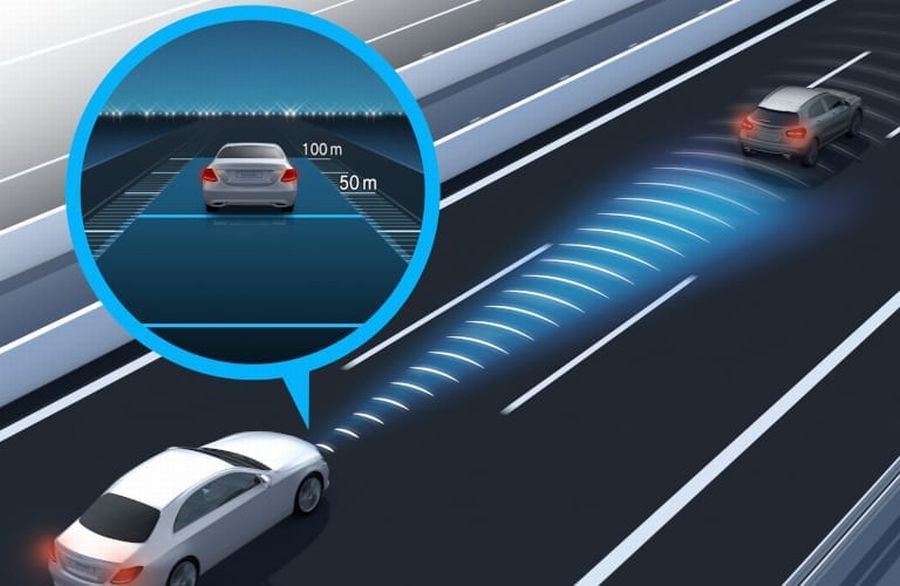
Adaptive Cruise Control (ACC) is an advanced version of conventional cruise control designed to maintain a selected vehicle speed while also automatically adjusting the distance from the vehicle ahead.
Unlike traditional cruise control, which only maintains a set speed, ACC can reduce the vehicle's speed when traffic slows down and accelerate again when the road becomes clear. Depending on the vehicle, ACC may also be able to bring the car to a complete stop and resume driving automatically.
What Is the Difference Between Cruise Control and Adaptive Cruise Control?
Conventional cruise control allows the driver to select a speed, such as 100 km/h, and the system keeps the vehicle around that speed.
The system does not normally know whether another vehicle is directly ahead. If traffic slows to 70 km/h, the driver must intervene.
Adaptive Cruise Control adds sensors that monitor the road ahead. If a slower vehicle is detected, the ACC system reduces the vehicle's speed to maintain the programmed following distance.
When the slower vehicle moves away or the lane becomes clear, the system can accelerate back toward the selected cruising speed.
How Does Adaptive Cruise Control Work?
ACC generally works through a combination of several electronic systems:
-
Radar sensor
-
Camera
-
Engine or electric motor control
-
Electronic throttle control
-
Automatic transmission control
-
Brake control system
-
ABS/ESC system
-
Vehicle speed sensors
-
Steering and other vehicle-control systems
The exact hardware varies depending on the manufacturer and vehicle model.
The radar or camera continuously monitors the area in front of the vehicle. The system estimates the distance and relative speed of vehicles traveling ahead.
The ACC control module then determines whether the vehicle should:
-
Maintain its current speed
-
Accelerate
-
Reduce engine torque
-
Apply the brakes
-
Stop the vehicle
-
Resume driving

How Does the Radar Sensor Detect Vehicles?
Many ACC systems use a forward-facing radar sensor mounted behind the front grille, bumper, or another protected area.
Radar sends electromagnetic waves toward the road ahead. When these waves reflect from another vehicle or object, the system analyzes the returning signal.
This allows the system to estimate:
-
Distance to the vehicle ahead
-
Relative speed
-
Direction of movement
-
Whether the detected vehicle is likely to be in the same lane
Modern systems can combine radar information with camera data to improve object and lane recognition.
The Role of the Camera in Adaptive Cruise Control
Some ACC systems use radar and a front-facing camera together.
The camera can help identify:
-
Lane markings
-
Vehicles
-
Motorcycles
-
Road geometry
-
Traffic signs
-
Other objects
Radar is particularly useful for measuring distance and relative speed, while the camera provides visual information about what is happening ahead.
Combining these sensors can make the system more capable than relying on either technology alone.
How Does ACC Maintain Following Distance?
The driver usually selects a desired following distance using controls on the steering wheel.
For example, the driver may choose a short, medium, or long distance.
If the vehicle ahead is traveling slower than the programmed speed, ACC calculates the required speed reduction and adjusts the vehicle accordingly.
Suppose the driver sets the cruising speed to 120 km/h, but a vehicle ahead is traveling at 100 km/h.
Instead of continuing toward 120 km/h, the ACC system reduces the vehicle's speed and maintains the selected gap.
When the road ahead becomes clear, the system can gradually accelerate toward the original set speed.
What Happens When Traffic Slows Down?
This is one of the main advantages of adaptive cruise control.
Imagine driving on a highway at 110 km/h. A vehicle ahead suddenly slows to 90 km/h.
The ACC system detects the change and reduces your vehicle's speed without requiring you to immediately press the brake pedal.
If traffic slows further, the system may continue reducing speed.
In vehicles equipped with Stop & Go ACC, the system can sometimes slow the vehicle all the way to a complete stop.
What Is Stop & Go Adaptive Cruise Control?
Stop & Go is an enhanced form of ACC designed primarily for congested traffic.
When traffic comes to a stop, the system can automatically brake the vehicle until it stops.
Depending on the manufacturer, the vehicle may then:
-
Remain stopped
-
Automatically resume when traffic starts moving
-
Require the driver to press a button or accelerator
-
Resume automatically only if the stop is very short
The exact behavior differs between manufacturers and models.
Does Adaptive Cruise Control Steer the Car?
Standard ACC primarily controls speed and following distance. It does not necessarily control steering.
However, many modern vehicles combine ACC with lane-centering or lane-keeping systems.
When these systems operate together, the vehicle may automatically adjust the steering to remain near the center of its lane.
This is sometimes marketed as a driver-assistance package rather than ACC alone.
It is important to distinguish this from fully autonomous driving. The driver remains responsible for monitoring the road and controlling the vehicle.
Can Adaptive Cruise Control Detect a Vehicle Changing Lanes?
Modern ACC systems can recognize when a vehicle enters or leaves the lane ahead.
If a vehicle moves into your lane, the system can detect the newly relevant target and reduce speed if necessary.
If the vehicle ahead changes into another lane and the lane in front becomes clear, ACC may begin accelerating toward the selected cruising speed.
The effectiveness of this process depends on sensor performance, road conditions, vehicle design, and software calibration.
What Happens If Another Vehicle Cuts In?
If another vehicle suddenly moves into the space between your car and the previous target vehicle, ACC may detect the new vehicle and respond by reducing speed.
The system needs to calculate the new relative distance and speed very quickly.
However, there are situations where a vehicle may enter the lane too suddenly for the system to respond exactly as a human driver would. This is one reason the driver must remain attentive.
Can ACC Apply the Brakes?
Yes. Adaptive cruise control can communicate with the vehicle's braking system.
When the system determines that the vehicle is approaching a slower vehicle too quickly, it can request deceleration through the electronic braking system.
Depending on the vehicle, ACC may use different levels of braking intervention.
In some situations, the system may only reduce engine torque or use light braking. In more advanced Stop & Go systems, stronger braking may be available.
However, ACC should not be treated as a substitute for emergency braking or attentive driving.
Adaptive Cruise Control and Automatic Emergency Braking
ACC and Automatic Emergency Braking (AEB) are related but different systems.
Adaptive Cruise Control is designed to maintain a selected speed and following distance.
Automatic Emergency Braking is designed to help avoid or reduce the severity of an imminent collision.
A vehicle can have both systems, and they may share radar and camera sensors, but they perform different functions.
What Are the Advantages of Adaptive Cruise Control?
ACC can make long-distance driving considerably more comfortable.
Important advantages include:
-
Reduced need for constant accelerator-pedal adjustments
-
More consistent following distance
-
Improved comfort during highway driving
-
Reduced driver workload in steady traffic
-
Automatic speed adjustment according to traffic
-
Stop & Go capability on some vehicles
-
Better integration with modern driver-assistance systems
The biggest benefit is convenience rather than replacing the driver's responsibility.
What Are the Disadvantages of Adaptive Cruise Control?
ACC is not perfect.
Its operation can be affected by:
-
Heavy rain
-
Snow
-
Fog
-
Dirt or mud covering the radar
-
Ice on the front sensor area
-
Dirty or obstructed camera
-
Poorly visible lane markings
-
Sharp curves
-
Vehicles entering the lane suddenly
-
Stationary objects
-
Unusual road layouts
The system may also occasionally identify an object incorrectly or fail to recognize a situation as quickly as a human driver.
What Causes Adaptive Cruise Control to Stop Working?
If ACC suddenly becomes unavailable, the problem may not necessarily be the ACC control module itself.
Possible causes include:
Dirty or obstructed radar sensor
A dirty grille or bumper area can interfere with the radar sensor.
Blocked camera
A dirty windshield area in front of the camera can prevent the system from operating correctly.
Radar sensor misalignment
After a front-end collision, bumper replacement, suspension work, or certain repairs, the radar sensor may become misaligned.
Camera calibration problems
If the windshield is replaced or the camera mounting position changes, calibration may be required.
ABS or wheel-speed sensor faults
ACC relies on accurate vehicle-speed information. An ABS or wheel-speed sensor fault can therefore disable cruise-control functions.
Brake-system faults
Because ACC may control the braking system, certain brake or stability-control faults can cause ACC to become unavailable.
Electrical or communication problems
ACC components communicate with other control modules through the vehicle's network. Wiring, connectors, power supply, or communication faults can disable the system.
What Are the Symptoms of an ACC System Failure?
A malfunctioning adaptive cruise-control system may produce several symptoms:
-
ACC cannot be activated
-
Adaptive cruise control switches off unexpectedly
-
"ACC unavailable" warning
-
"Radar sensor blocked" message
-
Cruise control works but adaptive functions do not
-
Following-distance control does not operate
-
Vehicle does not automatically slow down behind traffic
-
Warning light appears
-
Multiple driver-assistance systems become unavailable
A diagnostic scan is often necessary to determine the actual cause.
Does ACC Make Driving Safer?
Adaptive cruise control can contribute to safer and more comfortable driving by helping maintain a consistent speed and following distance.
However, it does not eliminate the possibility of an accident.
The driver must continue to monitor:
-
The road
-
Traffic
-
Pedestrians
-
Motorcycles
-
Road conditions
-
Vehicles entering from other directions
-
Construction zones
-
Unexpected obstacles
ACC is a driver-assistance system, not a replacement for the driver.
Can Adaptive Cruise Control Be Used in City Traffic?
It depends on the vehicle.
Basic ACC systems are primarily designed for highways and relatively predictable traffic.
More advanced Stop & Go systems can operate in slow-moving traffic and may even bring the vehicle to a complete stop.
Nevertheless, city driving contains many unpredictable situations, including pedestrians, bicycles, intersections, parked vehicles, and vehicles cutting across lanes. The driver must therefore remain fully engaged.
Does ACC Increase Fuel Consumption?
ACC can sometimes help maintain a more consistent driving speed, which may reduce unnecessary acceleration and deceleration on highways.
However, fuel consumption depends on many factors, including:
-
Vehicle weight
-
Engine type
-
Transmission
-
Road gradient
-
Traffic
-
Weather
-
Vehicle speed
-
Tire pressure
-
Driving style
ACC itself does not guarantee lower fuel consumption.
Is Adaptive Cruise Control Fully Autonomous?
No.
Adaptive cruise control is generally classified as a driver-assistance technology. It can automatically control certain vehicle functions, but the driver remains responsible for supervising the vehicle.
Even when ACC is combined with lane-centering assistance, the vehicle should not be treated as completely autonomous unless the manufacturer specifically defines the system's operating capabilities otherwise.
Final Thoughts
Adaptive Cruise Control is an important development in modern vehicle technology. By combining radar, cameras, electronic throttle control, braking systems, and vehicle-control software, it can automatically adjust the vehicle's speed according to traffic conditions.
The main difference from conventional cruise control is simple: traditional cruise control maintains a set speed, while adaptive cruise control can also react to vehicles ahead and maintain a selected following distance.
ACC can make highway and stop-and-go driving significantly more comfortable, but it has limitations. Sensor obstruction, bad weather, poor road markings, unexpected traffic movements, and system faults can affect its operation.
For that reason, Adaptive Cruise Control should always be considered a convenience and driver-assistance feature—not a substitute for an attentive driver.