TR
TR EN
EN

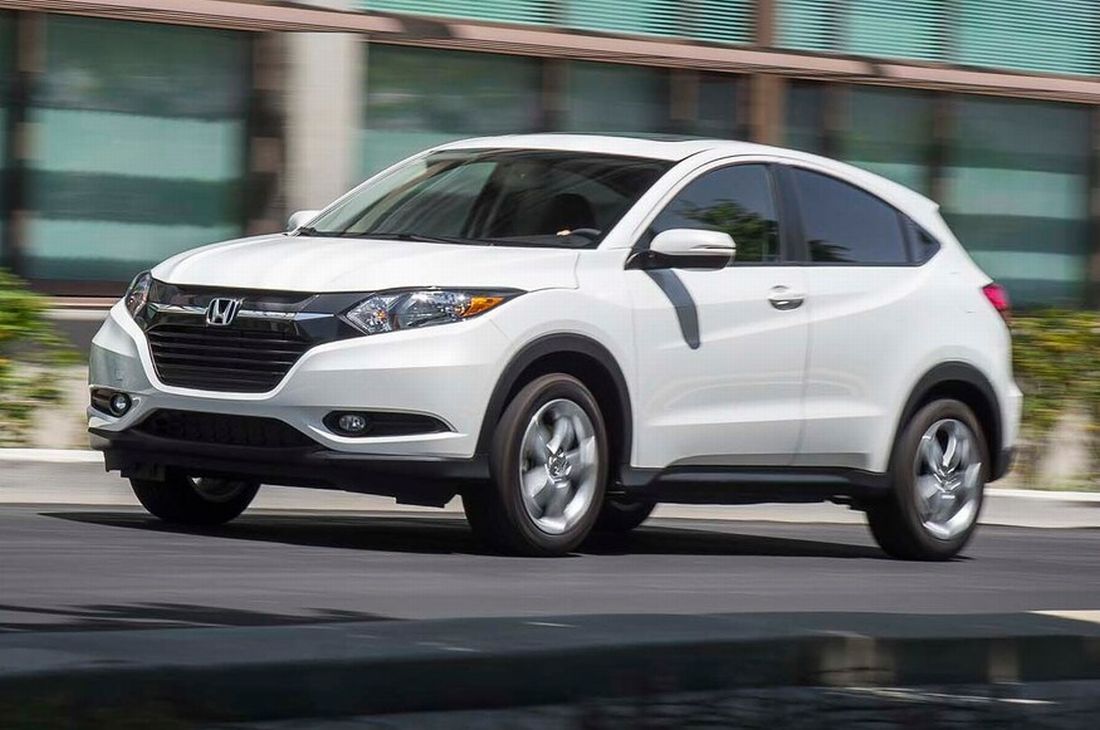
Is a Used Honda HR-V Worth Buying? Honda HR-V Common Problems and Failures
The Honda HR-V is a compact crossover SUV designed to combine the practicality of an SUV with the driving characteristics and fuel economy of a passenger car. Depending on the generation and market, it has been offered with front-wheel drive or all-wheel drive, gasoline engines, and continuously variable transmissions (CVT).
The first-generation HR-V was introduced in the late 1990s and was sold in many markets from 1999 to 2006. After a long gap, Honda introduced the second-generation HR-V in 2014, with production and sales continuing in different markets into the early 2020s. The third-generation HR-V appeared from 2021 onward, although its specifications and even its name differ between markets.
Honda has generally built the HR-V around simplicity, practicality, and relatively low running costs. However, that does not mean every HR-V is trouble-free. Certain model years have generated recurring complaints involving electronics, driver-assistance systems, paint, interior components, CVT behavior, air conditioning, suspension, and engine-related components.
It is also important not to treat every complaint reported by owners as a guaranteed "chronic problem." Complaint databases contain individual cases, and a problem reported frequently does not necessarily mean that every vehicle will experience it.
If you are considering a used HR-V, the generation, engine, transmission, mileage, maintenance history, and accident history are much more important than simply looking at the model year.
Honda HR-V Generations and What to Know
The HR-V has changed considerably over the years.
First generation: approximately 1999–2006
The first-generation HR-V was one of Honda's early compact crossover models. It was available with three- and five-door body styles in some markets and used relatively simple naturally aspirated gasoline engines.
Its age is now the biggest concern when buying one. Even if the engine and transmission remain healthy, rubber components, suspension parts, seals, electrical connectors, air-conditioning components, and bodywork can deteriorate simply because of age.
A well-maintained example can still be usable, but condition is much more important than mileage alone.
Second generation: 2014–2021, depending on market
This generation is the HR-V most commonly encountered on the used market today. It uses a more modern crossover design and, in many markets, a naturally aspirated gasoline engine combined with a CVT.
This generation generally offers good fuel economy and practical interior space, but there are several areas that should be checked carefully before purchase.
Third generation: 2021 onward
The third-generation HR-V introduced a substantially different platform and powertrain strategy. Depending on the market, it may be offered with gasoline or hybrid powertrains.
For a used third-generation HR-V, the usual concerns are less about age-related deterioration and more about electronics, driver-assistance systems, hybrid components where applicable, software, and the condition of a relatively new vehicle that may still have its warranty history available.
Is the Honda HR-V Reliable?
Overall, the HR-V can be a reliable used SUV, especially when it has a good maintenance history.
Honda's naturally aspirated gasoline engines used in many HR-V applications are relatively straightforward compared with many modern turbocharged engines. The CVT can also provide good durability when it has been properly maintained and driven appropriately.
However, reliability depends heavily on the exact engine and transmission combination.
A 2016 HR-V in excellent mechanical condition can be a better purchase than a neglected 2020 example. Likewise, a vehicle that has spent years in heavy traffic, on poor roads, or without proper CVT maintenance may require more attention than a higher-mileage vehicle with a complete service history.
For this reason, it is better to think of the HR-V as a generally reliable model with several areas that deserve inspection, rather than a vehicle with no known weaknesses.
Honda HR-V Electrical and Electronic Problems
Electrical complaints appear among HR-V owner reports, particularly on some second-generation vehicles.
Possible complaints include:
-
Warning lights appearing unexpectedly
-
Keyless-start problems
-
Intermittent starting problems
-
Battery discharge
-
Electrical accessories becoming inoperative
-
Instrument-panel or infotainment issues
-
Door-lock or window problems
-
Driver-assistance system warnings
-
Electrical faults caused by damaged wiring
One particularly discussed issue involves wiring insulation made with soy-based materials.
Rodent Damage to Wiring
Honda and other manufacturers have used plant-based materials in some wire insulation applications. These materials are sometimes blamed for attracting rodents.
The important point, however, is that this should not be described as an HR-V-specific electrical defect. Rodents can damage wiring on almost any modern vehicle, and the severity depends on where the vehicle is parked and the local rodent population.
A damaged wiring harness can become expensive if multiple circuits are affected. Problems can range from a simple warning light to communication failures between control modules or even a no-start condition.
When inspecting a used HR-V, look for:
-
Bite marks around wiring
-
Nesting material
-
Damaged insulation
-
Chewed connectors
-
Strange electrical repairs
-
Non-factory wiring
-
Multiple warning lights appearing simultaneously
A vehicle that has already suffered extensive rodent damage deserves particular caution.
Battery Drain and Starting Problems
Some HR-V owners have reported premature battery discharge or situations where the vehicle does not start normally.
A weak battery is not necessarily an HR-V-specific defect. Modern vehicles have many electronic systems that can consume power, and a battery can also fail prematurely because of age, repeated short trips, parasitic electrical loads, or charging-system problems.
If the battery repeatedly goes flat, simply installing another battery is not enough.
The charging system and parasitic draw should be tested to determine whether the real problem is:
-
Battery deterioration
-
Alternator/charging-system problems
-
Excessive parasitic draw
-
A malfunctioning control module
-
Keyless-entry system behavior
-
An aftermarket accessory
Honda HR-V Engine Problems
The HR-V has used different engines depending on generation and market, so engine complaints cannot be generalized to every HR-V.
Owner complaints can include:
-
Rough idle
-
Engine hesitation
-
Stalling
-
Loss of power
-
Excessive oil consumption
-
Engine vibration
-
Check Engine Light
-
Difficult starting
-
Misfires
-
Unusual engine noises
These symptoms can have many different causes.
For example, hesitation does not automatically mean that the engine itself is defective. A dirty throttle body, ignition problem, fuel-delivery issue, vacuum leak, sensor fault, weak battery, or transmission behavior can produce similar symptoms.
Before buying a used HR-V, a diagnostic scan should be performed even if the Check Engine Light is currently off. Stored and pending trouble codes can reveal intermittent problems that are not obvious during a short test drive.
Honda HR-V CVT Transmission Problems
One of the most important areas to inspect on many second-generation HR-Vs is the CVT.
Honda's CVTs can provide smooth operation and good fuel economy, but they still require proper maintenance.
Possible warning signs include:
-
Shuddering during acceleration
-
Juddering at low speed
-
Delayed engagement
-
Hesitation when accelerating
-
Unusual whining noises
-
RPM fluctuations
-
Poor response under heavy acceleration
-
Transmission warning lights
A short test drive should include both gentle and moderate acceleration.
Pay particular attention to the transmission when:
-
Pulling away from a stop
-
Accelerating from low speed
-
Driving uphill
-
Performing a moderate kickdown
-
Switching between Reverse and Drive
-
Maneuvering at very low speed
A CVT that behaves abnormally should not be ignored simply because the vehicle still moves.
The transmission fluid history should also be checked. Using the correct Honda-specified CVT fluid and following the maintenance schedule is important. Fluid replacement intervals vary according to the vehicle, market, driving conditions, and maintenance schedule, so the exact owner's manual or service documentation should be followed.
Honda HR-V Brake and Driver-Assistance Problems
Some of the most concerning complaints associated with certain HR-V model years involve the vehicle's driver-assistance and collision-mitigation systems.
This subject needs to be explained carefully because several different systems can be confused with each other.
A vehicle equipped with Honda's driver-assistance technology may have systems such as:
-
Collision Mitigation Braking System
-
Forward Collision Warning
-
Lane Departure Warning
-
Adaptive Cruise Control, depending on equipment
-
Other camera- or radar-based assistance functions
Some owners have reported unexpected braking or warnings from driver-assistance systems.
However, saying that the ABS suddenly activates when there is nothing in front of the vehicle is not technically the same as saying that the automatic emergency braking system has activated. ABS and collision-mitigation braking are different systems.
If an HR-V appears to brake unexpectedly, possible causes include:
-
Driver-assistance system intervention
-
Camera obstruction
-
Poor calibration
-
Weather conditions
-
Dirt or contamination
-
Software-related behavior
-
Sensor problems
-
Actual ABS/ESC faults
Because unexpected braking can create a serious safety issue, this should never be dismissed during a used-car inspection.
If a vehicle has a history of unexplained automatic braking, the system should be professionally inspected before purchase.
Honda HR-V 2016 Model Problems
The 2016 HR-V is one of the model years that deserves a careful inspection rather than an automatic rejection.
Uncomfortable Seats
Some owners have complained about the shape and firmness of the seats, particularly on longer journeys.
This is not a mechanical failure, but it is important because comfort is highly subjective. A seat that is perfectly acceptable to one driver may cause discomfort for another.
Anyone considering a 2016 HR-V should spend enough time in the driver's seat before buying.
Check:
-
Lower-back support
-
Seat cushion length
-
Driving position
-
Steering-wheel adjustment
-
Visibility
-
Long-distance comfort
A five-minute dealership test is not always enough to discover an ergonomic problem.
Paint and Clear-Coat Complaints
Some owners have reported paint peeling, fading, bubbling, or premature deterioration.
Paint problems can have many causes, including manufacturing defects, environmental exposure, previous repairs, poor repainting, bird droppings, UV exposure, and improper detailing.
Particular attention should be paid to:
-
Roof
-
Hood
-
Roof edges
-
Door edges
-
Areas around the windshield
-
Panels with noticeably different shades
If paint is peeling from a large panel, determine whether it is an original-paint problem or evidence of a previous accident repair.
Electrical and Starting Problems
Some 2016 HR-V owners have reported warning lights, starting difficulties, keyless-start problems, instrument-panel issues, and other intermittent electrical symptoms.
Before purchasing one, test:
-
Push-button start
-
Keyless entry
-
Instrument cluster
-
Exterior lighting
-
Interior lighting
-
Power windows
-
Door locks
-
Air conditioning
-
Infotainment
-
Parking sensors or camera if equipped
-
All dashboard warning lights
A vehicle that starts perfectly during one test does not necessarily have no electrical problem, so checking stored fault codes is useful.
Honda HR-V 2017 Model Problems
The 2017 HR-V has many of the same general characteristics as the 2016 model, but there are several areas worth examining.
Gear Selector and Interior Trim Complaints
Some owners have reported problems involving the gear selector/shift knob or interior components becoming loose or damaged.
This is generally not the type of problem that makes an HR-V mechanically unreliable, but it should still be checked because a damaged or loose selector can become inconvenient or, depending on the exact failure, affect the driver's ability to select gears normally.
The selector should move normally and should not feel excessively loose.
Unexpected Braking Complaints
Reports of unexpected braking or collision-mitigation intervention should be taken seriously.
However, these reports should not automatically be interpreted as proof that every 2017 HR-V has a defective braking system.
When inspecting a used vehicle, determine whether:
-
The vehicle has a driver-assistance warning history
-
Any warning lights are currently illuminated
-
The windshield/camera area is damaged
-
The vehicle has had windshield replacement
-
Driver-assistance calibration has been performed
-
Any relevant software updates or recalls have been completed
Windshield replacement can be particularly important on vehicles that use a camera mounted near the windshield, because camera calibration can affect driver-assistance performance.
Window and Weatherstrip Problems
Some owners have reported loose or displaced window weatherstrips.
This is usually an inconvenience rather than a major mechanical failure, but damaged weatherstripping can allow:
-
Wind noise
-
Water leaks
-
Dust intrusion
-
Door rattling
Inspect the seals around all doors and windows carefully.
Interior Components
Cup holders, trim pieces, seat materials, and other small interior components can develop wear or breakage with age.
These are not reasons by themselves to reject an HR-V, but they can indicate how carefully the previous owner treated the vehicle.
Honda HR-V 2018 Model Problems
The 2018 HR-V is generally considered a mature example of the second-generation design, but it should still be inspected carefully.
Driver-Assistance and Braking Complaints
As with the 2017 model, some owners have reported unexpected interventions from driver-assistance systems.
Again, it is important not to confuse Honda's collision-mitigation system with ABS.
If the vehicle has a history of unexplained braking, warning messages, or repeated driver-assistance faults, professional diagnosis should be performed before purchasing it.
Cruise Control and Acceleration Complaints
Some owner reports describe unusual acceleration or cruise-control behavior.
A complaint that a vehicle suddenly accelerates should never be ignored, but it also should not automatically be attributed to the cruise-control system.
Possible causes can include:
-
Accelerator-pedal input problems
-
Throttle control problems
-
Transmission behavior
-
Driver-assistance interaction
-
Electrical or sensor faults
-
Incorrect diagnosis
A complete diagnostic scan and live-data inspection are much more useful than simply replacing parts based on the symptom.
Honda HR-V Air Conditioning Problems
Air-conditioning performance should be tested carefully on a used HR-V.
Potential problems include:
-
Weak cooling
-
Intermittent cooling
-
Compressor noise
-
Blower problems
-
Unusual odors
-
Refrigerant leaks
-
Condenser damage
Do not assume that weak air conditioning only requires a refrigerant recharge.
A low refrigerant level can indicate a leak, and repeatedly adding refrigerant without repairing the leak is not a proper solution.
Test the system both at idle and while driving.
Honda HR-V Suspension and Steering Problems
Suspension components are particularly important on an older HR-V or one that has been driven extensively on poor roads.
During the test drive, listen for:
-
Clunking over bumps
-
Squeaking
-
Knocking
-
Steering vibration
-
Pulling to one side
-
Excessive body movement
-
Uneven tire wear
Inspect:
-
Shock absorbers
-
Springs
-
Bushings
-
Stabilizer links
-
Ball joints
-
Tie-rod ends
-
Wheel bearings
Uneven tire wear can also provide clues about alignment, suspension wear, accident damage, or incorrect tire pressures.
Honda HR-V Steering and Wheel Alignment
The HR-V should track straight on a reasonably level road.
If the steering wheel is not centered, the vehicle pulls to one side, or the tires show abnormal wear, the cause should be investigated.
Possible causes include:
-
Wheel alignment
-
Uneven tire pressure
-
Worn suspension components
-
Steering components
-
Accident damage
-
Tire defects
A simple alignment adjustment is relatively straightforward, but alignment problems caused by bent suspension or chassis components can be considerably more expensive.
Honda HR-V Recalls and Service Campaigns
Recalls are an important part of evaluating a used HR-V, but the number of recalls associated with a particular model year should not be used as a direct measure of reliability.
The same vehicle can have different recalls depending on:
-
Country
-
Production date
-
Engine
-
Equipment
-
VIN
-
Regulatory requirements
Therefore, statements such as "2019 HR-V had four recalls, so it is unreliable" are too simplistic.
A recall is often issued precisely because Honda has identified a safety or compliance issue and wants affected vehicles repaired.
For a used HR-V, the important question is:
Have all applicable recalls and service campaigns been completed for this specific VIN?
This should be verified before buying the car.
Which Honda HR-V Model Year Is the Best?
There is no single model year that can universally be called the "best" HR-V.
For a used vehicle, I would prioritize:
-
Complete maintenance history
-
Correct engine and transmission for your market
-
Clean accident history
-
No unresolved recalls
-
Healthy CVT behavior
-
No warning lights
-
Good electrical condition
-
Healthy suspension
-
Proper air-conditioning operation
-
A clean diagnostic scan
A well-maintained 2018 HR-V can therefore be a much better purchase than a neglected 2020 vehicle.
What Should You Check Before Buying a Used Honda HR-V?
A professional inspection is strongly recommended.
Start with the engine
Check for:
-
Oil leaks
-
Excessive oil consumption
-
Rough idle
-
Misfires
-
Abnormal noises
-
Coolant leaks
-
Exhaust smoke
The engine should start easily from cold.
A seller should ideally not warm up the vehicle before you arrive. A cold start can reveal problems that disappear once the engine reaches operating temperature.
Then inspect the CVT
Make sure there is no:
-
Shudder
-
Excessive hesitation
-
Delayed engagement
-
Abnormal whining
-
Transmission warning light
-
Strange behavior under acceleration
Test the vehicle in city traffic, on an incline, and at higher speeds.
Scan the vehicle electronically
Do not rely only on the dashboard.
A diagnostic scanner can reveal:
-
Stored trouble codes
-
Pending codes
-
Communication faults
-
ABS/ESC faults
-
Engine faults
-
Transmission faults
-
Airbag faults
-
Driver-assistance faults
This is especially important for an HR-V with intermittent electrical or driver-assistance complaints.
Inspect the body carefully
Look for:
-
Different paint shades
-
Overspray
-
Uneven panel gaps
-
Repaired chassis areas
-
Rust
-
Peeling paint
-
Windshield damage
-
Previous accident repairs
Check the wiring
Look for rodent damage and non-factory electrical repairs, particularly if the vehicle has been parked outdoors for long periods.
Test every electronic feature
Do not assume that a low-mileage car is automatically problem-free.
Test everything you can:
-
Air conditioning
-
Windows
-
Mirrors
-
Locks
-
Keyless entry
-
Push-button start
-
Infotainment
-
Cameras
-
Sensors
-
Cruise control
-
Driver-assistance functions
-
Lighting
-
Instrument cluster
Honda HR-V Advantages
The HR-V has several qualities that make it attractive on the used market.
Good fuel economy
Naturally aspirated engines combined with a CVT can provide reasonable fuel consumption, particularly in mixed driving.
Practical interior
The crossover body provides useful interior space without becoming as large as a traditional SUV.
Good urban usability
The HR-V is relatively easy to maneuver and park, making it suitable for city driving.
Honda engine reputation
Many HR-V powertrains are based on relatively proven naturally aspirated engine technology.
Good resale demand
Honda's reputation can help maintain demand for clean used examples.
Available AWD on certain versions
In markets where all-wheel drive was offered, it provides additional traction in appropriate conditions, although it does not turn the HR-V into a dedicated off-road vehicle.
Honda HR-V Disadvantages
The HR-V is not perfect.
Some disadvantages include:
-
CVT behavior may not appeal to every driver
-
Some interior materials can show wear
-
Driver-assistance systems can require careful calibration
-
Certain electrical problems can be difficult to diagnose
-
Rear-seat space is not class-leading in every generation
-
Older examples may have age-related suspension and electrical problems
-
Some owner reports mention paint and weatherstrip deterioration
-
Maintenance history is particularly important for CVT-equipped vehicles
Is a Used Honda HR-V Worth Buying?
Yes, a used Honda HR-V can be worth buying, but I would not recommend purchasing one simply because it carries the Honda badge.
The HR-V's biggest advantage is that it combines a practical crossover body with relatively straightforward powertrains and good everyday usability. A properly maintained HR-V can provide many years of useful service.
However, certain areas deserve more attention than others.
For second-generation HR-Vs, pay particular attention to the CVT, electrical system, battery/charging system, paint condition, suspension, air conditioning, and driver-assistance systems.
The 2016–2018 vehicles mentioned in many owner complaints should not automatically be considered "bad years." Instead, those complaints should tell you where to concentrate your inspection.
A used HR-V with a complete service history, healthy transmission, clean diagnostic scan, no unresolved recalls, properly functioning electronics, and no serious accident history can be a very sensible used SUV.
On the other hand, an HR-V with an unknown CVT history, multiple electrical faults, warning lights, unexplained braking behavior, extensive accident repairs, or evidence of wiring damage can quickly become an expensive purchase.
The most important rule is simple: don't buy the model year—buy the condition and the powertrain.