TR
TR EN
EN

Is a Used Hyundai Elantra Worth Buying? Hyundai Elantra Common Problems and Failures
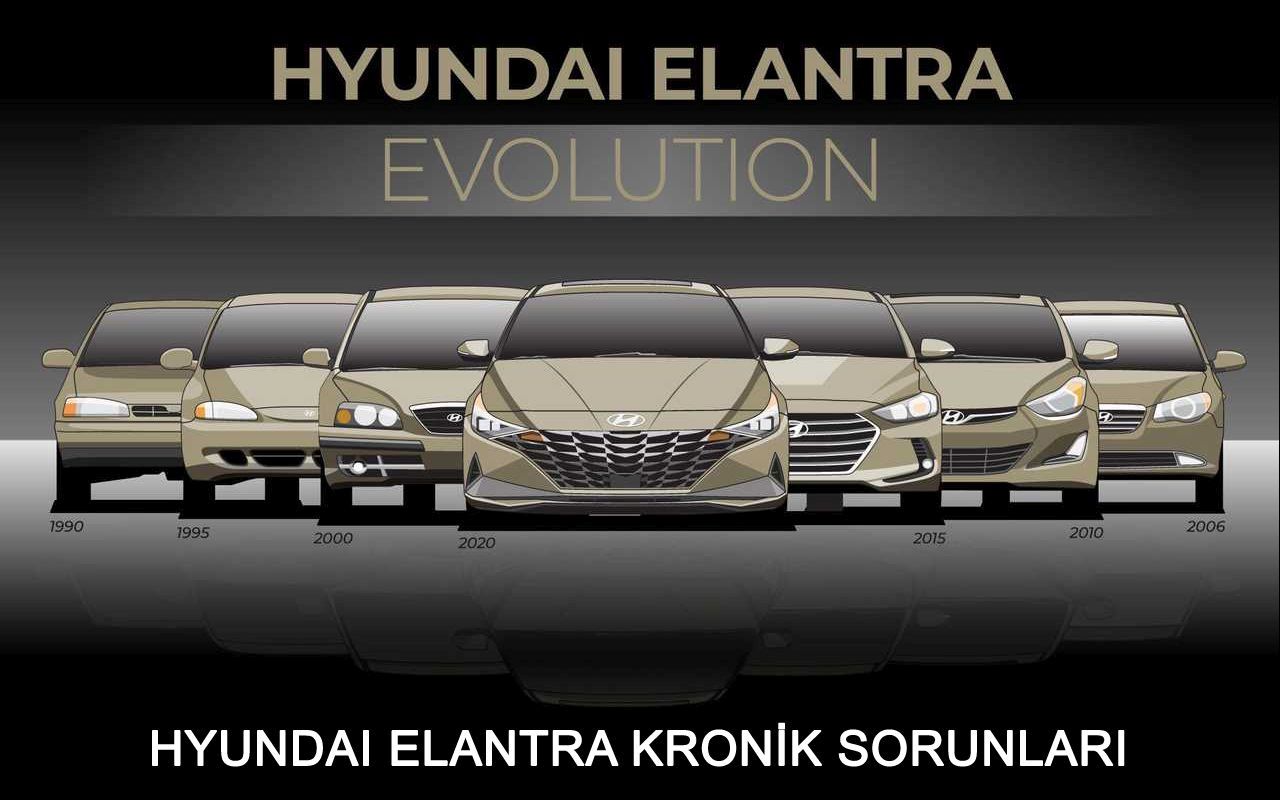
The Hyundai Elantra has been one of Hyundai's most important compact cars since its introduction in 1990. It was marketed as the Lantra in some European and Australian markets during its early years and gradually evolved from a relatively simple compact sedan into a sophisticated vehicle with turbocharged engines, advanced safety systems, dual-clutch transmissions, hybrid technology, and extensive electronic equipment.
The Elantra has generally offered good value for money, reasonable fuel economy, comfortable driving, and relatively affordable maintenance. However, reliability varies considerably between generations and engine configurations.
Older Elantras can suffer from age-related electrical, suspension, cooling, and engine problems, while some later generations have received complaints involving engine noise, oil consumption, steering systems, braking components, air conditioning, electronics, and automatic or dual-clutch transmissions.
The biggest mistake when shopping for a used Elantra is to assume that one model year's reputation applies to the entire generation. Engine type, production date, transmission, maintenance history, recall status, and mileage all need to be considered.
Hyundai Elantra Generations
The Elantra has gone through several generations:
-
First generation: 1990–1995
-
Second generation: 1995–2000
-
Third generation: 2000–2006
-
Fourth generation: 2006–2010
-
Fifth generation: 2010–2015
-
Sixth generation: 2015–2020
-
Seventh generation: 2020 onward
The exact production and facelift dates can vary slightly by market.
The early generations were mechanically simpler, so age and corrosion are now major concerns. The fifth generation brought more modern engines and equipment but also generated more complaints about certain engines and steering systems.
The sixth and seventh generations introduced substantially newer technology. They are generally more attractive to used-car buyers, although they are not completely free from problems.
What Are the Most Common Hyundai Elantra Problems?
Depending on the generation and engine, common complaints include:
-
Engine ticking or knocking noises
-
Excessive oil consumption
-
Engine misfires
-
Engine failure
-
Difficulty starting
-
Engine stalling
-
Check Engine Light
-
Automatic transmission hesitation
-
Dual-clutch transmission problems on applicable versions
-
Electric power steering problems
-
Steering-column noises
-
Brake squeaking
-
Premature brake wear
-
Uneven tire wear
-
ABS and ESC warning lights
-
Airbag warning lights
-
Power-window failures
-
Air-conditioning problems
-
Infotainment and electrical faults
-
Door-lock problems
-
Paint and trim deterioration
-
Cooling-system problems
Not all of these problems affect every Elantra. Some are strongly associated with particular generations or engine families.
First-Generation Hyundai Elantra Problems: 1990–1995
The first-generation Elantra is now an old vehicle, so its biggest reliability problems are related to age rather than simply its original design.
Some 1994 Elantras received complaints involving the engine, heating and air-conditioning systems, windows, and windshield area.
One reported engine-related symptom was stalling after the engine became warm. A vehicle might start normally when cold but become difficult to restart after reaching operating temperature.
Possible causes can include:
-
Fuel-delivery problems
-
Ignition-system faults
-
Temperature sensors
-
Idle-control problems
-
Crankshaft or camshaft sensors
-
Vacuum leaks
-
Electrical connections
Because these vehicles are now several decades old, wiring deterioration, corrosion, previous repairs, and neglected maintenance can be more important than the original model-year complaint statistics.
Second-Generation Hyundai Elantra Problems: 1995–2000
The second-generation Elantra was generally relatively simple mechanically.
Problems reported on some 1999 and 2000 vehicles included power windows, electrical equipment, fuel-system components, suspension, seat belts, airbags, and engine-management issues.
Power-window problems can occur because of worn window regulators, motors, switches, wiring, or damaged plastic components.
Engine-related complaints included:
-
High idle
-
Hesitation
-
Stalling
-
Failure to start
-
Check Engine Light
-
Poor running
Safety equipment deserves special attention on a vehicle this old.
If an airbag or seat-belt system has a warning light, the vehicle should be professionally inspected. A buyer should never assume that an old airbag warning light is simply an electrical nuisance.
Third-Generation Hyundai Elantra Problems: 2000–2006
The third-generation Elantra brought a more modern design and became much more widely used.
Some owners reported problems involving:
-
Fuel systems
-
Airbags
-
Seat belts
-
Brakes
-
Headlights
-
Electrical systems
-
Windows
-
Engine management
Some vehicles experienced stalling or drivability problems associated with the evaporative-emissions system and components such as the purge-control valve.
However, replacing the purge valve should not be considered the universal solution to every stalling problem.
A stalling engine can also be caused by fuel-pressure problems, ignition faults, crankshaft-position sensors, vacuum leaks, throttle-related problems, or electrical faults.
Airbag and Seat-Belt Problems on Older Elantras
Airbag warning lights should always be taken seriously.
Possible causes include:
-
Seat-occupancy sensors
-
Seat wiring
-
Clock spring
-
Airbag module faults
-
Damaged connectors
-
Previous accident repairs
-
Low system voltage
An airbag light does not necessarily mean the airbag itself has failed.
Similarly, reports of airbags failing to deploy during collisions cannot be used to conclude that every vehicle from a particular year has defective airbags. Accident severity, impact direction, sensor operation, previous repairs, and diagnostic history all matter.
Nevertheless, an airbag warning light on a used Elantra is a reason to stop and investigate before buying.
Brake Lights Remaining On
Some older Elantras can develop brake-light-switch problems.
A defective brake-light switch can cause the brake lights to remain illuminated or fail to operate correctly.
It can also affect other systems depending on the vehicle configuration.
A used Elantra should therefore be checked for correct brake-light operation and any stored electrical or ABS-related fault codes.
Fourth-Generation Hyundai Elantra Problems: 2006–2010
The fourth-generation Elantra introduced more modern electronic systems and improved comfort.
Automatic transmission and steering-related complaints became more noticeable in some vehicles.
Reported transmission symptoms include:
-
Delayed engagement
-
Harsh shifting
-
Failure to downshift correctly
-
Unusual noises
-
Hesitation during acceleration
These symptoms do not automatically mean that the transmission itself needs to be replaced.
Possible causes include:
-
Low or degraded transmission fluid
-
Solenoid problems
-
Valve-body problems
-
Input/output speed sensors
-
Transmission control problems
-
Internal wear
A proper diagnostic scan and road test should be performed before assuming that an expensive transmission repair is necessary.
Electric Power Steering Problems
Some fourth-generation Elantras have received complaints involving electric power steering.
Symptoms can include:
-
EPS warning light
-
Heavy steering
-
Intermittent steering assistance
-
Clicking or knocking sounds
-
Steering-wheel vibration
-
Abnormal steering feel
The problem may originate from the steering motor, torque sensor, control electronics, wiring, connectors, or mechanical steering components.
Therefore, replacing the entire steering column should not be considered the automatic solution.
If an EPS warning light appears during a test drive, the problem should be diagnosed before purchasing the vehicle.
Fifth-Generation Hyundai Elantra Problems: 2010–2015
The fifth-generation Elantra, particularly certain early model years and engine configurations, deserves more careful investigation.
This generation generated numerous complaints involving:
-
Engine noise
-
Oil consumption
-
Misfires
-
Engine vibration
-
Poor acceleration
-
Stalling
-
Check Engine Light
-
Steering
-
Wheels and tires
-
Brakes
The 2013 model year is frequently highlighted in complaint-based discussions, but it would be inaccurate to call every 2013 Elantra a bad car.
The engine specification is far more important than the model year alone.
2012 Hyundai Elantra Problems
The 2012 Elantra is one of the model years that deserves additional inspection, particularly regarding engine noise.
Some owners have reported ticking or knocking sounds from the engine.
A ticking noise can have many causes and is not automatically evidence of catastrophic engine failure. It may originate from valve-train components, accessories, injectors, lubrication problems, or internal engine wear.
A deeper knocking sound, particularly one that changes with engine speed or load, deserves much more serious investigation.
Potential causes include:
-
Low oil pressure
-
Bearing wear
-
Internal engine damage
-
Piston-related problems
-
Valve-train wear
-
Timing-system problems
If an engine is making abnormal noise, a professional should check oil level and condition, oil pressure, fault codes, compression where appropriate, and the mechanical condition of the engine.
The claim that every 2012 Elantra engine will fail around 110,000 km is not justified. Mileage patterns from owner complaints should not be treated as a guaranteed failure interval.
2013 Hyundai Elantra Problems
The 2013 Elantra is often mentioned among the more problematic model years in owner-complaint databases.
Engine complaints include:
-
Ticking noises
-
Rough running
-
Loss of power
-
Misfires
-
Oil consumption
-
Check Engine Light
-
Stalling
However, a high number of complaints does not mean every 2013 vehicle will experience engine failure.
A 2013 Elantra with excellent maintenance records and a healthy engine can be a much better purchase than a poorly maintained newer vehicle.
The engine should be inspected from a cold start, and any unusual noise should be investigated before purchase.
Premature Tire Wear on the Elantra
Some Elantra owners have reported uneven or premature tire wear.
This can be caused by:
-
Incorrect wheel alignment
-
Worn suspension bushings
-
Damaged control arms
-
Wheel-bearing wear
-
Bent suspension components
-
Incorrect tire pressure
-
Previous accident damage
It is therefore incorrect to assume that an axle or suspension defect is automatically responsible.
When inspecting a used Elantra, examine all four tires carefully.
Uneven wear on the inner or outer edges can reveal suspension or alignment problems that may not be obvious during a short test drive.
Elantra Brake Problems
Brake squeaking is one of the most commonly reported complaints associated with the Elantra.
However, brake squeaking does not necessarily mean the braking system is defective.
Possible causes include:
-
Brake-pad material
-
Glazed pads
-
Brake-disc condition
-
Dust
-
Rust
-
Caliper movement
-
Incorrect installation
-
Moisture
-
Normal brake noise
Premature brake wear can also occur depending on driving style, traffic conditions, vehicle load, brake-pad quality, and climate.
Some older vehicles can develop surface corrosion on brake discs after sitting unused, which can initially produce noise.
A proper inspection should check the thickness and condition of the pads and discs rather than replacing components simply because they make noise.
ABS and ESC Warning Lights
An ABS or ESC warning light can have many causes.
Possible problems include:
-
Wheel-speed sensor failure
-
Damaged sensor wiring
-
Steering-angle sensor problems
-
Brake-light switch faults
-
Low battery voltage
-
ABS module problems
-
Wheel-bearing problems
-
Communication faults
If ABS and ESC warnings appear together, the vehicle should be scanned before any parts are replaced.
The braking system is safety-critical, so warning lights should never be ignored simply because the brakes still appear to work normally.
Sixth-Generation Hyundai Elantra Problems: 2015–2020
The sixth-generation Elantra represented a significant improvement in design, equipment, safety, and overall refinement.
It also introduced more sophisticated engines and electronics.
The generation generally has fewer serious complaints than some older Elantras, but several areas still deserve attention.
Potential problems include:
-
Engine noise
-
Oil consumption
-
Airbag warnings
-
A/C problems
-
Transmission hesitation
-
Steering problems
-
Infotainment faults
-
Door and trim problems
-
Paint deterioration
-
Battery and electrical issues
Again, the exact engine and transmission combination matters.
2016 Hyundai Elantra Problems
Some 2016 Elantra owners have reported engine ticking or knocking noises.
Reports of engine noise at relatively low mileage should not be dismissed.
However, a ticking sound is not enough to diagnose an engine failure.
A technician should determine whether the sound originates from:
-
Valve train
-
Fuel injectors
-
Timing components
-
Accessory drive
-
Low oil pressure
-
Internal engine components
Airbag warning-light complaints have also been reported.
An illuminated airbag light can result from an actual restraint-system fault, a wiring or connector problem, a seat-occupancy sensor, a clock spring, or another component.
It should never simply be cleared without determining why the warning appeared.
Airbag Problems on 2016 Elantra
Reports of airbags failing to deploy in accidents should be treated carefully.
An airbag system is designed to deploy only under specific crash conditions. Therefore, a report that an airbag did not deploy does not automatically prove that the vehicle had a defective airbag system.
However, if an Elantra has an airbag warning light, accident history, or evidence of previous airbag replacement, it should receive a professional restraint-system inspection.
A used-car buyer should also be cautious about vehicles where the warning light has been deliberately disabled or the instrument cluster has been modified to hide warning indicators.
2017 Hyundai Elantra Problems
The 2017 Elantra is generally a more mature version of the sixth generation, but owners have reported problems involving the engine, air conditioning, paint, doors, and interior trim.
Some drivers have reported:
-
Reduced heating or cooling performance
-
Engine hesitation
-
Loss of power
-
Difficulty starting
-
Unusual engine noise
-
Paint peeling
-
Door problems
-
Weather-strip deterioration
Cold-weather heating complaints should not automatically be interpreted as an engine problem. A thermostat, coolant level, heater core, blend-door actuator, climate-control system, or another component may be responsible.
Hyundai Elantra Transmission Problems
Transmission choice is extremely important when buying a used Elantra.
Depending on generation and market, the Elantra has been offered with manual transmissions, conventional automatic transmissions, and dual-clutch transmissions.
Possible transmission symptoms include:
-
Delayed engagement
-
Harsh shifts
-
Hesitation
-
Shuddering
-
Gear slipping
-
Unusual noises
-
Failure to select a gear
-
Transmission warning lights
A dual-clutch transmission can naturally feel different from a conventional automatic, particularly during very slow acceleration and parking maneuvers.
Nevertheless, excessive shuddering, repeated hesitation, harsh engagement, or warning lights should be investigated.
Elantra Cooling System Problems
Cooling-system condition is another important consideration on a used Elantra.
Inspect:
-
Coolant level
-
Radiator
-
Water pump
-
Thermostat
-
Coolant hoses
-
Expansion tank
-
Cooling fans
-
Temperature sensors
Possible warning signs include:
-
Overheating
-
Coolant loss
-
Sweet smell
-
Visible coolant stains
-
Temperature fluctuations
-
Cooling fan running excessively
An overheating engine can eventually develop much more serious and expensive problems, including cylinder-head or head-gasket damage.
Elantra Steering and Suspension Problems
Suspension wear becomes increasingly likely as mileage increases.
Inspect:
-
Shock absorbers
-
Control arms
-
Bushings
-
Ball joints
-
Stabilizer links
-
Tie rods
-
Wheel bearings
-
Steering components
Symptoms include:
-
Knocking over bumps
-
Uneven tire wear
-
Steering vibration
-
Pulling to one side
-
Loose steering
-
Excessive body movement
The steering system should also be checked for abnormal sounds and EPS warning lights.
Elantra Electrical Problems
Electrical problems can become more common as the vehicle ages.
Potential complaints include:
-
Power-window failure
-
Door-lock problems
-
Instrument-cluster issues
-
Infotainment failures
-
Bluetooth problems
-
Backup-camera problems
-
Warning lights
-
Battery drain
-
Intermittent electrical faults
A weak battery can cause multiple warning lights and electronic faults, particularly in vehicles with numerous control modules.
For this reason, battery and charging-system tests should be included in a used-car inspection.
Is the 2013 Hyundai Elantra the Worst Model Year?
The 2013 Elantra is often described as one of the least desirable years because of the number of owner complaints, particularly concerning the engine.
There is enough history to justify a more careful inspection, but saying that every 2013 Elantra is a bad vehicle is too simplistic.
The condition of the individual vehicle is more important.
Before buying a 2013 model, pay particular attention to:
-
Cold-start engine noise
-
Oil consumption
-
Engine fault codes
-
Oil-pressure history
-
Misfires
-
Acceleration performance
-
Transmission operation
-
Brake condition
-
Tire wear
-
Steering behavior
A vehicle with documented maintenance and a healthy engine can still be considered.
What Should You Check Before Buying a Used Elantra?
A professional pre-purchase inspection can prevent a relatively inexpensive used-car purchase from becoming an expensive repair project.
Start with the engine cold.
Ask the seller not to warm the vehicle before inspection. Cold-start behavior can reveal timing, lubrication, battery, ignition, and engine-noise problems.
Check the oil.
Look at the oil level and condition. If the vehicle has a history of low oil pressure or excessive oil consumption, investigate further.
Listen carefully to the engine.
Do not dismiss ticking, knocking, rattling, or unusual vibration.
Scan the vehicle electronically.
A complete diagnostic scan should include the engine, transmission, ABS/ESC, airbag, steering, and other relevant control modules.
Test the transmission.
Drive the vehicle at low and high speeds. Check takeoff, reverse, shifting, acceleration, and stop-and-go operation.
Inspect the brakes.
Check pads, discs, calipers, brake fluid, ABS operation, and warning lights.
Inspect the tires.
Uneven wear can reveal alignment, suspension, wheel-bearing, or accident-related problems.
Check the steering.
Make sure the EPS system operates normally and that there are no unusual noises or warning lights.
Test every electrical function.
Check windows, locks, mirrors, lights, infotainment, cameras, climate control, steering-wheel buttons, and charging ports.
Check the cooling system.
Look for coolant loss, overheating, stains, and evidence of previous repairs.
Check recall history.
Use the vehicle's VIN to determine whether any applicable safety recalls remain outstanding.
Which Hyundai Elantra Is the Best Used Buy?
There is no single Elantra generation that is automatically best for everyone.
The newer sixth- and seventh-generation vehicles generally offer better safety, refinement, technology, and overall driving comfort than the oldest generations.
However, newer does not automatically mean problem-free.
For a used-car buyer, the ideal Elantra is one with:
-
A reliable engine specification
-
A suitable transmission
-
Complete service records
-
Regular oil changes
-
No unexplained engine noise
-
No excessive oil consumption
-
No unresolved warning lights
-
A healthy transmission
-
Good suspension condition
-
Properly functioning safety systems
-
Completed recalls
For buyers who prioritize simplicity and lower repair complexity, the exact powertrain may be more important than having the newest model year.
Is a Used Hyundai Elantra Worth Buying?
Yes, the Hyundai Elantra can be a good used car, but some examples require considerably more scrutiny than others.
Its strengths include:
-
Good fuel economy
-
Affordable purchase price
-
Comfortable interior
-
Practical dimensions
-
Generally reasonable maintenance costs
-
Good availability of parts
-
Good equipment levels
-
Strong value for money
-
Improved safety and technology in newer generations
Its weaknesses depend heavily on the generation and engine.
Older Elantras can suffer from age-related electrical and mechanical problems, while certain fifth-generation examples deserve particular attention because of engine-related complaints. The 2012 and 2013 models should be carefully inspected rather than automatically rejected, especially for engine noise, oil consumption, and maintenance history.
The sixth-generation cars generally represent a more attractive used-car proposition, although engine, transmission, air-conditioning, electrical, and safety-system checks remain important.
The seventh-generation Elantra is significantly more modern and technologically advanced, but the greater complexity of its electronics and powertrains means that maintenance history remains important.
The most important rule when buying a used Elantra is not to choose based on the model year alone. Choose the specific engine, transmission, maintenance history, and condition of the car.
A well-maintained Elantra can be a practical and economical daily driver for many years. A neglected example with engine noise, excessive oil consumption, transmission problems, or unresolved safety-system faults can quickly become much more expensive than its purchase price suggests.