TR
TR EN
EN

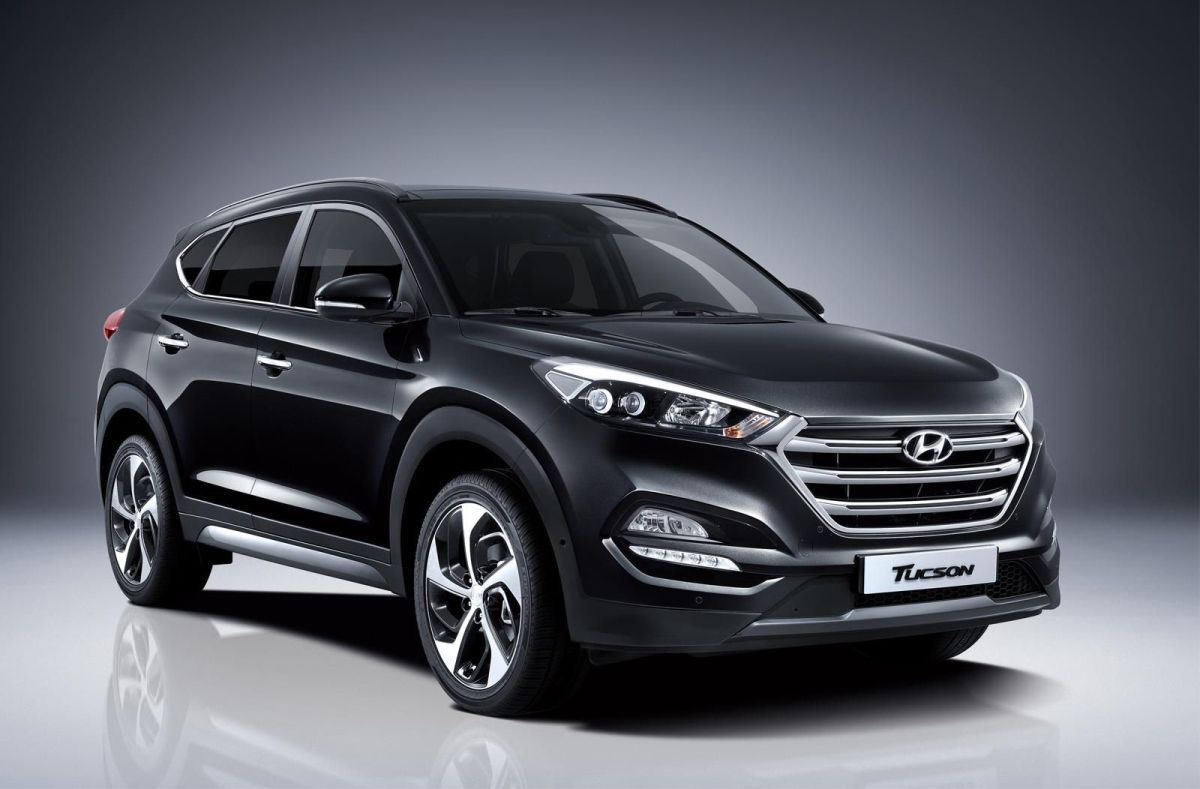
Is a Used Hyundai Tucson Worth Buying? Hyundai Tucson Common Problems and Failures
Hyundai Tucson has been one of Hyundai's most important compact SUV models since its introduction in 2004. It was developed as a practical alternative to larger SUVs, offering five-seat capacity, relatively compact exterior dimensions, good ground clearance, and a wide range of gasoline and diesel engines depending on the market.
Over the years, the Tucson has gone through several major redesigns. Each generation introduced different engines, transmissions, electronic systems, and safety technologies. Therefore, reliability can vary significantly between generations and even between different engine-transmission combinations within the same model year.
The Tucson is generally considered a practical and reasonably reliable used SUV, but some versions have known problem areas. Transmission behavior, engine problems, cooling-system issues, air conditioning, electrical equipment, and diesel emissions components deserve particular attention when inspecting a used example.
One of the most important things to understand is that not every Tucson from a particular model year has the same problem. Complaint statistics can help identify patterns, but they should not be used as an automatic reason to reject an individual vehicle.
Hyundai Tucson Generations
The first-generation Tucson was introduced in 2004 for the 2005 model year in many markets. It was a relatively simple compact SUV compared with later generations and was offered with several gasoline and diesel engines depending on the country.
The second-generation Tucson was introduced around 2009–2010. In some markets, this generation was sold under the Hyundai ix35 name rather than Tucson. This distinction is important when researching parts, recalls, and reliability information.
The third-generation Tucson arrived in 2015 for the 2016 model year in many markets. This generation brought a much more modern design and a wider range of engines and transmissions. Certain versions were equipped with Hyundai's 7-speed dual-clutch transmission.
The fourth-generation Tucson was introduced for the 2021 model year in many markets. It brought a completely redesigned exterior and interior, more advanced driver-assistance systems, and gasoline, diesel, hybrid, and plug-in hybrid powertrains depending on the market.
Because the technology changed substantially between generations, a 2005 Tucson and a 2022 Tucson should not be evaluated using the same reliability criteria.
Is a Used Hyundai Tucson Worth Buying?
Yes, a used Hyundai Tucson can be a good purchase, particularly if you choose the right engine and transmission and find a vehicle with a documented maintenance history.
The Tucson has several advantages in the second-hand SUV market:
-
Practical five-seat interior
-
Good ground clearance
-
Comfortable driving position
-
Large availability of replacement parts
-
Generally reasonable maintenance costs
-
Wide range of engines and transmissions
-
Good everyday usability
-
Strong availability in the used-car market
However, some versions deserve considerably more attention than others.
For many buyers, the engine and transmission combination is more important than the model year itself.
2016–2017 Tucson Dual-Clutch Transmission Problems
One of the most important issues associated with certain third-generation Tucson models concerns the 7-speed dual-clutch transmission.
The transmission was designed to combine the fuel efficiency of a manual gearbox with the convenience of an automatic transmission. Unlike a conventional torque-converter automatic, a dual-clutch transmission uses clutches to connect the engine to the transmission.
This design can provide quick gear changes and good fuel economy, but it can also behave differently at low speeds.
Some 2016–2017 Tucson owners reported:
-
Delayed acceleration from a stop
-
Hesitation when pulling away
-
Jerking
-
Shuddering
-
Delayed gear engagement
-
Transmission warning messages
-
Poor low-speed response
-
Difficulty deciding which gear to select
The behavior can become particularly noticeable when the driver repeatedly changes throttle input or rapidly presses and releases the accelerator.
However, describing this simply as the transmission "not knowing what to do" is not technically accurate.
The transmission control module continuously evaluates throttle position, vehicle speed, clutch position, engine torque, and other parameters. Poor calibration, clutch behavior, software problems, overheating, or mechanical wear can cause hesitation or abnormal engagement.
Hyundai issued software-related service information and updates for certain affected vehicles, and some vehicles were subject to campaigns or recalls depending on the market and exact configuration.
Therefore, the exact VIN, engine, transmission, and market specification should be checked before assuming that a particular Tucson is affected by a recall or campaign.
How to Test a Tucson Dual-Clutch Transmission
If you are considering a Tucson equipped with a dual-clutch automatic transmission, do not limit the test drive to a few minutes on an open road.
Test the vehicle in:
-
Stop-and-go traffic
-
Parking maneuvers
-
Reverse
-
Uphill starts
-
Low-speed acceleration
-
Moderate acceleration
-
Repeated acceleration and deceleration
Pay attention to whether the vehicle hesitates before moving or produces excessive shuddering.
Also check whether the transmission warning light appears and scan the transmission control module for stored fault codes.
A used Tucson with a dual-clutch transmission is not automatically a bad purchase. A smooth transmission with a good service history and no abnormal diagnostic codes can still be a perfectly reasonable choice.
Transmission Hesitation and Overheating
Transmission-related complaints are not limited to delayed acceleration.
Some Tucson owners have experienced:
-
Hesitant gear changes
-
Harsh shifting
-
Delayed engagement
-
Transmission overheating
-
Reduced performance
-
Warning messages
The risk is particularly important for vehicles that have been used heavily in traffic, on steep roads, or under high thermal loads.
A dual-clutch transmission can generate considerable heat during repeated low-speed clutch engagement.
If the transmission repeatedly overheats or enters a protection mode, the problem should be diagnosed before purchasing the vehicle.
Engine Problems on Older Tucson Models
Engine problems are another area that deserves attention, particularly on older high-mileage Tucson models.
The original statement that 2012–2013 Tucson engines commonly fail at exactly 150,000 km is too specific and should not be treated as a standard failure point.
Engine lifespan depends heavily on:
-
Engine version
-
Oil-change history
-
Cooling-system maintenance
-
Driving conditions
-
Previous overheating
-
Fuel quality
-
Maintenance quality
-
Mileage
-
Previous repairs
Some owners have reported serious engine problems, including knocking noises and internal engine damage. However, this does not mean that every 2012 or 2013 Tucson will experience engine failure.
Engine Knocking Should Never Be Ignored
A knocking or deep tapping sound from the engine is one of the most important warning signs when inspecting a used Tucson.
Possible causes include:
-
Low engine oil
-
Excessive bearing clearance
-
Connecting-rod bearing damage
-
Piston or valvetrain problems
-
Poor lubrication
-
Timing-system problems
-
Accessory components producing misleading noises
A genuine internal engine knock can become extremely expensive if ignored.
If an older Tucson produces a deep knocking noise that increases with engine speed, do not purchase it based on the seller's explanation that "it only needs an oil change."
The engine should be professionally inspected.
Oil Consumption
Oil consumption should also be checked on higher-mileage Tucson engines.
Some oil consumption can occur naturally as an engine ages, but excessive consumption may indicate:
-
Worn piston rings
-
Valve-seal problems
-
PCV-system problems
-
Turbocharger issues
-
External oil leaks
Check the oil level before and after the test drive and inspect the engine bay and underside of the vehicle for leaks.
Blue exhaust smoke during acceleration or after prolonged idling is another warning sign.
Cooling System Problems
Engine reliability depends heavily on the condition of the cooling system.
An overheating Tucson should be treated as a major warning.
Inspect:
-
Coolant level
-
Coolant condition
-
Expansion tank
-
Radiator
-
Hoses
-
Thermostat
-
Water pump
-
Cooling fans
-
Signs of previous coolant leakage
A previous overheating event can cause much more serious engine problems later.
This is particularly important when buying an older Tucson because cooling-system components naturally deteriorate with age.
Diesel Tucson Problems
Diesel Tucson and ix35 models can be economical, especially for drivers who regularly travel longer distances. However, diesel versions have additional components that can become expensive as mileage increases.
Depending on the engine and market, inspect:
-
Diesel particulate filter
-
EGR valve
-
Turbocharger
-
Injectors
-
High-pressure fuel system
-
Intake system
-
Dual-mass flywheel
-
Clutch
A diesel Tucson used almost exclusively for short city journeys can experience more DPF and EGR problems than a vehicle that regularly reaches full operating temperature on longer journeys.
Symptoms such as poor acceleration, excessive smoke, difficult starting, turbocharger noise, or repeated DPF warnings should be investigated.
DPF Problems
The diesel particulate filter traps soot from the exhaust and periodically regenerates to burn accumulated particles.
If regeneration is repeatedly interrupted, soot accumulation can increase.
Possible symptoms include:
-
DPF warning light
-
Reduced engine power
-
Increased fuel consumption
-
Frequent regeneration
-
Engine warning light
-
Limp mode
Replacing a DPF can be expensive, so its condition should be considered when purchasing a high-mileage diesel Tucson.
Turbocharger Problems
Turbocharged Tucson diesel and gasoline engines require careful inspection.
A failing turbocharger can produce:
-
Loss of power
-
Excessive smoke
-
Whining or siren-like noises
-
Oil consumption
-
Boost-related fault codes
-
Poor acceleration
However, not every turbocharger noise means that the turbo itself is defective. Intake leaks, exhaust leaks, hoses, bearings, and other components can create similar sounds.
A professional diagnosis is therefore important.
Air Conditioning and Heating Problems
Air conditioning and heating complaints are relatively common areas to investigate, particularly on older Tucson models.
Check whether:
-
The air conditioning becomes cold quickly
-
The heater produces sufficient heat
-
The blower works at every speed
-
Air direction changes correctly
-
The compressor operates normally
-
There are unusual noises
-
The system maintains the selected temperature
Potential causes of poor air conditioning include refrigerant leaks, compressor problems, condenser damage, electrical faults, and HVAC actuator problems.
A weak air-conditioning system should not simply be dismissed as "the gas needs filling." If the refrigerant is repeatedly disappearing, there is likely a leak that needs to be identified.
Steering Problems
The Tucson uses different steering technologies depending on generation and market.
Potential problems can involve:
-
Steering-assistance systems
-
Steering motors
-
Torque sensors
-
Steering control modules
-
Wiring
-
Alignment
-
Suspension components
If the steering becomes unusually heavy or a steering warning light appears, the vehicle should be scanned.
A steering problem should not be ignored because it is a safety-related system.
Suspension and Wheel Bearing Problems
SUVs generally place greater loads on suspension components than small passenger cars, especially when they are regularly driven over rough roads.
On a used Tucson, inspect:
-
Shock absorbers
-
Control-arm bushings
-
Ball joints
-
Stabilizer links
-
Tie-rod ends
-
Wheel bearings
-
Springs
-
Strut mounts
Symptoms of suspension wear include:
-
Knocking over bumps
-
Excessive body movement
-
Uneven tire wear
-
Steering vibration
-
Vehicle pulling to one side
-
Reduced stability
A humming noise that increases with road speed can also indicate a worn wheel bearing.
Brake System Problems
Brake components are normal wear items, but their condition can reveal how the vehicle has been used.
Check:
-
Brake discs
-
Brake pads
-
Brake-fluid condition
-
ABS warning light
-
Brake pedal feel
-
Parking brake
-
Uneven braking
A Tucson that has been heavily used in urban traffic may have considerably more brake wear than a vehicle with similar mileage used primarily on highways.
Electrical and Electronic Problems
Modern Tucson models contain many electronic control units and driver-assistance systems.
Potential problems can involve:
-
Battery
-
Alternator
-
Central locking
-
Power windows
-
Instrument cluster
-
Infotainment system
-
Parking sensors
-
Cameras
-
Blind-spot monitoring
-
Lane-keeping assistance
-
Start-stop system
A weak battery can sometimes produce multiple warning lights and communication errors.
Before replacing expensive electronic modules, battery condition, charging voltage, grounds, connectors, and wiring should be checked.
Infotainment Problems
Depending on the generation, Tucson models may have touchscreen infotainment systems with Bluetooth, navigation, smartphone connectivity, cameras, and other functions.
Test all of these features before buying.
Look for:
-
Frozen screens
-
Bluetooth disconnections
-
Navigation errors
-
Failed touchscreen functions
-
Backup-camera problems
-
Audio interruptions
-
Slow system response
Infotainment problems are usually less serious than engine or transmission failures, but replacement screens and control units can still be expensive.
Battery and Charging System
A battery that is approaching the end of its life can create strange electronic symptoms.
Before buying a used Tucson, check:
-
Battery age
-
Cold-start performance
-
Alternator charging voltage
-
Start-stop operation where equipped
-
Warning lights
-
Stored low-voltage fault codes
A vehicle with multiple electronic warnings should receive a complete diagnostic inspection rather than simply having its battery replaced.
Timing Belt and Timing Chain
The Tucson range includes engines using different timing-system designs.
Some engines use timing belts, while others use timing chains.
This distinction is extremely important because a timing belt has a defined replacement schedule, while a timing chain still requires inspection for wear even though it does not normally have the same scheduled replacement interval.
If the engine uses a timing belt and there is no documentation showing when it was replaced, the potential replacement cost should be included in your purchase calculation.
Clutch and Dual-Mass Flywheel
Manual Tucson models are generally simpler from a transmission perspective, but the clutch is a wear component.
Symptoms of a worn clutch include:
-
Engine revs rising without corresponding acceleration
-
Difficulty selecting gears
-
Juddering during takeoff
-
High clutch engagement point
-
Burning smell
Diesel versions can also have a dual-mass flywheel.
A worn dual-mass flywheel can cause:
-
Rattling at idle
-
Vibration
-
Clunking during engine shutdown
-
Vibration when starting
-
Abnormal noises
Replacing the clutch and dual-mass flywheel together can be expensive.
What Are the Worst Hyundai Tucson Model Years?
It is tempting to create a simple list such as "avoid 2016, 2017, 2011 and 2012."
That approach is too simplistic.
The 2016 Tucson deserves particular attention because some configurations had significant transmission-related complaints, especially those equipped with the 7-speed dual-clutch transmission.
The 2017 model can also warrant additional inspection when equipped with the same type of transmission.
Older Tucson models from around 2011–2013 should be evaluated carefully for engine condition, cooling-system problems, corrosion, suspension wear, and age-related electrical faults.
But this does not mean that every vehicle from these years is a bad purchase.
A properly maintained 2016 Tucson with a healthy transmission can be a better vehicle than a neglected 2019 model.
What Should You Check Before Buying a Used Tucson?
A professional pre-purchase inspection is strongly recommended.
Engine
Check:
-
Cold-start behavior
-
Oil level
-
Oil leaks
-
Coolant leaks
-
Engine noise
-
Exhaust smoke
-
Idle quality
-
Oil consumption
-
Cooling-system operation
Transmission
Check:
-
Engagement of Drive and Reverse
-
Low-speed behavior
-
Gear changes
-
Shuddering
-
Hesitation
-
Abnormal noises
-
Warning lights
-
Overheating history
Suspension
Inspect:
-
Shock absorbers
-
Bushings
-
Ball joints
-
Wheel bearings
-
Springs
-
Stabilizer links
Body
Look for:
-
Accident repairs
-
Panel gaps
-
Paint differences
-
Structural damage
-
Rust
-
Underbody damage
Interior and electronics
Test:
-
Air conditioning
-
Heating
-
Infotainment
-
Bluetooth
-
Cameras
-
Parking sensors
-
Power windows
-
Central locking
-
Seat adjustments
-
Warning lights
Diagnostic scan
A complete diagnostic scan is one of the most important steps.
Do not scan only the engine ECU. The transmission, ABS, airbag, steering, body-control, and other relevant modules should also be checked.
This is especially important on a Tucson with a history of transmission or electronic problems.
Is a High-Mileage Tucson Worth Buying?
High mileage does not automatically make a Tucson a bad purchase.
A 200,000-km Tucson with complete maintenance records can be a better investment than a 120,000-km vehicle with an unknown history.
The most important questions are:
-
Was the vehicle serviced regularly?
-
Was the correct oil used?
-
Has the transmission been maintained?
-
Has the timing belt been replaced where applicable?
-
Has the vehicle overheated?
-
Has the DPF been maintained on diesel versions?
-
Has the clutch or dual-mass flywheel been replaced?
-
Is there significant corrosion?
-
Are there accident repairs?
-
Are there unresolved warning lights?
Mileage should always be evaluated together with the vehicle's history.
Manual or Automatic Tucson?
For buyers who prioritize mechanical simplicity, a manual Tucson can be attractive, particularly when the clutch and dual-mass flywheel are in good condition.
Automatic versions offer greater comfort in city traffic, but the exact transmission must be identified.
This is particularly important for third-generation Tucson models equipped with the 7-speed dual-clutch transmission.
Do not compare a conventional automatic Tucson and a dual-clutch Tucson as though they have identical mechanical characteristics. Their behavior, maintenance requirements, and potential failure modes are different.
Advantages of a Used Hyundai Tucson
The Tucson remains attractive for several reasons.
Practical SUV design:
The elevated seating position and usable cargo area make it suitable for families and everyday driving.
Comfort:
The suspension and seating position provide a comfortable driving experience for both urban and longer-distance use.
Engine variety:
Depending on the generation and market, buyers can choose from gasoline, diesel, hybrid, and other powertrain options.
Parts availability:
The Tucson has been sold in large numbers, making parts and repair expertise relatively accessible.
Safety equipment:
Newer generations offer increasingly comprehensive active-safety and driver-assistance technology.
Used-car availability:
There are many Tucson examples on the second-hand market, giving buyers the opportunity to compare condition, mileage, equipment, and service history.
Disadvantages of a Used Hyundai Tucson
The Tucson also has some disadvantages that should be considered.
-
Certain automatic transmissions can be expensive to repair
-
Some older engines require careful inspection
-
Diesel emissions components can become expensive at high mileage
-
Suspension components wear with age
-
Electronic equipment can develop faults
-
Fuel consumption can be higher than a conventional compact car
-
Neglected examples can become expensive to restore
The biggest risk is buying the cheapest Tucson available without investigating its mechanical condition.
Final Verdict: Is a Used Hyundai Tucson Worth Buying?
Yes, a used Hyundai Tucson is generally worth considering, but the engine and transmission combination should be investigated before the model year.
The Tucson is fundamentally a practical and capable compact SUV. Its reputation is not based on being completely problem-free; rather, it offers a good balance of practicality, comfort, equipment, parts availability, and running costs when the right version is selected.
The 2016–2017 Tucson models equipped with the 7-speed dual-clutch transmission deserve particular attention because of reported hesitation, shuddering, delayed acceleration, and transmission-control problems.
Older Tucson models should be inspected for engine condition, cooling-system problems, corrosion, suspension wear, and age-related electrical faults.
The claim that certain model years are universally "bad" should therefore be avoided. Condition, engine, transmission, maintenance history, and previous use are more important than the model year alone.
If you find a Tucson with a healthy engine, properly functioning transmission, clean diagnostic history, good cooling-system condition, solid suspension, and documented maintenance, it can be a very sensible used SUV for family and everyday use.