TR
TR EN
EN

P0136 O2 Sensor Circuit Malfunction (Bank 1, Sensor 2)
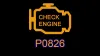
The P0136 diagnostic trouble code indicates that the engine control module (ECM/PCM) has detected a problem in the electrical circuit associated with the oxygen (O2) sensor on Bank 1, Sensor 2.
This sensor is normally the downstream oxygen sensor, positioned after the catalytic converter. Its signal is used primarily to monitor oxygen content in the exhaust and to evaluate catalytic converter operation and exhaust emissions.
P0136 is a circuit malfunction code, so it does not automatically mean that the oxygen sensor itself has failed. The problem may be inside the sensor, its wiring, connector, power or ground circuit, or even the engine/exhaust system conditions affecting the signal.
What Does Bank 1, Sensor 2 Mean?
The terminology is important when diagnosing P0136.
Bank 1 refers to the side of the engine containing cylinder number 1. On an inline four-cylinder engine, there is normally only one bank, so Bank 1 is the only cylinder bank.
Sensor 2 generally refers to the oxygen sensor located after the catalytic converter.
Therefore, P0136 normally concerns the downstream O2 sensor on the cylinder bank containing cylinder number 1.
The exact sensor location should still be confirmed using the vehicle's service information because sensor configurations can vary between engines.
What Is the Bank 1 Sensor 2 O2 Sensor Used For?
The downstream oxygen sensor has a different role from the upstream sensor.
The upstream O2 sensor, usually called Bank 1 Sensor 1, is heavily involved in monitoring and controlling the air-fuel mixture.
The downstream sensor is located after the catalytic converter and is primarily used to monitor exhaust oxygen behavior and assess catalyst efficiency.
A properly functioning catalytic converter generally reduces rapid changes in exhaust gas composition. As a result, the downstream sensor normally does not behave exactly like the upstream sensor.
This is important because a technician should not expect the Bank 1 Sensor 2 signal to behave exactly like Bank 1 Sensor 1.
What Does "Circuit Malfunction" Mean?
The word "circuit" is particularly important in P0136.
The ECM is not simply saying:
"The oxygen sensor is bad."
Instead, it has detected behavior in the Bank 1 Sensor 2 circuit that does not meet the expected electrical or operating conditions.
Depending on the vehicle manufacturer, this may involve:
-
An abnormal sensor signal
-
An open circuit
-
A short circuit
-
Poor electrical connection
-
Damaged wiring
-
Incorrect sensor ground
-
Heater circuit problems
-
An abnormal reference or supply circuit
-
A signal that remains fixed or behaves unexpectedly
-
Electrical interference or intermittent signal loss
The exact diagnostic criteria vary by manufacturer.
Common Symptoms of P0136
P0136 does not always produce obvious drivability problems.
The vehicle may continue to drive relatively normally because the downstream O2 sensor is not usually the primary sensor controlling the air-fuel mixture.
Possible symptoms include:
-
Check Engine Light
-
Increased emissions
-
Failed emissions inspection
-
Slightly increased fuel consumption
-
Poor fuel economy
-
Irregular O2 sensor readings
-
Other oxygen-sensor-related trouble codes
-
Catalyst monitoring problems
-
Occasional hesitation or rough running if another underlying fault is present
In many cases, the most obvious symptom is simply the illuminated Check Engine Light.
If the vehicle has severe drivability problems at the same time, it is important not to assume that P0136 is the sole cause. Another engine or fuel-system problem may be responsible for those symptoms.
Most Common Causes of P0136
Several different faults can produce this code.
Faulty downstream oxygen sensor
The sensor may be aged, contaminated, internally damaged, or electrically defective. Oxygen sensors operate in a harsh environment and can gradually become less reliable.
Damaged wiring
The wiring near the exhaust system is exposed to high temperatures, vibration, water, road debris and chemical contamination.
A wire can become:
-
Melted
-
Chafed
-
Broken internally
-
Shorted against the exhaust
-
Pulled from its connector
-
Intermittently open
A visually intact wire can still have an internal fault.
Poor connector or terminal contact
Corrosion, moisture, loose terminals or damaged connector locks can interrupt the sensor circuit.
A connector may look normal externally while having poor terminal tension internally.
O2 sensor heater problem
Many modern oxygen sensors have an integrated heater. The heater allows the sensor to reach operating temperature quickly.
Depending on the vehicle's diagnostic strategy, heater problems may contribute to abnormal sensor operation or generate additional heater-specific codes.
Sensor ground or power problem
Depending on the sensor design, the circuit may depend on a dedicated ground, sensor return or heater power supply.
A poor ground can produce a signal that appears incorrect even when the sensing element itself is functioning.
Exhaust leak
An exhaust leak near the downstream sensor can allow outside air to enter the exhaust stream.
Because outside air contains oxygen, the sensor may detect an oxygen concentration that does not accurately represent the actual exhaust condition.
An exhaust leak can therefore create misleading O2 sensor data.
Engine running problem
Misfires, fuel-system problems, vacuum leaks or other combustion problems can alter the oxygen content reaching the sensor.
For example, a misfire can send unburned oxygen into the exhaust. The downstream O2 sensor may then produce readings that appear abnormal even though the sensor itself is not defective.
Contamination
Oil consumption, coolant entering the combustion chamber, excessive fuel, silicone contamination and other chemical contaminants can damage or alter O2 sensor operation.
How to Diagnose P0136 Correctly
A good diagnosis starts with the complete vehicle condition rather than immediately replacing Bank 1 Sensor 2.
1. Scan All Stored Codes
Start by scanning all engine and related control modules.
Do not focus exclusively on P0136.
Look for codes involving:
-
Other O2 sensors
-
O2 heater circuits
-
Misfires
-
Fuel mixture
-
Fuel pressure
-
MAF/MAP sensors
-
Exhaust systems
-
Catalytic converter efficiency
A second code can completely change the diagnostic direction.
2. Check the Freeze-Frame Data
If freeze-frame information is available, examine the conditions under which P0136 was stored.
Useful information includes:
-
Engine RPM
-
Vehicle speed
-
Engine load
-
Coolant temperature
-
Intake air temperature
-
Fuel trims
-
Upstream O2 sensor data
-
Downstream O2 sensor data
-
MAF airflow
-
MAP pressure
-
Battery voltage
This can help determine whether the fault occurred during startup, idle, acceleration, cruising or another operating condition.
3. Inspect the Sensor and Wiring
Follow the Bank 1 Sensor 2 wiring from the sensor toward the engine harness.
Pay particular attention to areas close to:
-
Exhaust pipes
-
Catalytic converters
-
Heat shields
-
Brackets
-
Moving components
Look for melted insulation, rubbing, exposed conductors and previous repairs.
Also inspect the connector for corrosion, moisture, damaged terminals and poor locking.
4. Check the O2 Sensor Heater Circuit
If the sensor has an integrated heater, test the heater circuit according to the manufacturer's specifications.
Depending on the vehicle, this may involve checking:
-
Heater power supply
-
Heater ground/control
-
Heater resistance
-
Heater current
-
Fuse
-
Relay
-
Wiring
Do not assume a universal heater resistance value. Sensor designs vary considerably.
5. Check Live O2 Sensor Data
The engine should normally be at the operating temperature required by the manufacturer's diagnostic procedure before evaluating the downstream sensor.
Monitor Bank 1 Sensor 2 while observing Bank 1 Sensor 1 and other relevant data.
The important question is not simply:
"Is the voltage high or low?"
Instead, ask:
"Is the sensor signal behaving in a way that is electrically and physically plausible for this operating condition?"
Different O2 sensor technologies use different signal strategies, so universal voltage rules can be misleading.
6. Check for an Exhaust Leak
Inspect the exhaust system around the sensor and catalytic converter.
A small leak can introduce oxygen into the exhaust and distort sensor readings.
Pay particular attention to:
-
Exhaust manifold connections
-
Flanges
-
Gaskets
-
Welds
-
Sensor mounting areas
-
Cracks near the catalytic converter
7. Evaluate the Engine's Operating Condition
If the engine is misfiring or running excessively rich or lean, correct that problem before condemning the downstream O2 sensor.
Check supporting information such as:
-
Short-term fuel trim
-
Long-term fuel trim
-
Misfire counters
-
Fuel pressure
-
Injector operation
-
MAF readings
-
MAP readings
-
Intake leaks
Fuel-trim data can provide useful clues, but fuel trims alone do not prove that the O2 sensor is faulty.
8. Perform Electrical Testing
If the live-data behavior points toward a circuit problem, test the wiring and electrical circuits directly.
Depending on the sensor design, this may include checking:
-
Supply voltage
-
Ground/return
-
Signal circuit
-
Heater circuit
-
Resistance
-
Voltage drop
-
Short-to-ground
-
Short-to-power
-
Open circuits
A continuity test by itself is not always sufficient. A wire may show continuity with no load but develop excessive resistance when current flows or when the harness moves.
For intermittent faults, a wiring wiggle test while monitoring the scan data can sometimes expose the problem.
Why You Shouldn't Immediately Replace the O2 Sensor
Replacing the sensor is tempting because P0136 concerns an O2 sensor circuit.
However, replacing the sensor without testing can waste money.
For example, imagine the downstream sensor is functioning correctly but its signal wire has been partially melted against the exhaust.
Installing a new sensor will not solve the problem because the wiring fault remains.
Likewise, an exhaust leak can create abnormal sensor behavior without the sensor itself being defective.
The same applies to connector problems, poor grounds and engine misfires.
Can a Bad Catalytic Converter Cause P0136?
A catalytic converter problem can influence oxygen sensor behavior, but P0136 does not by itself prove that the catalytic converter has failed.
The downstream O2 sensor monitors conditions after the catalyst, so catalyst performance can affect what the sensor sees.
However, P0136 specifically concerns the Bank 1 Sensor 2 circuit malfunction. The first diagnostic priority should therefore be the sensor and its electrical circuit, while also checking exhaust and engine conditions.
A catalytic converter should not be replaced simply because P0136 is stored.
Can an Exhaust Leak Cause P0136?
Yes.
An exhaust leak can allow atmospheric oxygen to enter the exhaust stream. The downstream oxygen sensor can then report a condition that does not accurately correspond to the actual combustion process.
This is particularly important when the leak is close to the sensor.
If sensor readings seem implausible and wiring tests are normal, an exhaust leak should be investigated before replacing expensive components.
Can a Misfire Cause P0136?
A misfire can affect O2 sensor readings.
When combustion does not occur normally, oxygen can pass into the exhaust. The sensor then detects an oxygen-rich exhaust condition.
If misfire codes are present together with P0136, the misfire should be diagnosed rather than simply replacing the O2 sensor.
A sensor code can sometimes be a consequence of another engine problem.
Is P0136 a Serious Problem?
P0136 is generally not an immediate engine-destruction code, especially when the engine otherwise runs normally.
However, it should not be ignored indefinitely.
A malfunctioning downstream O2 sensor or its circuit can interfere with emissions monitoring and may prevent the vehicle from completing certain OBD readiness monitors.
In addition, the underlying cause could sometimes be an exhaust leak, misfire or fuel-system problem that deserves attention.
If the Check Engine Light is flashing, the engine is misfiring badly, there is significant power loss, or the exhaust system is severely damaged, the vehicle should not be treated as a simple P0136 sensor problem.
P0136 and the Difference Between Sensor Failure and Circuit Failure
One of the most important diagnostic principles is to distinguish the sensor from the circuit.
The sensor is only one component of the complete electrical path.
The complete system can include:
O2 sensor → connector → signal wiring → ground/return → heater circuit → ECM
A fault anywhere along this path can result in an O2 sensor circuit DTC.
Therefore, the correct diagnosis is based on measurements rather than the code description alone.
What a Proper Repair Looks Like
The repair depends entirely on what testing reveals.
Possible repairs include:
-
Replacing a failed Bank 1 Sensor 2 O2 sensor
-
Repairing damaged wiring
-
Replacing damaged connector terminals
-
Repairing sensor power or ground circuits
-
Repairing an exhaust leak
-
Repairing an O2 heater circuit
-
Correcting a misfire
-
Repairing a fuel-system problem
-
Correcting an intake or exhaust problem
-
Updating software when a manufacturer has identified a calibration issue
The ECM should normally be considered only after the sensor, wiring, power, ground, connectors and related engine conditions have been properly tested.
Final Diagnostic Takeaway
P0136 means the ECM has detected a malfunction involving the Bank 1 Sensor 2 oxygen sensor circuit. It does not automatically mean that the O2 sensor itself needs to be replaced.
The most reliable approach is to identify the exact sensor, inspect its wiring and connector, verify its heater and electrical circuits, examine live sensor behavior at operating temperature, check for exhaust leaks and evaluate the engine for misfires or mixture problems.
Once those checks are complete, the evidence can distinguish between a defective sensor and a problem elsewhere in the circuit.