TR
TR EN
EN

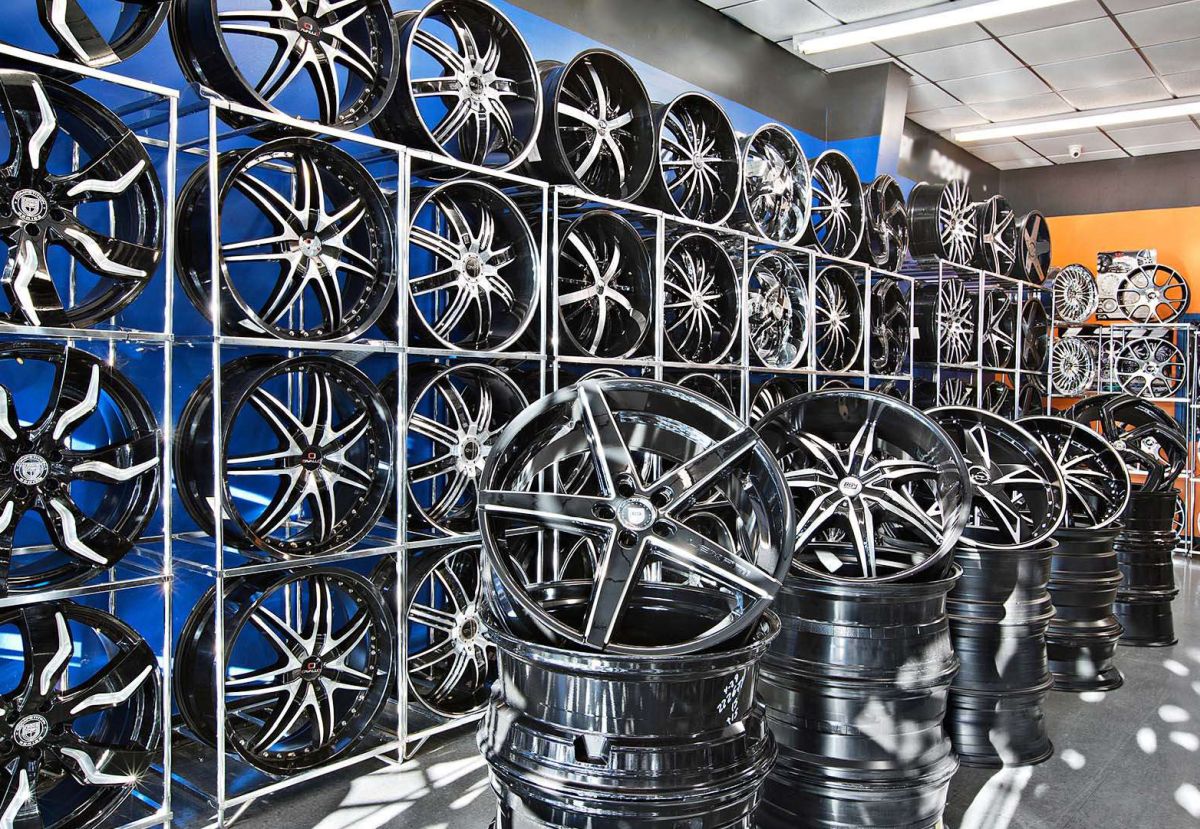
What Is a Wheel Rim? What Are the Different Types of Wheel Rims?
A wheel rim is the component on which a vehicle's tire is mounted. It connects the tire to the vehicle and helps transfer driving, braking, and cornering forces between the tire and the wheel hub.
A wheel rim is not simply a styling component. Its diameter, width, weight, offset, manufacturing method, and material can affect ride comfort, handling, steering response, braking behavior, and suspension performance.
For this reason, choosing a wheel rim should not be based only on appearance. Its technical specifications must also be compatible with the vehicle and the tires being used.
What Is the Purpose of a Wheel Rim?
The primary purpose of a wheel rim is to support the tire and provide a secure connection between the tire and the vehicle.
A rim also has to withstand significant mechanical forces during normal driving.
Its main functions include:
-
Supporting the tire
-
Transferring engine torque to the tire
-
Transferring braking forces
-
Handling lateral forces during cornering
-
Supporting the vehicle's weight
-
Maintaining the tire's correct position
-
Providing sufficient clearance for the brake system
-
Working with the suspension and steering systems to maintain proper wheel geometry
The loads placed on a rim can become particularly high during hard braking, sharp cornering, pothole impacts, and sudden changes in road surface.
What Parts Make Up a Wheel Rim?
Although a wheel rim may appear to be a single component, it contains several important areas.
Wheel hub area:
The central section connects the wheel to the vehicle's hub.
Lug or bolt holes:
These are the mounting points used to secure the wheel to the vehicle.
Center bore:
The hole in the center of the wheel must be compatible with the vehicle's hub.
Mounting face:
This is the surface where the wheel contacts the vehicle's hub.
Spokes:
Spokes connect the central section to the outer part of the wheel. Their design varies considerably between different wheels.
Rim barrel:
This is the outer structure where the tire is mounted.
Bead seat areas:
These areas support the tire bead and help keep the tire securely seated on the rim.
What Are the Different Types of Wheel Rims?
Wheel rims can be classified according to their material, manufacturing method, construction, and intended use.
The most common types include steel wheels, cast aluminum alloy wheels, forged wheels, and multi-piece wheels.
What Is a Steel Wheel?
Steel wheels are manufactured from steel and have been widely used for decades because of their durability and relatively low cost.
They generally have a simple design and are often used together with plastic wheel covers.
One advantage of steel wheels is their behavior under certain types of impact. A severe pothole can deform a steel wheel, and depending on the extent of the damage, it may sometimes be possible to repair it.
However, steel wheels are generally heavier than many aluminum alloy wheels.
Higher wheel weight can increase unsprung mass, which may make it more difficult for the suspension to control wheel movement over uneven surfaces.
What Is an Aluminum Alloy Wheel?
Commonly called an aluminum wheel or alloy wheel, an aluminum alloy wheel is manufactured from an aluminum-based alloy.
These wheels are very common on modern passenger cars.
Their advantages can include:
-
A wide variety of designs
-
Potentially lower weight
-
Good heat management depending on the design
-
Modern and sporty appearance
Wheel design can also influence airflow around the brakes, which can be useful when the braking system is subjected to repeated heavy use.
However, an alloy wheel is not automatically lighter than every steel wheel. A large, heavy-duty alloy wheel can weigh more than a smaller steel wheel.
What Is a Cast Wheel?
A cast wheel is manufactured by pouring molten metal into a mold and allowing it to form the basic shape of the wheel.
Casting can be relatively efficient for large-scale production, which makes cast wheels common on mass-produced passenger vehicles.
The strength of a cast wheel cannot be judged simply by the fact that it is cast. The alloy, design, production quality, heat treatment, and quality-control processes all influence the final strength and durability of the wheel.
What Is a Forged Wheel?
A forged wheel is produced by shaping metal under high pressure.
One of the main advantages of the forging process is that it can provide favorable material properties and allow manufacturers to achieve a high strength-to-weight ratio with an appropriate design.
Forged wheels are therefore commonly associated with high-performance vehicles and motorsports.
However, they are generally more expensive to manufacture than conventional cast wheels.
For a normal daily-driven passenger car, a forged wheel is not necessarily required simply because it is technically more advanced.
What Are One-Piece and Multi-Piece Wheels?
Wheels can also be classified according to their construction.
One-piece wheels are manufactured as a single main structure. This is the most common construction for ordinary passenger vehicles.
Multi-piece wheels consist of multiple sections that are assembled together.
Multi-piece designs are more common in specialized applications, high-performance vehicles, and custom wheel applications.
One advantage of a multi-piece design is that certain sections can be designed or serviced separately. However, the construction is more complex and requires appropriate assembly and maintenance.
What Is Wheel Diameter?
Wheel diameter refers to the nominal diameter of the rim where the tire is mounted.
For example, 16-inch, 17-inch, and 18-inch wheels refer to different wheel diameters.
When wheel diameter increases, a lower-profile tire is usually required if the overall tire diameter is to remain close to the original specification.
For example, moving from a smaller wheel to a larger wheel may mean using a tire with a shorter sidewall.
A larger wheel can give the vehicle a more aggressive appearance and, depending on the combination, can provide more direct steering response. However, it can also reduce ride comfort and increase the risk of wheel damage from potholes and sharp impacts.
What Is Wheel Width?
Wheel width refers to the internal width of the rim where the tire is seated.
Wheel width is directly related to tire selection.
A tire should be mounted on a wheel within the manufacturer's approved rim-width range.
Using a wheel that is excessively narrow or excessively wide for a particular tire can change the tire's working geometry and potentially affect handling and wear.
What Is Wheel Offset (ET)?
Wheel offset, commonly referred to as the ET value, is one of the most important wheel specifications.
It describes the distance between the wheel's centerline and the mounting surface where the wheel contacts the vehicle hub.
Offset determines how far the wheel sits inward or outward relative to the vehicle.
Changing the ET value can affect:
-
Wheel position relative to the fender
-
Clearance between the wheel and suspension components
-
Steering geometry
-
Steering feel
-
Tire position during steering
-
Suspension behavior
Therefore, the fact that a wheel physically fits onto a vehicle does not necessarily mean that it is technically suitable.
What Is PCD?
PCD describes the wheel's bolt-hole pattern.
For example, in a specification such as 5x114.3:
-
5 = number of bolt holes
-
114.3 mm = diameter of the bolt circle
The PCD must be compatible with the vehicle's hub.
A wheel with an incorrect bolt pattern cannot be safely installed simply by forcing or modifying the mounting arrangement.
What Is Center Bore?
The center bore is the diameter of the hole in the center of the wheel.
It must be compatible with the vehicle's hub.
If the wheel's center bore is larger than the vehicle hub, an appropriate hub-centric ring may be used in some applications to provide proper centering.
If the center bore is smaller than the vehicle's hub, the wheel cannot physically fit.
Correct centering is particularly important because an improperly centered wheel can contribute to vibration and other problems, especially at higher speeds.
Why Does Wheel Weight Matter?
Wheel weight is important for more than the vehicle's total weight.
The wheel and tire form part of the vehicle's unsprung mass, which is the mass that the suspension has to control directly.
A lighter wheel and tire combination can allow the suspension to respond more effectively to changes in the road surface.
Because the wheel is also a rotating component, its mass and how that mass is distributed can influence acceleration, braking, and steering response.
However, lighter is not automatically better. Strength, durability, manufacturing quality, vehicle weight, and intended use must all be considered.
Are Larger Wheels Always Better?
No.
Larger wheels can give a vehicle a more aggressive appearance and, when combined with suitable tires, may provide more immediate steering response.
However, larger wheels usually require lower-profile tires.
This can result in:
-
Reduced ride comfort
-
Greater risk of rim damage
-
Higher tire costs
-
Increased road noise
-
Greater sensitivity to potholes and sharp impacts
-
Possible changes in steering and suspension geometry if incorrect specifications are used
For this reason, increasing wheel diameter purely for appearance is not always the best choice.
Wheel and Tire Selection Should Be Considered Together
A wheel should never be selected independently from the tire.
Wheel diameter, wheel width, offset, PCD, center bore, and tire size all need to be considered together.
The wheel must also provide sufficient clearance for brake calipers and suspension components.
This is particularly important on vehicles equipped with large brake systems. A wheel may fit onto the hub but still be unsuitable if the spokes or inner barrel come into contact with the brake caliper.
What Should You Check When Buying a Wheel?
Before purchasing a new set of wheels, the vehicle's original specifications should be checked.
Important specifications include:
-
Wheel diameter
-
Wheel width
-
PCD
-
ET/offset
-
Center bore
-
Lug bolt or nut compatibility
-
Load rating
-
Brake clearance
-
Tire compatibility
-
Manufacturing quality and certification
A wheel being physically mountable is not enough. It must also operate safely under the loads and conditions expected from the vehicle.
What Types of Wheel Damage Can Occur?
Wheels are particularly vulnerable to potholes, curbs, road debris, and severe impacts.
Common types of wheel damage include:
-
Bending
-
Cracking
-
Structural breakage
-
Deformation of the rim lip
-
Paint or coating damage
-
Corrosion
A bent wheel can cause vibration, air leakage, or irregular tire behavior.
A cracked or severely damaged wheel should not simply be treated as a cosmetic problem. Depending on the type and severity of the damage and the wheel's construction, replacement may be the safer option.
Wheel Cleaning and Maintenance
Regular wheel cleaning is useful not only for appearance but also for maintaining the wheel's surface.
Brake dust, road dirt, salt, and other contaminants can accumulate on wheels over time.
Appropriate cleaning products should be used, particularly when the wheel has a painted, polished, powder-coated, or otherwise specialized surface.
Aggressive chemicals or unsuitable cleaning methods can damage the finish.
Early detection of corrosion or coating damage can also help prevent the problem from becoming more extensive.
Does Wheel Design Affect Brake Cooling?
It can.
The design of the wheel influences airflow around the brake assembly.
Some wheels have relatively open spoke designs that allow more air to reach the brake area, while other designs provide less airflow.
However, brake cooling depends on much more than the wheel itself. Brake disc design, vehicle speed, airflow around the vehicle, brake components, and driving conditions also play important roles.
Can Changing Wheels Affect Handling?
Yes.
Changing wheel diameter, width, offset, and tire dimensions can alter the vehicle's behavior.
For example, an incorrect offset can change the position of the tire relative to the suspension and steering geometry.
A different wheel width can change the tire's shape and contact behavior.
A larger wheel combined with a lower-profile tire may produce a sharper steering response but can also transmit more road impacts into the suspension and cabin.
This is why wheel modifications should be evaluated as a complete wheel-and-tire package.
Are Aftermarket Wheels Safe?
A quality aftermarket wheel that is correctly specified for the vehicle can be perfectly suitable.
The important issue is not simply whether a wheel is original equipment or aftermarket.
The wheel should have the correct dimensions, load capacity, mounting specifications, brake clearance, and appropriate manufacturing quality.
Very cheap wheels with unknown specifications or questionable manufacturing quality should be approached cautiously, particularly because wheels are safety-critical components.
What Is the Best Type of Wheel?
There is no single wheel type that is best for every vehicle.
A steel wheel can be a practical choice when durability and cost are priorities.
A cast aluminum alloy wheel can offer a good balance between appearance, weight, cost, and everyday use.
A forged wheel can be attractive for high-performance applications where low weight and high strength are particularly important.
The best choice depends on the vehicle, driving conditions, tire selection, budget, and intended use.
Final Considerations When Choosing a Wheel
A wheel should not be selected only because it looks good on the vehicle.
The correct diameter, width, ET value, PCD, center bore, load capacity, brake clearance, and tire compatibility are all important.
A properly selected wheel can contribute to predictable handling, appropriate ride comfort, and safe operation. An incorrectly specified wheel, on the other hand, can create clearance, vibration, tire wear, steering, or even safety problems.
For this reason, wheel selection should always begin with the vehicle's technical specifications and the intended tire size, with appearance considered after those requirements have been satisfied.