TR
TR EN
EN

What Is Routine Car Maintenance? How Is It Done and What Does It Include?
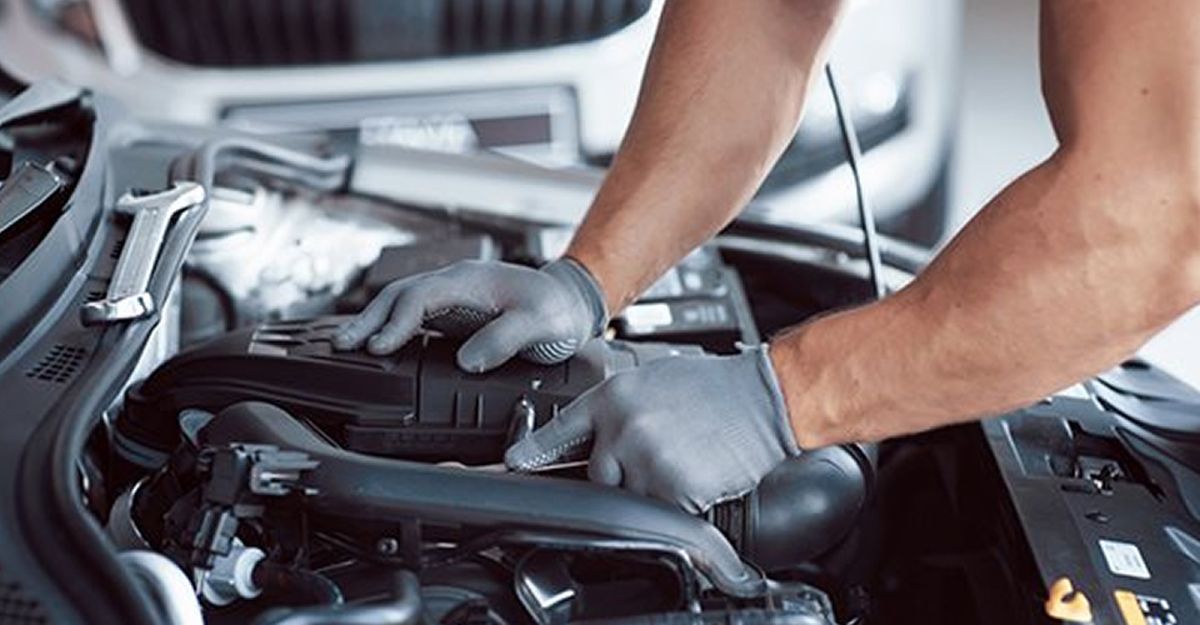
Routine car maintenance is the process of inspecting a vehicle at specific mileage or time intervals, carrying out necessary maintenance procedures, and checking components for wear, damage, or deterioration.
Routine maintenance is not limited to changing the engine oil. The engine, brakes, tires, suspension, steering system, battery, fluids, filters, lighting system, and electronic systems should all be considered as part of the vehicle's overall condition.
Regular maintenance helps keep the vehicle reliable and can also make it possible to identify developing problems before they turn into larger and more expensive repairs.
Why Is Routine Car Maintenance Necessary?
A car is constantly exposed to mechanical, thermal, electrical, and environmental stresses during normal use.
The engine operates at high temperatures, engine oil gradually loses some of its properties, brake components wear, tires deteriorate, batteries lose capacity, and filters become contaminated.
Because these components do not wear at the same rate, regular inspection is important.
The main purposes of routine maintenance include:
-
Keeping the engine operating properly
-
Identifying worn components before they fail
-
Maintaining proper lubrication
-
Supporting efficient air and fuel flow
-
Checking the braking system
-
Evaluating tire and suspension condition
-
Checking the battery and charging system
-
Inspecting fluid levels and condition
-
Detecting developing faults
-
Maintaining vehicle reliability and service life
When Should Routine Car Maintenance Be Performed?
The maintenance interval is not the same for every vehicle.
Manufacturers generally specify maintenance schedules based on both mileage and time. A vehicle may require maintenance after reaching a certain mileage or after a specified period has passed since the previous service.
Even if a vehicle is driven very little, some maintenance procedures may still be necessary because certain fluids and components deteriorate with age.
Engine oil, for example, can degrade over time even when the vehicle has covered relatively few miles.
For this reason, both mileage and time-based maintenance intervals should be considered.
Driving conditions can also influence maintenance requirements. Vehicles used mainly in heavy city traffic, frequent short trips, dusty environments, heavy loads, or extreme temperatures may experience more demanding operating conditions.
Why Is Engine Oil Changed During Routine Maintenance?
Engine oil reduces friction between moving engine components and helps protect the engine from wear.
Over time, however, engine oil is exposed to:
-
High temperatures
-
Pressure
-
Fuel and combustion by-products
-
Soot and contaminants
-
Oxidation
As a result, its properties gradually change.
When replacing engine oil, it is important to use the correct specification recommended by the vehicle manufacturer, not simply an oil with the correct viscosity.
Using an unsuitable oil can cause problems, particularly in modern turbocharged engines and engines with sensitive lubrication systems.
Oil Filter Replacement
The oil filter should also be inspected and replaced according to the manufacturer's maintenance schedule, generally when the engine oil is changed.
The oil filter helps remove contaminants and particles from the oil as it circulates through the engine.
A filter that is not replaced when required can reduce the effectiveness of the lubrication system.
For this reason, engine oil and the oil filter are usually among the fundamental parts of routine maintenance.
Air Filter Inspection and Replacement
An engine needs a sufficient supply of clean air to operate properly.
The air filter helps prevent dust and other particles from entering the engine.
As the filter becomes dirty, airflow can become restricted. The actual effect depends on the engine design and how heavily contaminated the filter is.
Vehicles driven in dusty environments or heavy urban traffic may require more frequent air filter inspection.
The filter should therefore be evaluated based on its actual condition as well as the recommended maintenance interval.
What Is the Cabin Air Filter?
The cabin air filter, also known as the pollen or HVAC filter, helps filter the air entering the passenger compartment through the ventilation and air-conditioning system.
A dirty cabin filter can:
-
Reduce airflow
-
Decrease ventilation performance
-
Make windshield defogging less effective
-
Reduce cabin air quality
Some vehicles use standard particulate filters, while others use activated-carbon or other specialized filters.
Fuel Filter Inspection
The fuel filter helps prevent dirt and contaminants from reaching the fuel system.
The replacement interval varies depending on the vehicle and fuel system.
Fuel filtration is particularly important on diesel engines because modern diesel fuel systems operate at very high pressures and are sensitive to fuel contamination.
Gasoline vehicles can also have fuel filter maintenance requirements, although the design and service interval vary between models.
Are the Brakes Checked During Routine Maintenance?
Yes.
The braking system is one of the most important safety-related areas inspected during routine maintenance.
Depending on the vehicle and service procedure, technicians may inspect:
-
Brake pads
-
Brake discs or rotors
-
Brake calipers
-
Brake hoses
-
Brake fluid
-
Parking brake system
-
General braking performance
Checking only brake pad thickness is not always sufficient. Disc condition, uneven wear, cracks, heat damage, and caliper problems should also be considered.
Why Is Brake Fluid Inspected?
Brake fluid can absorb moisture over time.
An increased moisture content can affect brake fluid performance, particularly when brake temperatures become high.
Therefore, checking only the fluid level is not enough. The manufacturer's recommended replacement interval and, where appropriate, the condition of the fluid should also be considered.
Are Tires Checked During Routine Maintenance?
Absolutely.
Tires are the only components directly connecting the vehicle to the road, making them critical for safety.
During maintenance, technicians may check:
-
Tread depth
-
Tire pressure
-
Uneven wear
-
Sidewall damage
-
Cracks
-
Tire age
-
Differences in wear between front and rear tires
Uneven tire wear does not necessarily mean that the tire itself is defective. It can also indicate problems with wheel alignment, suspension components, steering components, or wheel geometry.
Battery and Charging System Inspection
The battery should also be evaluated during routine maintenance.
Simply measuring battery voltage is not always enough. Starting performance and battery behavior under load can provide additional information about battery condition.
The following may also be checked:
-
Alternator charging voltage
-
Battery terminals
-
Cable connections
-
Ground connections
-
Battery mounting
This is particularly important on modern vehicles because low battery voltage can cause warning messages and even apparently unrelated electronic fault codes.
Coolant Inspection
The cooling system is essential for maintaining the engine at the correct operating temperature.
Routine maintenance may include checking:
-
Coolant level
-
Cooling system leaks
-
Hoses
-
Expansion tank
-
Radiator
-
Cooling system connections
Checking only the coolant level is not enough. The correct coolant type and mixture should also comply with the manufacturer's requirements.
Is Transmission Fluid Changed During Routine Maintenance?
This depends on the transmission type.
Manual, conventional automatic, dual-clutch, and CVT transmissions can have very different maintenance requirements.
Some manufacturers specify regular transmission fluid replacement, while others use different service procedures depending on the transmission design.
Therefore, general statements such as “transmission fluid is lifetime fluid” or “it must always be changed every 40,000 miles” should not be applied universally.
The manufacturer's maintenance schedule should be followed, and the correct transmission fluid specification must be used.
Steering and Suspension Inspection
Routine maintenance is not limited to the engine compartment.
The suspension and steering systems should also be inspected.
Depending on the vehicle, technicians may examine:
-
Shock absorbers
-
Control arms
-
Bushings
-
Tie-rod ends
-
Stabilizer links
-
Steering components
-
Springs
-
Wheel bearings
Worn suspension or steering components can affect handling, braking behavior, steering response, and tire wear.
Timing Belt Inspection
Vehicles equipped with timing belts require particular attention to the manufacturer's replacement interval.
A timing belt does not necessarily wear only according to mileage. Age also affects the material.
If a timing belt fails, some engines can suffer serious internal damage.
For this reason, both the mileage and age limits specified by the manufacturer should be followed.
Depending on the engine design, tensioners, idler pulleys, and the water pump may also need to be evaluated or replaced during a timing belt service.
Are Auxiliary Drive Belts Checked?
Yes.
Auxiliary or serpentine belts can drive components such as the alternator, air-conditioning compressor, and other accessories.
The belt can develop:
-
Cracks
-
Wear
-
Fraying
-
Glazing
-
Excessive looseness
-
Abnormal noise
The tensioner and pulleys should also be inspected because a worn pulley or tensioner can damage a new belt.
Are Engine Fluid Leaks Checked?
During routine maintenance, the engine and transmission areas can be inspected for oil, coolant, fuel, or other fluid leaks.
Oil accumulation around the engine does not always mean that there is a major leak, but its source should be identified.
A small leak that gradually becomes worse can eventually lead to low fluid levels and more serious mechanical problems.
Spark Plugs and Ignition System Inspection
On gasoline engines, spark plugs are inspected or replaced according to the manufacturer's maintenance schedule.
Worn spark plugs can contribute to:
-
Difficult starting
-
Misfires
-
Reduced performance
-
Increased fuel consumption
-
High-RPM ignition problems
Ignition coils and their electrical connections may also be inspected when necessary.
Diesel engines use glow plugs instead of gasoline spark plugs. Their purpose is different from that of spark plugs in a gasoline engine.
Air Conditioning System Inspection
The air-conditioning system may also be evaluated during routine maintenance.
If the air conditioner is not cooling properly, low refrigerant is not necessarily the only possible cause.
Other possible causes include:
-
Refrigerant charge
-
Compressor
-
Pressure sensors
-
Condenser
-
Evaporator
-
Cooling fans
-
Cabin filter
-
Electrical problems
Adding refrigerant without properly diagnosing the system is not always the correct solution.
Electronic Systems and OBD Diagnostics
Modern vehicles contain a large number of electronic control systems.
During routine maintenance, the vehicle can be scanned with an appropriate diagnostic tool to identify stored fault codes.
In addition to the engine ECU, a vehicle may contain separate control units for:
-
ABS
-
ESP/ESC
-
Airbags
-
Transmission
-
Body control
-
Steering
-
Parking assistance
However, reading a diagnostic trouble code does not automatically prove that the component named in the code has failed.
For example, a sensor-related fault can be caused by the sensor itself, wiring, a connector, power supply, ground connection, or communication problem.
Diagnostic codes should therefore be used as a starting point for diagnosis rather than as automatic proof of component failure.
Why Is an Underbody Inspection Important?
Lifting the vehicle provides an opportunity to inspect components that cannot be properly evaluated from above.
Technicians may inspect:
-
Fluid leaks
-
Exhaust system
-
Suspension components
-
Brake lines
-
Fuel lines
-
Inner tire surfaces
-
Chassis and mounting points
Routine maintenance should therefore not be considered simply an engine oil and filter change performed under the hood.
How Is Routine Car Maintenance Performed?
The exact procedure varies between vehicles, but the process generally begins by reviewing the vehicle's maintenance history and the manufacturer's maintenance schedule.
The vehicle is then visually and mechanically inspected.
Required fluids and filters are replaced, fluid levels are checked, and the braking and tire systems are evaluated.
The underside of the vehicle, suspension, and steering components are also inspected.
When necessary, electronic control units are scanned using a diagnostic tool.
After maintenance, the owner should be informed about the work performed, parts replaced, problems discovered, and any maintenance that will be required in the near future.
Does Every Part Get Replaced at Every Service?
No.
This is an important point.
Routine maintenance does not mean replacing every component at every service.
Engine oil and certain filters may have relatively regular replacement intervals, while brake pads, brake discs, spark plugs, batteries, timing belts, and transmission fluids have different service requirements depending on the vehicle and their actual condition.
The goal of good maintenance is not to replace as many parts as possible. It is to replace the right component at the right time.
Dealership or Independent Repair Shop?
Both options can have advantages.
A dealership generally has direct access to the manufacturer's technical documentation, service procedures, diagnostic equipment, and original parts.
A qualified independent repair shop may have extensive experience with a particular brand, engine, or transmission and may perform certain services at a lower cost.
The most important factor should not be price alone. The shop's technical knowledge, diagnostic capability, parts quality, equipment, and ability to document the work should also be considered.
What Happens If Routine Maintenance Is Ignored?
Delaying maintenance does not always cause an immediate failure. However, the risks generally increase over time.
Dirty oil, contaminated filters, worn brake pads, incorrect tire pressure, a weak battery, or an aging belt can eventually contribute to more serious problems.
Early detection can also prevent minor issues from becoming expensive repairs.
For example, identifying a small oil leak early can be significantly less expensive than repairing an engine that has suffered damage because it was operated with insufficient oil.
Is Routine Maintenance Only About Protecting the Vehicle?
No.
Routine maintenance is also directly related to driving safety.
The condition of the brakes, tires, steering, suspension, lighting system, and safety-related equipment can have a direct effect on how the vehicle behaves on the road.
A properly maintained vehicle is generally more predictable and gives the driver greater confidence that its major systems are operating as intended.
Routine maintenance is therefore not simply about keeping a car running. It is about keeping the vehicle as safe, reliable, efficient, and mechanically healthy as possible throughout its service life.
What Is the Most Important Part of Routine Maintenance?
Good routine maintenance is much more than an engine oil and filter change.
Oil and filters are important, but the brakes, tires, battery, fluids, suspension, steering system, belts, cooling system, and electronic systems are all part of the vehicle's overall condition.
For this reason, routine maintenance should evaluate the complete mechanical and electronic condition of the vehicle, rather than focusing only on the parts scheduled for replacement.
Regular and properly performed maintenance helps identify developing problems before they become major failures, reduces the risk of unexpected breakdowns, and helps keep the vehicle safe and reliable on the road.