TR
TR EN
EN

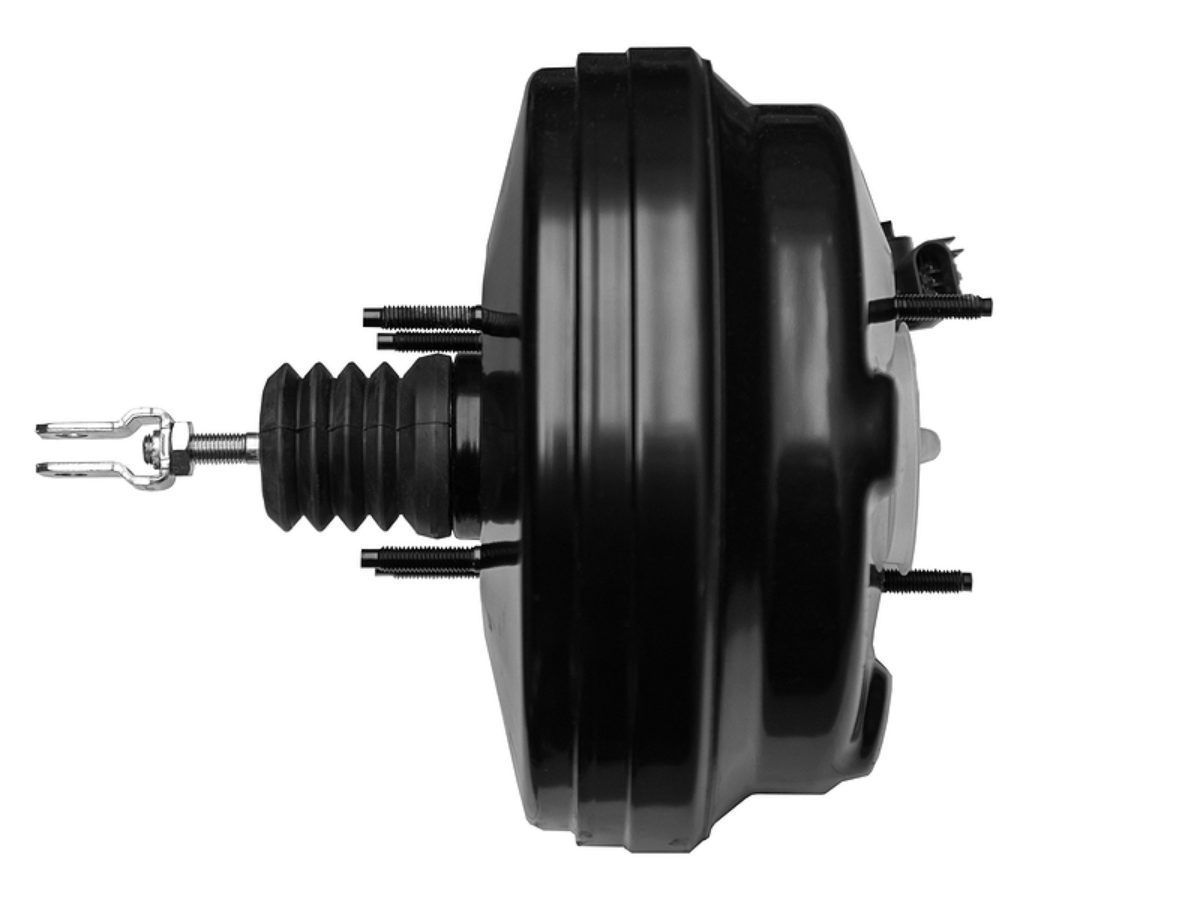
What Is a Brake Booster? What Are the Symptoms of Brake Booster Failure?
The brake booster, also known as a brake servo, is one of the most important components in a vehicle's braking system. Its main purpose is to reduce the amount of physical force the driver needs to apply to the brake pedal.
Without a brake booster, the hydraulic brake system could still operate mechanically, but the driver would need to apply considerably more force to achieve the same braking effect.
In most conventional vehicles, the brake booster works together with the brake pedal, master cylinder, and hydraulic brake system. When the driver presses the brake pedal, the booster assists the pedal force before that force reaches the master cylinder.
A problem with the brake booster can therefore make the brake pedal unusually hard and significantly change the vehicle's braking characteristics.
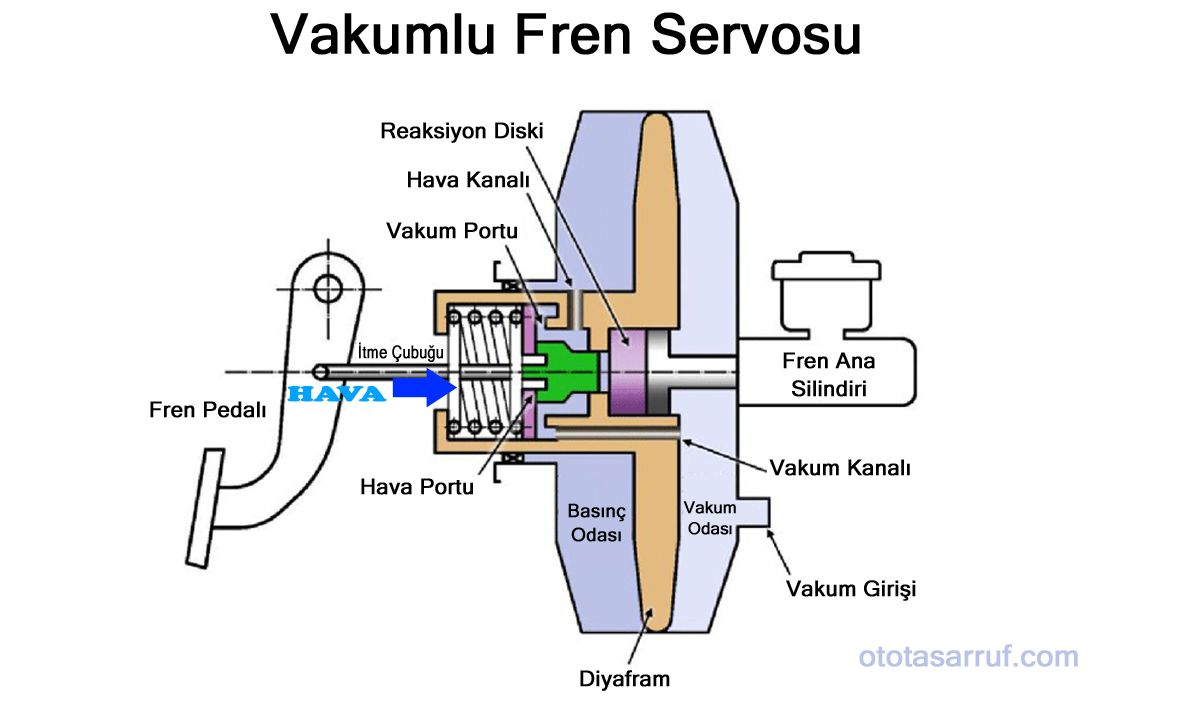
How Does a Brake Booster Work?
Traditional brake boosters commonly use engine vacuum to multiply the driver's pedal force.
The booster is installed between the brake pedal and the master cylinder. Inside it is a diaphragm or similar mechanism that separates two chambers.
When the brake pedal is released, the pressure conditions on both sides of the diaphragm allow the system to remain in its normal position.
When the brake pedal is pressed, a control valve changes the pressure inside the booster. The pressure difference across the diaphragm creates additional force.
This additional force is transferred to the master cylinder.
The basic sequence is:
Driver presses brake pedal → brake booster assists the pedal force → master cylinder generates hydraulic pressure → brake calipers/wheel cylinders apply the brakes.
Modern vehicles can use different technologies, including vacuum boosters, electric vacuum pumps, hydraulic boosters, and electrically assisted braking systems.
Therefore, not every modern vehicle has exactly the same type of brake booster.

What Is the Purpose of a Brake Booster?
The brake booster primarily exists to make braking easier and more controllable for the driver.
Its benefits include:
-
Reducing brake-pedal effort
-
Improving braking feel
-
Making emergency braking easier
-
Allowing sufficient hydraulic pressure with reasonable pedal force
-
Improving everyday driving comfort
The booster does not create the braking system's hydraulic pressure by itself.
The master cylinder generates hydraulic pressure. The booster increases the force applied to the master-cylinder piston.
This distinction is important when diagnosing brake problems.
What Are the Symptoms of Brake Booster Failure?
A failing brake booster can produce several recognizable symptoms.
The most common include:
-
Hard brake pedal
-
Increased pedal effort
-
Reduced braking assistance
-
Longer stopping distance
-
Hissing noise near the brake pedal
-
Engine idle changes when braking
-
Brake pedal behavior that changes with engine operation
-
Warning lights in some vehicles
-
Poor or inconsistent brake assistance
However, these symptoms are not exclusive to the brake booster.
A hard brake pedal can also be caused by vacuum problems, a failed vacuum pump, a seized brake component, incorrect brake-system repairs, or other mechanical problems.
Hard Brake Pedal
One of the most classic symptoms of a brake booster problem is a hard brake pedal.
The driver may notice that significantly more force is required to slow the vehicle.
The pedal may feel unusually firm immediately after the engine starts or may become harder during repeated braking.
If the booster is not providing assistance, the hydraulic brakes may still function, but the driver must generate much more pedal force.
This can become particularly dangerous during emergency braking because the driver may not be able to apply the necessary force quickly enough.
Brake Pedal Hardens After the Engine Starts
A useful basic test on vacuum-assisted systems is to compare the brake pedal with the engine off and then with the engine running.
With the engine off, press the brake pedal several times to remove stored vacuum assistance.
Keep moderate pressure on the pedal and start the engine.
On a properly functioning vacuum-assisted system, the pedal should normally move slightly downward as vacuum assistance becomes available.
If there is no noticeable change, the booster system may have a problem.
However, this is only a basic functional check. It does not identify the exact failed component.
The fault could involve the booster, vacuum hose, check valve, vacuum source, or another part of the system.
Hissing Noise When Pressing the Brake Pedal
A noticeable hissing sound around the brake pedal or booster can indicate a vacuum leak.
Possible causes include:
-
Brake-booster diaphragm leakage
-
Damaged vacuum hose
-
Faulty one-way check valve
-
Vacuum connection problems
-
Booster seal problems
A very slight sound may occur normally in some systems, but a loud or persistent hissing noise accompanied by changes in pedal feel deserves investigation.
Engine Idle Changes When You Press the Brake
A vacuum-assisted brake booster is connected to the engine's intake-vacuum system on many vehicles.
If the booster or its vacuum circuit develops a significant leak, unmetered air can enter the engine.
This can cause:
-
Rough idle
-
Engine RPM changes
-
Stalling
-
Lean mixture symptoms
-
Check Engine Light
This is one reason a brake-booster problem can sometimes appear to be an engine problem.
For example, if the engine runs normally until the brake pedal is pressed and then suddenly develops a rough idle, a vacuum leak in the brake-booster circuit should be considered.
Longer Stopping Distance
A brake-booster problem can contribute to increased stopping distance, particularly if the driver cannot generate enough pedal force.
However, increased stopping distance should never automatically be blamed on the booster.
Other causes include:
-
Worn brake pads
-
Poor-quality brake pads
-
Contaminated brake components
-
Worn brake discs
-
Brake-fluid problems
-
Air in the hydraulic system
-
Seized calipers
-
Tire problems
-
ABS faults
-
Hydraulic-system problems
A vehicle that takes noticeably longer to stop requires a complete brake-system inspection.
Brake Pedal Is Hard, but the Brakes Still Work
This is a common situation with brake-booster problems.
The hydraulic braking system may still operate even when booster assistance is lost.
The driver may therefore say:
“The brakes work, but the pedal is extremely hard.”
This distinction is useful.
A hard pedal often points toward a problem with brake assistance, while a soft or sinking pedal more commonly points toward hydraulic or mechanical issues.
However, this is not an absolute rule.
Hard Brake Pedal vs Soft Brake Pedal
These two symptoms can point toward very different problems.
Hard pedal
Possible causes include:
-
Brake-booster failure
-
Vacuum leak
-
Failed vacuum pump
-
Faulty check valve
-
Vacuum supply problem
-
Mechanical brake-system restriction
Soft or spongy pedal
Possible causes include:
-
Air in the brake system
-
Brake-fluid leak
-
Flexible brake-hose problems
-
Master-cylinder problems
-
ABS hydraulic-unit issues
-
Incorrect brake adjustment on applicable systems
A pedal that slowly sinks while maintaining pressure can be particularly important because it may indicate a master-cylinder or hydraulic problem.
What Causes Brake Booster Failure?
Several different problems can cause brake-booster failure.
Vacuum leaks
A cracked or disconnected vacuum hose can prevent the booster from receiving the required vacuum.
Damaged diaphragm
A damaged internal diaphragm can allow air leakage and prevent the booster from generating the required pressure difference.
Faulty check valve
The one-way check valve helps retain vacuum in the booster when required.
If it fails, the booster may lose stored vacuum too quickly.
Vacuum pump failure
Some engines do not generate sufficient intake vacuum for traditional brake assistance, so the vehicle may use a vacuum pump.
A failed pump can therefore cause brake-assistance problems even when the booster itself is healthy.
Internal mechanical failure
The internal control valve or other booster components can wear or become damaged.
Water or contamination
Depending on the design and location, contamination or moisture can contribute to corrosion or component deterioration.
Can a Vacuum Hose Cause the Same Symptoms?
Yes.
A vacuum hose problem can closely resemble a brake-booster failure.
The hose may be:
-
Cracked
-
Split
-
Disconnected
-
Softened
-
Collapsed
-
Incorrectly installed
A technician should therefore inspect the entire vacuum circuit before replacing the booster.
Replacing a brake booster will not solve a cracked vacuum hose.
What Is the Brake Booster Check Valve?
The brake-booster check valve is a one-way valve used in many vacuum-assisted systems.
Its job is to help maintain vacuum inside the booster and prevent unwanted pressure flow in the opposite direction.
If the check valve fails, the booster may lose vacuum assistance.
Possible symptoms include:
-
Harder pedal after the engine has been off
-
Reduced braking assistance
-
Repeated hard pedal
-
Vacuum loss
A faulty check valve is often less expensive to replace than the entire brake booster, which is why it should be tested separately where applicable.
Can a Brake Booster Cause an Engine Warning Light?
Yes.
On a vacuum-assisted system, a significant leak can affect the engine's intake-air mixture.
The engine may detect the resulting mixture problem and store diagnostic trouble codes.
Possible symptoms can include:
-
Rough idle
-
Lean mixture
-
Engine stalling
-
Increased idle speed
-
Check Engine Light
This is another reason not to treat a Check Engine Light and a brake-booster problem as completely unrelated.
Can a Brake Booster Cause the Engine to Stall?
It can in certain circumstances.
If the booster diaphragm or vacuum circuit develops a substantial leak, the engine may receive an abnormal amount of unmetered air.
Depending on the engine's control strategy, this can cause severe idle instability or even stalling when the brake pedal is pressed.
If the engine repeatedly stalls specifically when braking, the brake-booster vacuum circuit should be investigated.
Does Every Brake Booster Use Engine Vacuum?
No.
Traditional gasoline vehicles commonly use engine vacuum, but modern vehicles can use different brake-assistance technologies.
Examples include:
-
Vacuum-assisted systems
-
Electric vacuum pumps
-
Hydraulic brake boosters
-
Electro-hydraulic systems
-
Electrically assisted braking systems
Diesel engines, turbocharged engines, hybrids, and electric vehicles may use different arrangements because available engine vacuum can be insufficient or unavailable.
This means the diagnosis must be based on the vehicle's actual braking system.
Brake Booster Problems in Hybrid and Electric Vehicles
Hybrid and electric vehicles require particular attention because they may not rely on traditional engine vacuum in the same way as a conventional gasoline vehicle.
Many use electric pumps or electronically controlled brake systems.
Regenerative braking also changes the way the driver experiences the brake pedal.
A warning or unusual pedal feel in a hybrid or EV therefore should not automatically be diagnosed as a conventional vacuum-booster failure.
The manufacturer's diagnostic procedure should be followed.
How Is a Brake Booster Diagnosed?
Diagnosis starts with the driver's complaint.
The technician should determine whether the pedal is:
-
Hard
-
Soft
-
Spongy
-
Sinking
-
Pulsating
-
Changing with engine operation
The next step is to inspect the brake-assistance system.
Depending on the vehicle, this may include checking:
-
Vacuum level
-
Vacuum hose condition
-
Check valve operation
-
Vacuum pump operation
-
Booster response
-
Brake-pedal linkage
-
Master-cylinder operation
-
Hydraulic brake pressure
-
ABS system
-
Electronic brake-control system
A vacuum gauge or suitable diagnostic equipment can be used on systems designed for vacuum testing.
Can OBD Diagnose a Brake Booster Failure?
Sometimes, but not always.
Traditional mechanical vacuum-booster failures may not produce a specific OBD diagnostic trouble code.
Modern vehicles with electronically monitored brake-assistance systems may store codes when the system detects a fault.
Therefore, an OBD scan can be useful, but a scan tool cannot replace a physical brake-system inspection.
A vehicle can have a serious mechanical brake-assistance problem without producing a conventional engine-related fault code.
Can a Bad Brake Booster Damage the Master Cylinder?
A faulty brake booster does not normally directly damage the master cylinder.
However, abnormal pedal operation, incorrect installation, excessive mechanical force, or problems elsewhere in the braking system can affect the components around it.
When replacing a booster, the relationship between the booster pushrod and master-cylinder piston must be correctly adjusted according to the manufacturer's specifications.
Incorrect adjustment can cause serious braking problems.
Can a Brake Booster Leak Brake Fluid?
A conventional vacuum booster normally does not contain brake fluid.
Brake fluid belongs to the hydraulic system, particularly the master cylinder and brake circuits.
However, if the master cylinder develops a leak toward the booster side, brake fluid can enter the booster on some designs.
This is a serious condition because it can indicate a master-cylinder problem and potentially damage the booster.
Therefore, brake-fluid contamination around the booster should not be ignored.
Is It Safe to Drive With a Bad Brake Booster?
A suspected brake-booster failure should be treated seriously.
Even if the brakes still work, a vehicle with significantly reduced brake assistance may require much more pedal force and may have reduced emergency-braking performance.
If the brake pedal suddenly becomes very hard, the vehicle should not be treated as normal.
Likewise, a brake warning light, significant brake-fluid loss, abnormal pedal behavior, or major reduction in braking performance should be investigated immediately.
Can a Brake Booster Be Repaired?
Whether the booster can be repaired depends on its design and the manufacturer.
Some vacuum-system components, such as hoses and check valves, can often be replaced separately.
In many vehicles, however, the brake booster itself is replaced as an assembly rather than rebuilt.
Modern electronically assisted brake systems may require specialized procedures and calibration after replacement.
The correct procedure depends on the specific vehicle.
Brake Booster Replacement
Replacing the brake booster may require removing the master cylinder, disconnecting the brake pedal linkage, and accessing components inside the engine compartment or passenger compartment.
After replacement, the braking system may require:
-
Correct pushrod adjustment
-
Brake-system bleeding
-
Vacuum-system verification
-
Electronic calibration
-
ABS-related procedures
Not every vehicle requires all of these steps.
The manufacturer's service procedure should be followed.
What Should Be Checked Before Replacing the Brake Booster?
A brake booster should not be replaced solely because the pedal feels hard.
Before replacement, check:
-
Vacuum supply
-
Vacuum hose
-
Check valve
-
Vacuum pump if equipped
-
Booster operation
-
Pedal linkage
-
Master cylinder
-
Brake calipers
-
Brake hoses
-
ABS system
-
Hydraulic pressure
A failed vacuum pump, for example, can create symptoms that look almost identical to a failed booster.
Final Thoughts
The brake booster is responsible for providing braking assistance, making it possible for the driver to generate sufficient braking force without excessive pedal effort.
The most recognizable symptom of a conventional booster problem is a hard brake pedal accompanied by reduced pedal assistance. A hissing noise, vacuum leak, engine idle disturbance when braking, or loss of braking assistance can provide additional clues.
However, brake-booster symptoms can overlap with vacuum-system, master-cylinder, hydraulic, ABS, and mechanical brake problems.
For that reason, a hard or abnormal brake pedal should never be diagnosed from the symptom alone.
If braking performance has suddenly changed, the vehicle should be inspected promptly. The brake system is safety-critical, and replacing the booster without confirming the actual cause can leave the original problem unresolved.