TR
TR EN
EN

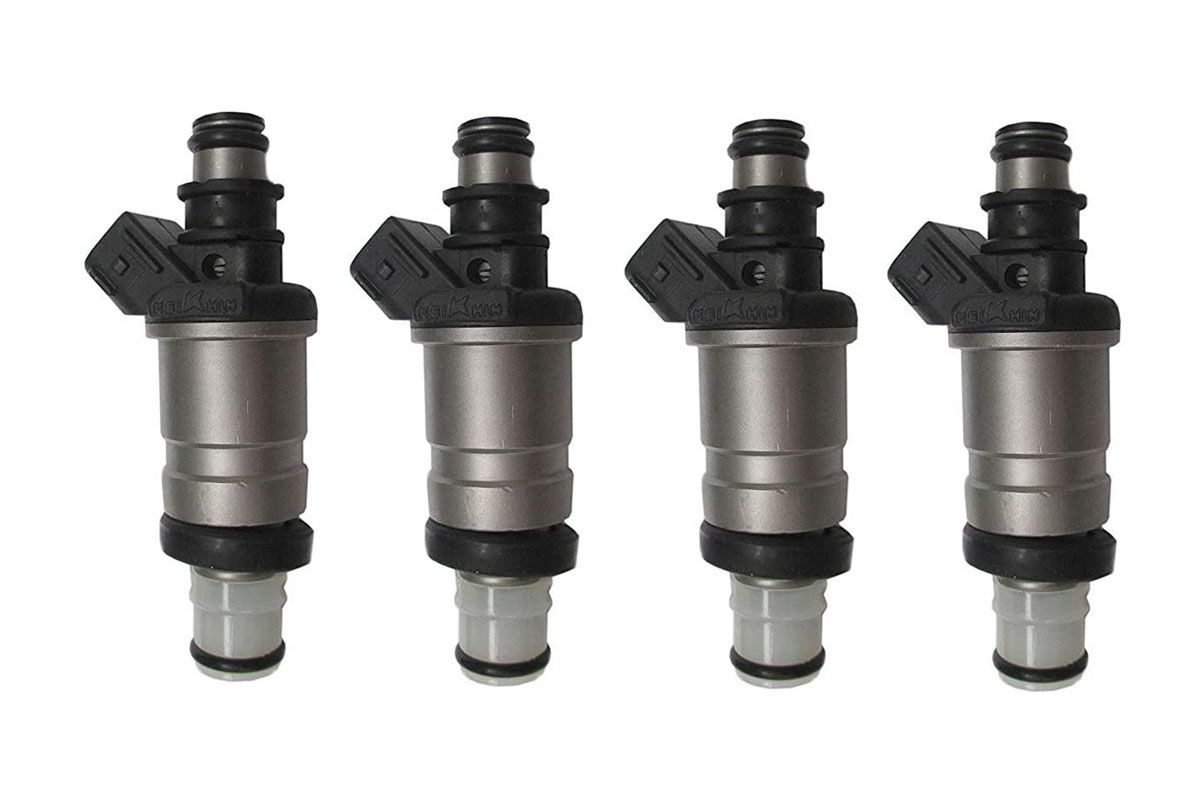
What Is a Fuel Injector? Its Structure and Working Principle
A fuel injector is one of the key components of a modern engine’s fuel system. Its job is to deliver a precisely controlled amount of fuel into the engine at the correct time and in the correct form.
Although a fuel injector may look like a relatively small component, its operation has a direct effect on engine performance, fuel consumption, emissions, starting, idle quality, and combustion efficiency.
In modern electronically controlled engines, the injector is not simply a valve that opens and closes. The engine control unit (ECU) determines when the injector should operate and how long it should remain open based on information from various sensors.
What Does a Fuel Injector Do?
The primary function of a fuel injector is to meter and atomize fuel.
The injector receives pressurized fuel from the fuel rail or fuel system and releases it through a small nozzle. The fuel is broken into fine droplets so that it can mix more effectively with the incoming air.
The ECU controls the injector opening time according to the engine’s operating conditions.
Depending on the engine design, fuel may be injected:
-
Into the intake port
-
Directly into the combustion chamber
-
Into the throttle body area on older systems
Modern gasoline engines commonly use either port fuel injection or gasoline direct injection. Diesel engines use their own high-pressure injection systems, which operate at much higher pressures.
Main Parts of a Fuel Injector
A typical electronically controlled fuel injector consists of several important components.
Electrical connector
The electrical connector connects the injector to the engine wiring harness. It supplies the electrical control signal from the ECU.
Solenoid coil
In many conventional gasoline injectors, an electromagnetic solenoid is used to control the injector valve.
When electrical current flows through the coil, a magnetic field is generated.
Armature
The armature is the movable part that responds to the magnetic field created by the solenoid.
When energized, it moves the internal valve or needle away from its seat, allowing fuel to pass through.
Needle or valve
The needle controls the fuel passage through the injector.
When the injector is closed, the needle seals the fuel passage. When the ECU activates the injector, the needle moves and fuel can flow through the nozzle.
Nozzle
The nozzle is the outlet through which fuel leaves the injector.
Its design determines how the fuel is sprayed. The spray pattern is extremely important because it affects how effectively the fuel mixes with air.
Fuel inlet
Pressurized fuel enters the injector through the inlet.
A small internal filter may be used at the inlet to prevent contaminants from reaching the precision components inside the injector.
O-rings and seals
Fuel injectors normally use seals or O-rings where they connect to the fuel rail and, depending on the engine design, the intake manifold or cylinder head.
Damaged seals can cause fuel leaks or allow air to enter the intake system.
How Does a Fuel Injector Work?
The basic operating principle is relatively simple.
Fuel is supplied to the injector under pressure. The injector remains closed until the ECU sends an electrical command.
When the ECU activates the injector, the solenoid creates a magnetic field. This causes the internal armature and needle to move, opening the fuel passage.
Pressurized fuel then passes through the nozzle and is sprayed into the intake port or combustion chamber, depending on the injection system.
When the ECU stops the electrical command, the magnetic field disappears. A spring or internal mechanism returns the needle to its seat, closing the injector.
This entire process can happen extremely quickly and repeatedly.
The amount of fuel delivered depends largely on injector opening time, fuel pressure, injector flow characteristics, and the operating conditions of the engine.
What Is Injector Pulse Width?
Injector pulse width is the amount of time the ECU commands an injector to remain open during a particular injection event.
For example, the ECU may command an injector to open for only a few milliseconds.
The exact value changes constantly depending on engine speed, load, air flow, coolant temperature, throttle position, fuel pressure, oxygen sensor feedback, and other factors.
Generally, more engine load requires more fuel, so injector operation may become longer or occur more frequently depending on the engine strategy.
Injector pulse width is an important parameter when diagnosing fuel-system problems because unusually high or low values can provide clues about the condition of the engine and fuel system.
How Does the ECU Control Fuel Injectors?
The ECU receives information from multiple sensors before deciding how much fuel the engine needs.
Depending on the vehicle, these may include:
-
Mass airflow sensor (MAF)
-
Manifold absolute pressure sensor (MAP)
-
Throttle position sensor
-
Engine coolant temperature sensor
-
Intake air temperature sensor
-
Crankshaft position sensor
-
Camshaft position sensor
-
Oxygen or air-fuel ratio sensors
-
Fuel pressure sensor
The ECU processes this information and calculates an appropriate injection strategy.
The engine control system also continuously adjusts fueling during closed-loop operation based on oxygen sensor or air-fuel ratio sensor feedback.
This allows the ECU to compensate for changing operating conditions and maintain the desired air-fuel mixture.
Port Fuel Injection
In a port fuel injection system, the injector is positioned near the intake valve.
Fuel is sprayed into the intake port before the air enters the combustion chamber.
When the intake valve opens, the air-fuel mixture enters the cylinder.
This system has been widely used in gasoline engines because it provides relatively precise fuel control and has a comparatively simple design.
One advantage is that the fuel spray can help keep the intake valve area cleaner than in some direct-injection engines, although actual deposits depend on engine design and operating conditions.
Gasoline Direct Injection
Gasoline direct injection (GDI) places the injector directly in the combustion chamber.
Instead of spraying fuel into the intake port, the injector introduces fuel directly into the cylinder.
Direct injection allows the engine to control fuel delivery very precisely and can provide benefits in terms of power, efficiency, and emissions under appropriate operating conditions.
However, GDI injectors operate under much higher fuel pressures and have more demanding requirements.
The injector spray pattern, timing, fuel pressure, and combustion chamber design must work together very accurately.
Diesel Fuel Injectors Work Differently
Diesel injectors are considerably different from conventional gasoline port injectors.
Modern common-rail diesel systems operate at very high fuel pressures. The injectors can perform multiple injection events during a single combustion cycle.
Depending on the engine strategy, there may be:
-
Pilot injection
-
Main injection
-
Post injection
These injection events help control combustion noise, emissions, power delivery, and exhaust aftertreatment operation.
Because diesel injection pressures are extremely high, injector condition and fuel-system cleanliness are particularly important.
Why Is Fuel Atomization Important?
An injector does not simply need to deliver the correct amount of fuel. It must also deliver the fuel in an appropriate spray pattern.
Fine fuel droplets generally provide better interaction with the available air.
If the spray pattern becomes distorted because of deposits or internal injector damage, combustion quality can deteriorate even if the injector is still capable of delivering fuel.
Poor atomization can contribute to:
-
Rough idle
-
Misfires
-
Hesitation
-
Poor acceleration
-
Increased fuel consumption
-
Increased emissions
-
Difficult starting
For this reason, injector testing should consider both flow quantity and spray behavior where applicable.
What Happens When an Injector Gets Dirty?
Fuel injectors contain very small passages and precision components. Contamination, deposits, poor-quality fuel, and long-term use can affect their operation.
A dirty injector may not close properly or may have a restricted nozzle.
If the injector flow becomes lower than expected, the affected cylinder may receive less fuel than required.
If an injector leaks or remains open longer than intended, the cylinder may receive too much fuel.
Both conditions can create engine problems, but they produce different symptoms.
Symptoms of a Faulty Fuel Injector
A faulty injector can produce a wide range of symptoms depending on whether it is clogged, leaking, electrically defective, mechanically stuck, or simply delivering an incorrect amount of fuel.
Rough idle
If one injector is not delivering fuel correctly, the affected cylinder may produce less power at idle.
This can cause engine vibration, unstable RPM, or a noticeable rough-running condition.
Engine misfire
An injector that delivers too little fuel can create a lean combustion condition in the affected cylinder. A leaking injector can create an excessively rich condition.
Either situation can result in a misfire.
Depending on the vehicle, the ECU may store a cylinder-specific misfire code such as P0301, P0302, P0303, or P0304.
Hard starting
A partially clogged injector may not supply enough fuel during starting.
A leaking injector can cause a different problem by allowing excess fuel into a cylinder while the engine is turned off.
If the vehicle consistently requires extended cranking before starting, the injector should be considered as one possible cause, but the fuel pressure system and ignition system should also be checked.
Poor acceleration
When the engine requires more fuel during acceleration, an injector with restricted flow may not be able to provide the required amount.
The result can be hesitation, lack of power, or poor throttle response.
However, similar symptoms can be caused by a weak fuel pump, restricted fuel filter, low fuel pressure, ignition problems, air-metering faults, or a turbocharger issue.
Increased fuel consumption
An injector that leaks or delivers excessive fuel can cause the engine to run rich.
This can increase fuel consumption and may also produce higher emissions.
However, increased fuel consumption alone does not prove that the injectors are faulty.
Fuel smell
A strong fuel odor can occur if an injector is leaking, especially when fuel is escaping externally or entering the engine in an abnormal way.
A fuel smell should never be ignored because it can indicate a fire hazard.
Injector Electrical Problems
Not every injector problem is caused by dirt or mechanical wear.
The electrical circuit is equally important.
Possible electrical problems include:
-
Open circuit
-
Short circuit
-
Damaged wiring
-
Poor electrical connection
-
Corroded connector
-
Faulty injector coil
-
ECU driver circuit problems
If the ECU cannot control an injector correctly, the injector may not operate even if the mechanical part is in good condition.
A diagnostic code related to an injector circuit therefore does not automatically mean that the injector itself needs to be replaced.
The wiring, connector, power supply, ground, and ECU control circuit should also be tested.
What Causes Fuel Injectors to Fail?
Several factors can affect injector performance.
Contaminated fuel
Dirt and other contaminants can restrict small injector passages.
Fuel deposits
Long-term operation can result in deposits that affect the injector nozzle and spray pattern.
Poor fuel filtration
A damaged or ineffective fuel filter can allow contaminants to reach the injectors.
Electrical problems
Heat, vibration, corrosion, and damaged wiring can affect the injector circuit.
Internal mechanical wear
The needle, valve, spring, and other internal components can wear over time.
Fuel-system contamination
Water or other contaminants in the fuel can cause corrosion and abnormal injector operation.
Excessive engine heat
High temperatures can contribute to deterioration of injector seals and internal components, depending on the injector design.
How Are Fuel Injectors Tested?
Proper injector diagnosis should involve more than simply listening to the injector or replacing it.
A technician may check injector electrical resistance, depending on injector design and manufacturer specifications.
The electrical control signal can also be examined using suitable diagnostic equipment.
A scan tool can provide information about misfire counters, fuel trims, injector-related fault codes, and other live data.
For a more detailed diagnosis, injectors can be removed and tested for:
-
Flow rate
-
Spray pattern
-
Leakage
-
Opening behavior
-
Electrical operation
On some systems, especially modern direct-injection and diesel systems, specialized equipment is required because of the much higher fuel pressures.
Can a Bad Injector Damage the Engine?
A faulty injector can cause more than poor performance.
A leaking injector may introduce excessive fuel into a cylinder. This can wash oil from the cylinder walls in some circumstances and potentially contribute to accelerated wear.
An injector that delivers too much fuel can also increase the amount of fuel reaching the exhaust system. On gasoline engines, this can damage the catalytic converter if severe or prolonged.
An injector that delivers too little fuel can create a lean condition and increase combustion temperatures under certain operating conditions.
Therefore, an injector problem should be diagnosed and repaired rather than ignored for an extended period.
Should Fuel Injectors Be Cleaned or Replaced?
Cleaning can be useful when the injector is contaminated or has deposits that can be removed without damaging the component.
However, cleaning cannot repair every injector problem.
A mechanically damaged injector, electrically failed injector, leaking injector, or injector with a permanently damaged internal component may need replacement.
This is why injector testing is important before deciding between cleaning and replacement.
Replacing injectors without confirming the fault can be expensive and may not solve the actual problem.
Can Injector Cleaner Fix a Bad Injector?
Fuel injector cleaning additives may help reduce certain types of deposits, particularly when the injector is still mechanically and electrically healthy.
They should not be considered a universal solution.
An injector with an electrical failure, severe mechanical wear, a damaged needle, or a serious leak cannot normally be repaired by adding a cleaning product to the fuel tank.
If the engine is already showing significant symptoms, proper diagnosis should come before relying on an additive.
Why Is Injector Balance Important?
Engine cylinders should receive fuel in a controlled and relatively consistent manner.
If one injector delivers significantly more or less fuel than the others, the cylinders can operate under different air-fuel conditions.
This imbalance can result in:
-
Uneven engine operation
-
Misfires
-
Rough idle
-
Poor acceleration
-
Increased emissions
-
Higher fuel consumption
Injector balance testing can therefore be useful when diagnosing cylinder-specific fuel delivery problems.
Fuel Injector Maintenance
There is no universal replacement interval for every fuel injector.
A healthy injector does not normally need to be replaced simply because the vehicle has reached a particular mileage.
Instead, injector condition should be evaluated according to the vehicle’s symptoms, fuel-system condition, maintenance history, and diagnostic data.
Using good-quality fuel, maintaining the fuel filter where applicable, and addressing engine misfires or fuel-system problems promptly can help protect the injectors.
For vehicles equipped with LPG systems, the gasoline injectors remain an important part of the vehicle’s fuel system even when the engine spends most of its time operating on LPG. Modern sequential LPG systems generally start the engine on gasoline and may also use gasoline under certain operating conditions.
A Fuel Injector Is a Precision Fuel-Control Component
The fuel injector is much more than a simple fuel nozzle. It is a precision component that controls both the quantity and delivery characteristics of fuel entering the engine.
Its operation depends on fuel pressure, electrical control, injector opening time, nozzle condition, spray pattern, and the overall strategy programmed into the ECU.
When an engine develops rough running, misfires, poor acceleration, high fuel consumption, or starting problems, the injector can be one possible cause, but it should not automatically be blamed.
A proper diagnosis should distinguish between injector flow problems, electrical faults, fuel-pressure problems, ignition faults, air-metering issues, and mechanical engine problems. This prevents unnecessary injector replacement and makes it much easier to identify the real cause of poor engine performance.