TR
TR EN
EN

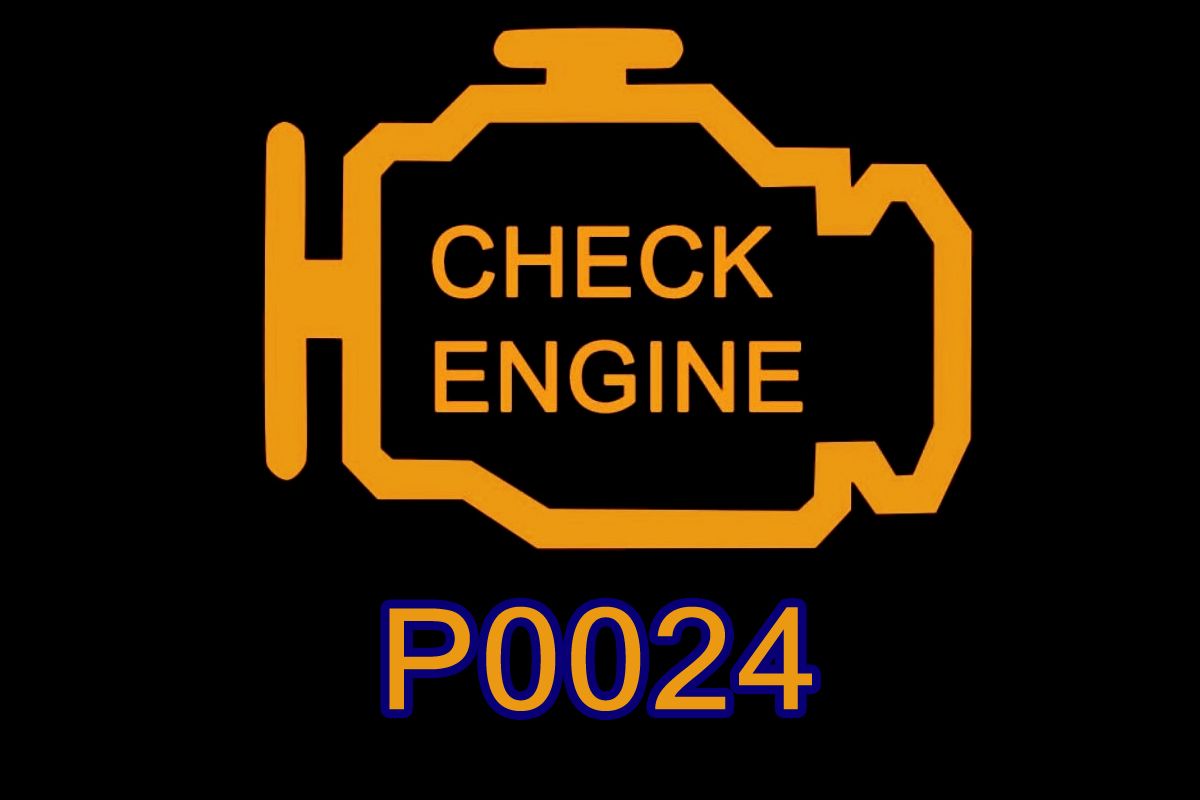
P0024 "B" Camshaft Position - Timing Over-Advanced (Bank 2)
The P0024 trouble code indicates that the engine control module (ECM/PCM) has detected that the Bank 2 "B" camshaft is positioned more advanced than the commanded or expected position.
This is generally associated with the variable valve timing (VVT) system and means the camshaft has not settled at the position the ECM requested.
P0024 does not automatically mean that the camshaft position sensor is faulty. It also does not necessarily mean that the timing chain has jumped or that the entire VVT system needs to be replaced.
The important question is: why is the camshaft staying too far advanced?
What Does "B" Camshaft Mean?
The "B" camshaft designation is manufacturer-dependent.
Many engines use A and B to distinguish between two camshafts, and in many applications the B camshaft is associated with the exhaust camshaft. However, this is not a universal rule.
Bank 2 is the cylinder bank that does not contain cylinder number 1.
Therefore, P0024 identifies an excessively advanced timing condition involving the B camshaft on Bank 2.
The exact camshaft should always be confirmed using the manufacturer's service information rather than assuming that "B" always means exhaust.
What Does "Timing Over-Advanced" Mean?
Modern engines can continuously adjust camshaft timing while the engine is running.
The ECM calculates a desired camshaft position based on conditions such as:
-
Engine speed
-
Engine load
-
Throttle position
-
Coolant temperature
-
Accelerator demand
-
Emissions requirements
-
Fuel economy
The ECM then controls the VVT system to move the camshaft.
The camshaft position sensor reports the actual position back to the ECM.
P0024 is set when the actual camshaft position is too far advanced compared with the position the ECM expects.
In simple terms:
The ECM asks the camshaft to be at position X, but the camshaft remains farther toward the advanced side than it should.
How the VVT System Can Create P0024
A typical VVT system uses engine oil to control a camshaft phaser.
The process generally works like this:
-
The ECM calculates the desired camshaft angle.
-
It commands the VVT oil-control solenoid.
-
Engine oil is directed to the appropriate side of the camshaft phaser.
-
The phaser changes the camshaft's angular position.
-
The camshaft sensor reports the actual position.
-
The ECM compares the commanded and actual positions.
If the camshaft moves too far advanced, moves when it should not, or fails to return to the requested position, P0024 may be stored.
This means the problem can be hydraulic, mechanical, electrical or related to position feedback.
Common Causes of P0024
VVT oil-control solenoid stuck or contaminated
A sticking solenoid is one of the important possibilities.
If the solenoid cannot regulate oil flow correctly, the camshaft phaser may receive oil when it should not or may not release oil as expected.
This can leave the camshaft excessively advanced.
Dirty or incorrect engine oil
VVT systems are highly dependent on oil quality and flow.
Sludge, contamination or an incorrect oil viscosity can interfere with solenoid and phaser operation.
Restricted or blocked oil passages
Small oil passages feed the VVT mechanism. Deposits can restrict these passages and interfere with proper camshaft control.
Camshaft phaser stuck in the advanced position
The phaser can become mechanically stuck or internally worn.
If it cannot return to the commanded position, the ECM may detect an over-advanced condition.
Low-quality or incorrect replacement components
An incorrectly specified VVT solenoid or camshaft phaser can create abnormal timing behavior.
Timing chain or belt problem
A stretched timing chain, worn timing components or incorrectly installed timing belt can cause camshaft timing to differ from the expected position.
Camshaft position sensor problem
An inaccurate sensor signal can make the ECM believe the camshaft is more advanced than it actually is.
However, P0024 itself is not proof of a defective sensor.
Crankshaft position signal problem
Camshaft position is evaluated relative to crankshaft position. Incorrect crankshaft information can therefore influence the ECM's calculated camshaft position.
Wiring or connector fault
Damaged wiring, loose terminals, corrosion or poor connections can affect the VVT solenoid or camshaft position sensor.
Mechanical engine problem
Worn timing components, damaged phaser mechanisms or other internal mechanical problems can prevent the camshaft from following the requested timing.
Symptoms of P0024
The symptoms depend on how far the actual camshaft position differs from the commanded position.
Possible symptoms include:
-
Check Engine Light
-
Rough idle
-
Hesitation
-
Reduced acceleration
-
Reduced engine power
-
Increased fuel consumption
-
Difficult starting
-
Engine stalling
-
Poor performance at certain engine speeds
-
Increased emissions
-
Abnormal engine noise
-
Unstable engine operation
In some vehicles, the ECM may limit engine performance when it cannot reliably control camshaft timing.
Start With the Oil
Because many VVT systems rely on engine oil pressure and flow, the oil should be one of the first things checked.
Inspect:
-
Oil level
-
Oil condition
-
Oil viscosity
-
Manufacturer-required oil specification
-
Evidence of sludge
-
Fuel contamination
-
Coolant contamination
If the oil is badly contaminated or the wrong specification has been used, correcting the oil condition may be necessary.
However, an oil change should not automatically be considered the complete repair. If P0024 returns, the VVT system needs further investigation.
How P0024 Is Diagnosed
The best diagnosis involves observing how the camshaft actually behaves rather than simply replacing the sensor or solenoid.
Scan all available DTCs
Look for additional codes related to:
-
Camshaft position
-
Crankshaft position
-
VVT
-
Oil pressure
-
Timing correlation
-
Engine performance
Multiple timing-related codes can point toward a common underlying problem.
Check freeze-frame data
Determine the conditions under which P0024 was recorded.
Important information may include:
-
Engine RPM
-
Engine load
-
Coolant temperature
-
Throttle position
-
Commanded camshaft angle
-
Actual camshaft angle
A fault that appears only at idle can have a different cause from one that occurs only at high RPM.
Compare commanded and actual camshaft position
This is one of the most valuable diagnostic steps.
If the ECM commands the camshaft to return toward a less-advanced position but the actual position remains advanced, the VVT system needs closer inspection.
If the actual position appears to change suddenly or implausibly, the sensor signal and wiring should also be investigated.
Testing the VVT Solenoid
The VVT oil-control solenoid should be tested according to the vehicle manufacturer's procedure.
Depending on the engine, this may involve:
-
Checking electrical resistance
-
Checking power supply
-
Checking the control signal
-
Inspecting the connector
-
Checking for contamination
-
Activating the solenoid with a scan tool
-
Checking mechanical movement
-
Verifying oil flow
A solenoid can have correct electrical resistance and still be mechanically stuck.
Therefore, measuring resistance alone cannot prove that the VVT solenoid is functioning correctly.
Could an Oil Pressure Problem Cause P0024?
Yes.
VVT operation depends on the correct hydraulic conditions.
However, P0024 is specifically an over-advanced condition, so the diagnostic question is not simply whether oil pressure is high or low.
The technician needs to determine whether oil is being directed to the camshaft phaser when it should not be, whether the phaser can release hydraulic pressure correctly, and whether the VVT mechanism can return to its commanded position.
If there are symptoms suggesting an engine oil-pressure problem, actual oil pressure should be measured using the manufacturer's procedure.
Could the Camshaft Phaser Be Stuck?
Yes.
A sticking camshaft phaser is an important possibility when the actual camshaft position remains advanced.
The phaser can develop problems because of:
-
Oil contamination
-
Internal wear
-
Mechanical damage
-
Incorrect installation
-
Internal locking problems
If the VVT solenoid is functioning correctly but the camshaft remains excessively advanced, the phaser becomes a stronger suspect.
Could the Timing Chain Cause P0024?
Yes, but the code does not automatically mean the timing chain has failed.
A stretched chain or worn timing components can change the relationship between crankshaft and camshaft.
Mechanical timing should be considered especially when P0024 occurs together with:
-
Startup rattling
-
Difficult starting
-
Multiple cam/crank correlation codes
-
Rough running
-
Persistent timing faults
-
Significant loss of engine performance
If mechanical timing is suspected, it should be verified using the manufacturer's timing procedure.
Does P0024 Mean the Camshaft Sensor Is Bad?
No.
The sensor may simply be accurately reporting a camshaft that is genuinely too far advanced.
For example:
The VVT solenoid allows excessive oil flow → the camshaft phaser moves too far advanced → the camshaft remains advanced after the ECM requests it to return → the sensor accurately reports the position → P0024 is stored.
In this scenario, the sensor is not the original problem.
This is why replacing the camshaft sensor immediately can result in an unnecessary repair.
Can an Electrical Problem Cause P0024?
Yes.
The VVT solenoid is electrically controlled on many engines.
A wiring or connector fault can cause the solenoid to operate incorrectly or prevent the ECM from controlling it as intended.
Possible electrical causes include:
-
Shorted wiring
-
Open circuit
-
Corroded connector
-
Poor terminal contact
-
Damaged solenoid
-
Incorrect wiring repair
-
ECM control fault
The circuit should be tested according to the vehicle-specific wiring diagram.
Does P0024 Mean the Engine Timing Has Jumped?
Not necessarily.
A mechanical timing problem can produce an incorrect camshaft position, but P0024 can also result from a VVT control problem.
For example, a sticking oil-control solenoid or camshaft phaser can leave the camshaft too far advanced while the basic timing chain remains correctly installed.
The difference must be established through testing.
Can Changing the Oil Fix P0024?
Sometimes, but not always.
If the problem is caused by severely degraded oil, incorrect viscosity or contamination affecting the VVT system, restoring the correct oil condition may improve operation.
But if the solenoid is stuck, the phaser is damaged, an oil passage is blocked or the timing components are worn, an oil change alone will not solve the underlying problem.
Should the VVT Solenoid Be Replaced Immediately?
Not automatically.
The solenoid is a reasonable suspect, but the correct diagnosis should establish whether it is actually failing.
A good diagnostic sequence is:
Oil condition → VVT solenoid → oil passages → camshaft phaser → camshaft/crankshaft signals → mechanical timing
This approach helps prevent unnecessary parts replacement.
Is P0024 Serious?
P0024 should not be ignored.
A minor VVT problem may initially cause only a Check Engine Light or slight roughness, but the underlying cause could involve a timing component, oil-pressure problem or mechanically damaged VVT system.
Continued driving becomes more concerning if the engine develops:
-
Severe rattling
-
Difficult starting
-
Stalling
-
Major power loss
-
Low oil pressure
-
Multiple camshaft/timing codes
If these symptoms are present, the vehicle should be diagnosed promptly.
Understanding the Real Meaning of P0024
P0024 is best understood as an actual-versus-commanded camshaft timing problem.
The ECM expects the Bank 2 "B" camshaft to occupy a particular position, but the actual position is too far advanced.
That condition can originate from the VVT solenoid, oil flow, camshaft phaser, sensor signal, wiring, crankshaft information or mechanical timing components.
The DTC therefore identifies what the ECM observed, not necessarily the component that failed.
The most reliable diagnosis is to compare commanded and actual camshaft position, verify the oil and VVT system, test the control solenoid, and inspect mechanical timing when the evidence points in that direction.