TR
TR EN
EN

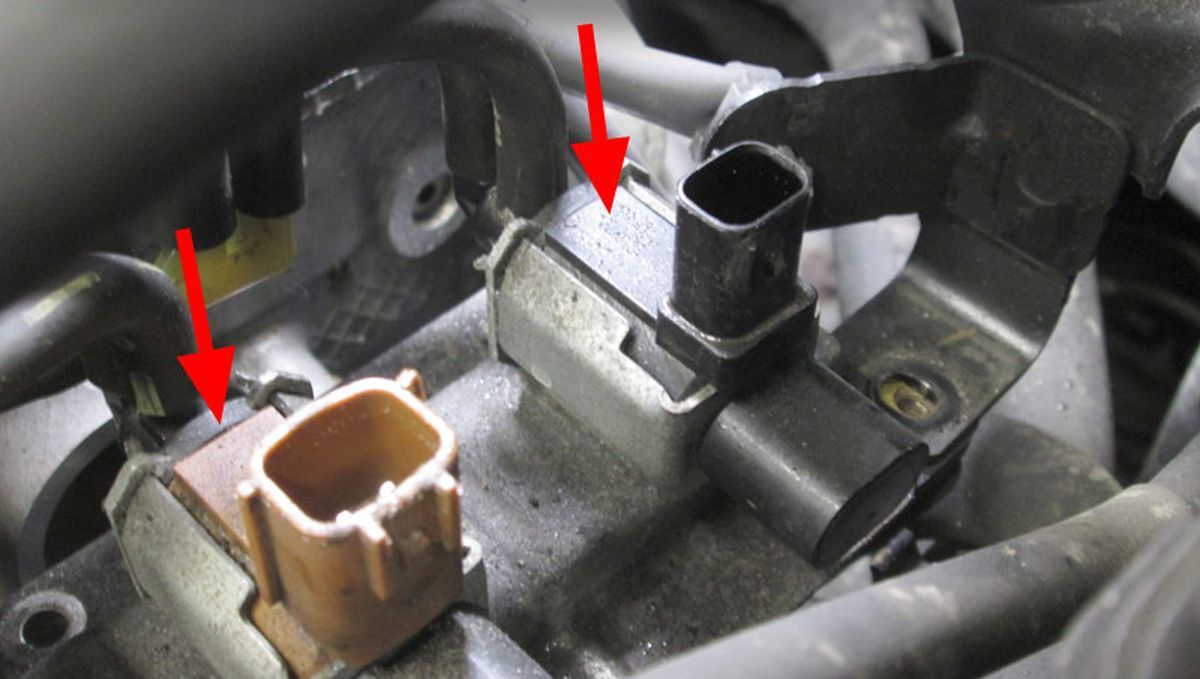
What Is an Intake Manifold Runner Control Valve (IMRC Valve)?
The Intake Manifold Runner Control (IMRC) valve is a component used in many modern gasoline and diesel engines to control airflow through the intake manifold. Its primary purpose is to change the effective intake-air path according to engine speed, load, throttle position, and operating conditions.
By changing the position of intake manifold runners or air-control flaps, the engine control system can improve airflow at different RPM ranges. This can help increase low-speed torque, improve high-RPM breathing, reduce emissions, and sometimes improve fuel economy.

Although it is commonly called an IMRC valve, the actual mechanism may consist of electric motors, vacuum actuators, linkages, shafts, and intake manifold flaps. Therefore, an IMRC-related fault does not automatically mean that the valve itself is defective.
How Does the IMRC System Work?
The intake manifold can be designed with different airflow paths to achieve different engine characteristics.
At lower engine speeds, restricting or changing the airflow path can increase air velocity and improve cylinder filling. At higher engine speeds, the system can open another or a larger airflow path to allow more air into the cylinders.
The engine control module (ECM/ECU) determines when the runners should move based on information such as:
-
Engine RPM
-
Engine load
-
Throttle position
-
Accelerator pedal position
-
Intake air pressure
-
Mass airflow
-
Engine coolant temperature
-
Vehicle operating conditions
Depending on the engine design, the ECU may command an electric actuator directly or control a vacuum actuator through a solenoid.
A position sensor may also be used to confirm that the runner mechanism actually reached the commanded position.
Why Do Engines Use IMRC Systems?
An intake manifold has to work efficiently across a wide range of engine speeds. A fixed intake design is always a compromise.
An IMRC system allows the engine manufacturer to change the airflow characteristics during operation.
The system can help provide:
-
Better low-RPM torque
-
Improved throttle response
-
Better high-RPM airflow
-
Improved combustion efficiency
-
Reduced emissions
-
Improved fuel economy under certain conditions
-
A broader usable power band
This is particularly useful in engines that need both good drivability at low RPM and adequate airflow at high RPM.
What Are the Symptoms of an IMRC Valve Failure?
A faulty IMRC system can produce different symptoms depending on whether the runners are stuck open, stuck closed, moving slowly, or being incorrectly controlled.
Common symptoms include:
Loss of engine power
The engine may feel weaker than normal, particularly in a specific RPM range. If the runners cannot reach their required position, airflow may not be optimized for the current operating condition.
Poor acceleration
The vehicle may hesitate or accelerate more slowly than expected. This can sometimes be especially noticeable when accelerating from low or medium RPM.
Hesitation during acceleration
The engine may hesitate when the IMRC system is commanded to change position. A sticking flap or actuator can cause a noticeable transition problem.
Rough or unstable engine operation
If the runner system significantly affects airflow, a malfunction can contribute to unstable engine operation, particularly at certain loads or engine speeds.
Poor throttle response
The accelerator may feel less responsive than usual. However, poor throttle response is not specific to the IMRC system and can also result from throttle-body, ignition, fuel, or sensor problems.
Reduced fuel economy
If the intake airflow is not properly controlled, combustion efficiency may decrease under certain operating conditions. The resulting fuel consumption increase may be small or significant depending on the fault.
Check Engine Light
An IMRC problem can cause the ECU to illuminate the Check Engine Light and store a diagnostic trouble code.
Depending on the manufacturer, faults may relate to:
-
Runner position
-
Runner control circuit
-
Runner performance
-
Actuator operation
-
Position sensor feedback
-
Vacuum control
-
Electrical wiring
Can an IMRC Failure Cause a Check Engine Light?
Yes.
The ECU can compare the commanded runner position with the actual position reported by the position sensor. If the two values do not correspond as expected, it can identify an IMRC performance or position problem.
For example, the ECU may command the runner to open, but the position sensor may indicate that it remains closed.
Similarly, the ECU may detect that the runner moves too slowly or does not reach the expected position.
This is why an IMRC-related diagnostic code does not necessarily mean that the actuator itself needs to be replaced.
What Causes IMRC Valve Failure?
There are several possible causes.
Carbon and dirt buildup
Carbon deposits can accumulate around intake manifold runners and flaps. Over time, this can make the mechanism difficult to move.
A flap may become partially stuck rather than completely seized.
Faulty electric actuator
Some IMRC systems use an electric motor or actuator. Internal wear, damaged gears, electrical failure, or position-sensor problems can prevent correct operation.
Vacuum actuator failure
Vacuum-operated systems can develop problems with the diaphragm, vacuum hose, control solenoid, or vacuum supply.
A cracked or disconnected vacuum hose can prevent the actuator from moving correctly.
Damaged linkage
The actuator may operate normally while the mechanical linkage connecting it to the intake runners is broken, disconnected, or worn.
In this situation, replacing the actuator without checking the linkage may not solve the problem.
Wiring problems
Damaged wiring, corrosion, loose terminals, poor grounds, or connector problems can interfere with actuator operation or position-sensor feedback.
An intermittent wiring problem can be particularly difficult to diagnose because the system may work normally most of the time.
Faulty position sensor
Some IMRC assemblies have an integrated or separate position sensor. If the sensor reports an incorrect position, the ECU may interpret the situation as a runner-control failure even when the mechanical mechanism is moving correctly.
Intake manifold problems
In some engines, the runner mechanism is integrated into the intake manifold. Wear or internal damage to the manifold can therefore cause an IMRC-related fault.
What Happens If the IMRC Flaps Get Stuck?
The result depends on where the flaps become stuck.
If they remain closed when the engine needs increased airflow, high-RPM performance can suffer.
If they remain open when the engine needs the altered airflow path at lower RPM, low-speed torque or drivability may be affected.
A partially stuck mechanism can produce symptoms that appear only under certain conditions.
For example, the vehicle might drive normally during gentle driving but hesitate or lose power when accelerating strongly.
Can an IMRC Problem Cause High Fuel Consumption?
It can, but it should not automatically be blamed for increased fuel consumption.
The engine management system constantly adjusts fueling according to airflow, load, oxygen-sensor feedback, and other parameters. An IMRC fault may change airflow characteristics and combustion efficiency, but fuel consumption can also increase because of:
-
Incorrect fuel pressure
-
Faulty injectors
-
MAF or MAP sensor problems
-
Vacuum leaks
-
Ignition problems
-
Oxygen sensor faults
-
Carbon buildup
-
Incorrect coolant temperature readings
-
Throttle-body problems
-
Turbocharger or boost problems
Therefore, increased fuel consumption alone is not sufficient evidence of an IMRC failure.
IMRC Valve vs IMRC Actuator
These terms are sometimes used interchangeably, but they are not always the same component.
The IMRC mechanism refers to the complete runner-control system, including the intake flaps and mechanical parts.
The actuator is the component that physically moves the mechanism.
The actuator can be electric or vacuum operated.
A problem with the actuator does not necessarily mean the intake manifold runners themselves are damaged.
Likewise, a runner that is physically stuck does not necessarily mean the actuator has failed.
Can a Vacuum Leak Cause an IMRC Fault?
Yes, on vacuum-operated systems.
If the actuator depends on engine vacuum and a vacuum hose is cracked, disconnected, leaking, or incorrectly connected, the actuator may not move as commanded.
A faulty vacuum-control solenoid can produce a similar symptom.
This is why the entire vacuum circuit should be inspected before replacing an expensive intake manifold assembly.
Can Carbon Deposits Cause IMRC Problems?
Yes.
Carbon deposits are one of the important mechanical causes of intake runner problems, especially on engines that experience significant intake contamination.
Deposits can increase friction and restrict flap movement.
In severe cases, the runner mechanism can become stuck.
However, cleaning the intake manifold is not automatically the correct repair for every IMRC fault. Electrical, actuator, position-sensor, wiring, and vacuum problems must also be considered.
How Is an IMRC Valve Diagnosed?
Proper diagnosis should begin with the stored diagnostic trouble codes and freeze-frame information.
A technician can then determine whether the problem concerns:
-
Electrical circuit operation
-
Actuator control
-
Runner position
-
Position-sensor feedback
-
Vacuum supply
-
Mechanical movement
Live diagnostic data can be particularly useful.
If the vehicle provides an IMRC commanded-position and actual-position parameter, the two values can be compared while activating the system.
A bidirectional scan tool may also allow the technician to command the actuator manually.
The mechanism should then be inspected to determine whether it actually moves.
What Should Be Checked Before Replacing the IMRC Valve?
A complete inspection should include:
-
Diagnostic trouble codes
-
Freeze-frame data
-
IMRC commanded position
-
IMRC actual position
-
Actuator operation
-
Electrical power supply
-
Ground
-
Wiring continuity
-
Connector terminals
-
Position-sensor signal
-
Vacuum hoses, if applicable
-
Vacuum-control solenoid
-
Mechanical linkage
-
Intake manifold flaps
-
Carbon or sludge buildup
-
Intake manifold condition
This approach is important because an IMRC fault code identifies a problem in the runner-control system, not necessarily a failed valve.
Can an IMRC Problem Be Caused by the ECU?
It is possible, but the ECU should normally be considered after the other parts of the system have been tested.
A defective ECU output driver, software issue, or communication problem can theoretically prevent proper actuator control.
However, replacing or reprogramming the ECU without first confirming the power supply, grounds, wiring, actuator, sensor feedback, and mechanical operation can lead to unnecessary repairs.
Can an IMRC Fault Be Intermittent?
Yes.
An intermittent IMRC problem can be caused by:
-
Loose connector terminals
-
Broken wiring strands
-
Corrosion
-
Heat-related electrical faults
-
A sticking runner mechanism
-
An actuator that fails only under certain conditions
-
Vacuum leaks that change with engine movement
-
Position-sensor irregularities
For this reason, a vehicle that operates normally during a short workshop test may still have a genuine intermittent IMRC problem.
Does an IMRC Fault Always Cause Poor Engine Performance?
No.
Some IMRC faults have only a minor effect on drivability.
The ECU may detect that the runner position is not exactly where expected and illuminate the Check Engine Light even though the driver notices little difference.
Other failures can cause substantial power loss or hesitation.
The effect depends on the engine design, runner configuration, and position in which the mechanism becomes stuck.
Can an IMRC Fault Damage the Engine?
An IMRC fault does not normally cause immediate catastrophic engine damage simply because the runner-control mechanism is not operating correctly.
However, the situation should not be ignored.
A malfunction may affect airflow, combustion, emissions, and engine performance. If the underlying problem involves loose or damaged intake components, the consequences can potentially be more serious.
A mechanically damaged intake manifold should therefore be inspected carefully rather than treating the problem as a simple electronic fault.
Is IMRC the Same as a Throttle Body?
No.
The throttle body controls the amount of air entering the engine through the main intake path.
The IMRC system changes the internal airflow path within the intake manifold.
They work together, but they perform different functions.
A throttle-body fault and an IMRC fault can sometimes produce similar symptoms, such as hesitation, poor acceleration, or reduced engine power. This is why diagnostic testing is important.
Can an IMRC Fault Be Detected With OBD?
Yes, many IMRC problems can trigger OBD diagnostic trouble codes.
However, OBD does not physically tell the technician, “replace the IMRC valve.”
The code should be interpreted together with live data and physical tests.
For example, if the ECU commands the runner to move but the position feedback does not change, possible causes include a failed actuator, broken linkage, stuck flap, wiring problem, position-sensor fault, or power/ground issue.
The code is therefore a starting point for diagnosis rather than a parts-replacement instruction.
Is It Safe to Drive With an IMRC Fault?
It depends on the severity.
If the vehicle has only a Check Engine Light and drives normally, the problem may not represent an immediate loss of control.
However, continued driving with noticeable hesitation, severe power loss, rough running, misfires, or other engine symptoms is not recommended.
If the vehicle enters limp mode or the engine runs poorly, the fault should be diagnosed as soon as possible.
Final Thoughts
The Intake Manifold Runner Control system is designed to optimize airflow through the engine across different RPM and load conditions. The system may include intake flaps, an electric or vacuum actuator, linkages, position sensors, solenoids, wiring, and the engine control module.
An IMRC-related fault can cause poor acceleration, hesitation, reduced power, increased fuel consumption, or a Check Engine Light. But these symptoms are not exclusive to the IMRC system.
A runner-control diagnostic code does not automatically mean the IMRC valve needs to be replaced. The actuator, mechanical linkage, intake manifold flaps, position sensor, wiring, connectors, vacuum system, and ECU control should all be evaluated.
The most reliable repair is therefore based on testing the complete IMRC system and identifying the actual cause rather than replacing components based only on the diagnostic code.