TR
TR EN
EN

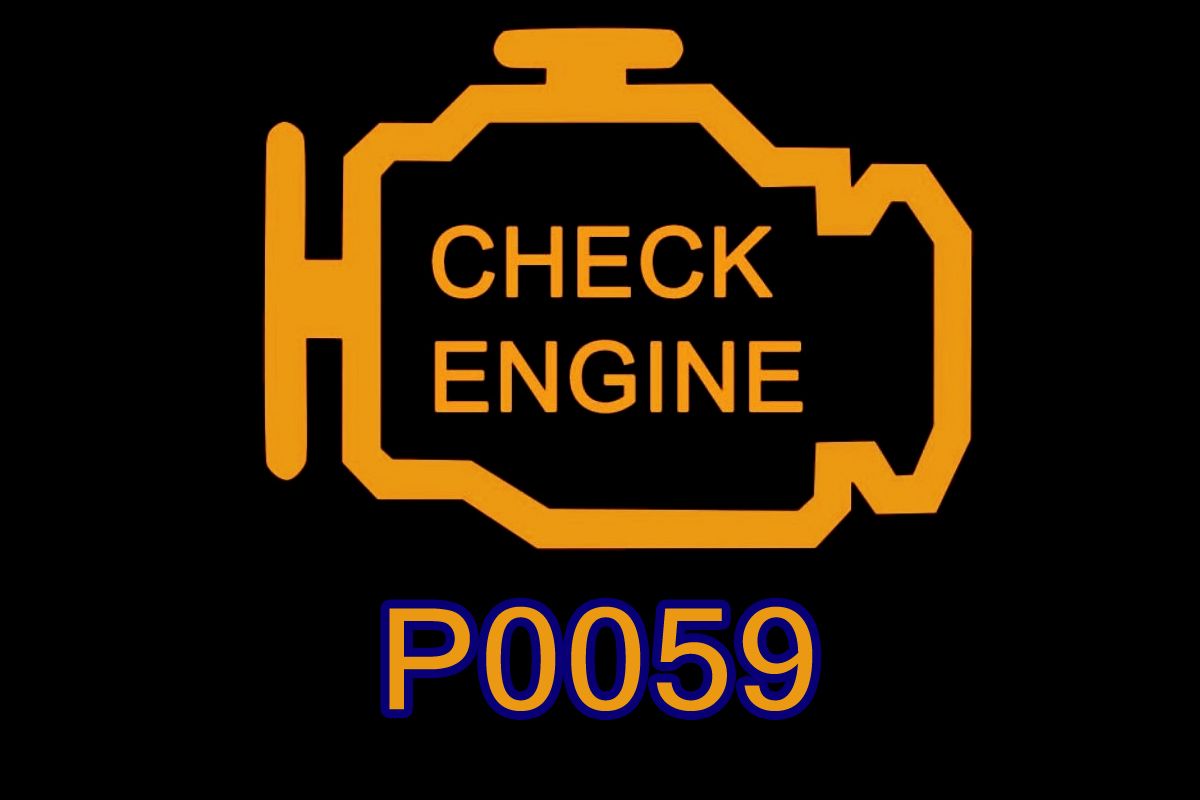
P0059 HO2S Heater Resistance (Bank 2 Sensor 1)
The P0059 trouble code indicates that the engine control module (ECM/PCM) has detected an abnormal resistance in the heater circuit of the Bank 2 Sensor 1 oxygen sensor (HO2S).
This is primarily an electrical heater-circuit fault. It does not automatically mean that the oxygen sensor's measuring element has failed, and it does not indicate a catalytic-converter problem by itself.
The important word in this code is “Resistance.” The ECM has detected electrical characteristics in the heater circuit that are outside the expected range.
Understanding Bank 2 Sensor 1
The sensor designation is important when diagnosing P0059.
Bank 2 is the cylinder bank that does not contain cylinder number 1.
Sensor 1 normally refers to the oxygen sensor located upstream of the catalytic converter, closer to the engine.
Therefore, P0059 generally concerns:
Bank 2 → Sensor 1 → upstream oxygen sensor → heater circuit
The exact physical location depends on the engine and exhaust design, so the correct sensor should always be identified using vehicle-specific service information.
Why Does an Oxygen Sensor Need a Heater?
An oxygen sensor needs to reach a certain operating temperature before it can accurately measure the oxygen content of the exhaust.
The exhaust eventually heats the sensor, but this can take considerable time after a cold start.
The integrated electrical heater solves this problem.
When the heater operates correctly, the sensor reaches operating temperature much faster, allowing the ECM to begin using its information according to the vehicle's control strategy.
The heater and sensing element are separate functions.
A heater fault therefore does not automatically mean that the oxygen-sensing element itself is defective.
What Does "Heater Resistance" Mean?
The oxygen sensor heater contains an electrical heating element with a specific resistance.
The ECM expects this heater to have electrical characteristics within a defined range.
If the resistance becomes too high, too low or otherwise abnormal, the ECM can determine that the heater circuit is not behaving correctly and store P0059.
Possible electrical conditions include:
-
Open heater element
-
Internal heater short
-
Increased resistance
-
Wiring resistance
-
Short circuit
-
Poor connector contact
-
Incorrect sensor
The exact diagnostic thresholds vary between manufacturers.
Why Can P0059 Occur?
There are several possible causes.
Failed heater element inside the oxygen sensor
The heating element can deteriorate with age or fail completely.
An internal open circuit is one possible failure, while an internal short or abnormal resistance is another.
If the heater resistance is outside the manufacturer's specification, the oxygen sensor may need to be replaced.
Damaged wiring
Bank 2 Sensor 1 is normally located relatively close to the engine and exhaust manifold, meaning its wiring can be exposed to significant heat.
Possible problems include:
-
Melted insulation
-
Broken wires
-
Chafed wiring
-
Short circuits
-
High-resistance connections
-
Incorrect previous repairs
The harness should be inspected carefully before condemning the sensor.
Connector or terminal problems
A poor connection can change the effective resistance of the heater circuit.
Check for:
-
Corrosion
-
Loose terminals
-
Bent terminals
-
Poor terminal tension
-
Water contamination
-
Damaged connector housing
-
Heat damage
A connector can appear clean while still having insufficient terminal contact.
Incorrect oxygen sensor
If the sensor was recently replaced, verify that the replacement unit is the correct part.
A sensor may physically fit the exhaust system but have a heater with different electrical characteristics.
This can result in a heater-resistance fault.
Power-supply problem
Depending on the vehicle, the heater may receive power through a fuse or relay.
A missing or unstable power supply can prevent the heater from operating correctly.
A blown fuse should also be investigated rather than simply replaced repeatedly.
Heater control-circuit problem
The ECM may control the heater through a switching circuit.
A problem with the control side can create abnormal heater behavior even if the sensor's heater element itself is good.
ECM driver problem
The ECM contains the circuitry used to control the heater on many vehicles.
An ECM driver fault is possible, but it should normally be considered only after the sensor, wiring, connectors, power supply and control circuit have been properly tested.
What Symptoms Does P0059 Cause?
The symptoms can be surprisingly mild.
Because P0059 concerns the heater of an upstream oxygen sensor, the vehicle may still drive reasonably normally once the engine and exhaust become hot.
Possible symptoms include:
-
Check Engine Light
-
Increased fuel consumption
-
Increased emissions
-
Poor cold-start operation
-
Cold-start hesitation
-
Roughness during warm-up
-
Delayed sensor activation
-
Failed emissions testing
Some vehicles may have no obvious drivability symptoms at all.
The Check Engine Light may be the only noticeable indication.
Why Does Sensor 1 Matter?
Sensor 1 is normally the upstream oxygen sensor.
This sensor is generally more important to the engine's air-fuel control than a downstream sensor.
Once the sensor reaches operating temperature, its information can be used by the ECM to adjust fuel delivery and maintain the desired mixture.
If the heater takes too long to bring the sensor to operating temperature, closed-loop fuel-control and emissions strategies can be affected during warm-up.
The exact control strategy differs between vehicles.
How Should P0059 Be Diagnosed?
A good diagnosis starts with a complete scan.
Look for additional codes involving:
-
Other oxygen sensors
-
Oxygen sensor heaters
-
Fuel mixture
-
Misfires
-
Battery/charging voltage
-
Exhaust system
-
Engine-management circuits
Other codes can provide clues about whether P0059 is an isolated heater problem or part of a larger electrical or engine issue.
Freeze-frame information can also show the operating conditions when the ECM detected the abnormal heater resistance.
Confirm the Correct Sensor
Before testing, confirm exactly which oxygen sensor the vehicle identifies as Bank 2 Sensor 1.
Do not rely only on physical appearance or assume that the closest sensor is Sensor 1.
The manufacturer's wiring diagram and service information should be used to identify the correct sensor and connector.
This is particularly important on engines with several oxygen or air-fuel sensors.
Inspect the Wiring First
Follow the sensor wiring from the connector toward the main harness.
Pay particular attention to areas near:
-
Exhaust manifold
-
Turbocharger
-
Catalytic converter
-
Heat shields
-
Exhaust pipes
Look for melted insulation, broken wires, rubbing and poorly repaired sections.
Heat damage is a common concern because oxygen sensor wiring is exposed to extreme temperatures.
Measure Heater Resistance
One of the most important tests for P0059 is measuring the resistance of the heater circuit.
The measurement should be compared with the manufacturer's specification for that exact oxygen sensor.
There is no universal oxygen sensor heater resistance value that applies to every vehicle.
An open circuit, extremely low resistance or a resistance outside the specified range can point toward an internal heater problem.
However, the sensor should generally be tested under the conditions specified by the manufacturer.
Check Heater Power and Control
Resistance testing alone may not be enough.
The technician should also verify that the heater receives the correct power supply and that the ECM control side operates correctly.
Depending on the system, this can involve checking:
-
Fuse
-
Relay
-
Power supply
-
Ground/control circuit
-
Wiring continuity
-
Short circuits
-
Voltage drop
-
ECM heater control
A circuit can show continuity and still have excessive resistance under load.
What If the Heater Resistance Is Normal?
If the heater resistance is within specification but P0059 keeps returning, do not immediately replace the sensor.
Investigate:
-
Connector terminal tension
-
Wiring resistance
-
Power supply
-
Ground/control circuit
-
Voltage drop
-
Intermittent wiring faults
-
Incorrect sensor identification
-
ECM control
An intermittent wiring problem can be especially difficult to diagnose because the circuit may work correctly while the vehicle is stationary.
Could a Blown Fuse Cause P0059?
Yes, depending on the vehicle's circuit design.
If the heater receives power through a fuse and that fuse is open, the heater cannot operate normally.
However, the blown fuse may be a result rather than the root cause.
A shorted heater element or damaged wiring may have caused the fuse to fail.
The underlying cause should therefore be found before simply installing another fuse.
Could Low Battery Voltage Cause P0059?
Low system voltage can affect electrical components and heater operation.
If the vehicle has several electrical faults, battery and charging-system condition should be checked.
However, an isolated P0059 should not automatically be attributed to the battery.
The oxygen sensor heater circuit still needs to be tested.
Does P0059 Mean the Oxygen Sensor Is Bad?
Not necessarily.
A failed heater element inside the sensor is certainly one of the main possibilities, but it is only one part of the circuit.
The actual fault could be:
-
Oxygen sensor heater
-
Wiring
-
Connector
-
Fuse
-
Power supply
-
Control circuit
-
Incorrect sensor
-
ECM driver
The sensor should be replaced when testing demonstrates that the heater inside the sensor is outside specification or otherwise defective.
Does P0059 Mean the Engine Is Running Rich or Lean?
No.
P0059 is not a direct rich or lean mixture code.
It specifically concerns the heater resistance of the Bank 2 Sensor 1 oxygen sensor.
A vehicle can have a perfectly correct air-fuel mixture and still store P0059 because the sensor heater circuit has an electrical problem.
Conversely, a vehicle could have both P0059 and a separate fuel-mixture problem.
Those conditions should be diagnosed independently.
Does P0059 Mean the Catalytic Converter Is Bad?
No.
The code does not directly indicate catalytic-converter efficiency.
The catalytic converter may be functioning normally while the oxygen sensor heater has failed.
If other codes indicate catalyst efficiency problems, those should be investigated separately.
P0059 alone is not a reason to replace the catalytic converter.
What About an Exhaust Leak?
An exhaust leak can affect oxygen sensor readings and may produce other emissions-related codes.
However, an exhaust leak does not normally explain an oxygen sensor heater resistance fault.
For P0059, the electrical heater circuit should receive priority during diagnosis.
What If the Oxygen Sensor Was Recently Replaced?
If P0059 appeared shortly after sensor replacement, carefully check the installation.
Verify:
-
Correct part number
-
Correct Bank 2 Sensor 1 position
-
Correct connector
-
Correct wiring
-
No pin damage
-
No wiring modifications
-
Harness routed away from excessive heat
An incorrectly specified replacement sensor can have a heater with electrical characteristics that do not match the original system.
Is P0059 Serious?
P0059 is often not an immediate engine-damage emergency.
Many vehicles can continue to operate normally after reaching operating temperature.
However, an upstream oxygen sensor heater fault can affect emissions and fuel-control behavior during warm-up.
It should therefore be repaired rather than ignored indefinitely.
The situation becomes more urgent if other symptoms are present, such as:
-
Severe misfire
-
Flashing Check Engine Light
-
Major power loss
-
Engine stalling
-
Strong fuel smell
-
Heavy smoke
-
Overheating
Those symptoms may indicate another problem in addition to P0059.
A Practical Diagnostic Approach
A sensible diagnostic sequence is:
Start with a complete scan.
Check P0059 along with all other stored and pending codes.
Confirm Bank 2 Sensor 1.
Use vehicle-specific service information to identify the correct sensor.
Inspect the sensor and harness.
Look for heat damage, corrosion, loose terminals and previous repairs.
Check the fuse and power supply.
Verify that the heater circuit is receiving the required power.
Measure heater resistance.
Compare the result with the manufacturer's specification.
Test the control circuit.
Check the ECM-controlled side, wiring, continuity, shorts and voltage drop as required.
Replace the sensor only when testing confirms an internal heater problem.
This approach is much more reliable than replacing the oxygen sensor simply because P0059 is stored.
Can You Drive With P0059?
In many cases, the vehicle can be driven if the engine runs normally and the Check Engine Light is steady.
Nevertheless, the fault should be addressed.
If the vehicle develops severe drivability problems, a flashing Check Engine Light, heavy smoke, strong fuel odor, stalling or major power loss, continued driving should be avoided until the cause is identified.
The Main Point to Remember
P0059 is best understood as an electrical resistance problem involving the heater circuit, not as a general oxygen-sensor failure code.
The ECM is essentially detecting:
“The heater circuit of Bank 2 Sensor 1 does not have the electrical characteristics I expect.”
The cause may be inside the oxygen sensor, but it may just as easily involve the wiring, connector, fuse, power supply or control circuit.
Conclusion
P0059 HO2S Heater Resistance (Bank 2 Sensor 1) indicates that the ECM/PCM has detected abnormal resistance in the heater circuit of the upstream oxygen sensor on Bank 2.
The most likely possibilities include a failed heater element, damaged wiring, poor connector contact, incorrect sensor, power-supply problem or heater-control circuit fault.
Diagnosis should include physical inspection, heater resistance testing, power and control-circuit checks, and comparison with the manufacturer's specifications.
Most importantly, P0059 does not automatically mean that the oxygen sensor or catalytic converter needs to be replaced. The complete heater circuit should be tested first so the actual cause can be identified.