TR
TR EN
EN

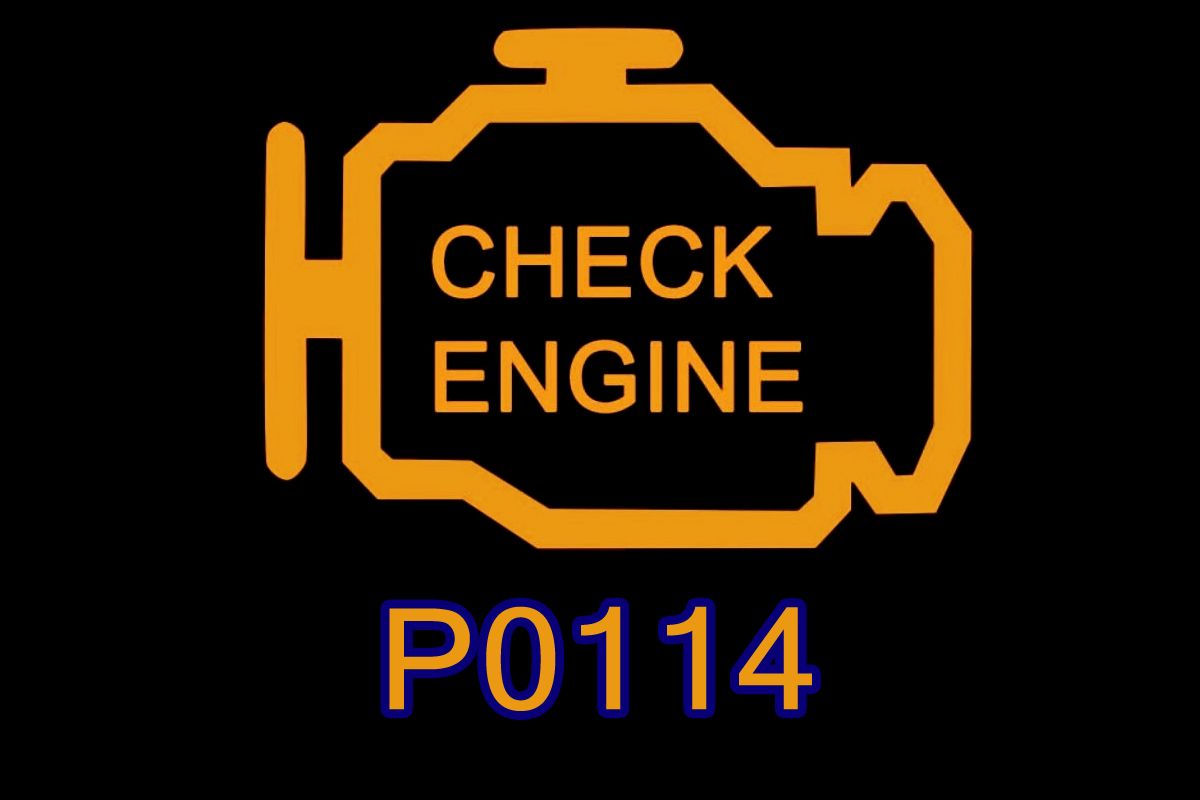
P0114 Intake Air Temperature (IAT) Sensor Circuit Intermittent / Erratic
The P0114 diagnostic trouble code means the engine control module (ECM/PCM) has detected an intermittent, unstable, or erratic signal from the Intake Air Temperature (IAT) sensor circuit.
The important word in this code is “Intermittent.”
The ECM is not necessarily seeing a permanently high or low signal. Instead, the IAT signal may suddenly disappear, jump to an implausible temperature, fluctuate unexpectedly, or temporarily become unreliable before returning to normal.
This makes P0114 different from a straightforward IAT circuit high- or low-input fault. The vehicle may operate normally for long periods, with the fault appearing only during vibration, engine movement, heat soak, acceleration, or a particular temperature range.
What Does the IAT Sensor Do?
The Intake Air Temperature sensor measures the temperature of the air entering the engine.
The ECM uses this information to estimate air density and make appropriate adjustments to engine operation.
Cooler air is denser, while warmer air is less dense. Because the amount of oxygen entering the engine depends partly on air density, intake temperature is an important input for engine management.
Depending on the vehicle, IAT information can influence:
-
Fuel injection
-
Ignition timing
-
Cold-start strategy
-
Idle control
-
Emissions control
-
Turbocharger or supercharger control
-
Engine load calculations
-
Engine protection strategies
On some vehicles, the IAT sensor is a separate component. On others, it is integrated into the MAF sensor, MAP sensor, or another intake/charge-air sensor.
The exact configuration must therefore be identified before diagnosis.
How Does an IAT Sensor Work?
Many IAT sensors use an NTC thermistor.
Its resistance changes according to air temperature.
Generally:
Air temperature increases → resistance decreases
Air temperature decreases → resistance increases
The ECM monitors the electrical signal from the sensor and converts it into a calculated intake-air temperature.
Because the sensor's electrical characteristics are temperature-dependent, a poor connection or intermittent circuit can make the ECM suddenly calculate a completely unrealistic intake temperature.
What Does “Intermittent / Erratic” Mean?
P0114 indicates that the IAT signal is not consistently reliable.
For example, suppose the actual intake temperature is gradually changing:
25°C → 28°C → 32°C → 35°C
An intermittent circuit problem could cause the scan tool to display:
25°C → 28°C → -40°C → 31°C → 120°C → 34°C
The physical intake temperature cannot normally make those sudden changes.
That type of behavior points toward an electrical or sensor problem.
The fault can also appear as a brief loss of signal followed by a return to normal operation.
Common Causes of P0114
Loose or damaged IAT connector
A poor connection is one of the first things worth checking with an intermittent code.
Possible problems include:
-
Loose terminals
-
Poor terminal tension
-
Corrosion
-
Bent pins
-
Water contamination
-
Oil contamination
-
Damaged connector lock
-
Terminals pushed backward inside the connector
The connector may look perfectly normal from the outside while still losing contact internally.
Damaged IAT wiring
The harness can develop an intermittent open circuit or unstable connection because of:
-
Vibration
-
Engine movement
-
Heat
-
Chafing
-
Previous repairs
-
Incorrect routing
-
Contact with hot engine or exhaust components
A wire can be electrically connected during a stationary test but disconnect momentarily when the engine moves.
Faulty IAT sensor
The sensor itself can become intermittent.
An internal defect may only appear at a particular temperature or after the sensor has been exposed to heat for some time.
For example, the sensor may work correctly when cold and become unstable as it warms.
High resistance in the circuit
A corroded connector or partially damaged wire may introduce resistance into the circuit.
The circuit may still have continuity, but the signal can become incorrect under actual operating conditions.
IAT sensor integrated into another component
If the IAT is part of a MAF, MAP or charge-air sensor assembly, the problem may involve the complete sensor assembly or a shared circuit.
Replacing a standalone IAT sensor would obviously not solve a problem when no separate IAT sensor exists.
Shared reference or return circuit problem
Multiple sensors can sometimes share electrical circuits.
If several sensor-related codes appear together, investigate shared power, reference, ground/return and wiring before replacing individual sensors.
ECM/PCM fault
An ECM input problem is possible but is normally considered only after the sensor, connector and wiring have been tested thoroughly.
Symptoms of P0114
The symptoms can be intermittent because the fault itself is intermittent.
Possible symptoms include:
-
Check Engine Light
-
Hesitation
-
Poor acceleration
-
Rough idle
-
Difficult starting
-
Poor fuel economy
-
Increased fuel consumption
-
Unstable engine operation
-
Reduced engine performance
-
Increased emissions
-
Incorrect boost behavior on turbocharged engines
Some vehicles may show almost no noticeable drivability problem.
The ECM may temporarily substitute a calculated or default IAT value when the signal becomes unreliable.
Why Can an Intermittent IAT Signal Affect Engine Performance?
The ECM needs a reliable estimate of incoming air conditions.
If the IAT suddenly indicates extremely cold air, the ECM may calculate a different air density than actually exists.
If it suddenly indicates extremely hot air, the calculated air density changes in the opposite direction.
The ECM may then alter fueling, ignition timing or other control strategies.
The effect depends on the engine management system and how long the incorrect signal remains present.
A brief interruption may cause little noticeable change, while repeated signal instability can create noticeable drivability problems.
Start With the Cold-Engine Test
A useful first step is to leave the vehicle parked long enough for the intake system to approach ambient temperature.
Then check the IAT reading with a scan tool before starting the engine.
Compare it with:
-
Ambient temperature
-
ECT temperature
-
Other available temperature readings
These values should generally be reasonably close.
They do not need to be exactly identical because the sensors are located in different places.
However, a large unexplained difference is suspicious.
For example, if the vehicle has been sitting overnight in 20°C ambient conditions but the IAT suddenly reports an extreme temperature, investigate the sensor and circuit.
Monitor IAT During Operation
Once the engine is started, monitor the IAT value.
The temperature does not have to increase continuously.
Real intake temperature depends on:
-
Outside temperature
-
Engine load
-
Airflow
-
Vehicle speed
-
Engine-bay temperature
-
Intake-system design
-
Heat transfer
-
Turbocharger operation
What matters is whether the changes are physically plausible and electrically stable.
A sudden jump from 30°C to -40°C or from 35°C to 120°C is much more suspicious than a gradual temperature change.
Use Freeze-Frame Data
Freeze-frame information can reveal when the ECM detected the intermittent fault.
Useful parameters include:
-
IAT temperature
-
ECT temperature
-
Engine RPM
-
Vehicle speed
-
Engine load
-
MAF airflow
-
MAP pressure
-
Throttle position
-
Battery voltage
Suppose P0114 is stored at a particular RPM and engine load.
Reproducing those conditions during a road test can make the intermittent fault much easier to locate.
Inspect the IAT Connector Carefully
Because P0114 specifically involves intermittent behavior, the connector should receive more attention than it might for a simple permanent fault.
Check for:
-
Corrosion
-
Loose terminals
-
Bent terminals
-
Poor terminal tension
-
Water
-
Oil
-
Damaged seals
-
Broken connector locking tabs
-
Wires pulling out of the connector
A terminal that makes contact only under certain vibration conditions can produce exactly the type of problem represented by P0114.
Inspect the Wiring Near the Sensor
The wiring immediately next to the sensor is particularly important.
Repeated engine vibration can flex the wires.
Look for:
-
Chafing
-
Broken insulation
-
Heat damage
-
Stretched wires
-
Previous splices
-
Poor repairs
-
Wiring trapped under brackets
-
Harness contact with moving components
If the sensor is located near a turbocharger or exhaust component, heat exposure should be considered carefully.
Perform an Appropriate Wiggle Test
A controlled wiggle test can be useful for P0114.
Connect a scan tool and monitor the live IAT value while carefully moving the harness and connector.
If the temperature suddenly jumps or drops when the harness is moved, the problem is likely related to:
-
Wiring
-
Connector
-
Terminal contact
-
Sensor connection
The harness should be manipulated gently. The purpose is to reproduce an existing intermittent fault, not to put excessive stress on the wiring.
Check the Sensor at Different Temperatures
If the wiring and connector appear correct, the IAT sensor itself should be evaluated.
For an NTC thermistor, resistance should generally decrease as temperature increases.
The sensor should also change resistance smoothly rather than suddenly jumping between unrelated values.
A sensor that operates normally when cold but becomes unstable when hot can be responsible for an intermittent code.
Testing should be performed according to the manufacturer's resistance-versus-temperature specifications.
There is no universal IAT resistance value that applies to every vehicle.
Continuity Alone May Miss P0114
This is particularly important with intermittent faults.
A technician may disconnect the sensor, measure continuity through the wiring and find that everything appears normal.
But the fault can still exist.
A partially broken conductor can maintain contact while stationary and lose contact when:
-
The engine vibrates
-
The harness moves
-
The engine warms up
-
The wire expands
-
The vehicle travels over rough roads
For this reason, voltage-drop and circuit testing under operating conditions can be more informative than continuity alone.
Check for Electrical Interference
If the IAT signal is unstable but the sensor and wiring appear physically intact, electrical interference should also be considered.
A damaged harness can allow the IAT signal to interact with another circuit.
The exact diagnosis requires the vehicle's wiring diagram and manufacturer-specific procedures.
Do not randomly apply voltage to the sensor circuit because the ECM and sensor architecture vary between vehicles.
IAT Integrated Into the MAF Sensor
Many modern engines use a MAF sensor that contains an integrated IAT sensor.
In such a system, P0114 may involve:
-
IAT element inside the MAF
-
MAF connector
-
Shared sensor ground/return
-
Sensor wiring
-
Internal sensor electronics
-
ECM connection
If MAF-related codes are present at the same time, the complete MAF/IAT circuit should be evaluated.
Do not assume that the MAF airflow measurement is necessarily the cause simply because the IAT is integrated into the same housing.
IAT Integrated Into a MAP Sensor
Some engines use a combined MAP/IAT sensor.
In this configuration, P0114 can potentially be associated with the sensor assembly, connector or shared wiring.
A MAP reading that appears normal does not automatically prove that the IAT portion of the sensor is functioning correctly, because the two measurements may use different internal circuits.
The wiring diagram and sensor specifications should be used to identify the relevant circuits.
P0114 on Turbocharged Engines
Turbocharged engines require additional care when evaluating IAT behavior.
The intake air can become significantly hotter during compression, while an intercooler can subsequently reduce its temperature.
IAT can therefore change substantially with:
-
Boost pressure
-
Engine load
-
Intercooler efficiency
-
Vehicle speed
-
Ambient temperature
-
Turbocharger operation
A high IAT reading during heavy acceleration is not automatically a sensor fault.
The key question is whether the value changes in a way that is consistent with the physical conditions.
Heat Soak Can Produce Real Temperature Changes
After a vehicle is driven and the engine is switched off, airflow through the engine compartment decreases dramatically.
Heat from the engine and surrounding components can then transfer into the intake system.
The IAT may rise significantly during this period.
Once the vehicle starts moving again, airflow can quickly reduce the temperature.
This is normal behavior on many vehicles.
Therefore, a temperature change following heat soak should not automatically be diagnosed as P0114.
The problem is when the sensor reports abrupt or implausible changes that cannot be explained by the operating conditions.
Can an Intake Leak Cause P0114?
An intake leak can affect engine operation and airflow calculations, but it is not normally the first suspect for an intermittent IAT circuit code.
If the IAT signal itself suddenly jumps to impossible values, the sensor circuit should be investigated first.
If the IAT signal remains stable but MAF/MAP and engine-load calculations are abnormal, intake-system problems can then be investigated as part of the broader diagnosis.
Can a Bad MAF Cause P0114?
It depends on the vehicle.
If the IAT sensor is integrated into the MAF assembly, a fault within the assembly or its wiring can affect the IAT signal.
If the IAT is a separate sensor, a MAF problem does not automatically mean the IAT circuit is faulty.
The exact sensor architecture should always be confirmed before replacing components.
Can P0114 Cause Poor Fuel Economy?
Yes.
If the ECM repeatedly receives an incorrect intake temperature, it can make incorrect assumptions about incoming air density.
This can influence fuel and ignition calculations.
The resulting fuel-economy change may be small or significant depending on how the ECM responds to the intermittent signal.
A Practical Diagnostic Sequence
A systematic diagnosis is more effective than immediately replacing the IAT sensor:
-
Confirm P0114 with a scan tool.
-
Check stored, pending and related sensor codes.
-
Record freeze-frame data.
-
Check the IAT reading with the engine completely cold.
-
Compare IAT with ECT and ambient temperature.
-
Monitor IAT during warm-up and driving.
-
Look for sudden, physically impossible temperature changes.
-
Identify whether IAT is a standalone sensor or integrated into MAF/MAP equipment.
-
Inspect the sensor connector.
-
Check terminal tension and corrosion.
-
Inspect the complete IAT wiring harness.
-
Perform a controlled wiggle test while monitoring live data.
-
Test the sensor at different temperatures if applicable.
-
Compare sensor resistance or signal behavior with manufacturer specifications.
-
Check reference, signal and sensor-return circuits.
-
Perform voltage-drop or load testing where appropriate.
-
Check shared circuits if other sensor codes are present.
-
Repair the confirmed fault.
-
Clear the diagnostic code.
-
Repeat the conditions under which the fault occurred.
-
Confirm that the IAT signal remains stable.
What Not to Do With P0114
The most common mistake is treating the code as a direct instruction to replace the IAT sensor.
P0114 does not prove that the sensor itself is defective.
The fault may actually be caused by:
-
Loose connector
-
Poor terminal tension
-
Corroded terminals
-
Broken wiring
-
Intermittent open circuit
-
High resistance
-
Shared sensor circuit problem
-
Integrated MAF/MAP sensor fault
-
Sensor internal failure
-
ECM input problem
Likewise, a single unusual IAT value should not automatically lead to sensor replacement. Freeze-frame data and live-data behavior can provide much more useful evidence.
Final Diagnosis
P0114 means the ECM has detected an intermittent or erratic Intake Air Temperature Sensor 1 circuit signal.
The defining characteristic is that the signal does not remain reliably stable.
Because the problem may disappear before the vehicle reaches the workshop, diagnosis should concentrate on reproducing the fault. Monitoring live IAT data while checking the connector and wiring, particularly under vibration and temperature changes, can be extremely effective.
If the IAT value suddenly changes to an impossible temperature, the sensor and its electrical circuit should be investigated. If the signal remains stable but the intake conditions themselves appear abnormal, the wider intake and engine-management system should be considered.
The goal is to determine where the IAT signal becomes unreliable, rather than simply replacing the sensor because P0114 is stored.