TR
TR EN
EN

Why Do Brake Discs Warp? What Are the Symptoms of a Warped Brake Disc?
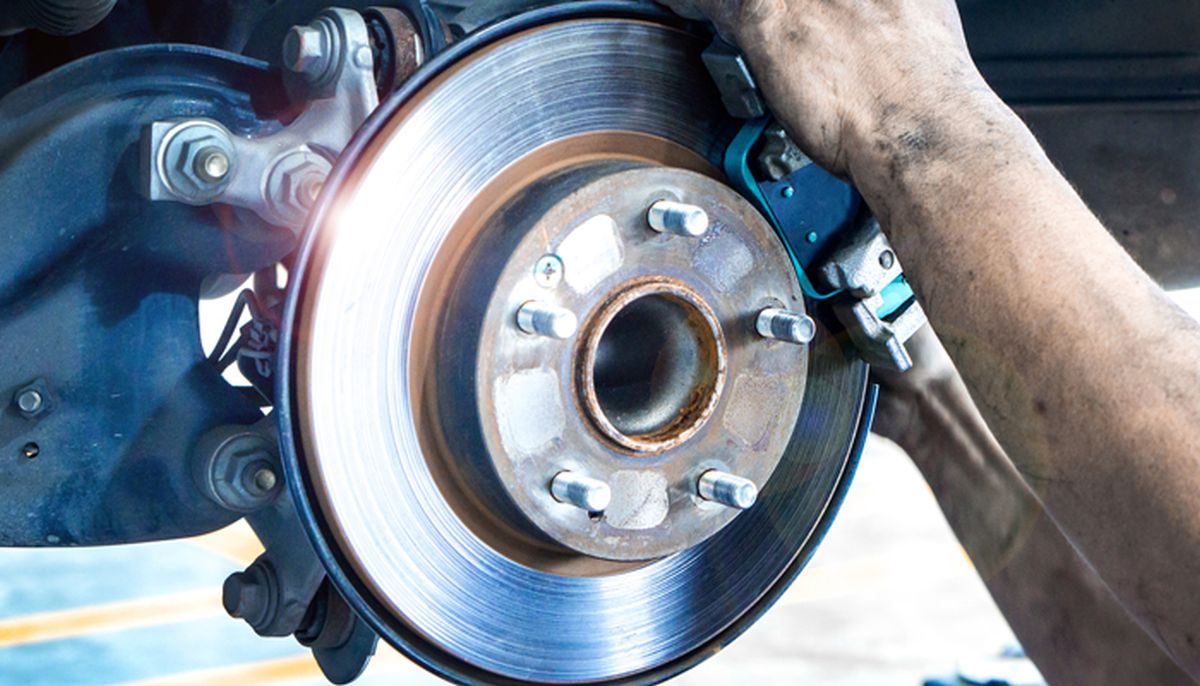
Brake discs are among the most important components of a vehicle's braking system. They rotate together with the wheel, while the brake pads press against their surfaces to create friction and slow the vehicle down.
Under normal conditions, a brake disc can withstand very high temperatures and repeated braking cycles. However, excessive heat, uneven cooling, incorrect installation, corrosion, or problems elsewhere in the braking system can cause disc thickness variation, surface deformation, or other conditions commonly described as a "warped brake disc."
One important point is that brake disc vibration does not always mean that the disc itself is physically bent or warped. In many cases, the real problem is uneven disc thickness, excessive runout, uneven pad material transfer, corrosion, or incorrect wheel installation.
What Does a Brake Disc Do?
A brake disc, also called a brake rotor, is attached to the wheel hub and rotates with the wheel.
When the driver presses the brake pedal:
-
The brake system generates hydraulic pressure.
-
The brake caliper moves the brake pads toward the disc.
-
The pads press against both sides of the rotating disc.
-
Friction is created.
-
The vehicle's kinetic energy is converted primarily into heat.
-
The vehicle slows down.
Because enormous amounts of heat can be generated during braking, brake discs are designed to dissipate heat efficiently.
Can a Brake Disc Really Bend?
The term "warped brake disc" is commonly used, but the actual physical mechanism is often more complicated.
A brake disc can experience measurable lateral runout or thermal distortion, but many symptoms attributed to a "warped" disc are actually caused by disc thickness variation (DTV) or uneven friction material deposited on the disc.
This distinction is important.
A brake disc may look visually straight but still cause strong steering-wheel or brake-pedal vibration because its friction surface is no longer uniform.
Why Do Brake Discs Warp?
Several conditions can contribute to brake disc deformation, runout, or thickness variation.
The most common causes include:
-
Excessive heat
-
Repeated heavy braking
-
Incorrect bedding-in
-
Uneven cooling
-
Incorrect wheel installation
-
Hub corrosion
-
Poor-quality brake discs
-
Sticking brake calipers
-
Uneven brake pad wear
-
Incorrect brake pad material transfer
-
Excessive wheel bearing play
-
Mechanical damage
-
Improper installation
-
Severe temperature changes
In many cases, more than one factor is involved.
Excessive Heat Is a Major Cause
Brake discs are designed to operate at high temperatures, but extreme or repeated heat cycles can cause problems.
Heavy braking converts a large amount of kinetic energy into heat.
This can happen during:
-
Long downhill driving
-
Repeated emergency braking
-
High-speed braking
-
Track driving
-
Towing
-
Driving with a heavily loaded vehicle
-
Frequent stop-and-go traffic
If the disc becomes extremely hot and is repeatedly subjected to severe thermal cycles, its surface and internal structure can change.
This may contribute to runout or thickness variation.
Can Braking Hard Warp a Brake Disc?
A single hard braking event does not necessarily warp a good-quality brake disc.
Modern brake discs are specifically designed to tolerate high temperatures.
Problems are more likely when extreme braking is combined with:
-
Poor cooling
-
Already worn discs
-
Incorrect brake pads
-
Sticking calipers
-
Heavy vehicle loads
-
Repeated braking without sufficient cooling
Therefore, "I braked hard once and warped the discs" is not always an accurate explanation.
Why Can Driving Through Water Cause Brake Disc Problems?
A very hot brake disc can experience rapid temperature changes when exposed to cold water.
For example, after repeated heavy braking, driving through deep water can suddenly cool part of the disc while another part remains extremely hot.
This creates a significant temperature difference across the disc.
Although modern brake discs are designed to tolerate normal wet-road conditions, severe thermal shock can contribute to deformation or cracking in extreme circumstances.
Simply driving through rain does not normally warp brake discs.
Can a Car Wash Warp Brake Discs?
Normal car washing does not usually cause brake discs to warp.
However, spraying large amounts of cold water directly onto extremely hot brakes immediately after heavy braking is not ideal.
The greater concern is not ordinary washing but rapid cooling of severely overheated brake components.
After intensive braking, allowing the brakes to cool naturally is preferable.
Can a Sticking Brake Caliper Warp the Disc?
Yes.
A sticking brake caliper can cause the brake pad to remain in contact with the disc when the brake pedal is not being pressed.
This creates continuous friction and heat.
Possible consequences include:
-
Excessive disc temperature
-
Uneven pad wear
-
Burning smell
-
Reduced fuel economy
-
Vehicle pulling to one side
-
Premature brake pad wear
-
Disc discoloration
-
Brake fade
-
Disc thickness variation
If a brake disc repeatedly develops problems on the same wheel, the caliper and brake hardware should be inspected rather than simply replacing the disc.
Can Incorrect Wheel Installation Cause Brake Vibration?
Yes.
This is one of the most overlooked causes of brake-disc problems.
If the wheel is installed incorrectly or the wheel fasteners are tightened unevenly, excessive clamping force can sometimes contribute to hub or disc runout.
A severely uneven tightening pattern can also cause the wheel and hub assembly to sit incorrectly.
Wheel fasteners should therefore be tightened according to the vehicle manufacturer's specified procedure and torque.
Can a Rusty Hub Cause a "Warped" Brake Disc?
Yes.
The brake disc mounts against the wheel hub. If rust, dirt, or corrosion remains between the disc and hub mounting surfaces, the disc may not sit perfectly flat.
This can create lateral runout.
The result may be:
-
Brake pedal pulsation
-
Steering-wheel vibration
-
Uneven disc wear
-
Uneven pad contact
In this situation, replacing the disc without correcting the contaminated hub surface may not solve the problem.
The hub and disc mounting surfaces should be clean and properly seated.
What Are the Symptoms of a Warped Brake Disc?
The most recognizable symptom is vibration during braking.
Depending on the severity and location of the problem, you may notice:
-
Steering-wheel vibration
-
Brake-pedal pulsation
-
Vehicle vibration
-
Judder during braking
-
Uneven braking
-
Vibration at certain speeds
-
Noise during braking
-
Reduced braking smoothness
-
Vehicle pulling to one side
The exact symptoms depend on the affected axle and the severity of the problem.
Why Does the Steering Wheel Shake When Braking?
If the front brake discs have significant runout or thickness variation, braking forces can be transmitted through the front suspension and steering system.
The driver may feel this as a shaking or pulsing steering wheel.
The vibration is often more noticeable when braking from higher speeds.
However, steering-wheel vibration does not automatically prove that the front brake discs are warped.
Other possible causes include:
-
Wheel imbalance
-
Tire problems
-
Suspension wear
-
Wheel bearing problems
-
Steering component wear
-
Incorrect wheel installation
The braking system should therefore be inspected together with the wheel and suspension components.
Why Does the Brake Pedal Pulse?
A brake pedal that repeatedly moves up and down slightly while braking can indicate variation in the brake disc's effective friction surface.
Possible causes include:
-
Disc thickness variation
-
Excessive disc runout
-
Uneven pad deposits
-
Severe disc surface irregularities
-
Other brake-system problems
The pulsation is usually synchronized with wheel rotation.
The faster the wheel rotates, the more frequently the driver may feel the variation.
Does a Warped Disc Always Make Noise?
No.
A brake disc can have measurable runout or thickness variation without producing a noticeable noise.
Some vehicles may primarily experience:
-
Steering vibration
-
Brake pedal pulsation
-
Brake judder
while others may produce scraping, clicking, or other sounds.
Noise alone is not enough to diagnose a warped disc.
Can Brake Pads Cause a Brake Disc to Warp?
Brake pads can contribute indirectly to disc problems.
If the pads are:
-
Poor quality
-
Incorrect for the vehicle
-
Contaminated
-
Unevenly worn
-
Installed incorrectly
-
Overheated
they may not contact the disc uniformly.
Uneven friction material transfer can create patches on the disc surface.
These patches can produce symptoms very similar to a warped disc.
What Is Disc Thickness Variation?
Disc thickness variation means that the thickness of the brake disc is not perfectly uniform around its friction surface.
Even a relatively small variation can become noticeable during braking.
As the disc rotates, the brake pads encounter slightly different thicknesses.
This causes changes in caliper piston position and braking force.
The driver may feel this as:
-
Brake pedal pulsation
-
Brake judder
-
Steering vibration
This is one of the main reasons why the term "warped disc" can be misleading.
What Is Uneven Pad Material Transfer?
When new brake pads are installed, they need to establish an appropriate contact pattern with the disc.
This process is commonly called bedding-in.
If the brakes are repeatedly overheated during this period, friction material may transfer unevenly to the disc surface.
This can create high-friction and low-friction areas.
The driver may then experience braking vibration even though the disc is not physically bent.
Can New Brake Discs Warp Quickly?
Yes, but if a new disc develops symptoms very quickly, the underlying cause should be investigated.
Possible reasons include:
-
Incorrect installation
-
Dirty hub surface
-
Excessive hub runout
-
Sticking caliper
-
Incorrect wheel-fastener torque
-
Incorrect brake pad bedding
-
Severe overheating
-
Poor-quality components
-
Suspension or wheel-bearing problems
Simply installing another set of discs may only temporarily hide the problem.
How Are Warped Brake Discs Diagnosed?
A professional diagnosis should not rely only on visual inspection.
The technician may check:
-
Disc thickness
-
Disc lateral runout
-
Hub runout
-
Disc surface condition
-
Brake pad thickness
-
Pad wear pattern
-
Caliper operation
-
Caliper guide pins
-
Brake fluid condition
-
Wheel bearing play
-
Wheel-fastener installation
-
Hub mounting surface
A dial indicator can be used to measure disc lateral runout.
A micrometer can be used to measure disc thickness at multiple points.
These measurements are much more reliable than simply looking at the disc.
Can You See a Warped Brake Disc?
Sometimes, but usually not reliably.
A severely damaged or overheated disc may show:
-
Blue or dark heat marks
-
Cracks
-
Grooves
-
Uneven wear
-
Surface discoloration
-
Visible scoring
However, a disc can cause severe vibration while looking relatively normal.
This is why measurement is important.
What Does a Blue Brake Disc Mean?
Blue or purple discoloration can indicate that the brake disc has experienced significant heat.
Possible causes include:
-
Repeated heavy braking
-
Sticking brake caliper
-
Brake pad dragging
-
Poor brake cooling
-
Excessive braking load
Color alone does not prove that the disc is unusable.
The disc should be inspected and measured according to the manufacturer's specifications.
Can a Warped Brake Disc Be Repaired?
It depends on the condition of the disc.
Some brake discs can historically be machined or resurfaced, but this is not appropriate for every modern brake disc.
If machining would reduce the disc below its minimum allowable thickness, the disc must be replaced.
Many manufacturers also specify replacement rather than resurfacing for certain applications.
The correct approach is to follow the vehicle and brake-disc manufacturer's specifications.
Should Brake Pads Be Replaced With Brake Discs?
In many situations, installing new brake pads together with new discs is recommended, particularly when the existing pads are heavily worn, unevenly worn, contaminated, or have established an abnormal contact pattern.
Using severely worn or damaged pads with new discs can prevent proper bedding and may cause uneven wear.
The caliper hardware should also be inspected at the same time.
Should Both Brake Discs Be Replaced?
Generally, brake discs on the same axle should be replaced as a pair when replacement is necessary.
Replacing only one disc can create differences in braking characteristics between the two sides.
The same principle commonly applies to brake pads.
However, the exact repair procedure should follow the manufacturer's instructions.
How Can Brake Disc Problems Be Prevented?
Good driving and correct maintenance can significantly reduce the risk.
Useful practices include:
-
Avoid unnecessary repeated hard braking.
-
Use engine braking on long descents where appropriate.
-
Do not keep your foot lightly on the brake pedal.
-
Allow heavily loaded brakes to cool when practical.
-
Use the correct brake discs and pads.
-
Follow the correct bedding procedure for new brakes.
-
Keep calipers and guide pins operating correctly.
-
Inspect the hub mounting surface during brake service.
-
Tighten wheel fasteners using the correct procedure.
-
Investigate repeated brake overheating.
-
Replace worn components before they cause secondary damage.
Can Driving With a Warped Brake Disc Be Dangerous?
It can be.
A mild vibration may not immediately cause a complete loss of braking, but a significant brake problem should not be ignored.
A severely damaged or overheated brake disc can be associated with:
-
Reduced braking performance
-
Brake fade
-
Uneven braking
-
Longer stopping distances
-
Cracking
-
Accelerated pad wear
-
Additional damage to brake components
If the vehicle develops severe steering vibration, brake pedal pulsation, pulling, burning smells, smoke, or unusual braking behavior, the vehicle should be inspected as soon as possible.
Is a Warped Brake Disc the Only Cause of Brake Vibration?
No.
This is one of the most important points when diagnosing brake vibration.
Similar symptoms can be caused by:
-
Wheel imbalance
-
Tire deformation
-
Wheel runout
-
Suspension problems
-
Steering component wear
-
Wheel bearing play
-
Uneven brake pad deposits
-
Disc thickness variation
-
Hub runout
-
Caliper problems
Therefore, replacing the brake discs immediately without measuring and inspecting the complete system is not always the correct solution.
Final Thoughts
Brake discs can develop runout, thickness variation, uneven wear, or thermal deformation because of excessive heat, repeated heavy braking, sticking calipers, incorrect installation, contaminated hub surfaces, uneven pad material transfer, and other mechanical problems.
The phrase "warped brake disc" does not necessarily mean that the disc is physically bent. In many cases, the driver's vibration is caused by disc thickness variation or uneven friction material on the disc surface.
The most common symptoms are steering-wheel vibration, brake-pedal pulsation, and brake judder, particularly during braking from higher speeds. However, these symptoms can also be caused by wheels, tires, suspension, wheel bearings, hubs, or other brake components.
For that reason, the correct repair is not simply to replace the disc whenever vibration occurs. The disc, hub, brake pads, caliper, wheel installation, and related components should be inspected and measured to determine the actual cause.