TR
TR EN
EN

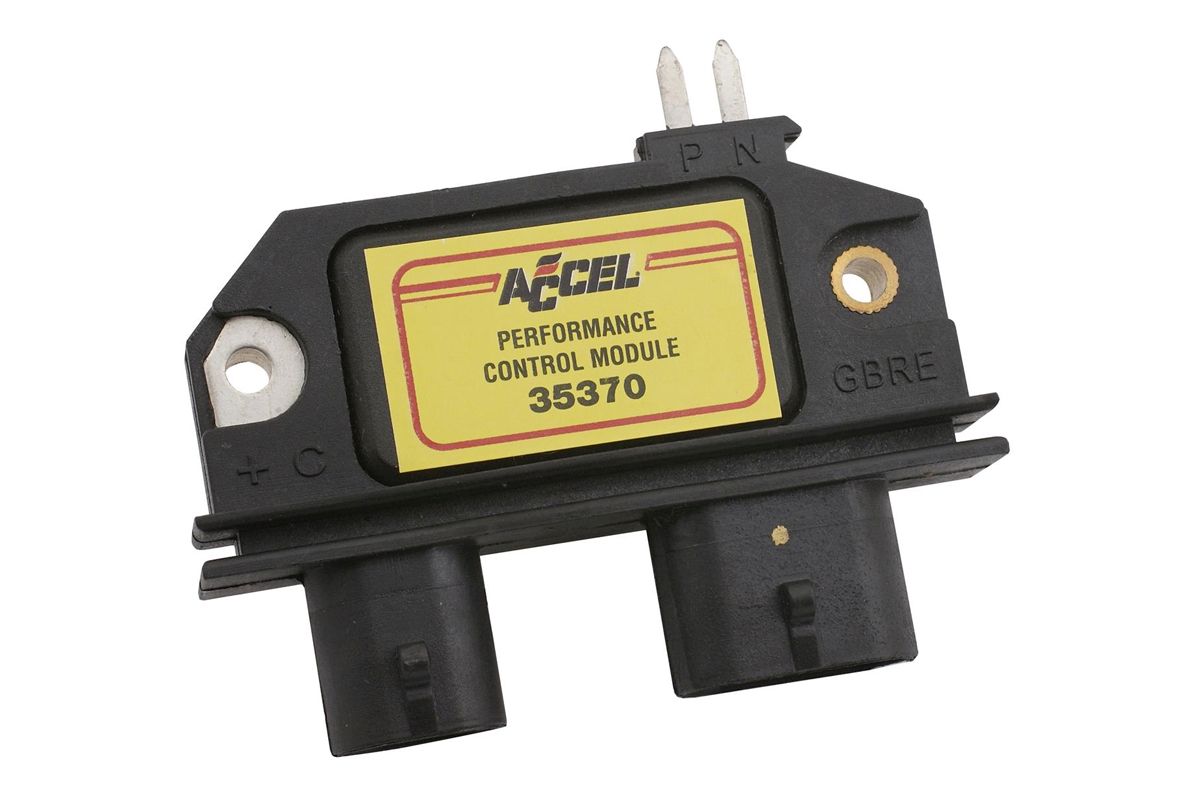
What Is an Ignition Control Module? What Are the Symptoms of Failure?
An Ignition Control Module (ICM) is an electronic component used in certain gasoline engine ignition systems to control when the ignition coil produces a high-voltage spark. It plays an important role in ensuring that the spark plugs fire at the correct time so the air-fuel mixture can ignite properly.
The exact design of an ignition system varies considerably between vehicles. Older electronic ignition systems may use a separate ignition control module, while many modern vehicles integrate ignition control functions into the Engine Control Unit (ECU/ECM) or into the ignition coils themselves.
For this reason, not every modern vehicle has a separate, replaceable ignition control module.
How Does an Ignition Control Module Work?
During engine operation, the ignition system needs accurate information about engine speed and crankshaft position. Depending on the vehicle, this information may come from a crankshaft position sensor, camshaft position sensor, distributor pickup, or another ignition trigger.
The ignition control module uses the available signals to control the ignition coil.
The basic process can be summarized as:
Crankshaft/camshaft position information → ignition control → ignition coil → high voltage → spark plug → spark → combustion
The ignition coil stores electrical energy by creating a magnetic field. When the primary circuit is switched off, the magnetic field collapses and generates a high voltage in the secondary winding. This voltage travels to the spark plug and creates the spark required for combustion.
On some systems, the ignition control module also controls the dwell time, which is the amount of time the ignition coil is energized before the spark occurs.
If dwell time is incorrect, the coil may not store enough energy to produce a strong spark, or it may be subjected to excessive electrical and thermal stress.
What Are the Symptoms of a Bad Ignition Control Module?
A failing ignition control module can cause a variety of engine problems. The symptoms depend on whether the module has completely failed or is suffering from an intermittent or temperature-related fault.
Common symptoms include:
-
Hard starting
-
Crank-no-start condition
-
Sudden engine stalling
-
Engine misfires
-
Jerking or hesitation during acceleration
-
Loss of engine power
-
Rough or unstable idle
-
Engine failing to start when hot
-
Engine restarting after cooling down
-
Ignition cutting out at high RPM
-
Increased fuel consumption
-
Check Engine Light
-
Intermittent ignition failure
A particularly important clue is an engine that starts normally when cold but stops after reaching operating temperature and then starts again after cooling down.
This can happen with heat-sensitive electronic components, including some ignition control modules.
However, this symptom does not prove that the ignition control module is defective. A crankshaft position sensor and other ignition components can behave in a similar way.
The Engine Cranks but Does Not Start
A completely failed ignition control module can prevent the ignition system from producing a spark.
In this situation, the starter motor may turn the engine normally, but the engine will not start because combustion cannot take place without an appropriate ignition event.
However, a crank-no-start condition can also be caused by:
-
Ignition coil failure
-
Crankshaft position sensor failure
-
Camshaft position sensor failure
-
ECU/ECM problems
-
Ignition relay failure
-
Blown fuse
-
Damaged wiring
-
Poor ground connection
-
Immobilizer problems
-
Faulty spark plugs
-
Missing coil power supply
Therefore, replacing the ICM immediately after finding a no-start condition is not a reliable diagnostic method.
The correct approach is to determine where the ignition signal is being lost.
Engine Stalls While Driving
An ignition control module that fails intermittently can cause the engine to stop suddenly while driving.
In some cases, the engine may restart immediately. In other cases, the vehicle may need to sit for several minutes before the engine starts again.
A temperature-related failure can produce a pattern such as:
Cold engine → normal operation → engine heats up → ignition stops → engine stalls → module cools down → engine restarts
This pattern can be a useful diagnostic clue.
Nevertheless, the same behavior can also be caused by a failing crankshaft position sensor, ignition coil, power supply, relay, wiring connection, or ECU.
Misfiring and Jerking
If the ignition control module cannot control the ignition coil correctly, the spark may become weak, inconsistent, or disappear altogether.
The driver may notice:
-
Engine hesitation
-
Jerking during acceleration
-
Rough running
-
Misfire under load
-
Poor throttle response
-
Loss of power
-
Vibration
The problem may become more noticeable when the engine is under heavy load or operating at higher RPM.
However, misfires have a very broad range of possible causes. Spark plugs, ignition coils, fuel injectors, fuel pressure, vacuum leaks, air-fuel mixture problems, and engine compression problems must also be considered.
Ignition Failure at High RPM
Some ignition problems are barely noticeable at low engine speeds but become obvious as RPM increases.
At higher RPM, the ignition system has less time to complete each ignition event and the coils must operate more frequently.
A vehicle might therefore:
-
Run normally at low RPM
-
Begin misfiring at medium RPM
-
Lose power at high RPM
-
Experience intermittent ignition cutout
This can point toward an ignition-system problem, but it does not identify the ICM by itself.
Ignition coils, crankshaft sensors, camshaft sensors, power supply, wiring, and ECU control signals should also be tested.
Rough or Unstable Idle
A problem in the ignition system can cause the engine to run unevenly at idle.
Possible symptoms include:
-
Engine vibration
-
RPM fluctuations
-
Occasional misfires
-
Rough idle
-
Engine nearly stalling
-
Engine stalling at idle
However, rough idle is not specific to the ignition system.
Vacuum leaks, PCV problems, throttle body problems, MAF/MAP sensor faults, fuel injectors, fuel pressure, and mechanical engine problems can produce similar symptoms.
Can an Ignition Control Module Cause a Check Engine Light?
Yes. If the engine control system detects ignition-related problems, it may store diagnostic trouble codes and illuminate the Check Engine Light.
For example, misfire-related codes may include:
-
P0300 – Random/Multiple Cylinder Misfire Detected
-
P0301 – Cylinder 1 Misfire Detected
-
P0302 – Cylinder 2 Misfire Detected
-
P0303 – Cylinder 3 Misfire Detected
-
P0304 – Cylinder 4 Misfire Detected
These codes do not automatically mean that the ignition control module has failed.
For example, P0301 indicates a misfire on cylinder 1. The cause could be the spark plug, ignition coil, injector, wiring, compression, valve problem, air leak, or another issue.
The fault code identifies a problem area rather than necessarily identifying the failed component.
What Causes an Ignition Control Module to Fail?
Several factors can eventually damage or degrade an ignition control module.
Excessive heat
The ignition module may be exposed to high temperatures in the engine compartment. Repeated thermal cycling can eventually damage electronic components or solder joints.
Electronic component aging
Transistors and other electronic components can deteriorate over time.
Ignition coil problems
A defective ignition coil that draws excessive current can place additional stress on the ignition control circuit.
Poor ground connection
A weak, corroded, or damaged ground connection can interfere with ignition control and cause intermittent operation.
Low or unstable voltage
Problems with the battery, alternator, wiring, or ground connections can cause abnormal voltage conditions that affect electronic ignition components.
Moisture and water intrusion
Water entering the module, connector, or wiring can cause corrosion and electrical faults.
Damaged wiring or connectors
Loose terminals, broken wires, corrosion, and poor electrical connections can create symptoms that look exactly like a failed ignition control module.
How Is an Ignition Control Module Tested?
An ICM should be tested as part of the complete ignition system rather than being tested in isolation.
The diagnostic process may include checking:
-
Battery voltage
-
Charging system voltage
-
Module power supply
-
Ground connections
-
Fuses
-
Relays
-
Connector condition
-
Wiring continuity and voltage drop
-
Ignition coil operation
-
Spark plug condition
-
Crankshaft position sensor signals
-
Camshaft position sensor signals
-
ECU ignition commands
When the engine will not start, checking whether a proper spark is present can be an important first step.
If there is no spark, the technician can then determine whether the ignition coil is receiving the correct power supply and control signal.
Electrical measurements should be performed according to the manufacturer's wiring diagram and specifications. Random resistance testing of electronic components can sometimes produce misleading results and may even damage sensitive circuits.
Can an OBD Scanner Detect a Bad Ignition Control Module?
An OBD scanner can be very useful, but it will not always provide a code that directly says "Ignition Control Module Failed."
Some vehicles have manufacturer-specific diagnostic codes for ignition control circuits. Other vehicles monitor the resulting ignition and combustion behavior rather than directly diagnosing the module.
An OBD scanner can also provide useful information such as:
-
Engine RPM during cranking
-
Misfire counters
-
Ignition-related fault codes
-
Sensor data
-
Engine operating parameters
If the engine does not show RPM while cranking, for example, a crankshaft position signal problem may need to be investigated before blaming the ignition control module.
Can an Ignition Control Module Problem Be Confused With a Crankshaft Sensor Failure?
Yes, very easily.
The crankshaft position sensor provides critical information about crankshaft position and engine speed. If the ECU loses this information, ignition and fuel injection can be affected.
A faulty crankshaft position sensor can therefore cause:
-
Crank-no-start
-
Sudden engine stalling
-
Hot-start problems
-
Misfires
-
Loss of power
-
Intermittent engine operation
This is why replacing an ignition control module without checking the crankshaft and camshaft position signals can result in unnecessary repairs.
The goal of diagnosis should be to determine which signal, power supply, or component is actually failing.
Is the Ignition Control Module the Same as the Ignition Coil?
No.
The ignition coil converts relatively low electrical voltage into the high voltage required by the spark plug.
The ignition control module controls the ignition process and, depending on the system design, controls when and how the ignition coil is energized.
The distinction is clearer on older ignition systems where the ICM is a separate component.
Modern vehicles often integrate these functions more closely.
For example, some coil-on-plug (COP) ignition coils contain their own electronic ignition driver. In other systems, the ECU directly controls the ignition coils.
As a result, a modern vehicle may not have a separate ignition control module at all.
Do Modern Vehicles Have a Separate Ignition Control Module?
Not necessarily.
Older electronic ignition systems commonly used a dedicated ignition control module.
Modern vehicles often use an integrated architecture in which ignition control is handled by a combination of:
-
ECU/ECM
-
Crankshaft position sensor
-
Camshaft position sensor
-
Ignition coils
-
Internal coil drivers
-
Engine wiring
-
Software-controlled ignition strategies
Some vehicles still use a separate ignition module, while others do not.
Therefore, the exact vehicle's ignition system design should always be identified before diagnosing or ordering an ICM.
Can a Bad Ignition Control Module Increase Fuel Consumption?
It can indirectly increase fuel consumption if it causes weak or inconsistent ignition.
Incomplete combustion can reduce engine efficiency and cause the ECU to compensate for certain operating conditions.
However, increased fuel consumption is not a specific symptom of ICM failure.
Fuel pressure, injectors, oxygen sensors, MAF/MAP sensors, air leaks, thermostat problems, poor compression, and many other issues can also increase fuel consumption.
Is It Safe to Drive With a Faulty Ignition Control Module?
Driving with a suspected ignition control problem is not recommended if the engine is misfiring, stalling, or losing power.
A severe misfire can allow unburned fuel to enter the exhaust system and potentially damage the catalytic converter.
An engine that unexpectedly stalls while driving also creates a significant safety risk.
If the Check Engine Light is flashing, the engine is severely misfiring, or the vehicle repeatedly stalls, it is safer to stop driving and have the problem diagnosed.
What Should Be Checked Before Replacing the Ignition Control Module?
If testing confirms that the ICM is defective, the reason for the failure should also be investigated.
Before installing another module, it is worth checking:
-
Ignition coil current draw
-
Module power supply
-
Ground quality
-
Connector terminals
-
Wiring condition
-
Battery condition
-
Alternator output
-
Engine compartment temperature
-
Water or oil contamination
-
Related ignition components
Replacing the module without addressing an underlying electrical or ignition problem can result in another module failing.
Final Thoughts
An Ignition Control Module is an important component in ignition systems that use a dedicated electronic ignition controller. Its job is to help control the ignition coil and ensure that the spark occurs at the appropriate time.
A failed module can cause difficult starting, no-start conditions, engine stalling, misfires, hesitation, high-RPM ignition problems, and other drivability issues.
However, these symptoms are not exclusive to the ICM. A faulty ignition coil, spark plug, crankshaft sensor, camshaft sensor, wiring connection, relay, power supply, ground, or ECU can create very similar symptoms.
For this reason, an ignition control module should not be replaced simply because the engine is misfiring or failing to start. The ignition system should be tested systematically to determine whether the problem is actually the module or another component in the circuit.