TR
TR EN
EN

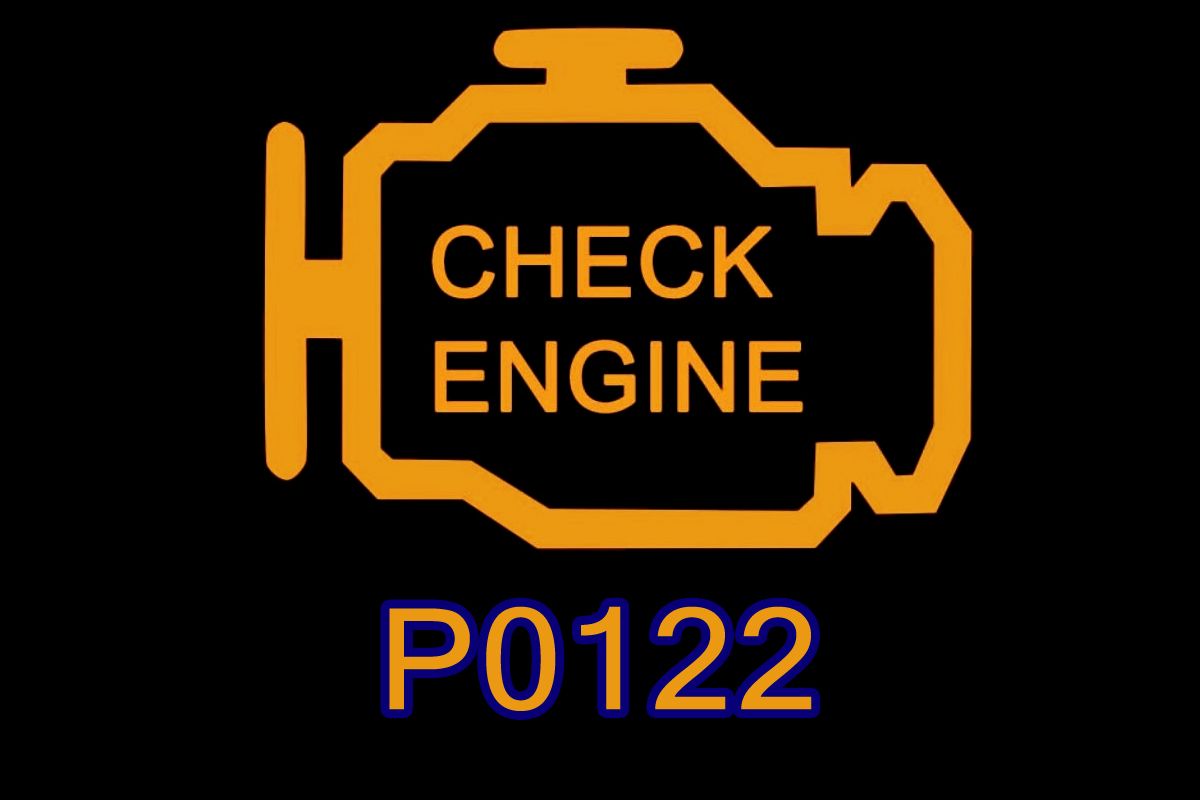
P0122 Throttle/Pedal Position Sensor/Switch "A" Circuit Low Input
The P0122 diagnostic trouble code (DTC) indicates that the engine control module (ECM/PCM) has detected an abnormally low electrical input signal from the Throttle/Pedal Position Sensor or Switch “A” circuit.
This code belongs to the electronic throttle and accelerator-pedal position monitoring system. Modern vehicles generally do not rely on a simple mechanical cable between the accelerator pedal and throttle body. Instead, the accelerator pedal position is converted into an electrical signal, the ECM interprets that request, and the electronic throttle system controls the throttle opening.
P0122 therefore does not automatically mean that the throttle body is mechanically stuck closed.
The important word is “Low.” In this DTC, low refers primarily to the electrical signal detected by the ECM, not necessarily to the physical position of the throttle plate or accelerator pedal.
Understanding the “A” Circuit
The designation “A” identifies a particular sensor or signal circuit defined by the vehicle manufacturer.
Depending on the vehicle, the monitored component may be associated with:
-
Throttle Position Sensor (TPS)
-
Accelerator Pedal Position Sensor (APP)
-
Electronic throttle body
-
Integrated throttle-position sensor
-
Pedal position sensor assembly
Many modern electronic throttle systems use multiple position signals for safety and plausibility checking.
For example, an accelerator pedal may contain two sensor channels that change in a coordinated but different way as the pedal moves.
Likewise, an electronic throttle body commonly has multiple throttle-position signals.
The ECM compares these signals to determine whether the throttle and pedal are behaving as expected.
What Does “Low Input” Actually Mean?
P0122 means that the ECM is seeing a lower-than-expected electrical signal on the monitored “A” circuit.
This can happen for several reasons.
The signal may genuinely be low because:
-
The sensor has an internal fault.
-
The signal wire is shorted toward ground.
-
The sensor ground is faulty.
-
The sensor's reference or supply circuit has a problem.
-
A connector terminal has poor contact.
-
The sensor has an internal electrical short.
-
Wiring resistance or damage is affecting the circuit.
The important distinction is:
P0122 identifies a low electrical input. It does not by itself identify the failed component.
How the Throttle Position System Works
On a conventional electronic throttle system, the accelerator pedal does not directly open the throttle plate.
The basic control path is:
Accelerator pedal → APP sensor → ECM → electronic throttle actuator → throttle plate
The throttle body normally contains an electric motor and throttle-position sensors.
The ECM receives the driver's accelerator request through the pedal sensors and then commands the throttle motor to achieve the required throttle position.
At the same time, it monitors throttle position feedback.
This creates several opportunities for a fault:
-
Pedal sensor
-
Throttle sensor
-
Throttle motor
-
Wiring
-
Connectors
-
Power supply
-
Sensor reference
-
Sensor ground
-
ECM control circuit
That is why P0122 should not be diagnosed simply by replacing the throttle body.
Common Causes of P0122
Faulty throttle or pedal position sensor
The sensor may develop an internal electrical fault and produce a signal below the expected range.
Short to ground
A signal wire contacting ground can pull the voltage down and produce a low-input condition.
Damaged wiring
The harness can become damaged through rubbing, vibration, heat, previous repairs, or mechanical movement.
Poor connector contact
Loose terminals, corrosion, water intrusion, or damaged connector pins can interfere with the sensor signal.
Faulty sensor ground
A poor ground connection can distort the sensor's output and cause the ECM to interpret the signal incorrectly.
Reference-voltage problem
Many position sensors use an ECM-provided reference voltage. If this circuit is abnormal, the sensor signal can also become abnormal.
Electronic throttle body fault
If the “A” circuit belongs to the throttle-position sensor integrated into the throttle body, an internal sensor problem can generate P0122.
Accelerator pedal sensor problem
If the monitored “A” circuit belongs to the accelerator pedal position system, the pedal assembly may be the source of the problem.
Mechanical throttle problem
A mechanically damaged or contaminated throttle assembly can sometimes cause position feedback to disagree with the commanded position. However, a purely mechanical problem should not automatically be assumed from P0122.
ECM/PCM fault
The ECM is a possible cause, but it should normally be considered only after the sensor and complete circuit have been tested.
Symptoms of P0122
The symptoms can range from almost unnoticeable to severe.
Possible symptoms include:
-
Check Engine Light
-
Poor throttle response
-
Hesitation
-
Limited acceleration
-
Rough idle
-
Engine stalling
-
Difficult starting
-
Reduced engine power
-
Limp-home mode
-
Throttle operation becoming restricted
-
Accelerator pedal becoming less responsive
-
Unstable engine speed
-
Increased fuel consumption
In some vehicles, the ECM will deliberately restrict throttle operation when it detects an implausible position signal.
This is a safety strategy.
The engine may still run, but the vehicle may have significantly reduced acceleration.
Why Can the Car Enter Limp Mode?
The accelerator pedal and throttle position are safety-critical inputs.
If the ECM cannot reliably determine what the driver is requesting, it cannot safely control engine torque.
For example, if the pedal position signal suddenly drops to an implausible value, the ECM may no longer trust the driver's accelerator request.
Depending on the vehicle, it may respond by:
-
Limiting throttle opening
-
Limiting engine RPM
-
Restricting engine torque
-
Entering reduced-power mode
-
Disabling certain throttle functions
This can make the vehicle feel as though the accelerator pedal has suddenly stopped working.
P0122 Does Not Necessarily Mean the Throttle Plate Is Closed
This is an important distinction when diagnosing electronic throttle systems.
A low sensor signal can cause the ECM to interpret the throttle or pedal position incorrectly.
That is different from physically finding a throttle plate that is stuck closed.
For example, a throttle position sensor may report an abnormally low voltage even though the throttle plate is physically capable of moving.
Likewise, an accelerator pedal sensor can generate P0122 even though the throttle body itself is mechanically healthy.
The signal path must therefore be tested before condemning the mechanical component.
Start With Live Data
A scan tool is particularly useful for P0122 because position sensors can be evaluated dynamically.
Monitor the available parameters for:
-
Accelerator pedal position
-
APP sensor A
-
APP sensor B
-
Throttle position
-
TPS A
-
TPS B
-
Commanded throttle position
-
Actual throttle position
-
Engine RPM
-
Engine load
-
Battery voltage
The exact parameter names vary between manufacturers.
The important thing is to observe how the signals behave as the accelerator pedal is moved.
Look for Smooth Sensor Movement
With the ignition on and engine off, where the manufacturer's diagnostic procedure permits it, monitor the position signals while slowly pressing the accelerator pedal.
The signal should generally change smoothly and predictably.
Watch for:
-
Sudden drops
-
Sudden spikes
-
Dead spots
-
Frozen readings
-
Intermittent signal loss
-
Implausible jumps
-
A signal that remains near zero
-
Two redundant channels that no longer correlate correctly
A sensor that works normally at one pedal position but suddenly drops toward zero at another position may have an internal problem.
Multiple Position Signals Are a Safety Feature
Many electronic throttle systems have redundant sensors.
The ECM may compare two signals rather than relying on one sensor alone.
The signals do not necessarily have to be identical.
They may use:
-
Different voltage ranges
-
Opposite directions of change
-
Different scaling
-
Different calibration curves
Therefore, a technician should not assume that APP sensor A and B must display exactly the same percentage or voltage.
The manufacturer's expected relationship should be used.
Check the Signal With the Engine Off
A useful initial test can often be performed with the ignition on and the engine not running.
This removes many engine-operation variables and allows the position sensors to be observed directly.
If the signal is already abnormally low before the engine starts, the problem is more likely to be associated with:
-
Sensor
-
Wiring
-
Connector
-
Reference
-
Ground
-
ECM input circuit
If the signal becomes abnormal only while the engine is running, vibration, heat, electrical loading, or mechanical movement may need further investigation.
Inspect the Accelerator Pedal
If the “A” circuit is associated with the accelerator pedal, inspect the pedal assembly carefully.
Look for:
-
Loose connector
-
Damaged terminals
-
Corrosion
-
Wiring pulled tight
-
Harness rubbing
-
Water intrusion
-
Physical damage
-
Evidence of previous repair
The wiring near the pedal can be overlooked because it is inside the cabin.
A connector may also appear connected while a terminal inside it has lost proper contact.
Inspect the Throttle Body Connector
If the monitored circuit is associated with the throttle body, inspect the throttle-body connector and harness.
The area around the throttle body can be exposed to:
-
Engine vibration
-
Heat
-
Oil contamination
-
Moisture
-
Mechanical movement
Look for damaged insulation and terminals that have lost their proper tension.
Test Reference Voltage and Ground
A position sensor commonly requires a stable electrical supply/reference and a reliable ground or return circuit.
The correct test procedure depends on the vehicle.
Do not assume that every throttle or pedal sensor uses the same voltage arrangement.
Verify the manufacturer's wiring diagram and specifications.
A good diagnostic sequence is to establish:
Is the reference correct?
Is the sensor ground/return correct?
Is the signal correct?
Does the signal change correctly as the pedal or throttle moves?
This approach is much more informative than measuring sensor resistance alone.
A Short to Ground Can Create P0122
Because P0122 describes a low input, a shorted signal circuit is an important possibility.
If the signal wire is contacting ground, the ECM may see a voltage substantially lower than expected.
Possible causes include:
-
Chafed wiring
-
Pinched harness
-
Water contamination
-
Incorrect previous repair
-
Damaged connector
-
Internal sensor short
A wiring diagram and appropriate circuit test should be used to determine whether the signal is being pulled down externally.
Do Not Rely Only on Continuity
A wiring harness can pass a basic continuity test and still fail during actual vehicle operation.
The fault may appear only when:
-
The pedal moves
-
The engine vibrates
-
The throttle body heats up
-
The harness moves
-
The connector is stressed
-
Electrical load changes
For intermittent problems, monitoring the live position signal while performing a controlled harness movement can be useful.
Voltage-drop and loaded-circuit testing may also reveal resistance problems that a simple continuity check cannot.
Battery Voltage Should Also Be Considered
Electronic throttle systems depend on stable electrical power.
If battery voltage is abnormally low or unstable, the throttle system may behave incorrectly.
Check:
-
Battery condition
-
Charging voltage
-
Main grounds
-
ECM grounds
-
Relevant fuses
-
Throttle/pedal power supply
If multiple unrelated electrical codes appeared at the same time, investigate the vehicle's overall power and ground system before replacing throttle components.
What About a Dirty Throttle Body?
A dirty throttle body can cause drivability problems, but it does not automatically explain a low electrical input from a position sensor.
Carbon buildup can interfere with throttle movement or create mechanical problems, but P0122 should first be approached as a sensor/circuit issue.
If live data shows that the position sensor is producing an abnormal signal, cleaning the throttle plate alone will not necessarily repair the fault.
Conversely, if the electrical signals are correct but commanded and actual throttle movement do not agree, mechanical throttle-body problems become more relevant.
Could the Accelerator Pedal Cause P0122?
Yes, if the “A” circuit monitored by the vehicle belongs to the accelerator pedal position system.
An APP sensor failure can cause:
-
Low signal
-
Intermittent signal
-
Incorrect pedal position
-
Poor accelerator response
-
Reduced engine power
-
Fail-safe operation
However, the exact relationship between P0122 and the pedal or throttle sensor is manufacturer-dependent.
The wiring diagram and scan-tool data should establish which physical circuit is being monitored.
Could the Throttle Body Cause P0122?
Yes, if the monitored “A” circuit is part of the throttle-position sensing system integrated into the throttle body.
But again, the code alone is insufficient to prove that the throttle body must be replaced.
The technician should determine whether:
-
The throttle sensor signal is actually low.
-
The reference is correct.
-
The sensor ground is correct.
-
The wiring is intact.
-
The throttle position changes appropriately.
-
The throttle actuator operates correctly.
Only then should the throttle body be considered for replacement.
A Better Way to Diagnose P0122
Instead of starting with the question “Which part should I replace?”, start with the question:
“Where does the position signal become abnormally low?”
If the signal is low directly at the sensor, investigate the sensor and its immediate circuits.
If the signal is correct at the sensor but low at the ECM, investigate the wiring between the sensor and ECM.
If the sensor has the correct reference and ground but produces an abnormal output, the sensor becomes a stronger suspect.
If the sensor signal is correct but the ECM reports a different value, the ECM input circuit or data interpretation needs further investigation.
This approach can dramatically reduce unnecessary parts replacement.
Practical Diagnostic Sequence
Confirm the P0122 code.
Determine whether it is current, pending, or stored.
Record freeze-frame data.
Note engine speed, throttle position, accelerator position, battery voltage, and other relevant parameters.
Identify the “A” circuit.
Use the manufacturer's documentation to determine whether it refers to an APP or throttle-position circuit.
Check live data.
Observe the sensor signal and its relationship with pedal/throttle movement.
Inspect connectors and wiring.
Pay particular attention to terminals, corrosion, damaged insulation, and harness movement.
Check reference and ground.
Verify them against manufacturer specifications.
Test the signal circuit.
Determine whether the signal is actually being pulled low.
Perform a controlled movement/wiggle test if appropriate.
Look for signal interruptions caused by harness or connector movement.
Check the mechanical operation if electrical tests pass.
Determine whether the throttle plate or actuator is physically responding correctly.
Check for related codes.
Multiple throttle or pedal-position codes can provide important clues about whether the problem is isolated or part of a larger circuit fault.
Repair the confirmed fault.
Do not replace the pedal, throttle body, or ECM based solely on P0122.
Clear the code and verify operation.
Perform the necessary drive cycle or throttle/position relearn procedure specified for the vehicle.
Throttle Relearn May Be Necessary
Some vehicles require an electronic throttle or accelerator-pedal relearn/adaptation after:
-
Throttle-body replacement
-
Accelerator-pedal replacement
-
ECM replacement
-
Certain battery disconnections
-
Certain throttle cleaning procedures
The requirement varies by manufacturer.
A vehicle can therefore have electrically correct components but still require a specific initialization procedure after repair.
The manufacturer's service procedure should always take priority over generic relearn instructions.
What Happens If P0122 Is Ignored?
Because throttle and accelerator position information is critical to engine torque control, ignoring P0122 can create a safety concern.
The vehicle may suddenly enter reduced-power mode or exhibit unpredictable accelerator response.
Possible consequences include:
-
Reduced acceleration
-
Difficulty merging into traffic
-
Stalling
-
Limited engine speed
-
Poor throttle response
-
Limp-home operation
If the accelerator response becomes severely restricted or inconsistent, the vehicle should not be treated as though the Check Engine Light were merely a minor warning.
Final Thoughts on P0122
P0122 means the ECM has detected a lower-than-expected electrical input from the Throttle/Pedal Position Sensor “A” circuit.
The problem may originate from the position sensor, accelerator pedal assembly, electronic throttle body, connector, wiring, sensor reference, ground, or ECM circuit.
The word “Low” describes the electrical signal, not necessarily a physically closed throttle.
The most effective diagnosis is to monitor the position signals in real time and determine whether the signal is low at the sensor itself or somewhere between the sensor and ECM.
Only after the electrical circuit has been verified should a throttle body, accelerator pedal, or ECM be condemned. This is especially important on modern electronic throttle systems, where replacing an expensive throttle assembly may accomplish nothing if the actual fault is simply a damaged wire or poor connector terminal.