TR
TR EN
EN

Cruise Control Faults and Reasons Why It Does Not Work
Cruise control is designed to maintain a selected vehicle speed without requiring the driver to continuously press the accelerator pedal. It is a convenient feature on highways and long-distance journeys, but it depends on several electronic and mechanical systems working together.
When cruise control stops working, the problem is not necessarily the cruise control switch itself. The system may deliberately refuse to activate because the vehicle detects a problem with the brake pedal, clutch, accelerator pedal, wheel-speed sensors, engine management, transmission, or another safety-related system.
Understanding how these systems interact is important when diagnosing a cruise control fault.
How Does Cruise Control Work?
A conventional cruise control system monitors the vehicle's speed and adjusts engine torque to maintain the speed selected by the driver.
In older systems, cruise control could use a mechanical actuator connected to the throttle.
Modern vehicles generally use electronic cruise control. There is no separate mechanical cable controlling the throttle. Instead, the cruise control system communicates with the engine control unit, which controls the electronic throttle and engine torque.
The system may use information from:
-
Accelerator pedal position sensors
-
Electronic throttle position sensors
-
Wheel-speed sensors
-
Engine RPM
-
Vehicle speed
-
Brake pedal switch
-
Clutch pedal switch
-
Transmission control module
-
Steering wheel controls
-
Engine control module
-
Stability control system
-
Radar or camera systems on adaptive cruise control
Because cruise control is closely connected to vehicle safety systems, a fault in another system can prevent cruise control from operating.
Cruise Control Does Not Activate
One of the most common complaints is that cruise control simply does not turn on.
The driver may press the cruise control button, but the system does not allow a speed to be set.
Possible causes include:
-
Cruise control is not enabled
-
Vehicle speed is outside the permitted operating range
-
Brake pedal switch fault
-
Clutch switch fault
-
Accelerator pedal sensor problem
-
Electronic throttle fault
-
ABS or wheel-speed sensor fault
-
Engine fault
-
Transmission fault
-
Low battery voltage
-
Steering wheel control problem
-
Cruise control fuse or power supply problem
-
Communication fault between control modules
Some vehicles also require specific conditions before cruise control can be activated.
For example, the vehicle may need to be moving above a minimum speed, the transmission may need to be in an appropriate gear, and the brake or clutch pedal must not be detected as being pressed.
Cruise Control Suddenly Stops Working
Cruise control may operate normally and then cancel itself while driving.
This can happen when the system detects a condition that requires cruise control to disengage.
Possible reasons include:
Brake pedal activation
If the brake switch reports that the brake pedal is being pressed, cruise control normally cancels immediately.
A defective or incorrectly adjusted brake switch can therefore cause cruise control to disengage even when the driver is not intentionally braking.
Clutch pedal activation
On manual-transmission vehicles, pressing the clutch normally cancels cruise control.
A defective clutch switch can produce similar symptoms.
Wheel-speed sensor problem
Cruise control needs reliable vehicle-speed information. If the ABS system detects an inconsistent wheel-speed signal, cruise control may be disabled.
Engine or transmission fault
The ECU or transmission control module may cancel cruise control if an important fault is detected.
Traction or stability control intervention
If the vehicle detects wheel slip or stability problems, cruise control may be temporarily canceled.
Low system voltage
A weak battery, charging problem, poor ground or alternator fault can cause multiple electronic systems to malfunction or become unavailable.
Brake Switch Problems
The brake pedal switch is one of the most important components to check when cruise control does not work.
Cruise control must be able to detect when the driver applies the brakes.
If the brake switch is stuck in the "brake applied" state, the vehicle may prevent cruise control from activating.
Possible symptoms include:
-
Cruise control will not set
-
Cruise control immediately cancels
-
Brake lights remain illuminated
-
Brake lights do not operate correctly
-
Cruise control works intermittently
Some vehicles use multiple circuits or redundant brake-switch signals, so a fault may affect cruise control even when the brake lights appear to work normally.
Clutch Switch Problems
Manual-transmission vehicles usually have a clutch pedal switch.
The switch informs the control system when the clutch pedal is depressed.
If the system incorrectly believes that the clutch is permanently pressed, cruise control may refuse to activate.
Possible causes include:
-
Defective clutch switch
-
Incorrect switch adjustment
-
Damaged wiring
-
Loose connector
-
Corrosion
-
Incorrect pedal position
This is why the clutch switch should be checked when a manual-transmission vehicle has a cruise control problem.
Accelerator Pedal Sensor Problems
Modern accelerator pedals normally contain one or more position sensors.
The ECU uses these signals to determine how much torque the driver is requesting.
If the accelerator pedal position signals are inconsistent, the ECU may disable cruise control as a safety precaution.
Possible related diagnostic trouble codes can include codes in the accelerator pedal/throttle position families, such as:
-
P0120
-
P0121
-
P0220
-
P0221
-
P2135
The exact code depends on the vehicle.
A cruise control problem accompanied by an electronic throttle or accelerator pedal warning should therefore be investigated as an engine-control problem rather than immediately blaming the cruise control switch.
Electronic Throttle Problems
Modern cruise control often depends directly on the electronic throttle system.
The ECU can increase or reduce engine torque by changing throttle opening.
If the electronic throttle has a fault, cruise control may be disabled.
Possible symptoms include:
-
Poor accelerator response
-
Hesitation
-
Reduced engine power
-
Unstable idle
-
Limp mode
-
Check Engine Light
-
Electronic throttle warning
-
Cruise control unavailable
A throttle-related fault can therefore affect both normal acceleration and cruise control.
However, a cruise control failure alone does not prove that the throttle body is defective.
The accelerator pedal, wiring, connectors, power supply, ECU and throttle position feedback should also be checked.
ABS and Wheel-Speed Sensor Problems
This is an important but sometimes overlooked cause of cruise control failure.
The vehicle needs accurate speed information to maintain a selected speed.
Modern vehicles commonly obtain speed information from wheel-speed sensors and other control modules.
If an ABS or stability-control system detects an unreliable wheel-speed signal, cruise control may be disabled.
Possible causes include:
-
Failed wheel-speed sensor
-
Damaged sensor wiring
-
Corroded connector
-
Damaged reluctor ring
-
Magnetic encoder problem
-
Wheel bearing damage
-
ABS module fault
-
Incorrect wheel or tire configuration
You may therefore have a situation where the vehicle drives normally but cruise control is unavailable because an ABS fault has been detected.
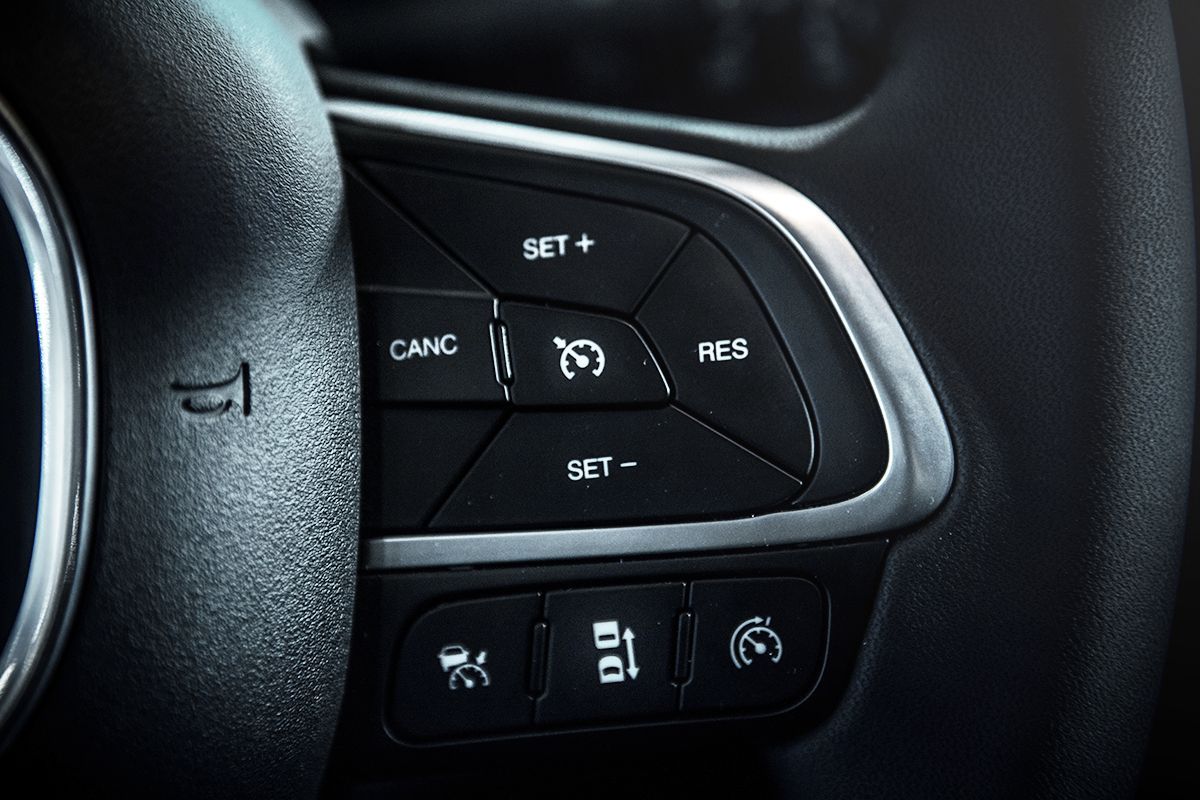
Steering Wheel Cruise Control Buttons
The cruise control controls mounted on the steering wheel can also fail.
Depending on the vehicle, there may be buttons for:
-
Cruise ON/OFF
-
SET
-
RES
-
CANCEL
-
Speed increase
-
Speed decrease
-
Limiter selection
Problems can occur because of:
-
Worn buttons
-
Damaged switch contacts
-
Broken wiring
-
Connector problems
-
Steering-wheel control module faults
-
Communication problems
-
Clockspring problems
A faulty clockspring is particularly relevant when steering-wheel buttons stop working.
If several steering-wheel functions fail at the same time, the clockspring or steering-wheel control system becomes a stronger suspect.
Clockspring Problems
The clockspring provides electrical connections between the stationary part of the steering column and the rotating steering wheel.
Depending on the vehicle, it may carry signals for:
-
Airbag
-
Horn
-
Cruise control buttons
-
Audio controls
-
Other steering-wheel functions
If the clockspring becomes damaged, cruise control buttons may stop responding.
Other symptoms may appear at the same time, especially an airbag warning light or a non-functioning horn.
Cruise Control Fuse and Power Supply
Some vehicles have a dedicated cruise control fuse, while others share power with other electronic systems.
A blown fuse can prevent the system from operating.
However, a blown fuse should be treated as a symptom requiring investigation.
The fuse may have blown because of:
-
Short circuit
-
Damaged wiring
-
Failed switch
-
Control module fault
-
Water intrusion
-
Excessive current draw
Installing a higher-rated fuse is unsafe and can damage wiring or create a fire risk.
Low Battery Voltage Can Disable Cruise Control
Modern vehicles contain many electronic control modules that communicate with one another.
Low voltage can cause unusual electronic behavior.
A weak battery or charging problem can potentially produce:
-
Cruise control unavailable
-
ABS warning
-
ESP/ESC warning
-
Steering warning
-
Transmission warning
-
Start-stop malfunction
-
Multiple unrelated warning lights
Possible causes include:
-
Weak battery
-
Faulty alternator
-
Poor battery terminal connection
-
Poor ground connection
-
Voltage regulator problem
-
Damaged charging-system wiring
If several electronic warnings appear simultaneously, checking the vehicle's electrical system is a sensible early diagnostic step.
Engine Faults Can Disable Cruise Control
Cruise control is often disabled when the ECU detects an engine-management fault.
For example, the vehicle may have a problem involving:
-
Misfire
-
Throttle position
-
Accelerator pedal position
-
Airflow
-
Fuel pressure
-
Engine speed
-
Turbocharger pressure
-
Emissions systems
The ECU may continue allowing normal driving while disabling cruise control.
This is intentional in many vehicles because maintaining automatic speed control may not be appropriate when engine torque cannot be reliably controlled.
Check Engine Light and Cruise Control
A Check Engine Light can sometimes be accompanied by a cruise control malfunction.
The relationship depends on the vehicle.
Some manufacturers disable cruise control whenever certain engine-related DTCs are stored.
Other faults may have no effect on cruise control.
Therefore, the presence of a Check Engine Light does not automatically identify the cause.
The diagnostic trouble code must be interpreted together with live data and the vehicle's control strategy.
Transmission Problems Can Disable Cruise Control
Cruise control can also depend on the transmission control system.
Automatic and dual-clutch transmissions continuously exchange information with the engine ECU.
A transmission fault may cause cruise control to be disabled.
Possible symptoms may include:
-
Cruise control unavailable
-
Harsh gear changes
-
Incorrect gear selection
-
Transmission warning
-
Limp mode
-
Delayed engagement
-
Gear slipping
A transmission DTC should therefore be investigated rather than treating the cruise control system as an isolated problem.
Manual Transmission and Cruise Control
Cruise control can work perfectly well with a manual transmission.
However, the system needs to know when the driver operates the clutch.
When the clutch pedal is pressed, cruise control normally cancels.
This prevents the engine from unnecessarily increasing RPM when the drivetrain is disconnected.
A faulty clutch switch can therefore prevent cruise control from working.
Automatic Transmission and Cruise Control
With an automatic transmission, the ECU and transmission control module can coordinate speed, gear selection and engine torque.
The transmission may automatically downshift when additional engine torque is required.
If the transmission system detects a fault, cruise control may be disabled.
This is especially important on vehicles where the transmission and engine control systems share information over the vehicle communication network.
Why Does Cruise Control Work Sometimes but Not Always?
An intermittent cruise control problem is often more difficult to diagnose than a complete failure.
Possible causes include:
-
Intermittent brake switch
-
Loose connector
-
Damaged wiring
-
Steering-wheel switch contact problems
-
Clockspring wear
-
Wheel-speed sensor signal interruption
-
Low battery voltage
-
Control-module communication problems
-
Temperature-sensitive electronic components
If the system works normally one day and refuses to operate the next, replacing the cruise control switch immediately may not solve the problem.
The fault should ideally be diagnosed while the problem is present.
Adaptive Cruise Control Problems
Adaptive Cruise Control, or ACC, is more sophisticated than conventional cruise control.
In addition to maintaining speed, ACC can monitor vehicles ahead and automatically adjust speed to maintain a selected following distance.
Depending on the vehicle, ACC may use:
-
Radar
-
Camera
-
Front-facing sensors
-
Brake control
-
Engine torque control
-
Transmission control
-
ABS/ESC systems
ACC can therefore be disabled by problems that would not necessarily affect conventional cruise control.
Radar or Camera Problems
On vehicles equipped with ACC, the system may stop working because the forward-facing sensor cannot operate correctly.
Possible causes include:
-
Dirt
-
Snow
-
Ice
-
Mud
-
Heavy rain
-
Sensor misalignment
-
Front-end damage
-
Windshield replacement
-
Camera calibration problems
-
Radar calibration problems
After certain collision repairs or windshield replacements, calibration may be required.
Tire Problems Can Affect Cruise Control
Tires are not usually the first thing people associate with cruise control faults, but modern vehicles use wheel-speed information extensively.
Differences in:
-
Tire diameter
-
Tire size
-
Tire pressure
-
Tire wear
-
Tire type
can affect wheel-speed measurements.
A significant mismatch between tires can cause ABS/ESC or wheel-speed-related problems and may indirectly prevent cruise control from operating.
Common OBD Codes Associated With Cruise Control Problems
There is no single universal "cruise control fault code."
Depending on the vehicle, diagnostic codes may involve different systems.
Examples can include:
-
P0564 – Cruise Control Multi-Function Input "A" Circuit
-
P0571 – Brake Switch "A" Circuit
-
P0572 – Brake Switch "A" Circuit Low
-
P0573 – Brake Switch "A" Circuit High
-
P0580–P0583 – Cruise control input circuit faults
-
P0121 – Throttle/Pedal Position Sensor range/performance
-
P0221 – Throttle/Pedal Position Sensor range/performance
-
P2135 – Throttle/Pedal Position Sensor voltage correlation
These are examples rather than a universal diagnostic list.
A specific vehicle may use manufacturer-specific codes or may store the fault in the ABS, body, steering, transmission or other control module rather than the engine ECU.
How Should a Cruise Control Fault Be Diagnosed?
A logical diagnostic process can save considerable time.
Start with the simplest checks.
Check whether cruise control is actually enabled
Some vehicles have separate cruise and speed-limiter modes. The system may be switched off without there being a fault.
Check the brake lights
If the brake lights remain on without the pedal being pressed, investigate the brake switch and its adjustment.
Check the clutch switch
On manual vehicles, make sure the system correctly detects clutch-pedal position.
Check warning lights
Look for:
-
Check Engine
-
ABS
-
ESP/ESC
-
Transmission
-
Steering
-
Brake system warnings
A cruise control fault accompanied by another warning is an important diagnostic clue.
Scan all relevant control modules
A basic engine-only OBD scanner may not be enough.
A proper diagnostic scan may need to access:
-
Engine ECU
-
ABS/ESC module
-
Transmission module
-
Body control module
-
Steering-wheel/control module
-
Adaptive cruise control module
Check live data
Live data can be particularly useful for checking:
-
Brake switch status
-
Clutch switch status
-
Accelerator pedal position
-
Throttle position
-
Wheel speeds
-
Vehicle speed
-
Cruise control switch inputs
This can reveal a signal that looks incorrect even when the component appears physically normal.
Cruise Control Switch Test
If the scan tool shows that the cruise control buttons are not being recognized, the switch circuit should be tested.
Depending on the vehicle, the buttons may use:
-
Individual electrical circuits
-
Resistance-based inputs
-
A steering-wheel control module
-
CAN communication
Therefore, there is no universal resistance value that can be applied to every vehicle.
Testing should follow the vehicle-specific wiring diagram and manufacturer's specifications.
Why Does Cruise Control Turn Off After Pressing the Brake?
This is normal.
Cruise control is designed to disengage when the brake pedal is pressed.
The important distinction is whether it turns off without the driver pressing the brake.
If that happens, the brake switch, adjustment, wiring or control signal should be investigated.
Why Does Cruise Control Turn Off When Accelerating?
Normally, pressing the accelerator does not necessarily cancel cruise control. On many vehicles, the driver can temporarily accelerate and then release the pedal, allowing the system to return to the previously set speed.
However, the exact behavior depends on the vehicle.
If cruise control cancels unexpectedly during acceleration, possible causes include an engine-control fault, throttle issue, transmission condition, wheel-speed signal problem or another system intervention.
Can Cruise Control Stop Working Because of ABS?
Yes.
This is a common relationship in modern vehicles.
Cruise control depends on reliable speed information and may rely on ABS/ESC systems.
An ABS fault can therefore cause cruise control to become unavailable even though the cruise control hardware itself is functioning correctly.
Can a Bad Wheel-Speed Sensor Cause Cruise Control Problems?
Yes.
A defective wheel-speed sensor can cause:
-
ABS warning
-
ESP/ESC warning
-
Traction control warning
-
Incorrect speed information
-
Cruise control cancellation
A damaged reluctor ring or wheel bearing can produce similar symptoms because the sensor may be functioning correctly while the signal-generating component is damaged.
Can Cruise Control Fail Because of the Steering Wheel?
Yes.
If the cruise control switches are located on the steering wheel, a fault in the switch assembly, wiring, clockspring or steering-wheel control module can prevent the system from receiving the driver's commands.
If other steering-wheel functions fail simultaneously, this becomes an especially important area to inspect.
Is Cruise Control Failure Dangerous?
Cruise control itself is not required for normal driving, so a vehicle can generally still be driven without the feature.
However, the cause of the failure may be important.
If cruise control stops working because of a faulty switch, the problem may be relatively minor.
If it stops working because of an ABS, brake, throttle, engine or transmission fault, the underlying problem may affect vehicle safety or drivability.
The warning lights and other symptoms should therefore not be ignored.
Should You Replace the Cruise Control Switch Immediately?
Not necessarily.
A cruise control switch is only one possible cause.
Before replacing it, it is better to determine whether the vehicle recognizes the switch commands.
If the control module sees the ON, SET, RES and CANCEL commands correctly, the problem may be elsewhere.
Likewise, if the brake switch is reporting "brake applied" continuously, replacing the cruise control switch would not solve the problem.
Cruise Control Fault After Battery Replacement
Some vehicles may temporarily display electronic warnings or require certain calibration or initialization procedures after the battery has been disconnected or replaced.
Depending on the vehicle, systems that may be affected include:
-
Steering-angle sensor
-
Electric power steering
-
Windows
-
Start-stop
-
ABS/ESC
-
Driver-assistance systems
If cruise control stops working immediately after battery replacement, check for stored faults and required initialization procedures before replacing components.
Cruise Control Fault After Brake Repair
A cruise control problem appearing after brake work deserves particular attention.
Possible causes include:
-
Brake switch disturbance
-
Incorrect brake switch adjustment
-
Wiring damage
-
ABS sensor wiring damage
-
Wheel-speed sensor installation problem
-
Connector not fully seated
-
Wheel-speed sensor contamination
If the problem began immediately after brake or wheel-bearing work, the recently serviced components should be inspected first.
Cruise Control Fault After Wheel Bearing Replacement
Wheel bearings can contain magnetic encoder rings used by wheel-speed sensors.
If the wrong bearing is installed, installed incorrectly, or the encoder is damaged, the ABS system may receive an incorrect signal.
That can cause ABS/ESC warnings and potentially disable cruise control.
This is another example of why a cruise control fault does not necessarily originate in the cruise control system itself.
What Is the Difference Between Cruise Control and Speed Limiter?
Cruise control and a speed limiter are different functions.
Cruise control automatically maintains a selected speed.
Speed limiter prevents the vehicle from exceeding a selected speed while allowing the driver to control acceleration manually.
Many vehicles have both systems and use similar steering-wheel controls.
Confusing the two operating modes can sometimes make a functioning system appear faulty.
What Is the Difference Between Cruise Control and Adaptive Cruise Control?
Conventional cruise control generally maintains the speed selected by the driver.
Adaptive Cruise Control can additionally adjust vehicle speed according to traffic ahead.
ACC therefore requires additional sensors and control strategies.
A problem with radar, camera calibration, braking systems or sensor visibility can disable ACC while conventional cruise control may still function, depending on the vehicle.
Final Consideration
A cruise control system that does not work does not automatically mean the cruise control switch is defective.
The system is closely integrated with the vehicle's engine, throttle, brake, clutch, ABS, stability control, transmission, steering and electrical systems.
The most common areas worth checking include:
-
Brake pedal switch
-
Clutch switch
-
Cruise control switches
-
Clockspring
-
Wheel-speed sensors
-
ABS/ESC system
-
Electronic throttle
-
Accelerator pedal sensors
-
Engine and transmission faults
-
Fuses and wiring
-
Battery and charging voltage
-
Control-module communication
The best diagnostic approach is to identify why the vehicle is refusing to activate cruise control, rather than simply replacing the most obvious component.
A diagnostic scan of the relevant control modules, combined with live-data analysis and electrical testing, can usually narrow down the problem much more effectively than replacing parts based only on the symptom.