TR
TR EN
EN

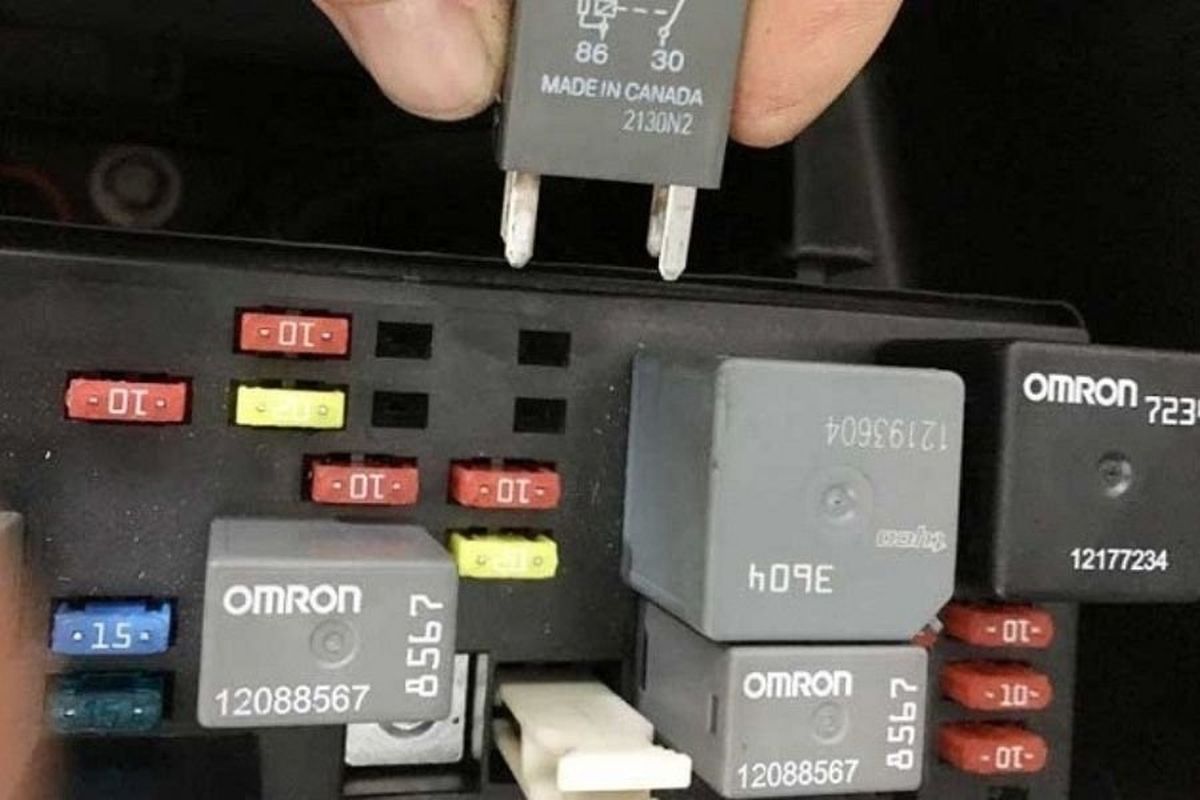
What Is a Fuel Pump Relay? What Are the Symptoms of Failure?
A fuel pump relay is an electrical switching component that controls the power supplied to the fuel pump. It allows the engine control system to turn the fuel pump on and off without sending the full pump current directly through the ECU or ignition switch.
Although the relay itself is a relatively small component, a failure can prevent the fuel pump from operating correctly. In some cases, the engine may not start at all; in others, the vehicle may stall intermittently or experience fuel-pressure problems.
What Does the Fuel Pump Relay Do?
The fuel pump requires a significant amount of electrical current, especially when the engine is running under high load. Instead of routing this current directly through a low-current control circuit, the vehicle uses a relay.
The basic operation is:
-
The ignition is switched on.
-
The ECU or another control module commands the fuel pump circuit.
-
The relay coil is energized.
-
The relay contacts close.
-
Battery voltage is supplied to the fuel pump.
-
The pump pressurizes the fuel system.
-
The ECU controls the pump operation according to the vehicle's design.
In many vehicles, the fuel pump briefly runs when the ignition is switched on. This is often called fuel pump priming. The exact duration and operating strategy vary by manufacturer.
Modern vehicles may not use a simple conventional relay. Some use a fuel pump control module, transistorized driver, smart relay, or an integrated body/engine control module to regulate pump operation.
Where Is the Fuel Pump Relay Located?
The location varies considerably between vehicles.
It may be found in:
-
The engine compartment fuse/relay box
-
The interior fuse box
-
A separate relay carrier
-
Near the ECU or body control module
-
Near the fuel pump control module
The relay may not always be labeled simply as "Fuel Pump Relay." Depending on the manufacturer, it can have a different designation or be integrated into a larger module.
The vehicle's wiring diagram and fuse-box documentation are therefore more reliable than simply replacing a relay based on its appearance.
What Are the Symptoms of a Faulty Fuel Pump Relay?
A failing relay can produce several different symptoms depending on whether it fails completely, intermittently, or develops excessive resistance at its contacts.
1. Engine Cranks but Does Not Start
One of the most important symptoms is a crank-no-start condition.
The starter motor may turn the engine normally, but the engine does not start because the fuel pump is not receiving power.
However, this symptom does not automatically mean the relay is defective.
The problem could also involve:
-
Fuel pump
-
Fuel pump fuse
-
Wiring
-
Ground connection
-
ECU command
-
Fuel pump control module
-
Immobilizer system
-
Crankshaft position sensor
-
Fuel pressure regulator
-
Fuel pressure sensor
-
Fuel pump connector
Therefore, checking whether the pump is actually receiving voltage is important.
2. No Fuel Pump Sound When the Ignition Is Turned On
On vehicles where the fuel pump normally performs a short priming cycle, you may hear a brief humming sound from the fuel tank area when the ignition is switched on.
If this sound suddenly disappears, the relay is one possible suspect.
But again, the absence of pump noise does not prove relay failure. The pump itself could be seized or electrically open, or the ECU may intentionally not command the pump because another condition has not been satisfied.
3. Intermittent Stalling While Driving
An intermittent fuel pump relay can be particularly difficult to diagnose.
The vehicle may:
-
Start normally
-
Drive normally for several minutes
-
Suddenly lose fuel pressure
-
Stall
-
Restart after waiting
-
Operate normally again
A relay with worn or burned contacts may work when cold but fail after heating up.
This type of failure can be mistaken for a defective fuel pump.
4. Engine Hesitation and Loss of Power
If the relay contacts have high electrical resistance rather than completely opening the circuit, the pump may receive insufficient voltage.
The pump can then operate below its intended performance.
Possible symptoms include:
-
Hesitation during acceleration
-
Poor throttle response
-
Loss of power
-
Misfire
-
Difficulty maintaining fuel pressure
-
Poor high-RPM performance
-
Engine stalling under heavy load
This is particularly important because a weak electrical supply can make a healthy fuel pump appear to be mechanically defective.
5. Hard Starting
A relay that intermittently fails to energize the pump can cause extended cranking before the engine starts.
The driver may notice that:
-
The engine normally starts after sitting for a while
-
Starting becomes difficult after the vehicle has been driven
-
Several ignition cycles are needed before starting
-
The engine starts after tapping or disturbing the relay area
These symptoms should not be interpreted as proof of relay failure, but they can provide useful diagnostic clues.
6. Vehicle Suddenly Dies and Then Restarts
A classic intermittent relay problem can look like this:
The vehicle suddenly stalls while driving. After a short period, it starts again as if nothing happened.
This can happen because an internal relay contact temporarily loses connection due to:
-
Heat
-
Vibration
-
Contact wear
-
Electrical arcing
-
Internal mechanical problems
However, crankshaft and camshaft position sensors can produce very similar symptoms, so they must also be considered.
7. Relay Clicking but Fuel Pump Not Operating
Hearing a relay click does not necessarily mean that the relay is working correctly.
A relay contains both a coil and switching contacts.
The coil may activate and produce an audible click while the contacts fail to deliver sufficient current.
Possible causes include:
-
Burned contacts
-
Pitted contacts
-
Corrosion
-
Internal resistance
-
Mechanical contact damage
Therefore, listening for a click is only a preliminary check.
8. Fuel Pressure Problems
If the relay supplies unstable or insufficient voltage to the fuel pump, fuel pressure can become unstable.
Depending on the fuel system, this may cause:
-
Low fuel pressure
-
Pressure fluctuations
-
Lean running
-
Misfire
-
Poor acceleration
-
Hard starting
-
Stalling
In modern direct-injection and common-rail systems, fuel pressure problems can be especially complicated because there may be both a low-pressure fuel supply system and a high-pressure fuel system.
Can a Bad Fuel Pump Relay Cause a Check Engine Light?
Yes, it can, but not always.
A relay failure may cause secondary fuel-system problems that result in diagnostic trouble codes.
Depending on the vehicle, possible codes may relate to:
-
Fuel pressure
-
Fuel pressure sensor
-
Fuel pump control
-
Engine misfire
-
Lean mixture
-
Low system voltage
For example, codes such as P0087 can indicate fuel rail/system pressure that is too low. However, P0087 does not specifically mean that the fuel pump relay is defective.
The code should be treated as evidence of a system problem rather than identification of one particular component.
Fuel Pump Relay vs Fuel Pump: What Is the Difference?
These two components are often confused.
The fuel pump is the electric motor/pump assembly that physically moves fuel.
The fuel pump relay is an electrical switching device that supplies power to the pump when commanded.
A failed fuel pump can cause almost the same symptoms as a failed relay.
For example, both can cause:
-
No-start
-
Stalling
-
Loss of power
-
Low fuel pressure
-
Hard starting
The correct diagnosis requires testing the electrical supply and fuel pressure rather than replacing both parts unnecessarily.
What Causes a Fuel Pump Relay to Fail?
Several factors can damage or weaken a relay.
Common causes include:
Worn relay contacts
Repeated switching eventually wears the internal contacts.
Electrical arcing
The fuel pump is an inductive electrical load. Switching current can produce arcing that gradually damages relay contacts.
Excessive current draw
A fuel pump that is wearing out can draw more current than normal. This can overheat the relay contacts.
This is an important diagnostic point: sometimes the relay fails because the fuel pump itself is becoming defective.
Replacing the relay without checking pump current draw may result in the same problem returning.
Heat
High temperatures can accelerate deterioration of relay contacts and internal components.
Corrosion
Moisture around the fuse or relay box can cause corrosion and increased electrical resistance.
Loose terminals
A poor connection at the relay socket can generate heat and voltage drop.
Water intrusion
Water entering the fuse/relay box can damage the relay or its terminals.
Incorrect replacement
Installing a relay with the wrong electrical specifications can cause premature failure or circuit problems.
How Is a Fuel Pump Relay Diagnosed?
A proper diagnosis should begin with the electrical circuit rather than immediately replacing the relay.
Check the Fuel Pump Fuse
First inspect the relevant fuse.
If the fuse is blown, replacing it without investigating why it failed is not a proper repair.
A short circuit, damaged wiring, or excessive fuel pump current may cause the fuse to blow again.
Check for Fuel Pump Voltage
Measure voltage at the fuel pump connector while the pump is commanded on.
This is one of the most useful tests.
If the ECU commands the pump but the pump does not receive the required voltage, the problem may be somewhere in the power circuit, including:
-
Fuse
-
Relay
-
Wiring
-
Connector
-
Ground
-
Fuel pump control module
Perform a Voltage-Drop Test
A relay may appear to function while still creating excessive voltage drop.
Voltage-drop testing can reveal resistance in:
-
Relay contacts
-
Fuse connections
-
Wiring
-
Ground connections
-
Connectors
This is often more informative than simply checking whether the relay clicks.
Check Fuel Pump Current Draw
Measuring the pump's current consumption can help determine whether the pump itself is becoming worn.
A pump that draws abnormally high current can overload the relay and electrical circuit.
The exact acceptable current depends on the vehicle and fuel pump design, so manufacturer specifications should be used.
Swap the Relay Carefully
On some vehicles, another relay with identical electrical specifications and pin configuration may be temporarily substituted for diagnostic purposes.
This should only be done when the replacement relay is genuinely compatible.
Relays that look physically identical are not necessarily electrically interchangeable.
Use a Wiring Diagram
A wiring diagram is particularly useful for determining:
-
Who commands the relay
-
Which terminal supplies battery voltage
-
Which terminal feeds the pump
-
Whether the ECU controls the relay ground or power side
-
Whether a fuel pump control module is present
-
Where the circuit is grounded
Without this information, randomly testing terminals can lead to incorrect conclusions.
Can a Bad Relay Cause a Fuel Pump to Fail?
It can contribute to fuel pump problems, but the relationship can also work in the opposite direction.
A worn fuel pump may develop increased mechanical resistance and draw excessive current.
That additional current can cause:
-
Relay contact overheating
-
Fuse problems
-
Connector heating
-
Wiring damage
-
Repeated relay failure
Therefore, if a fuel pump relay has failed more than once, the fuel pump's current consumption and electrical condition should also be investigated.
Can a Fuel Pump Relay Fail Intermittently?
Yes.
Intermittent relay failure can be harder to diagnose than a completely dead relay.
The vehicle may work perfectly during testing because the relay happens to operate correctly at that moment.
The problem may appear only:
-
When the relay is hot
-
During vibration
-
Under high electrical load
-
After extended driving
-
During acceleration
-
In very cold or hot weather
This is why reproducing the fault and monitoring voltage while the problem occurs can be important.
Can a Bad Fuel Pump Relay Cause Misfires?
Yes, indirectly.
If the relay causes insufficient fuel pump voltage, fuel pressure can drop.
Low fuel pressure can cause the engine to run lean or fail to deliver the required amount of fuel, particularly under load.
This can result in misfire codes such as:
-
P0300
-
P0301
-
P0302
-
P0303
-
P0304
However, a misfire code does not identify the fuel pump relay as the cause.
Ignition coils, spark plugs, injectors, vacuum leaks, fuel pressure problems and many other faults can also cause misfires.
What Happens If You Continue Driving With a Faulty Fuel Pump Relay?
It depends on the severity of the fault.
If the relay fails completely, the vehicle may not start.
If it fails intermittently, the vehicle may suddenly lose engine power or stall while driving.
That creates an important safety risk because the engine may stop unexpectedly, particularly in traffic or during overtaking.
For this reason, a vehicle suspected of having an intermittent fuel pump power problem should not be treated as reliable simply because it currently starts and drives normally.
Does Every Vehicle Have a Separate Fuel Pump Relay?
No.
Older and simpler vehicles commonly use a conventional relay.
Modern vehicles can use:
-
Fuel pump control modules
-
Electronic pump drivers
-
Smart relays
-
Integrated ECU drivers
-
Body control modules
-
Engine control modules
Some vehicles also use variable-speed fuel pump control rather than simply switching the pump fully on and off.
Therefore, the term "fuel pump relay" may describe a conventional relay in one vehicle and a more sophisticated control system in another.
Fuel Pump Relay and OBD Diagnosis
OBD scanning can be useful, but an OBD scanner cannot normally say, "the fuel pump relay is defective" with certainty.
The scanner may show information related to:
-
Fuel pressure
-
Fuel pump control
-
Fuel pressure sensor
-
Engine misfire
-
System voltage
-
Fuel mixture
The most effective diagnosis combines OBD data with electrical measurements and fuel-pressure testing.
Is Replacing the Fuel Pump Relay Difficult?
On vehicles with a conventional relay, replacement can be relatively simple because the relay may simply plug into the fuse/relay box.
However, the important part is identifying the correct relay and correct circuit.
If the vehicle uses an integrated control module, replacing a conventional relay may not be possible at all.
Some modern systems also require programming or configuration after control-module replacement.
Fuel Pump Relay Failure vs Fuel Pump Failure
The symptoms can overlap significantly, which is why diagnosis is important.
A vehicle that does not start because of a fuel pump problem may look exactly like a vehicle with a relay problem.
The most useful question is not simply:
"Does the fuel pump make noise?"
A better diagnostic approach is:
Is the pump receiving the correct voltage and ground when it is commanded to operate, and is it producing the required fuel pressure and flow?
If electrical power is missing, investigate the control circuit.
If correct power and ground are present but the pump does not operate correctly, the pump itself becomes a stronger suspect.
Final Consideration
A fuel pump relay failure can cause no-start, hard starting, intermittent stalling, hesitation, loss of power and fuel-pressure problems, but these symptoms are not exclusive to the relay.
A no-start condition does not automatically mean the relay is bad. Likewise, a relay that clicks is not necessarily healthy.
The most reliable diagnosis involves checking the fuse, relay control signal, voltage at the pump, voltage drop, ground integrity, pump current consumption and actual fuel pressure.
Most importantly, if a replacement relay repeatedly fails, the underlying cause should be investigated rather than simply installing another relay. A failing fuel pump, excessive current draw, damaged wiring or poor connections may be responsible for the repeated relay failure.