TR
TR EN
EN

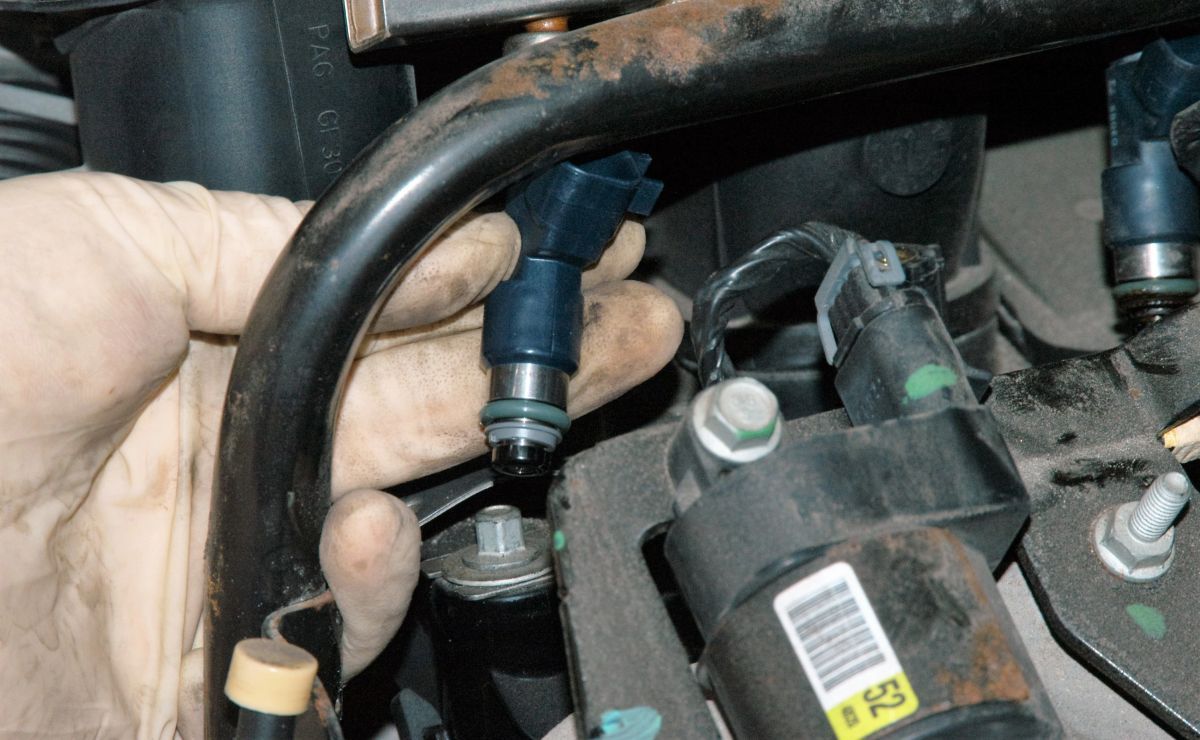
What Are the Symptoms of a Clogged Fuel Injector? How Is an Injector Cleaned?
Fuel injectors are critical components of modern gasoline and diesel engines. They control how much fuel enters the combustion chamber or intake system and deliver it at the correct time.
When an injector becomes partially or completely clogged, the amount and spray pattern of fuel can change. The engine may then run too lean, misfire, hesitate, or lose power.
A clogged injector does not always fail completely. In many cases, the problem develops gradually and becomes more noticeable during acceleration or under load.
What Causes a Fuel Injector to Become Clogged?
Fuel injectors operate under demanding conditions. Small deposits can accumulate inside the injector or around the nozzle over time.
Common causes include:
-
Contaminated fuel
-
Dirt or sediment in the fuel system
-
Poor-quality fuel
-
Long periods of vehicle inactivity
-
Fuel filter problems
-
Carbon and deposit formation
-
Internal injector contamination
-
Incorrect fuel-system maintenance
-
Corrosion or moisture in the fuel system
The severity of the problem depends on the injector design, fuel type, vehicle, operating conditions, and quality of the fuel system.
Symptoms of a Clogged Fuel Injector
A clogged injector can produce symptoms that resemble many other engine problems. Therefore, the presence of one symptom alone does not automatically prove that an injector is clogged.
Common symptoms include:
Engine misfire
A partially clogged injector may not deliver enough fuel to one cylinder. The cylinder can then run lean and misfire.
The engine may feel rough, especially at idle or during acceleration.
Rough idle
If fuel delivery is uneven between cylinders, the engine may shake or run unevenly at idle.
Hesitation during acceleration
A clogged injector may not supply enough fuel when the engine suddenly requires more fuel.
The vehicle may hesitate when the accelerator is pressed.
Loss of engine power
Insufficient fuel delivery can reduce combustion efficiency and cause noticeable power loss.
This may become especially obvious when climbing a hill or accelerating at higher engine loads.
Poor acceleration
The engine may respond slowly to the accelerator because one or more cylinders are not receiving the correct amount of fuel.
Increased fuel consumption
Although a clogged injector can cause a lean condition, fuel economy can sometimes decrease because the engine management system compensates for the problem or because combustion becomes inefficient.
Engine warning light
A clogged injector can contribute to misfire or fuel-trim problems that trigger the Check Engine Light.
Possible diagnostic codes can include cylinder-specific misfire codes such as P0301, P0302, P0303, and P0304, depending on the engine.
Hard starting
A severely restricted injector may make starting more difficult because insufficient fuel reaches the affected cylinder.
Engine stalling
If fuel delivery becomes severely restricted, the engine may stall, particularly at idle or during sudden load changes.
Can a Clogged Injector Cause a Misfire?
Yes.
An injector that delivers insufficient fuel can cause the affected cylinder to run lean.
The ECU may detect the resulting combustion instability through the crankshaft position signal and other engine-management data.
However, a misfire does not automatically mean that the injector is clogged.
The same symptoms can be caused by:
-
Spark plugs
-
Ignition coils
-
Fuel pressure problems
-
Vacuum leaks
-
Compression problems
-
Valve problems
-
Airflow measurement issues
-
Wiring faults
-
ECU-related problems
This is why an injector should be tested before replacing it.
Can a Clogged Injector Cause Lean Mixture Codes?
Yes.
If an injector is unable to deliver the expected amount of fuel, the engine can operate with a lean mixture.
Depending on the vehicle, diagnostic trouble codes such as P0171 or P0174 may appear.
However, lean codes can also be caused by vacuum leaks, low fuel pressure, a faulty mass airflow sensor, an intake leak, or other problems.
The code alone cannot prove that the injector is clogged.
How Is a Clogged Injector Diagnosed?
A proper diagnosis should start before any cleaning is performed.
A technician may check:
-
Diagnostic trouble codes
-
Fuel pressure
-
Fuel trims
-
Misfire counters
-
Injector electrical resistance
-
Injector wiring
-
Injector activation
-
Cylinder balance
-
Injector flow
-
Spray pattern
-
Fuel delivery volume
Live data can be particularly useful.
If one cylinder shows a consistent misfire and the injector associated with that cylinder is suspected, the injector can be tested individually.
Injector Cleaning With Fuel-System Additives
The simplest method is using a fuel-system cleaning additive designed for the specific fuel system.
The additive is mixed with the fuel according to the manufacturer's instructions.
This method may help remove light deposits from the fuel system and injectors.
However, it has limitations.
A severely clogged injector may not be restored by adding a bottle of cleaner to the fuel tank.
Fuel additives are more appropriate for mild contamination and preventive maintenance than for a severely restricted or mechanically damaged injector.
Can Injector Cleaner Damage the Engine?
A properly formulated product used according to its instructions is generally designed to be compatible with the intended fuel system.
Problems can arise when:
-
Too much additive is used
-
The wrong product is selected
-
A product is used in an incompatible fuel system
-
Unapproved chemicals are introduced into the fuel system
Using random solvents or workshop chemicals in the fuel tank is not a safe substitute for a proper injector cleaner.
Professional Injector Cleaning
For a significantly clogged injector, professional cleaning is usually more effective.
The injector can be removed from the vehicle and tested using specialized equipment.
A professional injector service may include:
-
Electrical testing
-
Flow testing
-
Spray-pattern testing
-
Ultrasonic cleaning
-
Back-flushing
-
Leakage testing
-
Final flow comparison
The important advantage is that the injector can be tested before and after cleaning.
This allows the technician to determine whether the cleaning process actually improved the injector.
What Is Ultrasonic Injector Cleaning?
Ultrasonic cleaning is a common professional method.
The injector is placed in an ultrasonic cleaning system while the cleaning process uses high-frequency vibrations to help loosen deposits.
The injector can also be electrically activated during the cleaning process so that the cleaning solution can pass through the internal fuel path.
After cleaning, the injector should be tested again.
The goal is not simply to make the injector look clean. The important question is whether it now delivers the correct amount of fuel with an appropriate spray pattern.
Why Is Spray Pattern Important?
An injector can deliver fuel but still have a problem.
For example, the injector may produce:
-
An uneven spray
-
A restricted spray
-
Multiple irregular streams
-
Poor atomization
-
An incorrect flow rate
Therefore, simply checking whether fuel comes out of an injector is not enough.
The spray pattern and flow rate are much more important.
Can You Clean Injectors Without Removing Them?
Yes, depending on the vehicle and the equipment available.
Some professional cleaning systems connect directly to the fuel rail and run specialized cleaning fluid through the injectors while the engine operates.
This can be useful for certain types of deposits.
However, it does not provide the same level of inspection as removing the injectors and testing each one individually.
If an injector is severely restricted, leaking, electrically faulty, or mechanically damaged, removal and bench testing are generally more informative.
Can a Fuel Additive Fix a Completely Clogged Injector?
Usually, no.
If an injector is completely blocked, severely contaminated, mechanically damaged, or electrically defective, pouring injector cleaner into the fuel tank is unlikely to solve the problem.
A severely clogged injector may require professional cleaning or replacement.
This distinction is important because repeatedly adding fuel-system cleaner without diagnosing the injector can waste money while the underlying problem remains.
Injector Cleaning on Gasoline Engines
Gasoline injectors can be cleaned using several methods depending on the injector design.
Port fuel injectors are generally more accessible and may be removed relatively easily on some engines.
Direct-injection injectors operate under much higher pressures and require more specialized procedures and equipment.
A direct-injection injector should not be treated like a conventional low-pressure gasoline injector.
What About Diesel Injectors?
Diesel injectors are even more sensitive to fuel quality and contamination.
Modern common-rail diesel injectors operate at extremely high pressures and require precise fuel metering.
Symptoms of injector problems can include:
-
Rough idle
-
Difficult starting
-
Excessive smoke
-
Poor acceleration
-
Increased fuel consumption
-
Knocking or combustion noise
-
Misfire-like behavior
-
Uneven engine operation
Common-rail injectors should be tested with appropriate equipment rather than cleaned using improvised methods.
Can a Clogged Injector Cause Black Smoke?
It can, but the relationship depends on the engine and injector condition.
A severely contaminated or malfunctioning injector may deliver an incorrect amount of fuel or produce poor atomization.
On diesel engines, excessive fuel or poor combustion can contribute to black smoke.
However, black smoke can also be caused by insufficient air, turbocharger problems, airflow restrictions, EGR issues, or other fuel-system faults.
Can a Clogged Injector Cause White Smoke?
A faulty injector can sometimes contribute to white or light-colored exhaust smoke, particularly on diesel engines.
If fuel is injected incorrectly or does not burn properly, unburned fuel can enter the exhaust.
However, white smoke has many possible causes, including coolant entering the combustion chamber, low compression, cold-start conditions, and other fuel-system problems.
The color of the smoke should therefore be treated as a diagnostic clue rather than proof of injector failure.
What Happens If You Keep Driving With a Clogged Injector?
Driving with a mildly restricted injector may not immediately cause catastrophic damage, but the problem should not be ignored.
A persistent lean misfire can increase combustion temperatures in the affected cylinder.
Continuous misfiring can also cause excessive unburned fuel to enter the exhaust system in some situations, potentially damaging the catalytic converter.
A severely malfunctioning injector can create more serious problems.
For this reason, a vehicle with a persistent Check Engine Light, severe misfire, significant power loss, or abnormal engine operation should be diagnosed rather than driven indefinitely.
Injector Cleaning vs Injector Replacement
Cleaning is not always the correct solution.
Cleaning may be appropriate when:
-
The injector is electrically healthy
-
The injector is mechanically functional
-
The spray pattern is poor because of deposits
-
Flow is reduced because of contamination
Replacement may be necessary when:
-
The injector coil is electrically damaged
-
The injector is mechanically stuck
-
The injector leaks excessively
-
The body is damaged
-
The injector cannot achieve the correct flow after cleaning
-
The spray pattern remains abnormal
-
The injector has an internal fault
A damaged injector cannot always be restored through cleaning.
Should All Injectors Be Cleaned Together?
If one injector is clogged, the condition of the other injectors should also be considered.
If the problem was caused by contaminated fuel, other injectors may have similar contamination.
Professional cleaning and flow testing can identify differences between injectors.
This is particularly useful because an injector set with significantly different flow rates can cause uneven combustion even when no injector is completely blocked.
What Should Be Checked Before Cleaning the Injectors?
Injector cleaning should not be used as a replacement for diagnosis.
Before cleaning, it is worth checking:
Fuel pressure
Low fuel pressure can make several injectors appear faulty even when the injectors themselves are healthy.
Fuel filter
A restricted fuel filter can limit fuel delivery.
Electrical connections
A damaged connector or wiring problem can prevent an injector from operating correctly.
Ignition system
A faulty spark plug or ignition coil can create symptoms that look almost identical to an injector problem.
Air leaks
Vacuum leaks can cause lean operation and rough running.
Compression
A mechanical engine problem can produce a cylinder-specific misfire that may incorrectly be blamed on the injector.
A Useful Injector Diagnosis Method
If one cylinder is consistently misfiring, a technician can compare the suspected injector with another cylinder when the engine design and diagnostic procedure allow it.
For example, after appropriate testing, the injectors can sometimes be swapped between cylinders.
If the misfire follows the injector, suspicion of the injector becomes much stronger.
If the misfire remains in the original cylinder, the problem may be elsewhere.
This should only be done when the injectors are interchangeable and the manufacturer's procedures allow it.
Can an Injector Be Cleaned With Brake Cleaner?
Using random solvents such as brake cleaner is not a proper injector-cleaning method.
Fuel injectors contain precision internal components, seals, electrical parts, and carefully calibrated passages.
The wrong chemical can damage seals or other components.
Injector cleaning should be performed with products and equipment designed specifically for fuel injectors.
How Often Should Fuel Injectors Be Cleaned?
There is no universal cleaning interval.
A healthy injector does not necessarily need periodic professional cleaning simply because the vehicle has reached a certain mileage.
The need depends on:
-
Fuel quality
-
Vehicle usage
-
Engine type
-
Injector design
-
Fuel-system condition
-
Symptoms
-
Maintenance history
Preventive use of a quality fuel-system cleaner may be appropriate for some vehicles, but routine ultrasonic cleaning is not automatically necessary for every engine.
The Most Important Point About Injector Problems
A clogged injector is only one possible cause of poor engine performance.
If the vehicle has rough idle, hesitation, misfire, power loss, or increased fuel consumption, replacing or cleaning the injectors without diagnosis may not solve the problem.
The most reliable approach is to first determine whether the injector has a problem with flow, spray pattern, electrical operation, leakage, or fuel delivery.
If deposits are responsible, professional cleaning may restore the injector.
If the injector is mechanically or electrically damaged, replacement may be the better solution.
In other words, injector cleaning should be based on testing rather than simply assuming that every misfire or hesitation is caused by a dirty injector.