TR
TR EN
EN

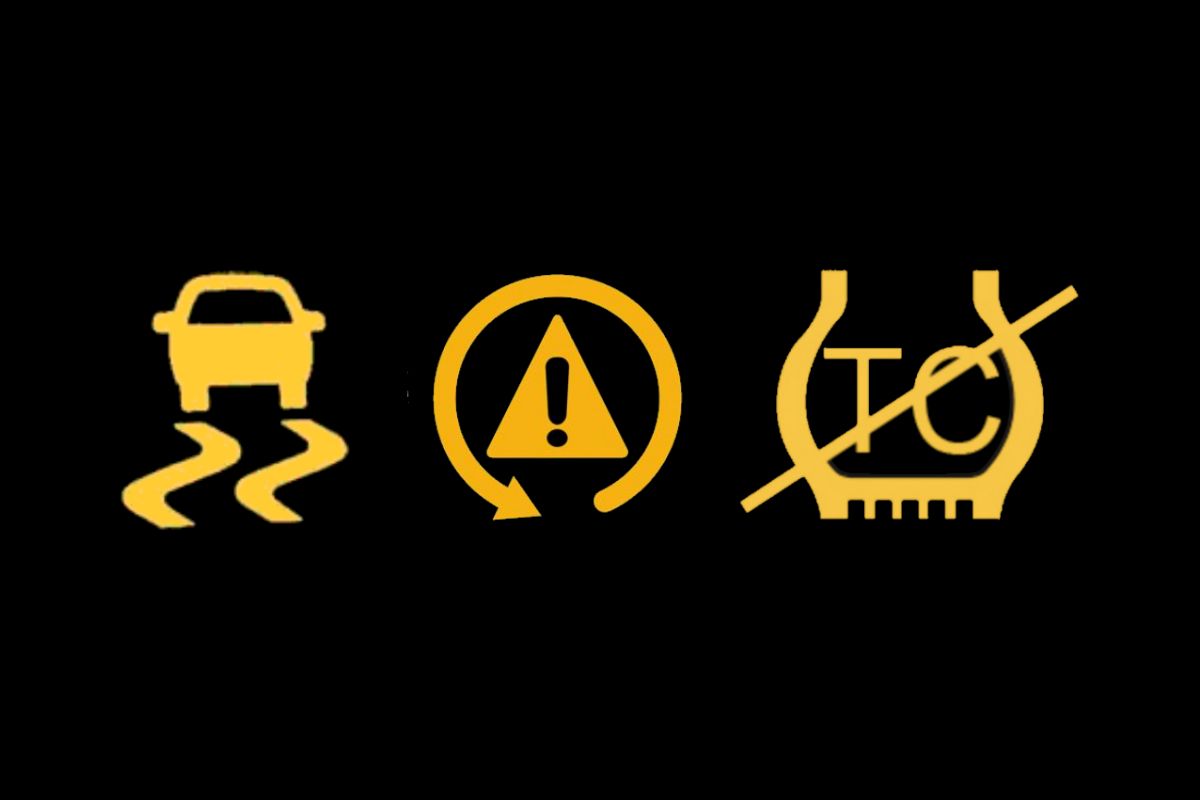
What Is the Traction Control System? Why Does the TCS / ASR Warning Light Come On?
The Traction Control System (TCS) is an electronic safety system designed to reduce excessive wheelspin during acceleration. It is particularly useful when the road surface is slippery or when the driver applies more engine torque than the tires can transfer to the road.
Depending on the manufacturer and market, the system may be called:
-
Traction Control System (TCS)
-
Anti-Slip Regulation (ASR)
-
Traction Control
-
Acceleration Slip Regulation
-
Drive Slip Control
-
Traction Control Function
Although the terminology varies, the basic principle is similar: the system detects excessive driven-wheel slip and attempts to restore traction by controlling engine torque and/or applying braking force to individual wheels.
The TCS warning light does not always indicate a fault. In many vehicles, the light flashes temporarily when the system is actively preventing wheelspin.
A light that remains illuminated, however, may indicate that the system has been switched off or that a fault has been detected.
How Does the Traction Control System Work?
TCS relies heavily on information from the vehicle's wheel-speed sensors.
These sensors are normally part of the ABS system and continuously monitor the rotational speed of each wheel.
During acceleration, the control module compares the wheel-speed signals.
If a driven wheel suddenly rotates significantly faster than the other wheels, the system may interpret this as wheelspin.
The control system can then intervene.
Depending on the vehicle, it may:
-
Reduce engine torque
-
Close the electronic throttle
-
Retard ignition timing
-
Reduce fuel injection
-
Adjust turbocharger boost
-
Apply the brake to a spinning wheel
-
Combine engine torque reduction with individual-wheel braking
The intervention can happen extremely quickly.
The driver may feel a brief hesitation, pulsing, or reduction in engine power while TCS is working.
This is normally expected behavior.
What Does the TCS Light Mean?
The meaning of the TCS warning light depends on how it behaves.
A traction-control symbol may:
-
Flash briefly
-
Remain continuously illuminated
-
Appear together with an ABS warning
-
Appear together with an ESC or stability-control warning
-
Appear with a Check Engine Light
-
Show a message indicating that traction control is disabled
A flashing TCS light commonly means the system is actively controlling wheelspin.
A steady TCS light can mean that traction control has been manually switched off or that the system has detected a malfunction.
The exact meaning depends on the vehicle.
Why Does the TCS Light Flash?
A flashing TCS indicator is often completely normal.
For example, imagine accelerating on:
-
Snow
-
Ice
-
Wet asphalt
-
Mud
-
Gravel
-
Sand
-
A painted road surface
One or more driven wheels may begin spinning faster than the vehicle can move.
The TCS system detects the difference in wheel speed and intervenes.
The warning light may flash while this intervention is taking place.
In this situation, the flashing light is usually telling the driver:
"Traction control is currently working."
It does not necessarily mean that the vehicle has a fault.
Why Does the TCS / ASR Light Stay On?
A continuously illuminated traction-control warning can have several meanings.
The first possibility is that the driver has intentionally switched the system off.
Some vehicles have a dedicated TCS, ASR, ESC, or stability-control button.
If the system has been disabled, the warning light may remain illuminated.
If the system has not been manually disabled, a steady warning may indicate a fault.
Possible causes include:
-
Faulty wheel-speed sensor
-
Damaged sensor wiring
-
ABS reluctor ring or encoder problem
-
ABS control-module fault
-
Steering-angle sensor problem
-
Yaw-rate sensor problem
-
Lateral acceleration sensor problem
-
Brake-pedal switch problem
-
Faulty brake system component
-
Electronic throttle problem
-
Accelerator pedal sensor problem
-
Engine torque-control problem
-
Transmission-related fault
-
Low battery voltage
-
Charging-system problem
-
Damaged wiring or connectors
-
Communication fault between control modules
-
Incorrect tire size
-
Significant tire-pressure differences
-
Mismatched tires
-
Software or calibration problem
Therefore, replacing a wheel-speed sensor simply because the TCS light is illuminated is not always justified.
Can a Faulty ABS Sensor Cause the TCS Light?
Yes.
This is one of the most common relationships between ABS and traction-control warnings.
TCS needs reliable wheel-speed information.
If an ABS wheel-speed sensor produces an incorrect signal, the traction-control module may no longer be able to determine whether a wheel is actually spinning.
The system may therefore disable traction control as a precaution.
A faulty wheel-speed sensor can potentially cause several warnings at the same time, including:
-
ABS warning light
-
TCS warning light
-
ESC warning light
-
Stability-control warning
-
Hill-start assistance warning
-
AWD warning on some vehicles
The vehicle may still drive normally, but important electronic safety functions may no longer be available.
What Is ASR?
ASR is another name commonly used for a traction-control system.
The abbreviation generally refers to Anti-Slip Regulation or Acceleration Slip Regulation, depending on the manufacturer.
ASR performs essentially the same basic task as TCS: preventing excessive wheelspin during acceleration.
The terminology varies by manufacturer.
For example, one manufacturer may label the function TCS, while another may call a similar system ASR.
The underlying technology can be closely related, although the exact control strategy is manufacturer-specific.
What Is the Difference Between TCS and ESC?
TCS and ESC are related but perform different functions.
TCS primarily controls wheelspin during acceleration.
ESC, or Electronic Stability Control, is designed to help maintain the vehicle's intended direction during situations such as understeer or oversteer.
ESC can use:
-
Wheel-speed sensors
-
Steering-angle information
-
Yaw-rate information
-
Lateral acceleration
-
Brake pressure
-
Engine torque
TCS can be considered one of the functions within the broader vehicle dynamics system.
In many modern vehicles, the same control module manages ABS, TCS, and ESC functions.
What Is the Difference Between TCS and ABS?
ABS and TCS both use wheel-speed information, but they operate under different circumstances.
ABS primarily prevents the wheels from locking during hard braking.
TCS primarily prevents excessive wheelspin during acceleration.
Both systems can use individual-wheel braking.
For example, TCS may briefly apply the brake to a spinning driven wheel.
ABS, on the other hand, modulates brake pressure when a wheel is approaching lock-up during braking.
Because they share sensors and control hardware, a problem in one system can affect the other.
Why Does the TCS Light Come On After Changing Tires?
Tire-related problems can sometimes trigger traction-control warnings.
The system expects the wheels to rotate according to predictable relationships.
Problems may occur when:
-
One tire is significantly different in diameter
-
Different tire sizes are installed
-
Tire wear is significantly different between axles
-
One tire has very low pressure
-
An incorrect wheel/tire combination is fitted
-
A tire has been replaced with an incompatible specification
A temporary warning can also occur after certain tire or wheel-related repairs if the vehicle requires sensor calibration or relearning.
This is especially relevant to vehicles with sophisticated ABS, TPMS, AWD, or stability-control systems.
Can Low Tire Pressure Cause the TCS Light?
Potentially, yes.
Low tire pressure changes the effective rolling circumference of a tire.
A significantly underinflated tire may therefore rotate at a different speed from the others.
The vehicle's electronic systems can detect unusual wheel-speed relationships.
However, a TCS warning should not automatically be blamed on tire pressure.
The first step is to check all four tires against the manufacturer's recommended pressures.
If the warning remains, further diagnosis may be necessary.
Can a Bad Battery Cause the TCS Light?
Yes.
Modern vehicles depend heavily on stable electrical voltage.
A weak battery, charging-system problem, poor ground connection, or voltage drop can interfere with communication between electronic control modules.
This can produce multiple warning lights simultaneously.
A driver may see:
-
TCS warning
-
ABS warning
-
ESC warning
-
Steering warning
-
Transmission warning
-
Battery warning
Low voltage can therefore create a misleading impression that several unrelated components have failed.
Battery and charging voltage should be checked before expensive electronic components are replaced.
Can the Alternator Cause a TCS Warning?
Yes, indirectly.
The alternator supplies electrical power while the engine is running and maintains the vehicle's electrical system voltage.
If charging voltage becomes unstable or too low, control modules may register communication or sensor errors.
A TCS warning may therefore appear alongside other electronic warnings.
This is particularly important if several warning lights appear at the same time or if the problem occurs shortly after starting the engine.
Can an Electronic Throttle Problem Trigger the TCS Light?
Yes.
Modern traction-control systems often reduce engine torque electronically.
The ECU may control the electronic throttle to reduce torque when wheelspin is detected.
If the electronic throttle, accelerator pedal sensor, or engine torque-control system has a fault, the TCS system may not be able to perform its required function.
The vehicle may then disable traction control.
Possible symptoms can include:
-
Poor acceleration
-
Delayed throttle response
-
Reduced engine power
-
Limp mode
-
Check Engine Light
-
TCS warning
-
ESC warning
A TCS warning in this situation does not necessarily mean that the traction-control hardware itself is defective.
Can an Engine Fault Cause the TCS Light?
Yes.
The TCS system depends on cooperation with the engine-management system.
If the ECU cannot reliably control engine torque, traction control may be disabled.
For example, faults involving:
-
Electronic throttle
-
Accelerator pedal position
-
Engine torque calculation
-
Ignition
-
Fuel injection
-
Airflow measurement
-
Boost control
can potentially cause the TCS function to become unavailable.
This is why a TCS warning appearing together with a Check Engine Light should be diagnosed as a complete powertrain and vehicle-control problem.
Can a Transmission Problem Cause the TCS Light?
In some vehicles, yes.
Modern automatic transmissions communicate extensively with the engine and stability-control systems.
The traction-control system may need information about:
-
Current gear
-
Engine torque
-
Transmission torque
-
Vehicle speed
-
Requested acceleration
A transmission fault or communication problem can therefore cause traction-control functions to be restricted.
The exact behavior depends on the vehicle's electronic architecture.
Can a Steering-Angle Sensor Cause the TCS Light?
Yes.
The steering-angle sensor tells the stability-control system where the driver intends the vehicle to go.
This information is particularly important for ESC, but because TCS and ESC often share the same control module, a steering-angle sensor problem can also cause a traction-control warning.
A steering-angle sensor may require calibration after:
-
Wheel alignment
-
Steering-system repairs
-
Battery disconnection
-
Steering-column work
-
Suspension repairs
A calibration issue can sometimes produce warning lights without a mechanically damaged sensor.
Can a Wheel Alignment Problem Cause a TCS Warning?
A conventional wheel-alignment problem does not necessarily cause a TCS warning by itself.
However, major alignment changes or steering-angle sensor calibration problems can affect the stability-control system.
For example, if the steering wheel is significantly off-center while the steering-angle sensor reports a straight-ahead position, the control system may detect an inconsistency.
This can lead to stability-control warnings.
Therefore, alignment should be considered when a warning appears after suspension or steering work.
What Happens When TCS Is Not Working?
If the traction-control system is disabled because of a fault, the vehicle may still drive normally under dry conditions.
However, the driver may lose electronic assistance that would otherwise reduce wheelspin.
The risk becomes greater on slippery roads.
Without functioning TCS, excessive accelerator input can cause the driven wheels to spin more easily.
Depending on the vehicle, ESC and other related functions may also be unavailable.
The driver should therefore treat a persistent TCS warning seriously, especially when driving in rain, snow, ice, or loose surfaces.
Can You Drive With the TCS Light On?
It depends on the cause.
If the light is flashing temporarily during acceleration, this is generally normal operation.
If the light remains on because TCS has been intentionally disabled, the vehicle may still be mechanically safe to drive, but traction assistance is reduced.
If the light remains on because of a fault, the vehicle may still be driveable, but the traction-control and potentially stability-control functions may not operate correctly.
Extra caution is necessary in slippery conditions.
If the TCS warning appears together with:
-
ABS warning
-
Brake warning
-
ESC warning
-
Steering warning
-
Severe engine problems
-
Loss of braking performance
the vehicle should be inspected as soon as possible.
If braking or steering behavior is abnormal, continued driving may be unsafe.
What Should You Check When the TCS Light Comes On?
A logical diagnostic process is more useful than immediately replacing parts.
Start with simple checks.
Check the tires
Verify that all tires have the correct pressure and compatible specifications.
Check whether TCS was manually disabled
Some vehicles leave the warning illuminated when traction control has been switched off.
Check the battery and charging system
Low voltage can create multiple electronic faults.
Scan the vehicle
Use a diagnostic scanner capable of communicating with the ABS/ESC module as well as the engine ECU.
A basic engine-only scanner may not retrieve the relevant ABS or stability-control fault codes.
Inspect wheel-speed sensors
Check sensor wiring, connectors, mounting, and the encoder or reluctor used by the sensor.
Check steering-angle and stability sensors
If the warning appeared after steering, suspension, alignment, or battery-related work, calibration may be necessary.
Compare live data
Wheel-speed readings should be compared while driving.
A sensor that intermittently drops to zero or reports a value inconsistent with the other wheels can provide an important diagnostic clue.
What Fault Codes Can Be Associated With the TCS System?
There is no single universal TCS fault code.
Depending on the vehicle, problems may be associated with codes relating to:
-
Wheel-speed sensors
-
ABS
-
Steering-angle sensors
-
Yaw-rate sensors
-
Lateral acceleration sensors
-
Brake switches
-
Electronic throttle control
-
Accelerator pedal position
-
Engine torque management
-
CAN communication
Some common OBD codes that can be relevant in certain vehicles include:
-
P0121 – Throttle/Pedal Position Sensor Performance
-
P0221 – Throttle/Pedal Position Sensor Performance
-
P2135 – Throttle/Pedal Position Sensor Voltage Correlation
-
C0035 and related wheel-speed sensor codes
-
C0040 and related wheel-speed sensor codes
-
C0050 and related wheel-speed sensor codes
The exact meaning of a code depends on the vehicle and its control-module architecture.
A code should therefore be interpreted using the manufacturer's diagnostic information rather than assuming that the code automatically identifies the failed component.
Why Does the TCS Light Appear After a Battery Replacement?
Battery replacement can sometimes be followed by temporary electronic warnings.
When battery power is disconnected, certain modules can lose learned values or calibration information.
Depending on the vehicle, systems that may require relearning or calibration include:
-
Steering-angle sensor
-
Electric power steering
-
Throttle position
-
Window systems
-
Stop-start system
-
Transmission adaptations
Some vehicles automatically restore these settings after driving.
Others require a diagnostic procedure.
If the TCS light appears immediately after battery replacement, checking for calibration and stored fault codes can be useful.
Why Does the TCS Light Come On After Brake Repairs?
TCS, ABS, and ESC systems are closely connected to the braking system.
A warning can appear after brake work if:
-
A wheel-speed sensor was damaged
-
A sensor connector was left disconnected
-
Wiring was pulled or routed incorrectly
-
A reluctor or encoder was damaged
-
Brake-fluid-related work introduced another fault
-
The brake-pedal switch is malfunctioning
-
A calibration procedure was not completed
If the warning appeared immediately after brake or suspension work, the repair history is an important diagnostic clue.
Can TCS Reduce Engine Power?
Yes.
This is one of the primary ways traction control prevents wheelspin.
When the system detects excessive slip, the ECU can temporarily reduce engine torque.
The driver may feel:
-
Reduced acceleration
-
A brief hesitation
-
Engine RPM dropping
-
Throttle response becoming less aggressive
A flashing TCS light may appear at the same time.
This does not necessarily mean that the engine has developed a fault.
The system may simply be intervening because the tires have lost traction.
Why Does the Car Feel Weak When the TCS Light Flashes?
When TCS is active, the system deliberately reduces available torque.
The driver may therefore feel that the engine has suddenly become weak.
This is particularly noticeable in powerful vehicles or on slippery surfaces.
Once traction is restored, the system normally returns engine torque to the requested level.
If the vehicle remains permanently weak and the TCS light stays illuminated, however, a fault should be investigated.
TCS Light and Limp Mode
A TCS warning can sometimes appear together with reduced-power or limp-home mode.
This may happen when the engine ECU detects a fault that prevents reliable torque control.
Electronic throttle faults are one possible example.
In this situation, the TCS warning may be a consequence of the underlying engine-management problem rather than the original fault.
This distinction is important because replacing ABS or traction-control components without diagnosing the engine fault may not solve the problem.
TCS and Launch Control
Performance vehicles may use the traction-control system as part of their Launch Control strategy.
During a launch, the vehicle needs to balance engine torque and tire grip.
Wheel-speed sensors provide information about wheel slip, while the engine and transmission controllers manage torque delivery.
Some Launch Control systems reduce or modify traction-control intervention according to their programmed strategy.
This is why an ABS or wheel-speed sensor fault can sometimes prevent Launch Control from operating.
Why Does TCS Work Differently on Snow, Mud and Sand?
Some vehicles offer specialized driving modes for different surfaces.
The ideal amount of wheel slip is not necessarily the same on every surface.
For example, a small amount of wheelspin may sometimes help a vehicle move through loose snow or sand.
As a result, certain vehicles allow a specialized off-road mode to change the behavior of traction control.
The system may permit more wheel slip before intervening.
This is one reason some vehicles have different TCS, ESC, snow, mud, sand, or off-road modes.
Can TCS Prevent a Vehicle From Getting Stuck?
Not always.
Traction control can be extremely useful when a vehicle is losing grip, but it cannot overcome the physical limitations of the tires and terrain.
A vehicle can still become stuck in:
-
Deep snow
-
Mud
-
Sand
-
Deep water
-
Loose gravel
-
Severe inclines
Some vehicles require a special traction or off-road mode to allow more wheel movement.
The correct setting depends on the manufacturer's recommendations.
Is TCS the Same as a Limited-Slip Differential?
No.
A limited-slip differential is a mechanical or electronically controlled drivetrain component that manages the difference in torque or wheel speed between the driven wheels.
TCS is an electronic vehicle-control function that can use braking and engine torque management to control wheelspin.
They can work together, but they are not the same system.
Why Does the TCS Light Come On During Hard Acceleration?
Hard acceleration can naturally produce wheelspin.
This is particularly common with:
-
High-torque engines
-
Turbocharged engines
-
Front-wheel-drive vehicles
-
Rear-wheel-drive performance cars
-
Cold tires
-
Wet roads
-
Uneven surfaces
If the TCS light flashes only during aggressive acceleration and then goes out, the system may simply be doing exactly what it was designed to do.
A persistent warning is a different situation.
Final Thoughts
The Traction Control System is an important part of modern vehicle safety and drivetrain management.
TCS, ASR, and similar systems are designed to prevent excessive wheelspin by monitoring wheel speeds and controlling engine torque and, when necessary, individual-wheel braking.
A flashing TCS or ASR light does not automatically indicate a fault. In many situations, it simply means that the system is actively working to maintain traction.
A TCS light that remains illuminated, however, may indicate that the system has been switched off or that a fault has been detected.
The cause can range from a simple tire-pressure or calibration issue to a faulty wheel-speed sensor, damaged wiring, low system voltage, ABS/ESC problems, steering-angle sensor faults, electronic throttle problems, or communication issues between control modules.
For that reason, the warning light itself should not be treated as a diagnosis.
The correct approach is to scan the relevant control modules, examine stored fault codes and live data, inspect the wheel-speed and stability-control sensors, and check the battery, charging system, tires, wiring, and recent repair history.
Most importantly, a traction-control warning can sometimes be a secondary symptom of another vehicle fault. Finding and repairing the underlying cause is more important than simply replacing the component associated with the warning light.