TR
TR EN
EN

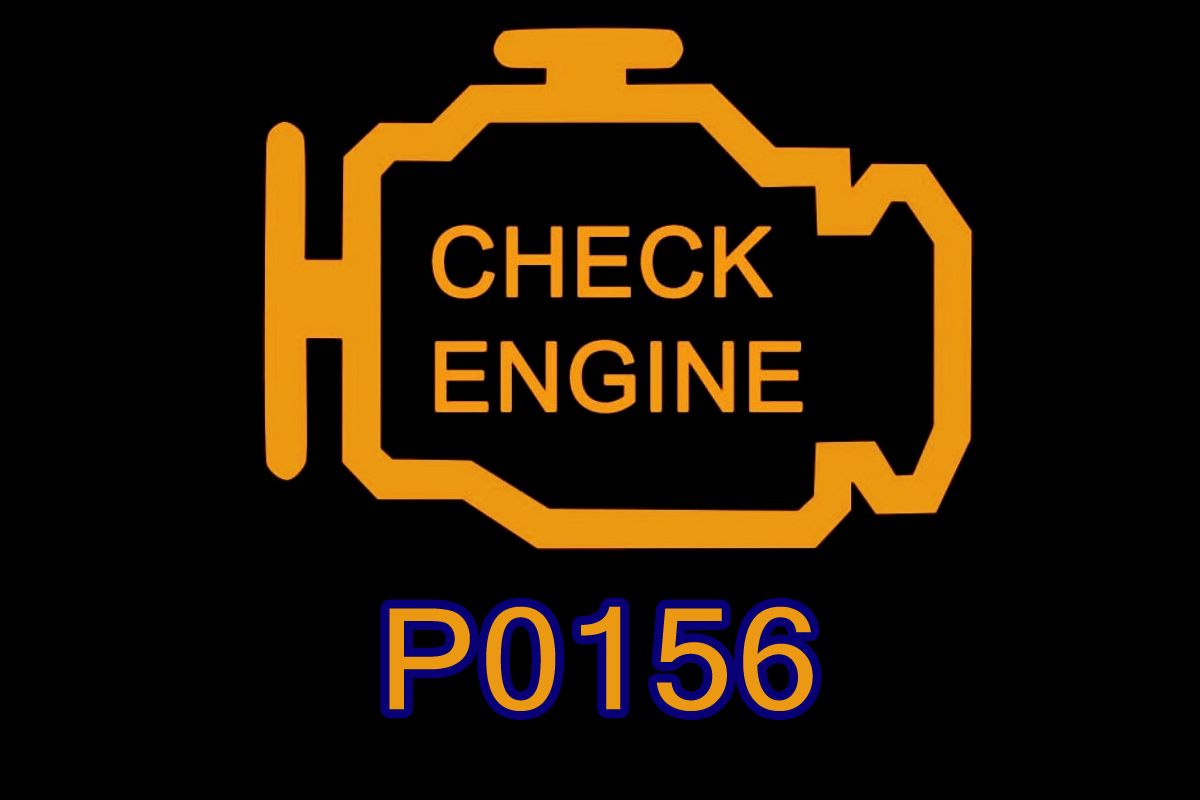
P0156 O2 Sensor Circuit Malfunction (Bank 2, Sensor 2)
The P0156 trouble code indicates that the engine control module (ECM/PCM) has detected a malfunction in the oxygen (O2) sensor circuit for Bank 2, Sensor 2.
Bank 2 Sensor 2 is normally the oxygen sensor positioned downstream of the catalytic converter on the side of the engine that does not contain cylinder number 1.
Unlike a code that specifically identifies a high or low signal, P0156 is a broader circuit malfunction code. It tells you that the ECM is seeing behavior from this sensor or its circuit that does not match what it expects, but the code alone does not identify the failed component.
What Does Bank 2 Sensor 2 Mean?
The sensor location is important before starting diagnosis.
Bank 2 is the cylinder bank that does not contain cylinder number 1.
Sensor 2 normally means the sensor installed after the catalytic converter.
So P0156 generally refers to:
Bank 2 downstream O2 sensor circuit
On a V6 or V8 engine, there are normally two banks. On a typical inline four-cylinder engine, there is only one cylinder bank, so Bank 2 would not normally exist.
The exact sensor arrangement should always be confirmed using the vehicle manufacturer's service information.
What Does “Circuit Malfunction” Mean?
The word “malfunction” is deliberately broad.
P0156 does not necessarily mean that the oxygen sensor has completely stopped working. The ECM may have detected an abnormal sensor signal, incorrect response, electrical interruption, implausible behavior, or another problem associated with the sensor circuit.
Possible problems can exist in:
-
The O2 sensor
-
Sensor wiring
-
Electrical connectors
-
Power or ground circuits
-
Sensor signal circuit
-
Exhaust system
-
Engine operating conditions
-
ECM control or interpretation
Therefore, replacing the sensor immediately is not always the correct repair.
How Does Bank 2 Sensor 2 Work?
The downstream oxygen sensor monitors the exhaust after it has passed through the catalytic converter.
Its signal helps the ECM evaluate exhaust oxygen content and catalytic-converter performance.
A simplified exhaust arrangement looks like this:
Engine → Bank 2 Sensor 1 → Catalytic Converter → Bank 2 Sensor 2
Sensor 1 is normally upstream of the catalyst, while Sensor 2 is normally downstream.
The downstream sensor is particularly important for monitoring catalyst behavior. Depending on the vehicle's engine-management strategy, its information can also be used for additional emissions and fuel-control calculations.
If the ECM detects that Bank 2 Sensor 2 is not behaving as expected, P0156 may be stored.
Common Causes of P0156
There is no single cause that applies to every vehicle.
Failed oxygen sensor
The internal sensing element or electrical components of the sensor can deteriorate with age or contamination.
An old sensor may become slow, unstable, or unable to produce a signal that matches the ECM's expectations.
Damaged wiring
O2 sensor wiring is exposed to high temperatures because it is routed close to the exhaust.
The harness can become:
-
Melted
-
Burned
-
Brittle
-
Chafed
-
Broken
-
Shorted
-
Open-circuit
A damaged wire can cause an O2 circuit malfunction even when the sensor itself is good.
Connector problems
Loose terminals, corrosion, water contamination, damaged locking mechanisms, or poor electrical contact can interfere with the sensor signal.
Exhaust leak
An exhaust leak near the sensor can introduce outside air into the exhaust stream and alter the oxygen concentration detected by the sensor.
This can produce sensor readings that appear abnormal to the ECM.
An exhaust leak should therefore be considered before automatically condemning the O2 sensor.
Sensor contamination
Oxygen sensors can be affected by contamination from:
-
Engine oil
-
Coolant
-
Excessive fuel
-
Silicone-containing substances
-
Certain fuel or chemical additives
The source of the contamination may need to be repaired as well.
Heater circuit problem
Many oxygen sensors are heated. If the heater circuit is not operating correctly, the sensor may take too long to reach operating temperature or may not operate properly under certain conditions.
Related heater codes may appear together with P0156.
Engine running problems
A genuine engine or fuel-system problem can affect the exhaust reaching the sensor.
Potential causes include:
-
Rich mixture
-
Lean mixture
-
Misfire
-
Fuel-pressure problems
-
Injector problems
-
Air-metering faults
-
Vacuum or intake leaks
The O2 sensor may be reporting an unusual exhaust condition rather than causing it.
ECM/PCM problem
A control-module fault is possible, but it should be considered only after the sensor and circuit have been thoroughly tested.
Symptoms of P0156
P0156 may produce very few noticeable symptoms, especially when the problem is limited to the downstream sensor.
Possible symptoms include:
-
Check Engine Light
-
Increased emissions
-
Failed emissions inspection
-
Poor fuel economy
-
Rough running
-
Hesitation
-
Reduced engine performance
-
Unusual fuel-trim readings
-
Unusual O2 sensor live-data behavior
Some vehicles may continue to drive almost normally.
This is common with downstream oxygen sensor faults because Bank 2 Sensor 2 is generally used more heavily for emissions and catalyst monitoring than for primary fuel control.
Does P0156 Mean the O2 Sensor Is Bad?
No.
This is an important distinction.
P0156 describes a malfunction involving the Bank 2 Sensor 2 circuit. The sensor is one possible cause, but the circuit surrounding the sensor must also be considered.
For example, imagine that the sensor is functioning correctly but its signal wire has an intermittent break.
The ECM may still store P0156.
Similarly, a corroded connector can create resistance or intermittent contact and cause an apparently faulty sensor signal.
Replacing the sensor without checking the wiring could therefore leave the original problem unresolved.
How Is P0156 Diagnosed?
A proper diagnosis should start by scanning the vehicle for all stored and pending trouble codes.
Other codes may provide valuable information.
For example, additional codes related to:
-
O2 heater circuits
-
Fuel mixture
-
Misfires
-
Fuel pressure
-
Catalyst efficiency
-
Engine temperature
-
Airflow
can help determine whether P0156 is the primary fault or a secondary consequence.
Freeze-frame data should also be examined to determine when the code was stored.
Inspect the Wiring and Connector
Because the sensor is mounted close to the exhaust system, the wiring should be carefully inspected.
Look for:
-
Melted insulation
-
Burn marks
-
Exposed wires
-
Broken conductors
-
Chafing
-
Corrosion
-
Loose terminals
-
Poor previous repairs
-
Wiring touching the exhaust
-
Connector damage
The harness should also be checked for intermittent faults. A wire can sometimes appear intact while being broken internally.
Check the O2 Sensor Live Data
A scan tool can provide useful information about Bank 2 Sensor 2.
The technician should observe how the sensor behaves after the engine reaches operating temperature.
The signal should be evaluated according to the specific sensor technology and vehicle strategy.
It is important not to apply one universal voltage pattern to every vehicle because modern vehicles can use different types of oxygen and air-fuel-ratio sensors.
The manufacturer's diagnostic specifications should be followed.
Compare Bank 2 Sensor 2 With Other Sensors
On an engine with two banks, comparing the readings of Bank 1 Sensor 2 and Bank 2 Sensor 2 can be useful.
If one downstream sensor behaves very differently from the other under similar operating conditions, the affected sensor, wiring, exhaust side, or engine bank deserves closer examination.
However, the two banks should not be expected to produce perfectly identical readings under every condition.
Differences in engine design, load distribution, exhaust routing, sensor characteristics, and catalyst behavior can affect the signals.
Check for Exhaust Leaks
An exhaust leak should not be overlooked.
A leak near an oxygen sensor can allow atmospheric oxygen into the exhaust stream.
The sensor may then report an oxygen concentration that does not accurately represent the gases leaving the engine.
The result can be confusing because the sensor itself may be functioning correctly.
Inspect:
-
Exhaust manifold
-
Manifold gasket
-
Flex pipe
-
Catalytic converter connections
-
Sensor mounting area
-
Exhaust joints
Check the Sensor Heater
If the sensor is equipped with an electric heater, its heater circuit should also be tested.
A heater problem can prevent the sensor from reaching its required operating temperature.
Check the relevant:
-
Fuse
-
Power supply
-
Ground/control circuit
-
Wiring
-
Connector
-
Heater element
The exact test procedure and specifications are vehicle-specific.
There is no universal resistance or voltage value that should be applied to every O2 sensor.
Check Fuel Trims and Engine Operation
P0156 can sometimes be the result of another engine problem.
Fuel trims can help determine whether the engine is actually operating too rich or too lean.
Other useful diagnostic information may include:
-
Short-term fuel trim
-
Long-term fuel trim
-
Upstream O2/A/F sensor data
-
MAF readings
-
MAP readings
-
Fuel pressure
-
Injector operation
-
Engine coolant temperature
-
Misfire counters
If the engine is genuinely running rich or lean, the underlying condition should be repaired rather than simply replacing the downstream O2 sensor.
P0156 and Catalytic Converter Problems
P0156 does not automatically mean the catalytic converter is bad.
Bank 2 Sensor 2 is located after the catalytic converter, but the code specifically concerns the sensor circuit's abnormal operation.
A catalyst can potentially influence downstream sensor behavior, but other possibilities should be eliminated first.
If a catalyst-efficiency code is also present, such as a Bank 2 catalyst efficiency fault, the diagnostic process should consider both codes together.
Replacing the catalytic converter solely because P0156 is present can be an expensive mistake.
P0156 vs. P0157
These codes involve the same general sensor location but describe different conditions.
P0156 — O2 Sensor Circuit Malfunction, Bank 2 Sensor 2
P0157 — O2 Sensor Circuit Low Voltage, Bank 2 Sensor 2
P0158 — O2 Sensor Circuit High Voltage, Bank 2 Sensor 2
P0159 — O2 Sensor Slow Response, Bank 2 Sensor 2
The distinction matters because P0156 is a broader malfunction code, while P0157, P0158, and P0159 provide more specific information about the detected behavior.
Can P0156 Cause Poor Fuel Economy?
It can, but the effect depends on the vehicle.
Since Bank 2 Sensor 2 is normally downstream of the catalytic converter, a fault in this sensor does not necessarily cause a major change in fuel delivery.
However, modern engine-control systems can use oxygen-sensor information in different ways, and an O2 fault can also be accompanied by another problem affecting fuel control.
If fuel consumption has increased significantly, the entire engine-management system should be checked rather than assuming the downstream sensor alone is responsible.
Can P0156 Damage the Catalytic Converter?
The code itself does not normally damage the catalytic converter.
The greater concern is the underlying cause.
For example, if P0156 occurs because the engine is running excessively rich or experiencing a severe misfire, the resulting unburned fuel can overheat and damage the catalytic converter.
If the problem is simply a damaged O2 sensor wire, the situation is different.
This is why diagnosing the root cause is more important than focusing only on the code.
Can You Drive With P0156?
In many cases, the vehicle can still be driven with P0156 if it runs normally and the only symptom is an illuminated Check Engine Light.
However, the problem should be diagnosed rather than ignored indefinitely.
Avoid continued driving or seek prompt inspection if the vehicle also has:
-
Severe misfires
-
Flashing Check Engine Light
-
Major loss of power
-
Strong fuel smell
-
Rough running
-
Excessive fuel consumption
-
Overheating
These symptoms may indicate a more serious engine or emissions problem.
How Is P0156 Repaired?
The repair depends on the actual cause.
Possible repairs include:
-
Replacing the Bank 2 Sensor 2 O2 sensor
-
Repairing damaged wiring
-
Replacing a damaged connector
-
Correcting a poor electrical connection
-
Repairing the O2 heater circuit
-
Repairing an exhaust leak
-
Correcting a fuel-system problem
-
Repairing an intake or airflow problem
-
Correcting an engine misfire
-
Repairing an ECM control circuit when confirmed
After the repair, the code should be cleared and the vehicle should be tested under the conditions that originally triggered the fault.
Should the O2 Sensor Be Replaced First?
Generally, no.
A P0156 diagnosis should not begin with automatic sensor replacement.
The better approach is to determine whether the abnormal behavior originates from:
the sensor → the wiring → the connector → the heater/power/ground circuit → the exhaust → or another engine operating condition.
Only after testing identifies the defective component should it be replaced.
Final Takeaway
P0156 O2 Sensor Circuit Malfunction (Bank 2, Sensor 2) indicates that the ECM/PCM has detected abnormal operation involving the downstream oxygen sensor circuit on Bank 2.
Possible causes include a faulty O2 sensor, damaged wiring, connector problems, heater-circuit faults, exhaust leaks, sensor contamination, or an underlying engine/fuel-system problem.
The code does not by itself prove that the oxygen sensor is defective, and it certainly does not automatically mean that the catalytic converter needs replacement.
The most reliable diagnosis combines live O2 sensor data, wiring and connector inspection, heater-circuit testing, exhaust inspection, fuel-trim analysis, and checking for other engine-management faults. This prevents unnecessary parts replacement and helps identify the actual cause of the P0156 code.