TR
TR EN
EN

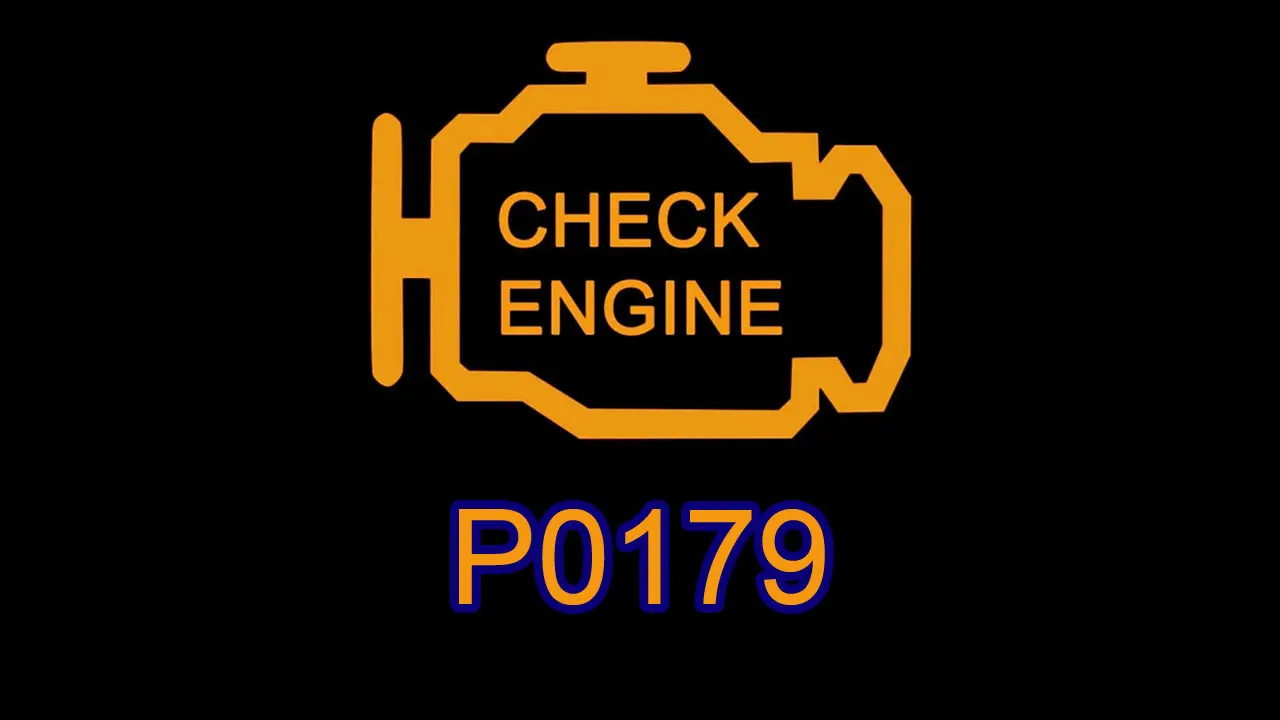
P0179 Fuel Composition Sensor Circuit High Input
P0179 is an OBD-II trouble code that indicates the ECM/PCM has detected an abnormally high electrical input from the Fuel Composition Sensor circuit.
This code is commonly associated with flex-fuel systems, where the vehicle needs to determine the composition of the fuel being used, particularly the proportion of ethanol in the fuel.
But there is an important detail: the fuel composition sensor does not simply tell the ECM “this is gasoline” or “this is ethanol.” Depending on the system, it can provide information about fuel composition, fuel temperature, and other characteristics through its electrical output.
With P0179, the ECM sees a signal that is higher than the expected range.
What Is a Fuel Composition Sensor?
A Fuel Composition Sensor is used on vehicles designed to operate with varying fuel compositions.
A typical flex-fuel vehicle can run on gasoline containing different concentrations of ethanol. Because the properties of the fuel change with composition, the ECM needs to know what is actually in the tank.
The sensor analyzes the fuel and provides information to the engine control module.
The ECM can then adjust parameters such as:
-
Fuel injection quantity
-
Injection timing
-
Ignition timing
-
Cold-start enrichment
-
Air-fuel mixture
-
Emissions strategy
The exact information and communication method depend on the vehicle.
What Does “High Input” Mean?
The phrase “High Input” refers to the electrical signal received by the ECM, not necessarily to a high ethanol concentration.
This distinction is extremely important.
P0179 does not automatically mean:
“The fuel contains too much ethanol.”
Instead, it means:
The ECM is detecting a fuel-composition sensor signal that is higher than the expected electrical range.
The cause may be the sensor, wiring, connector, power supply, or another circuit problem.
How Does a Fuel Composition Sensor Communicate?
Many fuel composition sensors do more than generate a simple variable voltage.
On some systems, the sensor generates a digital frequency signal, with the frequency representing fuel composition and sometimes pulse width representing fuel temperature.
This means a diagnostic code described as “High Input” does not necessarily mean that a conventional voltage measurement alone will identify the problem.
The technician must know the specific sensor design used by the vehicle.
This is another reason manufacturer-specific service information is important when diagnosing P0179.
Common Causes of P0179
Several faults can cause the ECM to see an excessively high signal.
Faulty Fuel Composition Sensor
The sensor itself may be internally defective and produce an abnormal output.
Signal wire shorted to voltage
If the sensor signal circuit contacts a power source, the ECM can see an abnormally high input.
This is one of the most important possibilities with a high-input code.
Damaged wiring
The harness may have:
-
Chafed insulation
-
Melted sections
-
Broken conductors
-
Previous poor repairs
-
Corrosion
-
Pinched wiring
Faulty connector
A connector with damaged terminals, corrosion, moisture, or poor contact can interfere with the sensor signal.
Incorrect power supply
If the sensor is receiving an incorrect supply voltage, its output may not behave normally.
Ground/return circuit problem
A poor ground or return circuit can alter the electrical signal and cause incorrect readings.
Fuel contamination or unexpected fuel composition
If the vehicle has received an unusual fuel mixture, the sensor may detect a composition outside the expected operating range.
However, actual fuel composition and an electrical high-input fault are not the same thing and must be distinguished during diagnosis.
ECM/PCM fault
An ECM problem is possible but considerably less common than a sensor or wiring issue.
Symptoms of P0179
The symptoms depend on the vehicle and how the ECM responds to the abnormal fuel-composition signal.
Possible symptoms include:
-
Check Engine Light
-
Difficult starting
-
Rough idle
-
Hesitation
-
Poor acceleration
-
Reduced engine performance
-
Increased fuel consumption
-
Poor cold-start behavior
-
Engine stalling
-
Incorrect ignition timing
-
Increased emissions
Some vehicles may exhibit almost no noticeable symptoms apart from the Check Engine Light.
This can happen when the ECM substitutes a default fuel-composition value.
Flex-Fuel Vehicles and P0179
P0179 is particularly relevant to Flex Fuel Vehicles (FFVs).
A flex-fuel engine is designed to operate with different gasoline/ethanol mixtures.
For example, the engine may be capable of operating on gasoline with relatively low ethanol content as well as fuel containing a much higher percentage of ethanol.
The ECM needs to know what fuel is present because ethanol has different combustion characteristics from gasoline.
If the ECM receives an incorrect fuel-composition signal, it may calculate the fuel strategy incorrectly.
That can affect starting, drivability, emissions, and fuel economy.
A High Signal Does Not Necessarily Mean High Ethanol
This is worth emphasizing.
A driver may see:
P0179 – Fuel Composition Sensor Circuit High Input
and conclude:
“The ethanol content is too high.”
That is not necessarily correct.
A high electrical signal could be caused by:
-
A short to battery voltage
-
Faulty sensor electronics
-
Incorrect wiring
-
Connector damage
-
Electrical interference
-
Incorrect sensor supply
-
A communication problem
The actual fuel should not be blamed until the sensor circuit has been tested.
Check the Fuel Composition Before Replacing the Sensor
If the vehicle recently received fuel from an unfamiliar source, or if the code appeared shortly after refueling, the fuel itself should be considered.
An unexpected fuel mixture can create unusual sensor readings.
However, don't assume that contaminated or incorrect fuel is the cause simply because the code appeared after refueling.
The timing may be coincidental.
The sensor's electrical output still needs to be verified.
Scan Tool Diagnosis
Begin by scanning for all stored and pending codes.
P0179 may be accompanied by other fuel-system or sensor-related codes.
Then examine available live data.
Depending on the vehicle, the scan tool may display:
-
Fuel composition
-
Ethanol percentage
-
Fuel temperature
-
Fuel system status
-
Engine load
-
Fuel trims
-
Engine RPM
If the displayed fuel composition is wildly inconsistent with the fuel actually being used, the sensor or its signal deserves attention.
For example, a vehicle that has been running on ordinary gasoline should not suddenly report an implausibly extreme composition without a corresponding physical explanation.
Check the Freeze-Frame Data
Freeze-frame information can show the operating conditions when P0179 was recorded.
Useful values include:
-
Engine RPM
-
Vehicle speed
-
Engine load
-
Coolant temperature
-
Fuel temperature
-
Fuel composition, if available
-
Battery voltage
-
Fuel trims
This can help determine whether the code occurred during startup, acceleration, cruising, or another condition.
If it consistently appears immediately after startup, the electrical circuit may be more suspicious.
If it appears after refueling, fuel composition should also be considered.
Inspect the Connector
The fuel composition sensor connector deserves close attention.
Check for:
-
Corrosion
-
Water intrusion
-
Bent terminals
-
Loose terminals
-
Damaged locking mechanisms
-
Fuel contamination
-
Terminals pushed backward
-
Previous wiring repairs
Because many fuel-system components are exposed to moisture, dirt, heat, and vibration, connector problems are not unusual.
Inspect the Wiring for a High-Voltage Short
With a high-input code, the signal wire should be carefully checked for unintended contact with a power source.
Look for wiring that has:
-
Rubbed against metal
-
Melted against a hot component
-
Been crushed
-
Been incorrectly repaired
-
Been modified by aftermarket equipment
A signal wire that is unintentionally connected to battery voltage can cause the ECM to interpret the sensor output as excessively high.
Verify the Sensor Power and Ground
The sensor's power supply and ground should be tested according to the vehicle manufacturer's specifications.
Do not assume that every fuel composition sensor uses the same voltage or circuit arrangement.
Some systems use different electrical architectures, and the correct test points must be identified from the wiring diagram.
A faulty supply can create a misleading sensor fault.
Frequency-Based Sensors Require Different Testing
This is an important difference from many conventional temperature sensors.
If the fuel composition sensor communicates through a frequency signal, measuring only DC voltage may not provide enough information.
An oscilloscope or suitable frequency-measuring equipment may be required to determine:
-
Signal frequency
-
Signal stability
-
Pulse width
-
Duty cycle
-
Signal dropouts
The expected values are vehicle-specific.
A technician should compare the observed signal with the manufacturer's specifications.
What Happens If the Sensor Is Unplugged?
Unplugging the sensor can cause additional fault codes and may cause the ECM to enter a default strategy.
Therefore, simply disconnecting the sensor is not a reliable way to diagnose P0179.
A proper diagnosis should determine what the ECM is receiving from the circuit and whether that signal matches the manufacturer's specifications.
Could the Fuel Composition Sensor Be Contaminated?
Yes.
Because the sensor interacts with the fuel system, fuel contamination or deposits can potentially affect its operation depending on its design.
But the presence of contamination should be confirmed rather than assumed.
Fuel composition problems can also originate from:
-
Incorrect refueling
-
Contaminated fuel
-
Unexpected ethanol content
-
Fuel-system contamination
If the vehicle suddenly develops drivability problems immediately after refueling, fuel quality deserves investigation alongside the electrical diagnosis.
P0179 vs. P0178
The two codes are opposites in terms of electrical signal direction.
P0178 – Fuel Composition Sensor Circuit Low Input
The ECM detects an input below the expected electrical range.
P0179 – Fuel Composition Sensor Circuit High Input
The ECM detects an input above the expected electrical range.
This does not necessarily mean low or high ethanol concentration.
The terms Low Input and High Input describe what the ECM sees electrically.
P0179 vs. P0177
Another useful comparison is:
P0177 – Fuel Composition Sensor Circuit Range / Performance
The signal exists, but its value or behavior does not correspond correctly to the expected operating range.
P0179 – Fuel Composition Sensor Circuit High Input
The ECM specifically detects an excessively high electrical input.
This distinction can help determine whether the investigation should focus on general signal plausibility or an electrical high-signal condition.
Can P0179 Affect Fuel Economy?
Yes.
If the ECM receives incorrect information about the fuel composition, it may calculate fuel delivery and other parameters incorrectly.
The result can include:
-
Rich or lean operation
-
Poor fuel economy
-
Poor cold starting
-
Hesitation
-
Increased emissions
The exact effect depends on how the particular engine uses fuel-composition information.
Can P0179 Cause a No-Start?
It is possible, particularly if the vehicle's fuel-management strategy relies heavily on accurate fuel-composition information.
A severely incorrect fuel-composition signal can lead to inappropriate fueling during starting.
However, a no-start condition should never automatically be blamed on P0179.
Fuel pressure, ignition, injector operation, battery voltage, crankshaft position, and other starting requirements must also be checked.
Common Diagnostic Mistakes
One common mistake is replacing the sensor immediately.
The sensor may be perfectly good while the signal wire is shorted to battery voltage.
Another mistake is interpreting “High Input” as high ethanol content.
That is not what the DTC directly indicates.
It is also possible to overlook the sensor's signal type.
If the sensor uses a frequency-based output, a basic voltage test may not reveal the actual problem.
Finally, replacing the ECM should be the last step, not the first.
What Repairs Can Fix P0179?
Depending on the confirmed cause, repairs may include:
-
Replacing the Fuel Composition Sensor
-
Repairing the sensor signal wire
-
Removing a short to voltage
-
Repairing damaged wiring
-
Replacing a damaged connector
-
Repairing loose or corroded terminals
-
Restoring the correct sensor power supply
-
Repairing the sensor ground/return circuit
-
Correcting contaminated or incorrect fuel
-
Repairing another fuel-system component
-
Repairing or replacing the ECM only after its failure has been properly confirmed
After the repair, the code should be cleared and the vehicle tested again.
Fuel-composition data should be monitored to confirm that the ECM is receiving a stable and believable signal.
Is P0179 Serious?
P0179 is not always an emergency.
If the vehicle starts and drives normally, the problem can usually be investigated without immediately stopping the vehicle.
However, continued operation should not be treated as a permanent solution.
If the vehicle develops:
-
Severe hesitation
-
Stalling
-
Difficult starting
-
Major loss of power
-
Very poor fuel economy
-
Strong drivability problems
the vehicle should be diagnosed promptly.
The problem may extend beyond the sensor itself.
The Bottom Line
P0179 – Fuel Composition Sensor Circuit High Input means that the ECM/PCM is detecting an electrically high signal from the Fuel Composition Sensor circuit.
It does not automatically mean that the fuel contains too much ethanol.
The underlying cause could be a:
-
Faulty fuel composition sensor
-
Signal wire shorted to voltage
-
Damaged harness
-
Faulty connector
-
Incorrect power supply
-
Poor sensor ground
-
Fuel composition or contamination issue
-
Or, much less commonly, an ECM fault
The smartest diagnostic approach is to determine what type of signal the sensor uses, check the power and ground circuits, inspect the harness, and verify the actual sensor output against manufacturer specifications.
P0179 is therefore best understood not as a simple “bad fuel sensor” code, but as a warning that the ECM is receiving more electrical signal than it expects from the fuel-composition sensing system.