TR
TR EN
EN

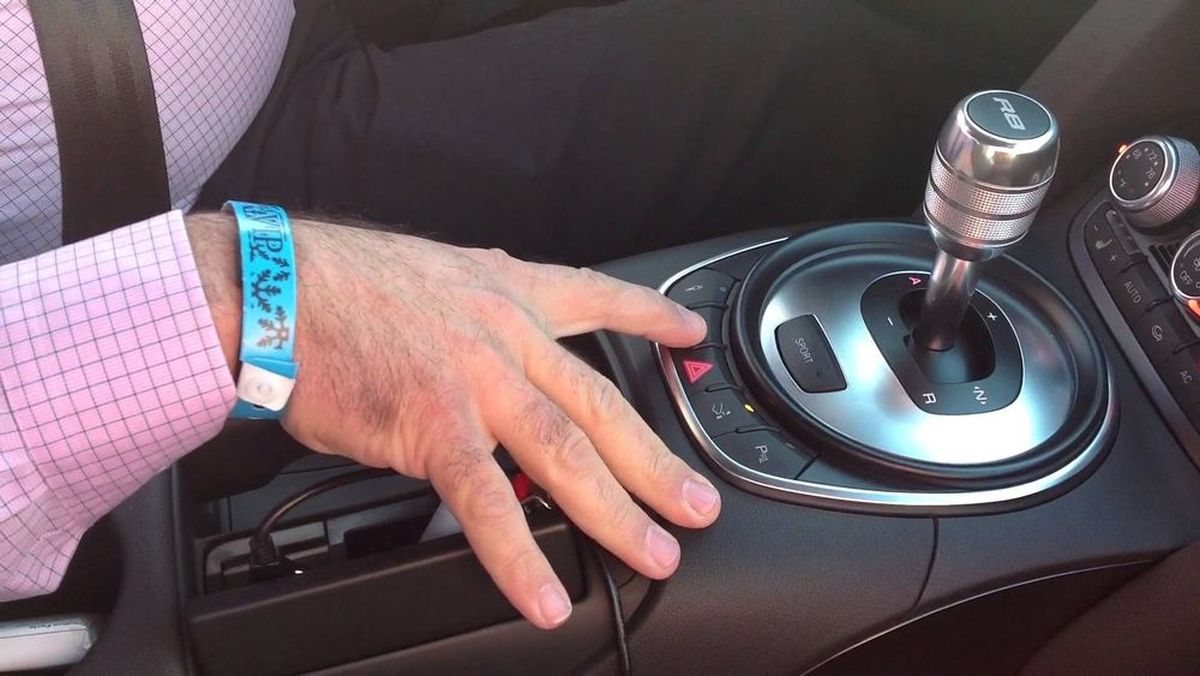
What Is Launch Control? How Does Launch Control Work?
Launch Control is an electronic performance function designed to help a vehicle achieve rapid and consistent acceleration from a complete standstill.
It is most commonly found in high-performance cars equipped with automatic, dual-clutch, or automated manual transmissions. Some vehicles with manual transmissions also offer launch-assist systems that perform a similar function.
The basic idea is simple: instead of leaving the driver to manually balance engine RPM, throttle position, clutch engagement, wheelspin, and gear changes, Launch Control coordinates several vehicle systems electronically.
The objective is not simply to produce maximum engine power. The real objective is to transfer as much usable torque as possible to the road without excessive wheelspin or unnecessary drivetrain shock.

What Is the Purpose of Launch Control?
A car can produce enormous engine power and still achieve a poor launch.
If too much torque reaches the driven wheels too quickly, the tires may lose traction and spin. If the driver launches at too low an engine speed, the engine may not produce enough torque and the vehicle can hesitate before accelerating strongly.
Launch Control attempts to find the optimum balance between these conditions.
Depending on the vehicle, the system can coordinate:
-
Engine RPM
-
Electronic throttle position
-
Ignition timing
-
Fuel injection
-
Turbocharger boost
-
Transmission gear selection
-
Clutch engagement
-
Torque output
-
Wheel slip
-
Differential operation
-
All-wheel-drive torque distribution
-
Traction control
-
Stability control
The exact strategy is manufacturer-specific.
How Does Launch Control Work?
Launch Control works by preparing the vehicle's drivetrain before the car begins moving.
In a typical automatic or dual-clutch vehicle, the system first checks whether the necessary conditions have been met.
These conditions can include:
-
Engine temperature
-
Transmission temperature
-
Vehicle speed
-
Brake pedal position
-
Accelerator pedal position
-
Selected driving mode
-
Transmission mode
-
Traction-control status
-
Stability-control status
-
Clutch temperature
-
Battery voltage
-
Presence of active powertrain faults
If the conditions are acceptable, the system prepares the engine and transmission for the launch.
The engine may then be held at a predetermined RPM while the transmission and clutch system prepare to deliver torque.
When the driver releases the brake, the vehicle begins accelerating while the electronic control systems continue monitoring wheel speeds and drivetrain behavior.
The ECU and transmission controller can adjust torque almost immediately if excessive wheelspin or another abnormal condition is detected.
Does Launch Control Simply Hold the Engine at High RPM?
No.
This is one of the most common misunderstandings about Launch Control.
Holding an engine at 4,000 RPM, for example, does not by itself constitute a complete Launch Control strategy.
The system may simultaneously control the engine, transmission, clutch, differential, and traction systems.
On a turbocharged engine, it may also attempt to build useful boost pressure before the vehicle starts moving.
The engine RPM is therefore only one part of the overall process.
What RPM Does Launch Control Use?
There is no universal Launch Control RPM.
Different engines and drivetrains require different strategies.
Some vehicles may use a launch speed in the range of approximately 3,000–4,500 RPM, while other vehicles may use considerably different values.
The ideal RPM depends on:
-
Engine torque characteristics
-
Turbocharger response
-
Transmission type
-
Gear ratios
-
Vehicle weight
-
Tire characteristics
-
Drive configuration
-
Differential design
-
Available traction
-
Road surface
-
Engine temperature
-
Transmission temperature
The launch RPM is normally programmed into the vehicle's control software.
Therefore, a specific RPM should not be presented as a standard value for every vehicle.
Launch Control on Automatic Transmissions
Automatic transmissions are particularly suitable for Launch Control because the transmission controller can precisely manage gear selection and torque transfer.
When the system is activated, the transmission may select first gear and prepare its internal clutch packs or torque converter.
The engine ECU and transmission controller can then work together to control torque delivery.
During the launch, the system may determine:
-
When to engage the transmission
-
How much torque to transmit
-
How quickly to increase torque
-
When to shift into second gear
-
How aggressively to perform the shift
This coordination can produce very fast and repeatable acceleration.
Launch Control and Dual-Clutch Transmissions
Dual-clutch transmissions are particularly common in performance cars with Launch Control.
A dual-clutch transmission uses two separate clutches to control different gear sets.
This allows the transmission to prepare the next gear while the vehicle is still accelerating in the current gear.
During a Launch Control event, the transmission can therefore combine rapid clutch operation with precise engine torque management.
This can result in extremely fast acceleration and gear changes.
However, this also means that repeated launches can generate substantial heat in the clutch assemblies and transmission.
How Does Launch Control Work With a Manual Transmission?
Manual-transmission vehicles generally require more involvement from the driver.
Some performance cars provide a launch-assist function that helps maintain a predetermined engine speed.
A typical system may work by:
-
Pressing the clutch pedal
-
Selecting first gear
-
Activating the appropriate performance mode
-
Applying the accelerator
-
Allowing the ECU to control or limit engine RPM
-
Releasing the clutch
The driver remains responsible for clutch engagement.
If the clutch is released too aggressively, the result can be excessive wheelspin and drivetrain shock.
If the clutch is released too slowly, excessive clutch slip can generate heat and accelerate clutch wear.
Does Launch Control Require ESP or Traction Control to Be Turned Off?
Not necessarily.
This is another area where generic Launch Control instructions can be misleading.
Some vehicles require the driver to reduce or disable traction and stability control.
Others require a specific Track, Race, Sport, or performance setting.
Some systems retain electronic intervention during the launch and use wheel-speed information to control wheelspin.
Therefore, there is no universal rule that ESP, ESC, TCS, or DSC must always be completely switched off.
The correct procedure depends on the vehicle.
The manufacturer's operating instructions should always take priority.
What Happens to the Tires During Launch Control?
The tires are one of the most important parts of a successful launch.
The engine may produce hundreds of horsepower, but all of that power eventually has to pass through the tire contact patches.
If the tires cannot transmit the available torque, the wheels will spin.
Launch Control therefore attempts to maintain an appropriate amount of wheel slip.
A small amount of controlled slip can sometimes improve acceleration.
Excessive slip, however, wastes energy and can make the vehicle slower.
Tire compound, temperature, pressure, tread condition, road surface, and vehicle weight can all affect the result.
Launch Control and All-Wheel Drive
All-wheel-drive vehicles can have a significant advantage during standing acceleration because torque can be distributed across four driven wheels.
However, Launch Control does not necessarily send the same amount of torque to every wheel.
An electronically controlled AWD system can continuously evaluate:
-
Individual wheel speeds
-
Throttle position
-
Engine torque
-
Vehicle speed
-
Steering angle
-
Transmission gear
-
Available traction
The system can then adjust torque distribution between the front and rear axles.
This allows the vehicle to use available grip more effectively.
Launch Control on Front-Wheel-Drive Vehicles
Launch Control is not limited to rear-wheel-drive or all-wheel-drive cars.
Front-wheel-drive performance vehicles can also use Launch Control.
However, launching a powerful front-wheel-drive vehicle can be challenging because the front tires must both steer the vehicle and transmit engine torque.
During acceleration, weight transfers toward the rear of the vehicle. This can reduce the effective load on the front tires and increase the possibility of wheelspin.
Electronic torque management, limited-slip differentials, suspension design, and appropriate tires can help reduce this problem.
Why Is Launch Control Important for Turbocharged Engines?
Turbocharged engines can benefit significantly from Launch Control.
When a turbocharged engine is operating at low RPM, the turbocharger may not immediately produce its maximum available boost.
Launch Control can use a specific engine-management strategy to bring the engine closer to its desired torque-producing condition before the vehicle starts moving.
Depending on the vehicle, the ECU may control:
-
Engine speed
-
Throttle position
-
Ignition timing
-
Fuel delivery
-
Turbocharger operation
-
Engine torque
This can reduce the delay associated with building boost and produce a much stronger initial acceleration.
What Sensors Does Launch Control Use?
Launch Control relies on information from several sensors and control systems.
Depending on the vehicle, these can include:
-
Wheel-speed sensors
-
Accelerator pedal position sensors
-
Throttle-position sensors
-
Brake-pedal switch or sensor
-
Crankshaft position sensor
-
Camshaft position sensor
-
Engine temperature sensor
-
Transmission temperature sensors
-
Steering-angle sensor
-
Vehicle-speed information
-
Manifold pressure sensors
-
Mass airflow sensor
-
Clutch-position information
-
Transmission pressure sensors
The ECU and other control modules use this information to determine whether a launch can safely and effectively be performed.
Why Does Launch Control Sometimes Not Activate?
A vehicle can have a fully functional Launch Control system and still refuse to activate it.
The system may be unavailable because one or more operating conditions have not been satisfied.
Possible reasons include:
-
Engine temperature is too low
-
Transmission temperature is too low
-
Transmission temperature is too high
-
Clutch temperature is excessive
-
Battery voltage is insufficient
-
Incorrect driving mode is selected
-
The required traction-control setting is not selected
-
Brake-pedal information is incorrect
-
Accelerator-pedal conditions are not satisfied
-
Vehicle speed is not zero
-
Steering position does not meet the required condition
-
Fuel level is too low on some vehicles
-
An engine or transmission fault is stored
-
An ABS or stability-control fault is present
-
The system has entered a protective mode
-
Launch Control has temporarily been disabled after repeated use
This is why a Launch Control problem should not immediately be interpreted as a defective Launch Control component.
Can a Check Engine Light Disable Launch Control?
Yes.
A powertrain fault can cause the ECU to restrict performance functions.
For example, faults involving the throttle, accelerator pedal, engine torque control, transmission, ABS, wheel-speed sensors, or stability-control system may cause Launch Control to become unavailable.
This is often a protective strategy rather than a separate Launch Control failure.
The vehicle may deliberately disable high-performance functions until the underlying fault is corrected.
Launch Control and ABS Wheel-Speed Sensors
Wheel-speed information is extremely important during a launch.
ABS wheel-speed sensors measure the rotational speed of individual wheels.
The electronic control system can compare these values to determine whether one or more driven wheels are spinning excessively.
A faulty wheel-speed sensor can therefore cause more than an ABS warning.
Depending on the vehicle, it can also affect:
-
Traction control
-
Stability control
-
AWD operation
-
Transmission behavior
-
Launch Control
A warning related to Launch Control should therefore be diagnosed as part of the complete vehicle control system.
Why Does Launch Control Produce Better 0–100 km/h Times?
The major advantage is consistency.
A driver has to coordinate several actions simultaneously during a hard launch.
The driver must manage:
-
Engine RPM
-
Accelerator position
-
Brake release
-
Clutch engagement
-
Wheelspin
-
Gear changes
Launch Control can perform these tasks according to a precisely calibrated strategy.
This makes it possible for the vehicle to repeat a similar launch under similar conditions.
That repeatability is especially valuable when manufacturers measure acceleration figures such as:
-
0–60 mph
-
0–100 km/h
-
0–100 mph
-
Quarter-mile acceleration
Does Launch Control Make a Car Faster?
Under the right conditions, it can.
However, Launch Control does not create additional engine horsepower.
Instead, it attempts to use the available power more effectively during the launch.
A vehicle with 500 horsepower does not necessarily accelerate faster than a vehicle with 400 horsepower if the more powerful car cannot put its torque onto the road.
Launch Control attempts to optimize the relationship between engine torque and available tire grip.
Does Launch Control Damage the Engine?
Launch Control does not automatically damage an engine when used according to the manufacturer's instructions.
However, repeated high-load launches are considerably more demanding than normal driving.
The engine can experience high thermal and mechanical loads, particularly when high RPM and high boost are involved.
Other drivetrain components can also experience substantial stress.
These can include:
-
Clutch
-
Transmission
-
Differential
-
Driveshafts
-
CV joints
-
Transfer case
-
Engine mounts
-
Transmission mounts
-
Tires
The condition of the vehicle therefore matters greatly.
Using Launch Control on a poorly maintained or mechanically damaged vehicle can expose an existing weakness much faster.
Can Launch Control Damage the Transmission?
Repeated launches can accelerate transmission and clutch wear.
This is particularly relevant to dual-clutch transmissions because the clutch assemblies can experience significant heat during rapid torque transfer.
Possible sources of additional stress include:
-
High clutch temperatures
-
Rapid clutch engagement
-
High drivetrain torque
-
Gear changes under heavy load
-
Differential loads
-
Driveshaft shock
Modern performance transmissions often contain protective strategies to reduce these risks.
For example, the transmission may limit Launch Control or refuse to activate it when temperatures become excessive.
Can Launch Control Cause Clutch Wear?
Yes, particularly on manual and dual-clutch vehicles.
Clutch engagement involves friction.
When there is relative movement between the clutch surfaces, mechanical energy is converted into heat.
A hard launch can therefore generate significant clutch temperature.
Repeated launches can accelerate:
-
Clutch disc wear
-
Clutch surface wear
-
Pressure plate wear
-
Dual-mass flywheel stress
-
Clutch actuator wear
The exact amount of wear depends on the vehicle and the launch strategy.
Does Launch Control Wear Out Tires Faster?
It can.
A hard launch puts a large amount of force through the driven tires.
Even when wheelspin is controlled, the tires experience substantial longitudinal load.
Repeated aggressive launches can therefore contribute to faster tire wear.
If wheelspin is excessive, tire wear can increase dramatically.
Tire temperature and pressure are also important because they influence the amount of available traction.
Can Launch Control Overheat the Car?
Launch Control can increase heat in several parts of the vehicle.
Potentially affected components include:
-
Engine
-
Turbocharger
-
Transmission
-
Clutch
-
Differential
-
AWD clutch
-
Brakes
-
Cooling system
This is one reason some vehicles prevent Launch Control from being used repeatedly.
If the transmission or clutch reaches a predetermined temperature, the control system may temporarily disable the feature.
This behavior is normally a protective function rather than evidence of a fault.
Can Launch Control Be Used Twice in a Row?
This depends on the vehicle.
Some cars allow repeated launches within certain conditions.
Others impose restrictions after one or more launches.
The system may monitor drivetrain temperatures and reduce or disable the function when necessary.
Therefore, statements such as "Launch Control can only be used once" or "it must never be used twice consecutively" should not be treated as universal rules.
Repeated launches increase mechanical and thermal stress, so the manufacturer's limitations should always be followed.
How Long Can Launch Control Be Held?
There is also no universal time limit.
Some vehicles automatically cancel the launch sequence if the driver remains in the launch condition for too long.
Others may impose specific time or temperature limits.
A generic rule such as "never hold the accelerator for more than 15 seconds" should therefore not be applied to every vehicle.
The correct limit is the one specified by the vehicle manufacturer.
Can Launch Control Be Used on Wet Roads?
A Launch Control system may technically operate on a wet surface, but available tire grip is much lower.
Electronic traction management can reduce engine torque when wheelspin occurs, but it cannot create additional physical grip.
The road surface remains a fundamental limitation.
Standing acceleration on a wet, icy, snowy, or contaminated road can therefore produce unpredictable vehicle behavior.
Is Launch Control Useful in Normal Traffic?
For ordinary road driving, Launch Control generally provides little practical benefit.
Its main purpose is rapid standing acceleration in controlled conditions, performance testing, track environments, and similar situations where such operation is appropriate.
Using Launch Control repeatedly at traffic lights does not provide a meaningful advantage for normal transportation.
It can instead increase:
-
Tire wear
-
Clutch wear
-
Transmission stress
-
Differential stress
-
Fuel consumption
-
Mechanical temperatures
It can also create an unnecessary safety risk.
Is Launch Control a Marketing Trick?
Launch Control has genuine engineering value, but it also has significant marketing value.
Automakers often advertise extremely fast acceleration figures, and Launch Control can help a vehicle achieve highly repeatable standing-start performance.
However, it would be inaccurate to describe the system as nothing more than a marketing trick.
The underlying technology performs real engineering functions by coordinating engine torque, transmission operation, clutch engagement, wheel slip, and drivetrain behavior.
The marketing benefit is simply an additional consequence.
Is Launch Control Legal on Public Roads?
The legality of using Launch Control depends on the country, jurisdiction, road conditions, and manner of operation.
The existence of a factory-installed Launch Control system does not mean that it can be used anywhere without restriction.
Aggressive acceleration on a public road can be dangerous and may violate traffic or dangerous-driving laws depending on the circumstances.
Launch Control is therefore best reserved for a suitable controlled environment where its use is legal and appropriate.
What Is the Difference Between Launch Control and Traction Control?
These systems have different purposes.
Traction control primarily attempts to prevent excessive wheelspin during acceleration.
Launch Control is specifically designed to optimize acceleration from a stationary position.
Launch Control may use traction-control information, but it can also control engine RPM, clutch engagement, transmission operation, torque delivery, and differential behavior.
Traction control can therefore be considered one part of the larger vehicle dynamics strategy rather than a replacement for Launch Control.
What Is the Difference Between Launch Control and Hill Start Assist?
Hill Start Assist is designed to prevent a vehicle from rolling backward when starting on an incline.
It temporarily maintains brake pressure while the driver moves from the brake pedal to the accelerator or clutch.
Launch Control has a completely different purpose.
It is designed to maximize acceleration from a standstill.
Hill Start Assist prioritizes controlled movement and convenience, while Launch Control prioritizes rapid acceleration.
Can Launch Control Be Added to Any Car?
No.
Aftermarket software can provide launch-control-like functions on some vehicles, but this does not mean every car can safely support a sophisticated Launch Control system.
A factory system is calibrated together with the:
-
Engine
-
Transmission
-
Clutch
-
Differential
-
Tires
-
Stability-control system
-
Cooling system
-
Drivetrain
Changing engine software to create aggressive launch behavior can increase drivetrain loads beyond the original design assumptions.
It may also affect reliability, emissions compliance, warranty coverage, and road legality.
How Should a Car Be Prepared for Launch Control?
Before using a factory Launch Control system, the vehicle should be in good mechanical condition.
Important points include:
-
Correct engine oil level
-
Correct transmission fluid level
-
Correct tire pressure
-
Good tire condition
-
Adequate engine temperature
-
Appropriate transmission temperature
-
Proper brake operation
-
No active drivetrain faults
-
Correct driving mode
-
Sufficient fuel
-
Correct stability and traction-control settings
The manufacturer's instructions should always take priority over generic procedures found online.
What If Launch Control Stops Working?
Do not immediately replace the transmission, throttle body, ECU, or another expensive component simply because Launch Control will not activate.
Start by checking the conditions required by the vehicle.
A diagnostic scan can be useful for identifying faults involving:
-
Engine management
-
Transmission
-
ABS
-
Wheel-speed sensors
-
Accelerator pedal
-
Electronic throttle
-
Brake switches
-
Stability control
-
AWD systems
Live data can be particularly useful because a Launch Control activation problem may result from an incorrect sensor signal rather than a failed Launch Control function itself.
Final Thoughts
Launch Control is an electronic drivetrain-management system designed to optimize acceleration from a standstill.
It does much more than hold the engine at a predetermined RPM. Depending on the vehicle, it can coordinate engine torque, throttle position, turbocharger response, clutch engagement, transmission shifting, wheel slip, differential behavior, traction control, stability control, and all-wheel-drive torque distribution.
There is also no universal Launch Control procedure.
Some vehicles require specific Sport or Race modes. Some require traction or stability control to be reduced. Others retain electronic intervention during the launch. Launch RPM, temperature requirements, activation conditions, and restrictions also vary between vehicles.
Launch Control can provide extremely fast and repeatable acceleration, which is why it is common in modern performance cars. At the same time, repeated hard launches place considerably greater stress on the tires, clutch, transmission, differential, driveshafts, mounts, and other drivetrain components.
For this reason, Launch Control should be regarded as a specialized performance function rather than something intended for routine use at every traffic light.
Most importantly, the correct Launch Control procedure is always the one specified for that particular vehicle. Generic instructions such as always disabling ESP, always using 3,500–4,500 RPM, never launching twice in a row, or never holding the system for more than a fixed number of seconds cannot be universally applied to every car.