TR
TR EN
EN

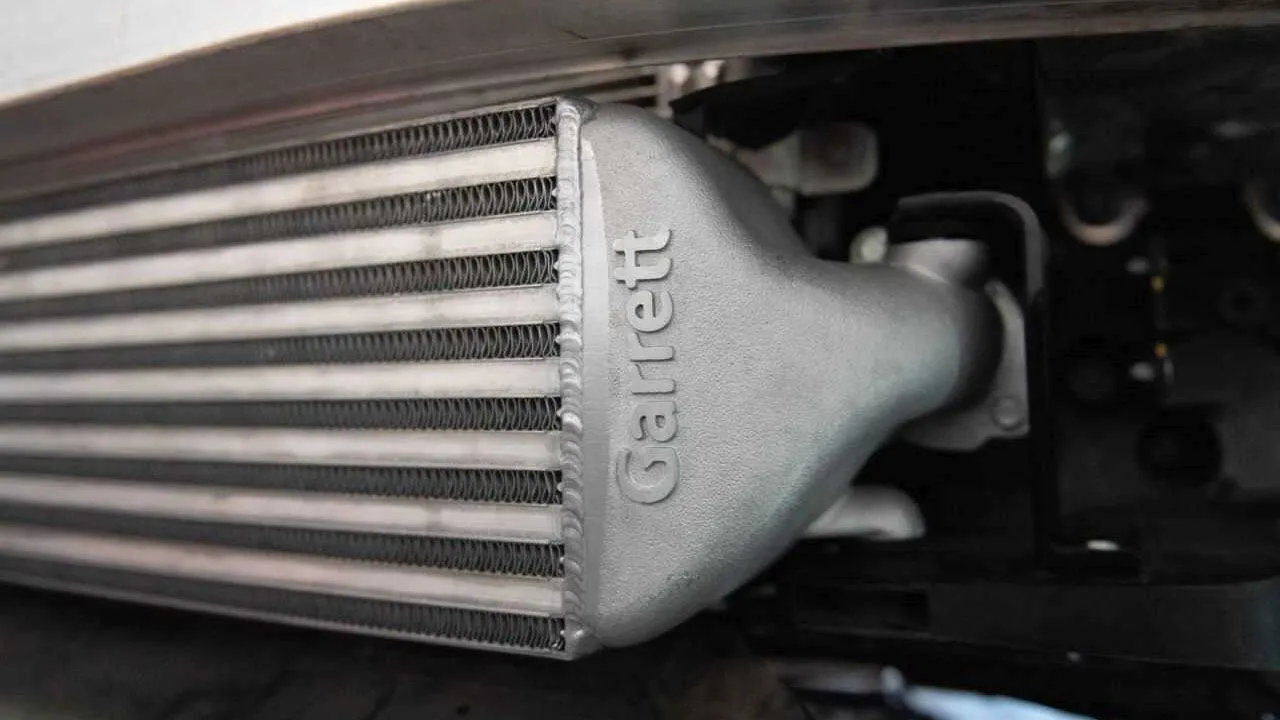
What Is an Intercooler? What Are the Symptoms of Intercooler Failure?
An intercooler is a heat exchanger used in turbocharged and supercharged engines to cool the compressed air before it enters the engine.
When a turbocharger or supercharger compresses air, the temperature of that air increases. Hot compressed air is less dense than cooler air, so it contains fewer oxygen molecules for the same volume.
The intercooler reduces the temperature of this compressed air, allowing denser air to reach the engine.
This can improve combustion efficiency, engine performance, and the consistency of boost pressure.
Intercoolers are especially common on modern turbocharged gasoline and diesel engines, where controlling intake-air temperature is important for both performance and engine protection.
How Does an Intercooler Work?
The basic principle is straightforward.
The turbocharger compresses the intake air before sending it toward the engine. During compression, the air becomes hotter.
This hot compressed air enters the intercooler.
The intercooler removes heat from the charge air and then sends the cooler air toward the throttle body or intake manifold.
The cooler air is denser, allowing more oxygen to enter the cylinders.
The engine control unit can then adjust fuel delivery, ignition timing, boost pressure, and other parameters according to the operating conditions.
The exact temperature reduction depends on many factors, including:
-
Ambient temperature
-
Turbocharger efficiency
-
Boost pressure
-
Engine load
-
Vehicle speed
-
Intercooler size
-
Intercooler design
-
Airflow through the intercooler
-
Charge-air flow rate
Therefore, an intercooler does not always reduce intake-air temperature by a fixed amount.
Why Is an Intercooler Necessary on a Turbocharged Engine?
A turbocharger increases the amount of air that can enter an engine by compressing the intake air.
However, compression also increases air temperature.
If the compressed air becomes excessively hot, its density decreases.
Hot intake air can also increase the tendency toward knock in gasoline engines, depending on the engine design and operating conditions.
Cooling the charge air helps the engine receive denser air and can make the forced-induction system operate more efficiently.
This is one reason why intercooling is such an important part of many turbocharged engine designs.
What Is the Difference Between an Intercooler and a Radiator?
An intercooler and a radiator are both heat exchangers, but they perform different jobs.
The radiator primarily removes heat from the engine coolant.
The intercooler removes heat from compressed intake air.
A radiator therefore belongs to the engine cooling system, while an intercooler belongs to the forced-induction or charge-air system.
Although their appearance can sometimes be similar, they are designed for different fluids, temperatures, pressures, and operating conditions.
What Is an Air-to-Air Intercooler?
An air-to-air intercooler uses outside air to cool the compressed intake air.
Hot charge air passes through the intercooler's internal passages while ambient air flows across the external fins.
Heat moves from the hot charge air into the intercooler core and then into the surrounding air.
This type of intercooler is widely used because it is relatively simple and does not require a separate coolant circuit.
Its effectiveness depends heavily on airflow.
This is why front-mounted intercoolers can perform particularly well when the vehicle is moving and the intercooler receives sufficient airflow.
What Is an Air-to-Water Intercooler?
An air-to-water intercooler uses coolant to remove heat from the compressed intake air.
The charge air passes through an intercooler core while coolant absorbs the heat.
The heated coolant then travels to a separate heat exchanger where the heat is released.
Air-to-water systems can be useful when there is limited space for a large conventional intercooler.
They can also provide a short charge-air path in certain engine designs.
However, the system is more complex because it requires additional components such as:
-
Coolant
-
Pump
-
Heat exchanger
-
Coolant lines
-
Expansion reservoir in some designs
What Are the Symptoms of Intercooler Failure?
Intercooler problems can produce different symptoms depending on the type of failure.
A cracked intercooler, damaged core, blocked airflow path, or leaking connection can all affect engine operation.
Common symptoms include:
-
Loss of engine power
-
Reduced acceleration
-
Reduced boost pressure
-
Poor throttle response
-
Turbocharger-related performance problems
-
Hissing or whooshing sounds
-
Check Engine Light
-
Increased fuel consumption
-
Excessive intake-air temperature
-
Black smoke on some diesel engines
-
Oil or oily residue around the intercooler
-
Inconsistent engine performance under boost
The exact symptoms depend on whether the intercooler has an air leak, physical damage, restricted airflow, or an internal problem.
Loss of Engine Power
One of the most noticeable symptoms of an intercooler problem is reduced engine performance.
If compressed air escapes through a damaged intercooler or a leaking connection, the engine may not receive the expected amount of boost.
The turbocharger may continue trying to produce the requested boost, but some of the compressed air can escape before reaching the engine.
This can result in:
-
Weak acceleration
-
Reduced high-load performance
-
Slower turbo response
-
Difficulty reaching expected boost pressure
A loss of power does not automatically mean that the intercooler itself is faulty.
Turbocharger problems, boost-control faults, vacuum leaks, charge pipes, sensors, and other components can create similar symptoms.
Hissing or Whooshing Noise From the Intercooler System
A hissing, whooshing, or air-leak sound during acceleration can indicate a boost leak.
If the intercooler or one of the charge-air connections is damaged, pressurized air can escape.
The sound may become more noticeable when the turbocharger produces higher boost pressure.
Possible leak locations include:
-
Intercooler core
-
Intercooler end tanks
-
Charge-air hoses
-
Pipe connections
-
Clamps
-
Seals
-
O-rings
-
Plastic charge pipes
The location of the sound does not necessarily identify the exact source of the leak.
Oil Around the Intercooler
Finding oil or an oily film around an intercooler can be concerning, but it does not automatically mean the intercooler has failed.
Turbocharged engines can normally carry a small amount of oil mist through the crankcase ventilation system and intake system.
Some oil may therefore accumulate inside the charge-air system over time.
However, a significant amount of oil or fresh oil leaking from an intercooler or its connections deserves investigation.
Possible causes include:
-
Turbocharger oil leakage
-
Crankcase ventilation problems
-
Excessive blow-by
-
Charge-air system leakage
-
Damaged intercooler
-
Loose or damaged connections
The amount and location of the oil are important when diagnosing the problem.
Intercooler Boost Leak
A boost leak occurs when pressurized air escapes from the turbocharger-to-engine charge-air system.
The intercooler is one possible leak point.
A damaged intercooler may have:
-
Cracked end tanks
-
A damaged core
-
Broken mounting points
-
Damaged inlet or outlet connections
-
Corrosion
-
Physical impact damage
A boost leak can cause the engine control system to detect a difference between requested and actual boost pressure.
Depending on the vehicle, this may result in a Check Engine Light and diagnostic trouble codes related to boost pressure or turbocharger performance.
What Causes an Intercooler to Fail?
Intercoolers can fail for several reasons.
Physical impact
Because many intercoolers are mounted near the front of the vehicle, they can be damaged by road debris or an accident.
A small impact can sometimes damage the core or end tanks.
Cracks
Repeated temperature changes, vibration, pressure cycles, and mechanical stress can eventually contribute to cracking.
Corrosion
Moisture, road salt, and environmental exposure can contribute to corrosion, especially in intercoolers made from materials susceptible to corrosion.
Loose connections
A problem with a hose, clamp, seal, or connection can create a boost leak even when the intercooler itself is intact.
Excessive boost pressure
A charge-air system operating outside its intended pressure range can place additional stress on the intercooler and associated components.
Mounting problems
A poorly supported intercooler can experience excessive vibration or movement, increasing stress on connections and the intercooler itself.
Can a Cracked Intercooler Cause a Check Engine Light?
Yes.
If an intercooler leak causes the engine to receive less boost than expected, the engine management system may detect an abnormal relationship between requested and measured boost pressure.
Depending on the vehicle, this can trigger a Check Engine Light.
However, the warning light alone cannot prove that the intercooler is cracked.
Diagnostic trouble codes must be interpreted together with live data, physical inspection, and appropriate testing.
Can an Intercooler Cause Black Smoke?
On some diesel engines, a significant charge-air leak can contribute to black smoke.
A diesel engine requires the correct relationship between air and fuel.
If compressed air escapes from the intercooler system, the engine may receive less air than expected while fuel delivery remains relatively high under certain conditions.
This can result in incomplete combustion and increased soot production.
However, black smoke has many other possible causes, including:
-
Fuel injector problems
-
Air filter restriction
-
Turbocharger problems
-
EGR-related issues
-
Boost-control problems
-
Intake restrictions
-
Excessive fueling
Therefore, the intercooler should not be blamed without proper diagnosis.
Can an Intercooler Cause High Intake-Air Temperature?
Yes, but there are several possible reasons for high intake-air temperature.
An intercooler may not provide sufficient cooling because of:
-
Poor airflow
-
Blocked external fins
-
Excessive heat soak
-
Internal restriction
-
Incorrect intercooler size
-
High ambient temperature
-
Excessive turbocharger discharge temperature
-
Cooling-system problems in an air-to-water system
A temperature increase does not automatically mean that the intercooler is defective.
What Is Intercooler Heat Soak?
Heat soak occurs when the intercooler and surrounding components become saturated with heat.
This can happen during:
-
Long periods of high engine load
-
Repeated acceleration
-
Hot weather
-
Slow traffic
-
Track driving
-
Extended operation at high boost
When an intercooler becomes heat-soaked, its ability to reduce charge-air temperature can decrease.
A front-mounted air-to-air intercooler may recover more effectively once airflow increases.
An air-to-water system has a different thermal behavior depending on the size and efficiency of its coolant circuit.
Can a Blocked Intercooler Cause Power Loss?
Yes.
An intercooler can potentially become restricted internally or externally.
External blockage can reduce airflow through an air-to-air intercooler.
Dirt, mud, leaves, bent fins, or other debris can reduce heat transfer.
An internal restriction can increase pressure drop across the intercooler and reduce the efficiency of the charge-air system.
However, a restriction is less common than a simple boost leak in many passenger vehicles.
How Can an Intercooler Leak Be Diagnosed?
A proper diagnosis should begin with a visual inspection.
A technician may inspect:
-
Intercooler body
-
End tanks
-
Charge-air hoses
-
Pipe connections
-
Clamps
-
Seals
-
Mounting brackets
-
Oil residue
-
Physical impact marks
-
Corrosion
If a leak is suspected, a suitable boost leak or pressure test can be performed using equipment and pressure levels appropriate for the vehicle and system.
The system should not be pressurized beyond its safe design limits.
Diagnostic scan data can also be useful.
A technician may compare:
-
Requested boost pressure
-
Actual boost pressure
-
Intake-air temperature
-
Turbocharger control data
-
Mass airflow
-
Manifold pressure
This information can help distinguish an intercooler problem from a turbocharger, sensor, or boost-control problem.
Does an Intercooler Need Regular Replacement?
There is generally no universal replacement interval for an intercooler.
Unlike engine oil, air filters, or spark plugs, an intercooler is usually not replaced at a fixed mileage.
It is normally replaced when it is damaged, leaking, excessively corroded, internally restricted, or otherwise unable to perform correctly.
The replacement interval therefore depends on the vehicle's design, operating conditions, and component condition.
Can an Intercooler Be Repaired?
In some cases, repair may be possible, but replacement is often the preferred solution depending on the type of damage.
The repairability depends on:
-
Intercooler construction
-
Material
-
Location of the damage
-
Size of the crack
-
End-tank design
-
Corrosion level
-
Manufacturer specifications
Some metal intercoolers can potentially be professionally repaired.
However, a heavily damaged or corroded intercooler may be better replaced.
Repairs must also withstand the temperature and pressure conditions of the charge-air system.
Is a Bigger Intercooler Always Better?
Not necessarily.
A larger intercooler can provide greater cooling capacity, but size alone does not determine performance.
Important factors include:
-
Core design
-
Internal flow
-
External airflow
-
Pressure drop
-
Thermal efficiency
-
Charge-air volume
-
Vehicle packaging
-
Turbocharger characteristics
An excessively large or poorly designed intercooler can introduce additional charge-air volume or pressure drop without providing a meaningful benefit for a particular engine.
The best intercooler is one that is properly matched to the engine and its intended operating conditions.
Can a Faulty Intercooler Damage the Turbocharger?
A leaking or damaged intercooler does not normally directly destroy a turbocharger.
However, a major boost leak can cause the engine management system and turbocharger control system to behave differently because the requested and actual boost pressures no longer match.
In some circumstances, the turbocharger may work harder to achieve the requested pressure.
The exact effect depends on the engine management strategy and the nature of the leak.
A turbocharger problem can also cause intercooler symptoms, so both systems should be evaluated when diagnosing a boost-related complaint.
What Happens If You Drive With an Intercooler Leak?
A small leak may initially cause only a modest loss of performance.
As the leak becomes larger, the vehicle may experience:
-
Significant power loss
-
Poor acceleration
-
Increased fuel consumption
-
Increased smoke on some diesel engines
-
Poor boost control
-
Check Engine Light
-
Reduced drivability
Continuing to drive with a known boost leak is therefore not ideal.
The severity depends on the size and location of the leak and the vehicle's control strategy.
Can a Dirty Intercooler Cause Problems?
Yes.
An externally dirty air-to-air intercooler may not be able to exchange heat efficiently.
Mud, insects, dust, leaves, and road debris can restrict airflow through the fins.
A damaged fin structure can have a similar effect.
However, cleaning must be performed carefully.
Aggressive pressure washing can bend delicate fins and make airflow worse.
The intercooler should be cleaned using a method appropriate for its construction and the manufacturer's recommendations.
Intercooler Problems vs. Turbocharger Problems
Intercooler and turbocharger problems can produce similar symptoms.
Both can cause:
-
Loss of power
-
Reduced boost
-
Poor acceleration
-
Unusual sounds
-
Check Engine Light
This is why replacing the turbocharger simply because the vehicle has low boost is not a good diagnostic strategy.
A leaking intercooler hose, damaged charge pipe, faulty boost-control solenoid, defective pressure sensor, or cracked intercooler can produce similar symptoms.
The entire boost system should be tested before expensive components are replaced.
What Should You Check When the Intercooler Is Suspected?
A systematic diagnosis is much more effective than replacing parts based only on symptoms.
Start by checking the vehicle for diagnostic trouble codes.
Then inspect the entire charge-air system.
Look for:
-
Cracks
-
Loose clamps
-
Damaged hoses
-
Oil residue
-
Bent or blocked fins
-
Damaged intercooler connections
-
Broken mounting points
-
Signs of physical impact
If necessary, perform a suitable pressure or leak test.
Afterward, compare boost pressure and intake-air temperature data with the manufacturer's expected values.
This approach helps determine whether the problem is actually the intercooler or another part of the forced-induction system.
Final Thoughts
The intercooler is an important component of many turbocharged and supercharged engines.
Its primary function is to reduce the temperature of compressed intake air before that air enters the engine. Cooler charge air is denser, allowing the engine to receive more oxygen under the appropriate operating conditions.
The most common symptoms associated with intercooler problems include loss of power, reduced boost, poor acceleration, hissing sounds, oil residue, high intake-air temperature, and Check Engine Light.
However, these symptoms are not exclusive to intercooler failure.
A boost leak can also originate from a hose, clamp, charge pipe, seal, turbocharger, boost-control component, or sensor.
For this reason, an intercooler should not be replaced simply because the vehicle has low power or low boost.
A proper diagnosis should inspect the complete charge-air system, check for leaks, examine the intercooler for physical damage, and use diagnostic data to determine what is actually happening.
There is also no universal mileage at which an intercooler must be replaced. If it remains structurally sound and performs correctly, it can generally continue operating for a long time.
When an intercooler is cracked, leaking, severely corroded, or internally damaged, replacement or professional repair may be necessary depending on its construction and the manufacturer's repair recommendations.