TR
TR EN
EN

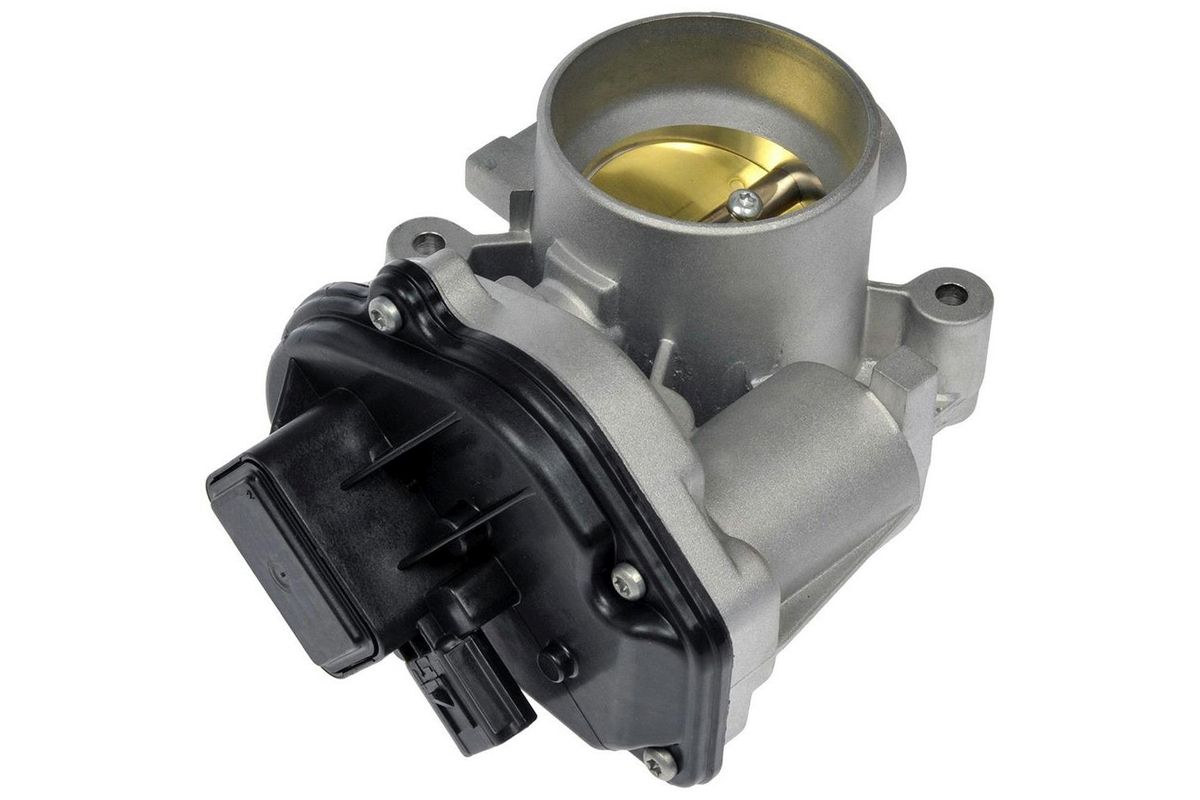
What Is an Electronic Throttle Body? What Are the Symptoms of Failure?
The electronic throttle body is a key component of modern engine management systems. It controls the amount of air entering the engine and therefore plays an important role in engine speed, acceleration, fuel injection, emissions, and overall drivability.
Unlike older mechanical throttle systems that use a physical throttle cable connected directly to the accelerator pedal, an electronic throttle body is controlled by the vehicle's electronic control system.
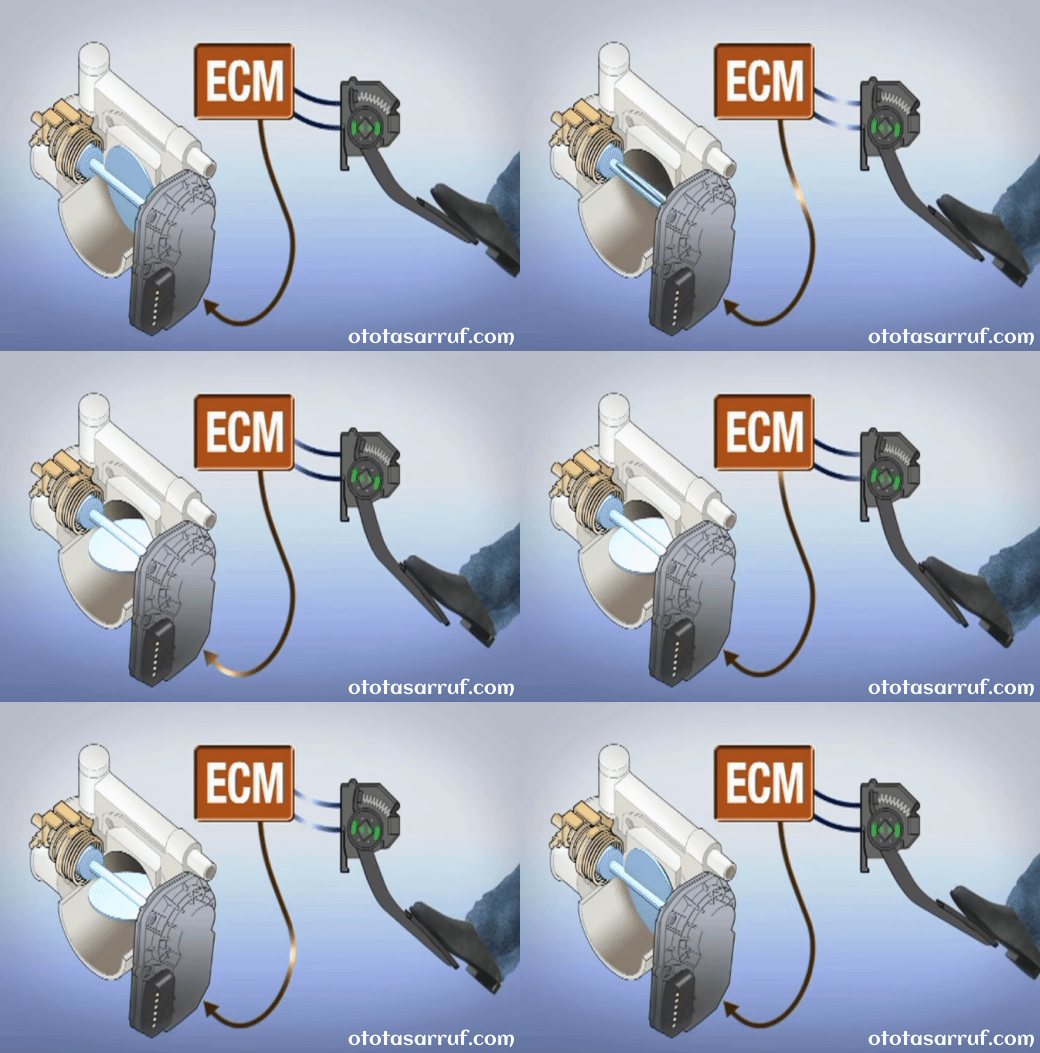
The accelerator pedal does not usually open the throttle plate directly. Instead, the pedal position is detected by sensors, and the engine control unit (ECU) calculates how much the throttle should open.
This system is commonly known as Electronic Throttle Control (ETC) or Drive-by-Wire.
How Does an Electronic Throttle Body Work?
An electronic throttle body contains a motor that moves the throttle plate.
The basic operating sequence is:
Accelerator pedal → pedal position sensors → ECU → throttle motor → throttle plate
When the driver presses the accelerator pedal, the pedal sensors send a signal to the ECU.
The ECU evaluates this information together with other engine data, such as:
-
Engine speed
-
Engine load
-
Airflow
-
Intake manifold pressure
-
Coolant temperature
-
Vehicle speed
-
Transmission status
-
Traction-control requirements
-
Stability-control requirements
-
Emissions requirements
The ECU then commands the throttle motor to move the throttle plate to the required position.
A throttle-position sensor normally provides feedback to the ECU so that the system can compare the commanded throttle position with the actual throttle position.
What Is the Difference Between a Mechanical and Electronic Throttle?
A traditional mechanical throttle uses a cable or linkage.
When the driver presses the accelerator pedal, the cable physically rotates the throttle plate.
An electronic throttle does not require a conventional throttle cable.
Instead:
Mechanical throttle:
Accelerator pedal → cable → throttle plate
Electronic throttle:
Accelerator pedal → sensors → ECU → electric motor → throttle plate
Electronic throttle control allows the ECU to control engine torque more precisely.
It also allows systems such as cruise control, traction control, stability control, start-stop, and automatic transmission management to influence throttle operation without requiring direct mechanical pedal movement.
What Are the Symptoms of a Faulty Electronic Throttle Body?
A defective electronic throttle body can cause several different symptoms.
Common signs include:
-
Poor acceleration
-
Delayed throttle response
-
Engine hesitation
-
Rough or unstable idle
-
High or low idle speed
-
Engine stalling
-
Reduced engine power
-
Throttle response becoming inconsistent
-
Check Engine Light
-
Electronic throttle warning
-
Limp-home mode
-
Accelerator pedal appearing unresponsive
-
Engine speed being limited
-
Difficulty maintaining stable RPM
-
Increased fuel consumption
The exact symptoms depend on whether the problem is related to the throttle motor, throttle-position sensors, wiring, electrical supply, mechanical contamination, or the control system.
Does a Bad Throttle Body Cause Limp Mode?
Yes, it can.
The ECU continuously monitors the electronic throttle system.
If the ECU detects that the commanded throttle position does not match the actual throttle position, or if it detects an electrical or sensor problem, it may limit throttle operation.
This can activate a reduced-power or limp-home mode.
The vehicle may then:
-
Respond very slowly to the accelerator
-
Limit engine RPM
-
Reduce engine torque
-
Maintain only a limited throttle opening
-
Display a warning light
This strategy is designed to prevent uncontrolled throttle operation and protect the engine and vehicle.
However, limp mode does not automatically mean that the throttle body itself is defective.
Electronic Throttle Body Failure and Check Engine Light
A throttle-related fault can illuminate the Check Engine Light.
Depending on the vehicle, possible diagnostic trouble codes can include:
-
P0120
-
P0121
-
P0122
-
P0123
-
P0220
-
P0221
-
P0222
-
P0223
-
P0638
There are also manufacturer-specific codes and other related faults.
These codes can point toward:
-
Throttle-position sensor
-
Accelerator pedal sensor
-
Throttle actuator motor
-
Wiring
-
Connector
-
ECU
-
Power supply
-
Ground
-
Throttle plate movement
Therefore, an OBD code should be treated as a diagnostic clue rather than proof that the throttle body needs to be replaced.
What Causes an Electronic Throttle Body to Fail?
Electronic throttle bodies can develop both electrical and mechanical problems.
Common causes include:
Carbon and dirt accumulation
Oil vapor from the crankcase ventilation system can combine with dust and combustion deposits around the throttle plate.
This can cause the plate to become dirty or sticky.
Throttle motor failure
The small electric motor responsible for moving the throttle plate can wear out.
Throttle-position sensor problems
The position sensors can develop an inconsistent or implausible signal.
Damaged wiring
Broken, corroded, or high-resistance wiring can interfere with throttle control.
Poor electrical connections
Loose or corroded connectors can cause intermittent faults.
Low system voltage
Weak battery voltage or charging-system problems can interfere with electronic throttle operation.
Mechanical damage
The throttle plate or internal mechanism can become damaged or restricted.
Water or moisture intrusion
Water entering the connector or throttle assembly can cause corrosion and electrical faults.
ECU or control-system problems
In less common cases, the ECU or related control system can be responsible.
Can a Dirty Throttle Body Cause Problems?
Yes.
A dirty throttle body can affect airflow around the throttle plate, particularly when the plate is nearly closed.
This can contribute to:
-
Rough idle
-
Unstable idle
-
Stalling
-
Poor throttle response
-
Hesitation
-
Difficult idle control
-
Increased fuel consumption
However, dirt is not always the cause of a throttle-related problem.
A throttle body that is electrically defective will not necessarily be fixed by cleaning it.
Can Cleaning the Electronic Throttle Body Fix It?
Sometimes, but not always.
If the problem is caused by carbon deposits or dirt restricting throttle movement, proper cleaning may improve operation.
However, care is required.
Electronic throttle bodies contain sensitive components and should be cleaned according to the manufacturer's procedure.
Aggressively forcing the throttle plate open or spraying inappropriate chemicals directly into the electronic assembly can cause damage on some designs.
After cleaning, some vehicles may require a throttle adaptation or relearn procedure.
What Is Throttle Body Adaptation?
Throttle adaptation is a process through which the ECU learns the correct relationship between throttle motor commands, throttle plate position, and sensor feedback.
The procedure varies significantly between manufacturers.
Some vehicles can perform an automatic relearn after specific conditions are met.
Others require a diagnostic scan tool.
If adaptation is required but not performed correctly, the vehicle may experience:
-
High idle
-
Low idle
-
Rough idle
-
Poor throttle response
-
Stalling
-
Throttle-related fault codes
Therefore, replacing or cleaning a throttle body does not always mean the repair is finished immediately.
Can a Bad Accelerator Pedal Sensor Cause Throttle Problems?
Absolutely.
The accelerator pedal assembly in an electronic throttle system normally contains one or more position sensors.
If the pedal sensor sends an incorrect signal, the ECU may not command the throttle correctly.
Symptoms can include:
-
No accelerator response
-
Delayed acceleration
-
Intermittent acceleration
-
Reduced power
-
Limp mode
-
Throttle-related fault codes
This is an important diagnostic distinction.
A throttle-related fault code does not automatically mean the throttle body is defective.
The accelerator pedal sensors and their wiring should also be checked.
Electronic Throttle Body vs Accelerator Pedal Sensor
These are two separate components.
The accelerator pedal sensor detects what the driver is requesting.
The electronic throttle body physically controls airflow into the engine.
The ECU sits between them and determines the appropriate throttle position.
For example:
Pedal sensor problem:
The ECU may receive an incorrect accelerator request.
Throttle body problem:
The ECU may command a specific throttle position, but the throttle cannot achieve or accurately report that position.
Both problems can produce similar drivability symptoms.
Can Wiring Cause Electronic Throttle Problems?
Yes.
The electronic throttle system depends on reliable electrical power, ground, sensor signals, and communication.
Potential wiring problems include:
-
Broken wires
-
Chafed insulation
-
Corroded terminals
-
Loose connectors
-
High electrical resistance
-
Poor ground connections
-
Water intrusion
-
Intermittent connections
-
Damage caused by previous repairs
An intermittent wiring fault can be particularly difficult to diagnose because the vehicle may operate normally most of the time.
Can a Weak Battery Cause Throttle Body Problems?
Yes, low system voltage can interfere with electronic throttle operation.
Modern throttle systems are sensitive to electrical supply quality.
A weak battery, poor ground, alternator problem, or unstable charging voltage can produce multiple electronic symptoms.
However, a weak battery does not automatically mean the throttle body is bad.
If throttle problems appear together with:
-
Difficult starting
-
Flickering lights
-
Multiple warning lights
-
Battery warning light
-
Communication errors
-
Random electronic faults
the charging and power-supply system should also be checked.
Can an Electronic Throttle Body Cause High Idle?
Yes.
If the throttle plate does not close correctly, if the system has an adaptation problem, or if the throttle control is receiving incorrect information, idle speed can become abnormal.
However, high idle has many other possible causes.
These include:
-
Vacuum leaks
-
Intake manifold leaks
-
PCV problems
-
EVAP purge valve problems
-
Coolant temperature sensor faults
-
MAF problems
-
MAP sensor problems
-
Idle-control issues on applicable engines
-
Incorrect throttle adaptation
A high idle does not automatically prove that the throttle body is defective.
Can an Electronic Throttle Body Cause Stalling?
Yes.
If the throttle cannot maintain the correct airflow during idle or transitions, the engine may stall.
This can be particularly noticeable when:
-
Releasing the accelerator
-
Coming to a stop
-
Turning on the A/C
-
Changing electrical loads
-
Starting the engine
-
Decelerating from higher RPM
But stalling has many possible causes.
Fuel pressure, ignition, crankshaft position sensors, camshaft position sensors, vacuum leaks, EGR operation, air metering, and electrical problems should also be considered.
Can a Throttle Body Cause Hesitation During Acceleration?
Yes.
An electronic throttle problem can cause delayed or inconsistent throttle response.
The ECU may command the throttle to open, but the actual position may not follow the command correctly.
The result can feel like:
-
Hesitation
-
Stumbling
-
Jerking
-
Delayed acceleration
-
Sudden loss of power
However, hesitation can also be caused by ignition, fuel delivery, turbocharging, air metering, transmission, or engine-management problems.
The symptom itself does not identify the failed component.
Can an Electronic Throttle Body Cause Engine Misfires?
It can contribute indirectly.
If throttle control results in incorrect engine airflow, the air-fuel mixture and engine load can be affected.
However, a throttle body is not normally the first component to blame for a misfire.
Misfires are commonly associated with:
-
Spark plugs
-
Ignition coils
-
Fuel injectors
-
Fuel pressure
-
Vacuum leaks
-
Compression problems
-
Valve timing
-
Airflow measurement
-
EGR operation
If a vehicle has a P0300-series misfire code, the throttle body should not automatically be replaced.
How Is an Electronic Throttle Body Diagnosed?
A proper diagnosis should combine an OBD scan, live data, electrical testing, and physical inspection.
The technician may check:
-
Accelerator pedal position
-
Commanded throttle position
-
Actual throttle position
-
Throttle motor operation
-
Sensor signal consistency
-
Battery voltage
-
Charging voltage
-
Power supply
-
Ground connections
-
Connector condition
-
Wiring continuity
-
Voltage drop
-
Throttle plate movement
-
Intake contamination
Live data can be particularly useful because it allows the technician to compare what the ECU is requesting with what the throttle body is actually doing.
What Does a Throttle Position Sensor Signal Look Like?
Most electronic throttle systems use redundant position signals for safety.
The ECU can compare multiple signals to determine whether the throttle position is plausible.
If the signals disagree beyond an allowed range, the ECU can identify a fault and reduce throttle operation.
An abnormal sensor signal can result from:
-
Worn sensor tracks
-
Internal electronic failure
-
Wiring resistance
-
Connector problems
-
Reference-voltage problems
-
Ground problems
The exact voltage ranges depend on the specific vehicle and throttle system.
Generic voltage assumptions should therefore not replace manufacturer specifications.
Can You Test an Electronic Throttle Body With a Multimeter?
Electrical testing can help, but the exact procedure depends on the throttle design.
Possible checks include:
-
Power supply
-
Ground
-
Reference voltage
-
Sensor signal
-
Wiring continuity
-
Voltage drop
-
Motor circuit
However, simply measuring resistance across random throttle-body terminals is not always an appropriate test.
Some electronic throttle assemblies contain multiple circuits and sensitive electronics.
The vehicle's wiring diagram and manufacturer testing procedure should be used whenever possible.
Should You Replace the Throttle Body Immediately After Getting a Fault Code?
No.
This is one of the most common diagnostic mistakes.
A throttle-related code may be caused by:
-
Throttle body
-
Accelerator pedal
-
Wiring
-
Connector
-
Fuse
-
Relay or power supply
-
Ground
-
Low battery voltage
-
ECU
-
Mechanical restriction
-
Adaptation problem
For example, a damaged wire can create exactly the same symptom as a defective throttle-position sensor.
Replacing the throttle body without testing the circuit can therefore waste money and leave the original problem unresolved.
Electronic Throttle Body and Cruise Control
Cruise control is another system that can command the electronic throttle.
When cruise control is active, the ECU can adjust throttle opening automatically to maintain the selected speed.
This is one of the major advantages of electronic throttle control.
The system can also coordinate throttle operation with:
-
Traction control
-
Electronic stability control
-
Automatic transmission
-
Engine braking
-
Cruise control
-
Start-stop systems
This means a throttle-related fault can sometimes affect several vehicle functions simultaneously.
Can the Throttle Body Be Stuck Open?
Yes.
A mechanical obstruction, motor problem, internal failure, or control fault can prevent the throttle plate from reaching its intended position.
A stuck-open condition can cause:
-
High idle
-
Uncontrolled or abnormal RPM
-
Poor deceleration behavior
-
Throttle-related fault codes
-
Reduced-power operation
Modern electronic throttle systems are designed with safety strategies to reduce the consequences of a detected malfunction.
Nevertheless, an abnormal throttle condition should be investigated promptly.
Can the Throttle Body Be Stuck Closed?
A throttle that remains too closed can restrict airflow.
Possible symptoms include:
-
Poor acceleration
-
Low engine power
-
Hesitation
-
Difficulty increasing RPM
-
Stalling
-
Reduced-power mode
Again, the problem may not necessarily be mechanical.
An electrical control or sensor problem can make the ECU limit throttle opening intentionally.
Electronic Throttle Body Failure in Diesel Engines
Modern diesel engines can also use electronic throttle bodies.
A diesel engine does not normally rely on a throttle plate in the same way a gasoline engine does, but a throttle valve can still be used for several functions.
Depending on the engine, it may assist with:
-
EGR control
-
Intake airflow management
-
Engine shutdown
-
Emissions control
-
Regeneration strategies
-
Intake pressure management
Therefore, throttle-related symptoms on a diesel engine should be interpreted differently from those on a gasoline engine.
Can an Electronic Throttle Body Cause DPF Problems?
On some diesel engines, throttle operation is involved in EGR and exhaust-emission strategies.
If the throttle valve does not operate correctly, it can interfere with the conditions required for certain emission-control functions.
However, a DPF problem does not automatically mean the throttle body is faulty.
DPF loading, differential pressure, exhaust temperature, EGR operation, fuel injection, sensors, and regeneration conditions should all be evaluated.
How Long Does an Electronic Throttle Body Last?
There is no universal service life.
Some throttle bodies operate for the entire life of the vehicle, while others develop problems earlier.
Service life depends on:
-
Engine design
-
Driving conditions
-
Mileage
-
Intake contamination
-
Oil vapor exposure
-
Temperature
-
Electrical conditions
-
Water intrusion
-
Component quality
-
Maintenance
Regular inspection of the intake system and prompt attention to drivability problems can help prevent secondary damage.
Is It Safe to Drive With a Faulty Electronic Throttle Body?
It depends on the type and severity of the fault.
A vehicle with mild throttle response problems may remain operational, but continued driving can be risky if throttle control becomes unpredictable.
Driving should be avoided if the vehicle has:
-
Severe loss of acceleration
-
Unpredictable throttle response
-
Sudden engine stalling
-
Severe limp mode
-
Uncontrolled engine speed
-
Multiple electronic warning lights
-
Intermittent loss of throttle control
Because the throttle system directly affects engine torque, serious faults can affect the vehicle's ability to accelerate safely in traffic.
Final Thoughts
The electronic throttle body is a central part of modern engine management and Electronic Throttle Control systems. It uses an electric motor and position sensors to control the throttle plate according to commands from the ECU.
Common symptoms of a problem include poor acceleration, hesitation, unstable idle, stalling, reduced engine power, throttle response problems, warning lights, and limp-home mode.
However, these symptoms do not automatically mean that the throttle body itself is defective.
The accelerator pedal sensors, wiring, connectors, power supply, battery, alternator, ECU, throttle-position sensors, mechanical contamination, and adaptation settings can all cause similar symptoms.
For this reason, replacing the throttle body immediately after seeing a throttle-related fault code is not always the correct approach. A proper diagnosis should compare the accelerator pedal signals, commanded throttle position, actual throttle position, electrical supply, wiring, and physical condition of the throttle assembly.
When the underlying cause is correctly identified, the repair may be as simple as correcting a wiring problem, cleaning the throttle assembly, performing an adaptation procedure, or repairing the power supply rather than replacing the entire throttle body.